Story code: ST-001192
Part 1: The Morning Shift
Elena dragged her feet up the freshly poured concrete driveway, the sharp, metallic smell of iodine and stale sweat permanently baked into her teal scrubs after a brutal fourteen-hour trauma shift. Her eyelids felt heavy and lined with crushed glass. All she wanted was a hot shower to wash away the phantom sensation of latex gloves and the iron tang of blood. Around her, the newly flipped neighborhood of Oak Creek gleamed with a sterile, hyper-manicured perfection that made the chaotic, life-and-death reality of the emergency room feel like a distant hallucination. Perfect geometric hedges cast razor-sharp shadows across pristine lawns. Identical slate-gray mailboxes stood at exact military attention. Not a single blade of grass was permitted to step out of line.
And there, crouching on the edge of her front lawn in freshly pressed khaki shorts, was Richard.
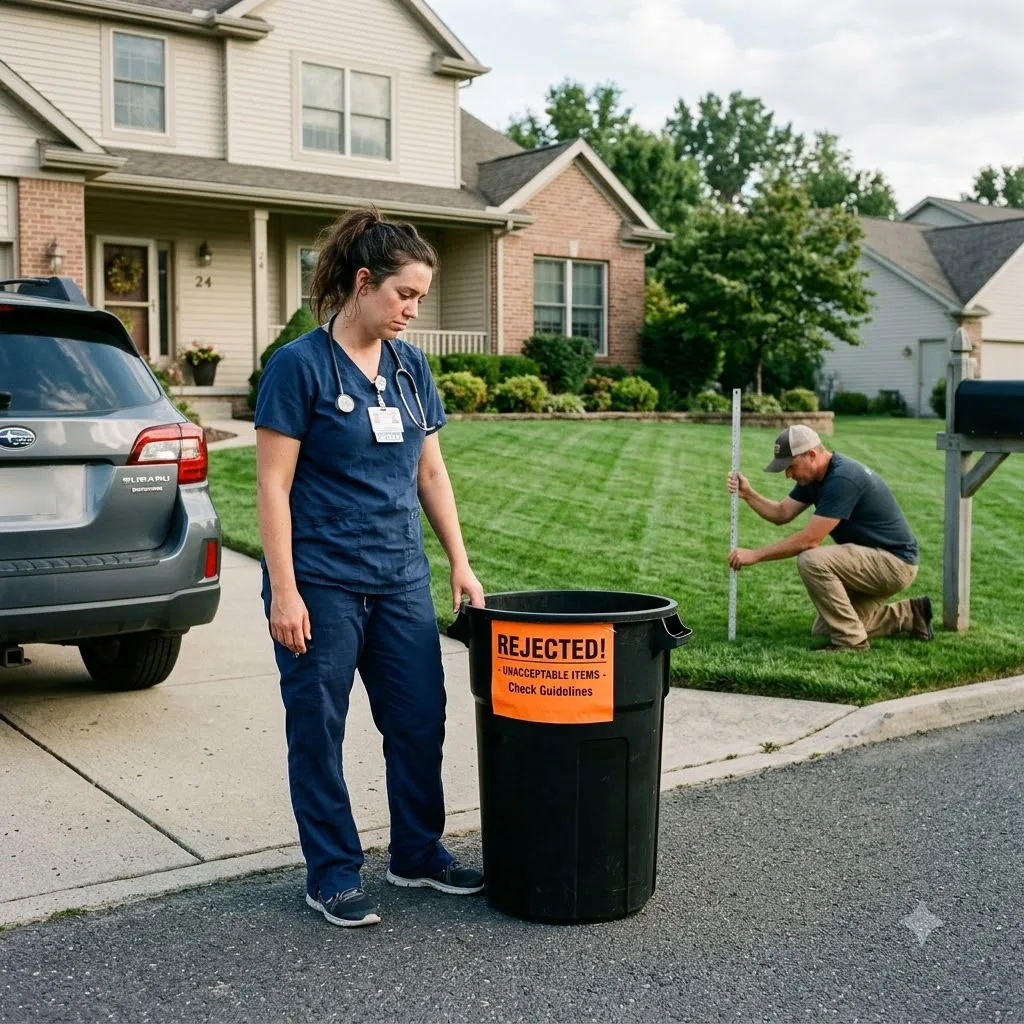
The HOA chair held a standard yellow Stanley tape measure, pulling the metal strip down to the soil to meticulously check the height of Elena’s fescue. He squinted at the hash marks, then logged a number on a silver clipboard with a heavy, theatrical sigh. Elena watched him through a thick fog of sensory-dulling fatigue, lacking the physical energy to even raise a hand in protest. Three inches. That was the maximum allowable height. She knew the rule because Richard had slid a laminated, highlighted copy of the bylaws under her door twice in the last four weeks.
Elena stopped at the edge of the curb. She had spent the entire night compressing a dying man’s chest until her shoulders burned, fighting the grim monitor to keep a fading pulse alive. Now she was standing in the blinding, cheerful morning sun watching a grown man measure lawn clippings. The severe dissonance made her stomach pitch. Richard adjusted the collar of his pastel polo shirt, stood up, brushed a microscopic speck of dirt from his knee, and gave her a tight, rehearsed smile. He marched back across the pristine asphalt to his own fortress of immaculate landscaping without offering a single greeting.
He did not need to speak to her. His preferred communication method was already waiting.
Next to her closed garage door, her dark green municipal trash can sat exactly where she had dragged it yesterday afternoon. Plastered dead center on the lid was a massive neon orange sticker. The color practically vibrated in the bright, unforgiving daylight. It was just another routine annoyance. Another citation. Her fourth this week. Elena let out a long, ragged exhale that rattled deep in her chest.
First, it had been a fifty-dollar fine for leaving the can out three hours past the strict collection window, even though she had been pulling a mandatory double shift due to a multi-car pileup on the interstate. Then it was a seventy-five-dollar penalty because the can was deemed visible from the street by a margin of four inches, throwing off the aesthetic symmetry of the cul-de-sac. The citations always came on these thick, sticky labels that left an impossible white residue on the plastic.
She trudged toward the receptacle, her leaden legs barely lifting high enough to clear the driveway expansion joints. The neighborhood was dead silent, save for the distant, expensive hum of a ride-on lawnmower three streets over. It was a perfectly sanitized world, aggressively hostile to anyone who actually lived and worked and bled in the messy reality of the city.
Elena dropped her canvas tote bag onto the driveway. Her knuckles were stiff and aching as she reached out to hook her fingernails under the edge of the orange adhesive. She just wanted to see the dollar amount. She wanted to know how much of her overtime pay was going to be drained away for the crime of being a working nurse in a neighborhood of retired executives.
The adhesive was industrial strength, biting into the textured plastic of the trash can lid. She leaned in closer, bringing her face mere inches from the neon paper to read the blocky black text, expecting the standard boilerplate about municipal waste storage and escalating monetary fines.
The black letters blurred for a second. Her exhausted eyes struggled to hold focus in the glare of the morning sun. She blinked hard, forcing the heavy text into sharp clarity.
This was not a standard HOA ordinance citation.
The header did not mention the Oak Creek Homeowners Association or trash receptacle visibility. It did not have the standard fifty-dollar or hundred-dollar checkboxes filled in with Richard’s meticulous red ink. The bold black letters at the top declared the property a severe biohazard contamination zone. The text explicitly cited her hospital employment, stating that her home and all exterior waste receptacles were now subject to immediate county seizure and lockdown. Elena stood frozen in the driveway as her eyes dropped to the forged signature at the very bottom of the document.
Elena dragged her feet up the freshly poured concrete driveway, the sharp, metallic smell of iodine and stale sweat permanently baked into her teal scrubs after a brutal fourteen-hour trauma shift. Her eyelids felt heavy and lined with crushed glass. All she wanted was a hot shower to wash away the phantom sensation of latex gloves and the iron tang of blood. Around her, the newly flipped neighborhood of Oak Creek gleamed with a sterile, hyper-manicured perfection that made the chaotic, life-and-death reality of the emergency room feel like a distant hallucination. Perfect geometric hedges cast razor-sharp shadows across pristine lawns. Identical slate-gray mailboxes stood at exact military attention. Not a single blade of grass was permitted to step out of line.
And there, crouching on the edge of her front lawn in freshly pressed khaki shorts, was Richard.
The HOA chair held a standard yellow Stanley tape measure, pulling the metal strip down to the soil to meticulously check the height of Elena’s fescue. He squinted at the hash marks, then logged a number on a silver clipboard with a heavy, theatrical sigh. Elena watched him through a thick fog of sensory-dulling fatigue, lacking the physical energy to even raise a hand in protest. Three inches. That was the maximum allowable height. She knew the rule because Richard had slid a laminated, highlighted copy of the bylaws under her door twice in the last four weeks.
Elena stopped at the edge of the curb. She had spent the entire night compressing a dying man’s chest until her shoulders burned, fighting the grim monitor to keep a fading pulse alive. Now she was standing in the blinding, cheerful morning sun watching a grown man measure lawn clippings. The severe dissonance made her stomach pitch. Richard adjusted the collar of his pastel polo shirt, stood up, brushed a microscopic speck of dirt from his knee, and gave her a tight, rehearsed smile. He marched back across the pristine asphalt to his own fortress of immaculate landscaping without offering a single greeting.
He did not need to speak to her. His preferred communication method was already waiting.
Next to her closed garage door, her dark green municipal trash can sat exactly where she had dragged it yesterday afternoon. Plastered dead center on the lid was a massive neon orange sticker. The color practically vibrated in the bright, unforgiving daylight. It was just another routine annoyance. Another citation. Her fourth this week. Elena let out a long, ragged exhale that rattled deep in her chest.
First, it had been a fifty-dollar fine for leaving the can out three hours past the strict collection window, even though she had been pulling a mandatory double shift due to a multi-car pileup on the interstate. Then it was a seventy-five-dollar penalty because the can was deemed visible from the street by a margin of four inches, throwing off the aesthetic symmetry of the cul-de-sac. The citations always came on these thick, sticky labels that left an impossible white residue on the plastic.
She trudged toward the receptacle, her leaden legs barely lifting high enough to clear the driveway expansion joints. The neighborhood was dead silent, save for the distant, expensive hum of a ride-on lawnmower three streets over. It was a perfectly sanitized world, aggressively hostile to anyone who actually lived and worked and bled in the messy reality of the city.
Elena dropped her canvas tote bag onto the driveway. Her knuckles were stiff and aching as she reached out to hook her fingernails under the edge of the orange adhesive. She just wanted to see the dollar amount. She wanted to know how much of her overtime pay was going to be drained away for the crime of being a working nurse in a neighborhood of retired executives.
The adhesive was industrial strength, biting into the textured plastic of the trash can lid. She leaned in closer, bringing her face mere inches from the neon paper to read the blocky black text, expecting the standard boilerplate about municipal waste storage and escalating monetary fines.
The black letters blurred for a second. Her exhausted eyes struggled to hold focus in the glare of the morning sun. She blinked hard, forcing the heavy text into sharp clarity.
This was not a standard HOA ordinance citation.
The header did not mention the Oak Creek Homeowners Association or trash receptacle visibility. It did not have the standard fifty-dollar or hundred-dollar checkboxes filled in with Richard’s meticulous red ink. The bold black letters at the top declared the property a severe biohazard contamination zone. The text explicitly cited her hospital employment, stating that her home and all exterior waste receptacles were now subject to immediate county seizure and lockdown. Elena stood frozen in the driveway as her eyes dropped to the forged signature at the very bottom of the document.