Story code: ST-001193
Part 1: The Mission
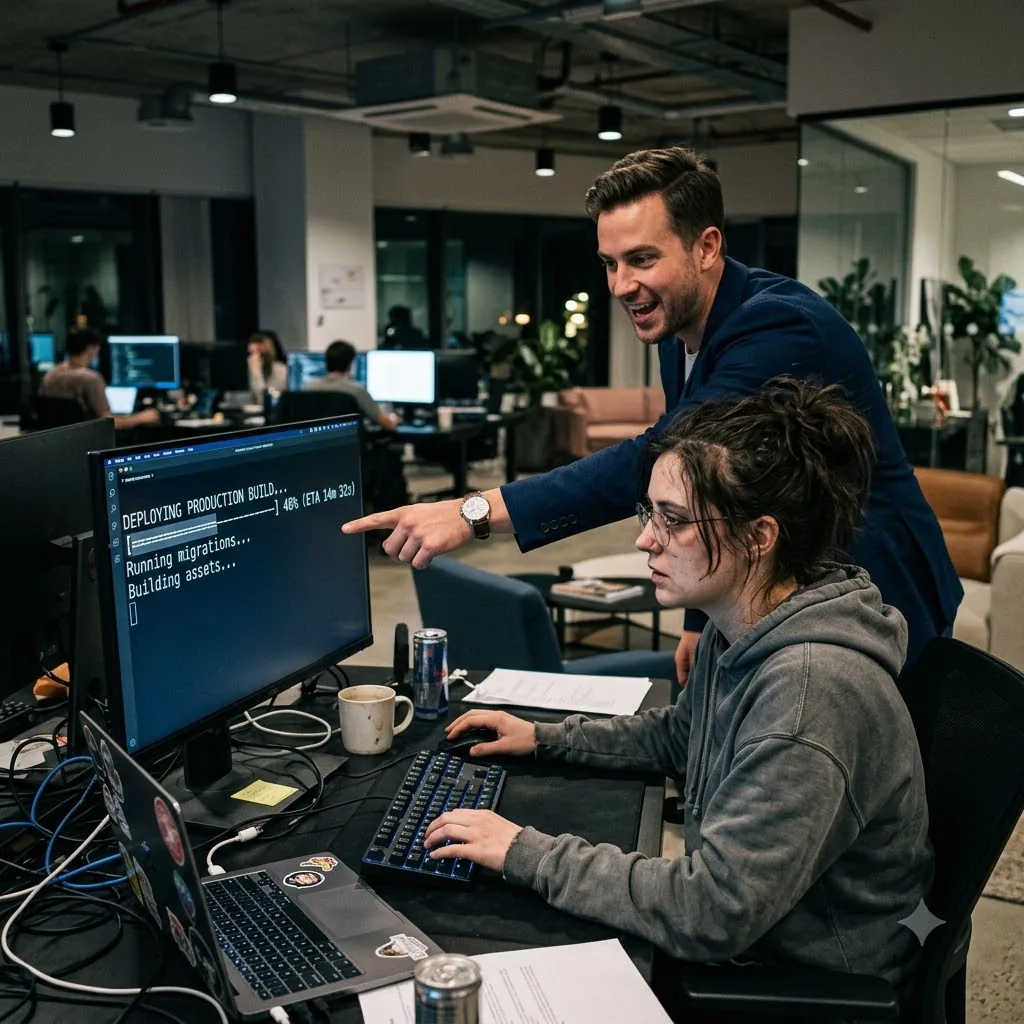
The harsh blue light of the monitor burned Maya’s retinas as Julian leaned over her chair to point at a block of perfectly functional code. He had been talking about their unified mission to disrupt global logistics for twenty uninterrupted minutes, offering a waterfall of buzzwords to excuse why yesterday’s direct deposits had never arrived in anyone’s bank account. Beneath her active integrated development environment, a dark terminal window ran a silent, heavily obfuscated progress bar that currently sat stalled at sixty-two percent.
“We have to see the bigger picture, Maya,” Julian said, pacing a tight circle on the thin office carpet. His pristine, limited-edition sneakers squeaked on the floorboards where the carpet gave way to polished concrete. “Cash flow is a temporary metric. What we are building here is a legacy. A family. And families endure the lean times together to reap the harvest.”
Maya kept her eyes fixed on the screen, nodding at intervals that required no actual cognitive processing. She had been awake for thirty-six hours. The empty paper cups on her desk smelled of stale espresso and metallic exhaustion. Her hands rested lightly on the keyboard, her left thumb hovering millimeters from the command key. If she pressed it, the IDE would minimize, exposing the command-line interface and the script she had written to execute her silent retaliation. She adjusted the edge of the code window, covering the terminal just a fraction more, leaving only the bottom right corner visible.
Sixty-five percent.
The script was heavy, resource-intensive, and agonizingly slow. It had to crawl through the backend architecture without triggering the primary monitoring alerts. Maya felt a dull throb behind her left eye, a physical manifestation of her depleted bank account. Her rent was due in three days. Her credit card was maxed out from paying last month’s utilities. Julian had promised funding was secured, that the bridge loan was clearing, that the payroll glitch was a simple clerical error. Yet, he bounded around the office at two in the morning, buzzing with manic energy, entirely insulated from the financial panic gripping his exhausted lead developer.
“Look at this module,” Julian said, stopping his pacing to step close to her right shoulder. The scent of his expensive cologne mixed sickeningly with the stale office air. “This database call right here. It feels sluggish. We need optimization, Maya. We need to be lean.”
Maya did not move her mouse. “It runs at three milliseconds, Julian.”
“Three milliseconds is an eternity in high-frequency routing,” he countered, leaning closer.
Maya watched the sliver of the terminal. Seventy-one percent.
She needed him to step back. The proximity was suffocating. Every time he shifted his weight, his sleeve brushed the mesh back of her ergonomic chair. She was keenly aware of the slight fan noise kicking up from her tower, the processor working overtime to handle both the redundant code review Julian demanded and the massive background task she had initiated an hour ago.
“I can refactor it,” Maya said, her voice raspy from disuse. “I will look at the caching logic tomorrow.”
“We do not have tomorrow,” Julian said, his tone dropping into the severe, visionary register he reserved for investor pitches and late-night guilt trips. “We have tonight. This is where the magic happens. This is where we prove our dedication to the platform.”
Eighty percent.
The terminal output flickered, rendering a new block of hashed characters as the script chewed through another directory. Maya’s pulse hammered in her throat. She dragged the IDE window down another centimeter, terrified the sudden movement would draw his eye. Julian was notoriously oblivious to backend mechanics, but a moving progress bar was universally understood.
“I need you completely focused on the mission,” Julian continued, ignoring her obvious physical collapse. “You are my top engineer. When we go public, these are the nights we will laugh about on the yacht. The missed payroll is just a test of our resolve. The universe testing our grit.”
Eighty-six percent.
Maya blinked hard, trying to clear the gritty feeling from her eyes. The sheer audacity of his yacht comment made her chest tight. She was eating ramen and calculating if she could afford a subway pass, while he was weaving fantasies of luxury. The script running in the background was her answer to that grit. It was the only tangible action left to a developer who realized loyalty was a one-way street paved with unpaid labor.
Julian stopped talking. The silence in the cavernous, empty office dropped like an anvil. Maya froze, keeping her breathing shallow and even.
Ninety-two percent.
“Wait,” Julian said, his voice entirely devoid of the visionary warmth from a moment ago.
Maya stared straight ahead at the block of code. She did not click. She did not type.
Julian stepped directly into her line of sight, crowding her space, his eyes locked onto the bottom corner of her monitor. The reflection of the screen glowed faintly against his glasses. He extended his right hand over her shoulder, his fingers reaching for the mouse resting just inches from Maya’s rigid grip.
“Minimize the code editor right now.”
The harsh blue light of the monitor burned Maya’s retinas as Julian leaned over her chair to point at a block of perfectly functional code. He had been talking about their unified mission to disrupt global logistics for twenty uninterrupted minutes, offering a waterfall of buzzwords to excuse why yesterday’s direct deposits had never arrived in anyone’s bank account. Beneath her active integrated development environment, a dark terminal window ran a silent, heavily obfuscated progress bar that currently sat stalled at sixty-two percent.
“We have to see the bigger picture, Maya,” Julian said, pacing a tight circle on the thin office carpet. His pristine, limited-edition sneakers squeaked on the floorboards where the carpet gave way to polished concrete. “Cash flow is a temporary metric. What we are building here is a legacy. A family. And families endure the lean times together to reap the harvest.”
Maya kept her eyes fixed on the screen, nodding at intervals that required no actual cognitive processing. She had been awake for thirty-six hours. The empty paper cups on her desk smelled of stale espresso and metallic exhaustion. Her hands rested lightly on the keyboard, her left thumb hovering millimeters from the command key. If she pressed it, the IDE would minimize, exposing the command-line interface and the script she had written to execute her silent retaliation. She adjusted the edge of the code window, covering the terminal just a fraction more, leaving only the bottom right corner visible.
Sixty-five percent.
The script was heavy, resource-intensive, and agonizingly slow. It had to crawl through the backend architecture without triggering the primary monitoring alerts. Maya felt a dull throb behind her left eye, a physical manifestation of her depleted bank account. Her rent was due in three days. Her credit card was maxed out from paying last month’s utilities. Julian had promised funding was secured, that the bridge loan was clearing, that the payroll glitch was a simple clerical error. Yet, he bounded around the office at two in the morning, buzzing with manic energy, entirely insulated from the financial panic gripping his exhausted lead developer.
“Look at this module,” Julian said, stopping his pacing to step close to her right shoulder. The scent of his expensive cologne mixed sickeningly with the stale office air. “This database call right here. It feels sluggish. We need optimization, Maya. We need to be lean.”
Maya did not move her mouse. “It runs at three milliseconds, Julian.”
“Three milliseconds is an eternity in high-frequency routing,” he countered, leaning closer.
Maya watched the sliver of the terminal. Seventy-one percent.
She needed him to step back. The proximity was suffocating. Every time he shifted his weight, his sleeve brushed the mesh back of her ergonomic chair. She was keenly aware of the slight fan noise kicking up from her tower, the processor working overtime to handle both the redundant code review Julian demanded and the massive background task she had initiated an hour ago.
“I can refactor it,” Maya said, her voice raspy from disuse. “I will look at the caching logic tomorrow.”
“We do not have tomorrow,” Julian said, his tone dropping into the severe, visionary register he reserved for investor pitches and late-night guilt trips. “We have tonight. This is where the magic happens. This is where we prove our dedication to the platform.”
Eighty percent.
The terminal output flickered, rendering a new block of hashed characters as the script chewed through another directory. Maya’s pulse hammered in her throat. She dragged the IDE window down another centimeter, terrified the sudden movement would draw his eye. Julian was notoriously oblivious to backend mechanics, but a moving progress bar was universally understood.
“I need you completely focused on the mission,” Julian continued, ignoring her obvious physical collapse. “You are my top engineer. When we go public, these are the nights we will laugh about on the yacht. The missed payroll is just a test of our resolve. The universe testing our grit.”
Eighty-six percent.
Maya blinked hard, trying to clear the gritty feeling from her eyes. The sheer audacity of his yacht comment made her chest tight. She was eating ramen and calculating if she could afford a subway pass, while he was weaving fantasies of luxury. The script running in the background was her answer to that grit. It was the only tangible action left to a developer who realized loyalty was a one-way street paved with unpaid labor.
Julian stopped talking. The silence in the cavernous, empty office dropped like an anvil. Maya froze, keeping her breathing shallow and even.
Ninety-two percent.
“Wait,” Julian said, his voice entirely devoid of the visionary warmth from a moment ago.
Maya stared straight ahead at the block of code. She did not click. She did not type.
Julian stepped directly into her line of sight, crowding her space, his eyes locked onto the bottom corner of her monitor. The reflection of the screen glowed faintly against his glasses. He extended his right hand over her shoulder, his fingers reaching for the mouse resting just inches from Maya’s rigid grip.
“Minimize the code editor right now.”