Story code: ST-001210
Part 1: The Silent Ledger
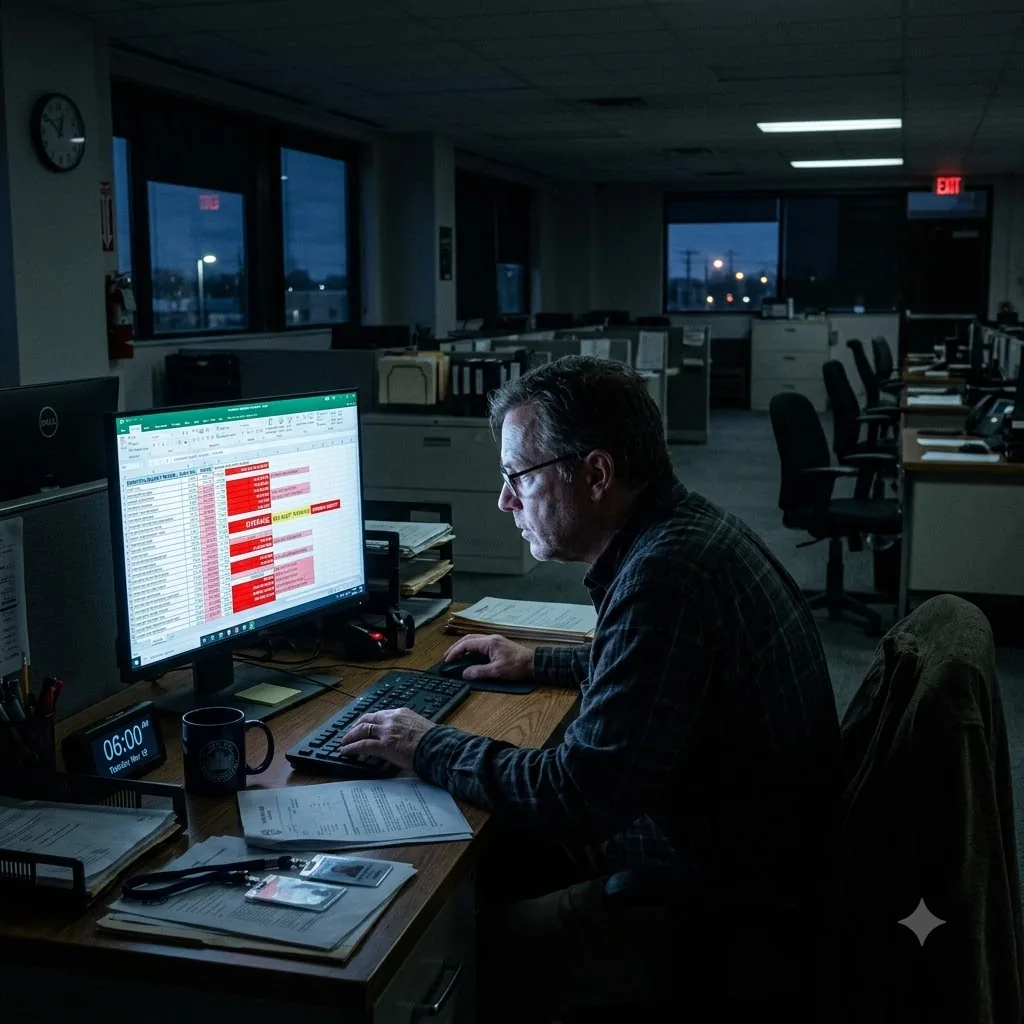
Elias pressed his thumb against the bezel of his primary monitor, tracing the edge of the glass as the municipal revenue dashboard updated at exactly six in the morning. The cell in row twelve, column D, flashed a soft, pulsing red. That specific cell tracked the per-diem operational subsidy from Blackwood Correctional, the private facility anchoring the town’s entire fiscal survival. A red indicator meant a negative variance. Elias leaned closer, assuming a macro had failed to pull the overnight data.
He tapped the F5 key. The screen flickered, dumping the local cache and pulling a fresh query directly from the county integration server.
Row twelve flashed red again. The variance was no longer a minor accounting rounding error. The projected monthly revenue had dropped by fourteen percent.
Elias set his coffee mug on a stack of unopened vendor invoices. The Blackwood API fed directly into the town’s financial projections, a system he had designed himself to ensure Oakhaven never faced a surprise deficit. He moved his mouse to the secondary monitor, bringing up the raw facility headcount. Blackwood housed exactly one thousand four hundred and twenty-two state inmates. The contract mandated a baseline of twelve hundred to keep the town’s water and emergency services solvent.
The current live headcount displayed one thousand two hundred and ten.
It was ten past six. Two hundred and twelve inmates did not simply vanish before breakfast. Elias pulled up the raw server logs, his fingers moving automatically over the keyboard. He filtered the event viewer by the last thirty minutes. The screen filled with hundreds of green success codes. There were no error flags, no dropped packets, no firewall alerts. The system was functioning exactly as programmed.
A new line of text populated at the bottom of the terminal window. A release notice had just hit the integration layer. Then another. Then five more in rapid succession.
Elias watched the digital ledger with a mounting, cold pressure in his chest. A standard release process took days of paperwork, parole board sign-offs, and manual verification by the warden’s staff. The dashboard was currently processing automated release certificates at a rate of three per second.
He tabbed back to the main municipal spreadsheet. The macro refreshed on its five-minute timer. The headcount dropped to nine hundred and eighty.
The corresponding revenue cell shifted from a soft red warning to a deep, structural crimson. The town’s road maintenance budget vanished. The cell tracking the elementary school’s supplementary funding turned negative. Elias sat completely still in the quiet hum of his office. There were no alarms blaring in the town hall. No frantic phone calls from the county seat. The erasure of Oakhaven’s entire operational budget was happening in absolute, mechanical silence.
He reached for his desk phone, dialing the direct line for Blackwood’s IT department. The line rang out into the automated directory. He navigated the menus, pressing zero for the emergency operations center. The hold music clicked on, a cheerful, synthesized track that looped endlessly. He wedged the receiver between his shoulder and his ear, returning both hands to his keyboard.
This had to be a catastrophic database mirroring failure. The state system must be writing test data to the live production environment. Elias opened a secure shell terminal, authenticating directly into the town’s firewall appliance. He needed to sever the API connection to stop the corrupted data from overwriting the monthly financial locks. If the system saved these figures at seven o’clock, the automatic payroll triggers for the town’s employees would bounce.
He typed the command to blackhole the incoming IP address. Before he could hit enter, his secondary monitor refreshed again.
Headcount: seven hundred and fourteen.
The fire department’s operating budget zeroed out. The municipal pension fund contributions flashed an insufficient funds warning.
Elias deleted the firewall command. Severing the connection would not fix the underlying data if the state’s end was genuinely broadcasting these numbers to the banks. He needed to see the actual release certificates. He accessed the shared drop-folder where the PDF backups of the digital authorizations were temporarily cached.
The folder contained over seven hundred files, all generated within the last forty-five minutes.
He double-clicked the most recent file. The document loaded on his screen, bearing the official watermark of the state Department of Corrections. It was fully executed. The digital signatures were mathematically valid. The authorization code matched the current cryptographic key. It was not test data. The system was executing real, verified release protocols.
The headcount dropped to five hundred.
Elias slammed the phone receiver down, cutting off the hold music. He grabbed his coat from the back of his chair and his keys from the desk. If the IT department was not answering, he would drive the three miles to the facility and physically unplug the integration server from the warden’s rack. He sprinted out of his office, his boots echoing sharply down the linoleum hallway of the empty town hall.
He pushed through the heavy glass double doors into the freezing morning air, his thumb already pressing the unlock button on his key fob. The headlights of his truck flashed in the pre-dawn darkness.
A harsh, grinding mechanical siren erupted from the direction of the tree line, shattering the quiet of the valley as the prison’s perimeter lockdown sequence engaged on manual override.
Elias pressed his thumb against the bezel of his primary monitor, tracing the edge of the glass as the municipal revenue dashboard updated at exactly six in the morning. The cell in row twelve, column D, flashed a soft, pulsing red. That specific cell tracked the per-diem operational subsidy from Blackwood Correctional, the private facility anchoring the town’s entire fiscal survival. A red indicator meant a negative variance. Elias leaned closer, assuming a macro had failed to pull the overnight data.
He tapped the F5 key. The screen flickered, dumping the local cache and pulling a fresh query directly from the county integration server.
Row twelve flashed red again. The variance was no longer a minor accounting rounding error. The projected monthly revenue had dropped by fourteen percent.
Elias set his coffee mug on a stack of unopened vendor invoices. The Blackwood API fed directly into the town’s financial projections, a system he had designed himself to ensure Oakhaven never faced a surprise deficit. He moved his mouse to the secondary monitor, bringing up the raw facility headcount. Blackwood housed exactly one thousand four hundred and twenty-two state inmates. The contract mandated a baseline of twelve hundred to keep the town’s water and emergency services solvent.
The current live headcount displayed one thousand two hundred and ten.
It was ten past six. Two hundred and twelve inmates did not simply vanish before breakfast. Elias pulled up the raw server logs, his fingers moving automatically over the keyboard. He filtered the event viewer by the last thirty minutes. The screen filled with hundreds of green success codes. There were no error flags, no dropped packets, no firewall alerts. The system was functioning exactly as programmed.
A new line of text populated at the bottom of the terminal window. A release notice had just hit the integration layer. Then another. Then five more in rapid succession.
Elias watched the digital ledger with a mounting, cold pressure in his chest. A standard release process took days of paperwork, parole board sign-offs, and manual verification by the warden’s staff. The dashboard was currently processing automated release certificates at a rate of three per second.
He tabbed back to the main municipal spreadsheet. The macro refreshed on its five-minute timer. The headcount dropped to nine hundred and eighty.
The corresponding revenue cell shifted from a soft red warning to a deep, structural crimson. The town’s road maintenance budget vanished. The cell tracking the elementary school’s supplementary funding turned negative. Elias sat completely still in the quiet hum of his office. There were no alarms blaring in the town hall. No frantic phone calls from the county seat. The erasure of Oakhaven’s entire operational budget was happening in absolute, mechanical silence.
He reached for his desk phone, dialing the direct line for Blackwood’s IT department. The line rang out into the automated directory. He navigated the menus, pressing zero for the emergency operations center. The hold music clicked on, a cheerful, synthesized track that looped endlessly. He wedged the receiver between his shoulder and his ear, returning both hands to his keyboard.
This had to be a catastrophic database mirroring failure. The state system must be writing test data to the live production environment. Elias opened a secure shell terminal, authenticating directly into the town’s firewall appliance. He needed to sever the API connection to stop the corrupted data from overwriting the monthly financial locks. If the system saved these figures at seven o’clock, the automatic payroll triggers for the town’s employees would bounce.
He typed the command to blackhole the incoming IP address. Before he could hit enter, his secondary monitor refreshed again.
Headcount: seven hundred and fourteen.
The fire department’s operating budget zeroed out. The municipal pension fund contributions flashed an insufficient funds warning.
Elias deleted the firewall command. Severing the connection would not fix the underlying data if the state’s end was genuinely broadcasting these numbers to the banks. He needed to see the actual release certificates. He accessed the shared drop-folder where the PDF backups of the digital authorizations were temporarily cached.
The folder contained over seven hundred files, all generated within the last forty-five minutes.
He double-clicked the most recent file. The document loaded on his screen, bearing the official watermark of the state Department of Corrections. It was fully executed. The digital signatures were mathematically valid. The authorization code matched the current cryptographic key. It was not test data. The system was executing real, verified release protocols.
The headcount dropped to five hundred.
Elias slammed the phone receiver down, cutting off the hold music. He grabbed his coat from the back of his chair and his keys from the desk. If the IT department was not answering, he would drive the three miles to the facility and physically unplug the integration server from the warden’s rack. He sprinted out of his office, his boots echoing sharply down the linoleum hallway of the empty town hall.
He pushed through the heavy glass double doors into the freezing morning air, his thumb already pressing the unlock button on his key fob. The headlights of his truck flashed in the pre-dawn darkness.
A harsh, grinding mechanical siren erupted from the direction of the tree line, shattering the quiet of the valley as the prison’s perimeter lockdown sequence engaged on manual override.