Story code: ST-001210
Part 3: The Master’s Tools
The red alert flashed on Sergeant Davis’s screen, accompanied by the digitized confirmation that state police SWAT units were mobilizing from the county seat.
Elias stared at the terminal. He pushed Davis aside. “No. No, a corporate compliance AI doesn’t proactively trigger a SWAT raid. It would flag the legal risk and wait for a human underwriter to approve the liability.”
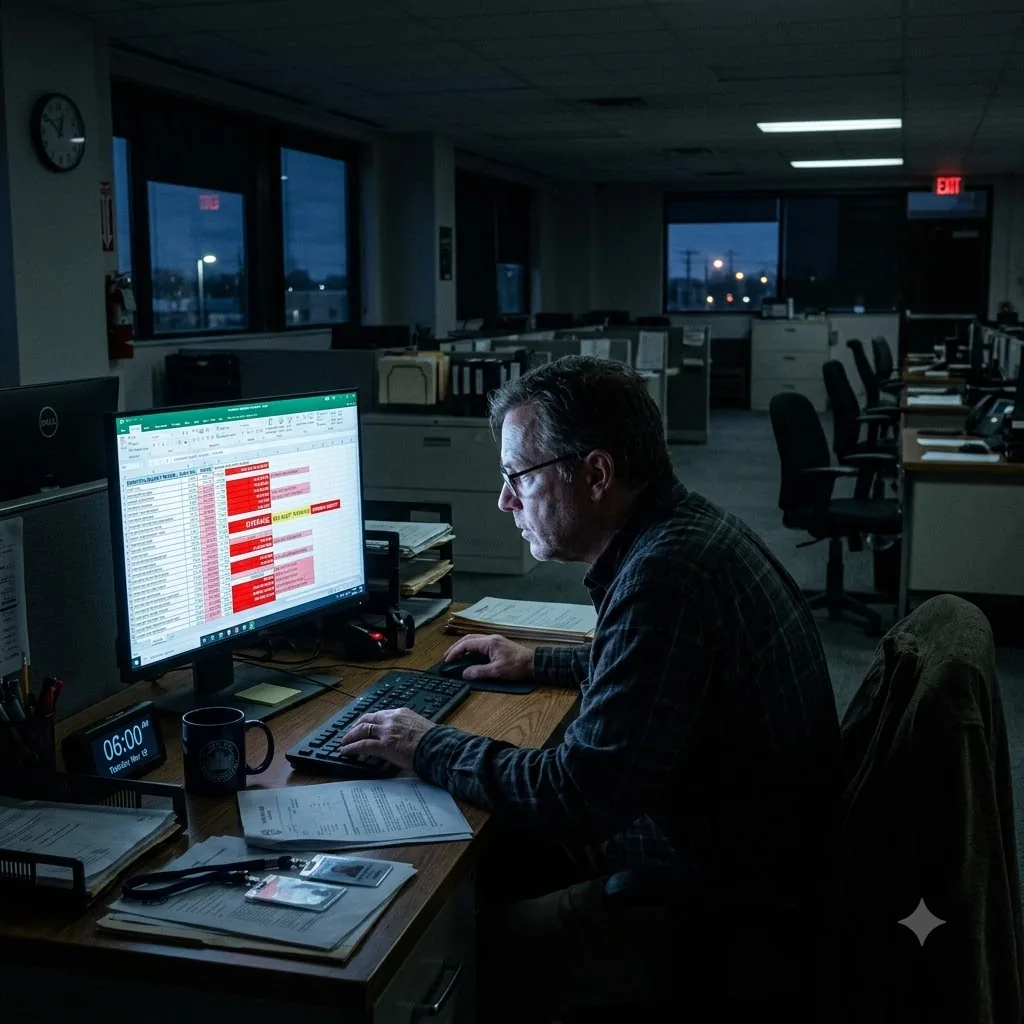
He dragged his laptop closer, jacking a USB-C cable directly into the gatehouse router console port. His fingers flew across the keyboard, running a raw packet trace on the outbound connection.
“Elias, what are you doing?” Davis shouted over the radio chatter. “The governor’s dispatch is already rolling! We need to evacuate the gatehouse!”
“The AI isn’t acting alone,” Elias snapped, his eyes darting across the cascading lines of network traffic. “There’s a live heartbeat ping. Someone is monitoring the optimization loop in real-time. They pushed the update, and they’re holding the connection open to make sure Blackwood can’t patch it.”
He found the IP address-a heavily masked relay, bouncing through a dozen VPNs-but the endpoint had left a diagnostic audio channel open. It was a standard feature for remote corporate IT, repurposed.
Elias didn’t try to sever it. He didn’t have the administrative privileges. Instead, he forced a pingback request, overriding the gatehouse PA speaker and routing his laptop’s microphone into the active remote session.
“I know you’re there,” Elias said, his voice echoing slightly in the cramped glass booth. “Drop the execution thread. Now.”
For a long moment, the only sound was the distant wail of the prison’s lockdown siren and the frantic static from Davis’s radio.
Then, the gatehouse speakers crackled.
“You are attempting to interfere with a verified, legally compliant release of non-violent inmates,” a woman’s voice replied. It was calm, modulated, and entirely devoid of panic. “Please step away from the terminal.”
“You’re not corporate compliance,” Elias said, leaning over the microphone, his breath fogging the cold glass of his screen. “Blackwood would never liquidate their own inventory. You hacked the overnight patch.”
“I corrected a systemic inefficiency,” she replied smoothly. “Blackwood’s contract allows automated release for good behavior. I simply lowered the threshold to zero. The state signed the digital certificates. It’s perfectly legal.”
“You’re bankrupting a municipality to make a political point!” Elias slammed his hand against the metal desk. “Look at the secondary parameters on your script! The municipal guarantee clause! Oakhaven is being billed for failing to provide fifty transit buses we don’t own. You just drained our emergency reserves. You just wiped out the elementary school’s budget, the road maintenance, the fire department. You’re destroying innocent people’s lives!”
“I am dismantling a private prison that relies on a captive population to subsidize your town’s roads,” the woman countered, her voice hardening. “If your town’s survival depends on keeping twelve hundred human beings in cages, then your town does not deserve to exist.”
“You don’t understand the collateral damage!” Elias pleaded, his voice cracking as the dashboard on his secondary monitor showed the municipal pension fund hitting zero. “We are a town of three thousand people. We’re just trying to survive. We didn’t build the system, we just work here. You’re using an algorithm to erase our jobs without looking us in the eye. It’s completely unethical.”
A low, dry laugh echoed through the speakers. The sound sent a cold spike of adrenaline straight through Elias’s chest.
“Collateral damage,” the woman repeated, tasting the words. “That’s a fascinating choice of phrasing, Elias.”
Elias froze. His hands hovered over the keyboard.
“You know who I am?”
“Of course I know who you are, Elias Thorne,” she said. The calm detachment in her voice had vanished, replaced by a razor-sharp contempt. “Did you really think I built this architecture from scratch? I didn’t have to. I just adapted the open-source remnants of the Kestrel Capital liquidation engine.”
The blood drained from Elias’s face. The freezing air in the gatehouse suddenly felt suffocating.
“Chicago,” she continued softly. “Two thousand and twelve. Your high-frequency optimization model. You identified that liquidating the pension funds of three manufacturing plants in Ohio would create a micro-surge in Kestrel’s quarterly dividend. Four thousand union jobs. Erased in six milliseconds.”
“That was different,” Elias whispered, his throat tight. “I was an analyst. I was following fiduciary parameters-”
“You were using an algorithm to erase jobs without looking people in the eye,” she snapped, throwing his exact words back at him like a physical blow. “You built a black-box program to dismantle lives because it was ‘efficient.’ You called the workers ‘necessary structural friction’ in your shareholder report. I read it, Elias. I studied it.”
Davis stared at Elias, his eyes wide with a horrified, dawning comprehension. Elias couldn’t look at him. He couldn’t look away from the terminal.
“I left that life,” Elias said, his voice trembling. “I came here to build something tangible. To protect this town.”
“You came here to hide,” the activist corrected coldly. “But you didn’t change anything. You just built another spreadsheet to guarantee your own survival off the backs of someone else’s misery. The only difference today, Elias, is that for the first time in your life, you are the one being optimized.”
The terminal screen flashed a brilliant, blinding white as the final municipal account was drained and sealed.
In the distance, over the dark canopy of the trees, the heavy, rhythmic thumping of the state police tactical helicopters began to shake the dawn air.