Story code: ST-001223
Part 1: Compliance Protocol
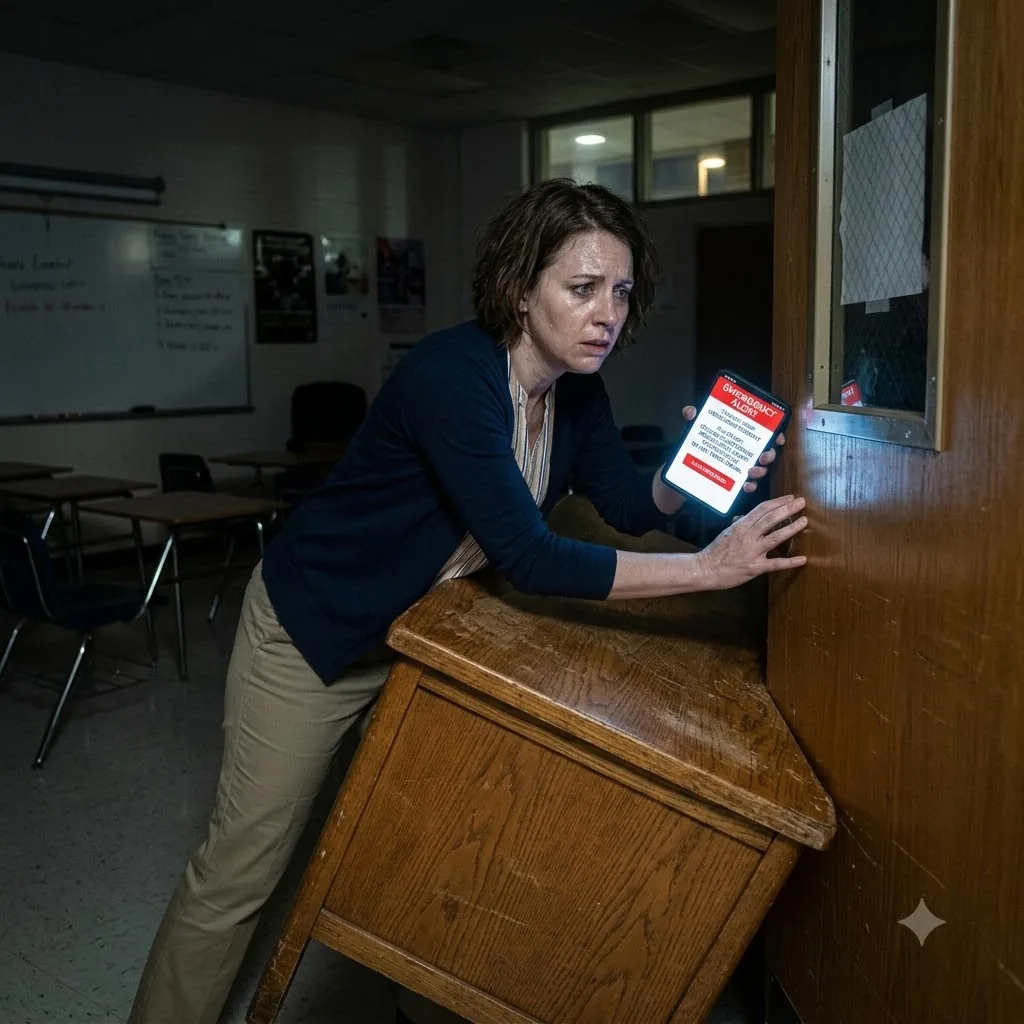
Sarah’s fingernails bent backward, the sharp sting of tearing cuticles ignored as she wedged her heavy oak desk against the classroom door. The metal legs scraped a brutal, agonizing shriek against the linoleum. The sound made her stomach drop and her lungs seize. She threw her entire body weight into the solid wood, pressing her shoulder into the frame until the desk clicked firmly under the door handle. In the back corner of the unlit room, twenty-two second graders sat curled into tight, trembling spheres of silence. The gap beneath the door glowed with the rhythmic, blood-red pulse of the hallway emergency strobes.
Her chest tightened in a familiar, suffocating grip. It was a cold vise crushing her ribs, exactly like the one that had seized her three years ago in another classroom, in another state. The phantom smell of spent gunpowder and copper crept into the back of her throat, thick and cloying. She pressed her spine against the cold masonry wall next to the doorframe, sliding down until she hit the floor. Her hands shook violently. She clamped them between her bare knees to stop the rattling, but the tremors traveled up her arms and into her jaw. The silence in the building felt heavy, an oppressive weight pressing down on the school. Every creak of the aging pipes sent a fresh spike of adrenaline straight into her already overloaded nervous system. She scanned the shadows, forcing herself to count the small, huddled shapes of her students. It was an anchoring technique her therapist had taught her. One, two, three, four. They were looking at her, their wide eyes reflecting the flashing red light from the hall. They trusted her to keep the monsters on the other side of that wood.
A sharp, synthetic double-vibration buzzed against her hip. The sudden sensory input felt like a physical strike. Her breath hitched in her throat. She fumbled with numb fingers for the phone in her pocket, terrified the screen would light up and give away their position in the dark. She hastily shielded the device inside the folds of her thick knit cardigan before pressing the side button. The sterile, crisp blue light of the district’s new automated safety app illuminated the yarn of her sweater. It was not a message from the police dispatch. It was not a mass alert from the district superintendent signaling an all-clear. It was a push notification from the corporate software the school board had installed over the summer to optimize security compliance.
The bold, cheerful font on the screen contrasted violently with the acid churning in her stomach.
*Drill Assessment Update: Room 204.*
*Biometric feedback: Teacher Heart Rate 142 BPM. Parameter exceeded. Calm leadership protocol failed.*
*Environmental sensors detect: Unauthorized heavy furniture movement. Standard operating procedure dictates doors locked, sightlines clear. Barricades are a direct violation of Fire Marshal Code Section 4A.*
*Current Penalty: $50.00 docked from next payroll cycle.*
Sarah stared at the glowing numbers, her vision blurring at the edges. A fifty-dollar fine for trying to keep her kids alive. Her mind fractured between the raw, primal instinct to survive and the cold, algorithmic reality of the screen in her hand. The red emergency strobes continued to pulse under the door, a relentless reminder that in a real scenario, a locked door without a barricade was just a five-second delay for a determined threat. She knew that firsthand. She bore the psychological scars of that truth. The algorithm did not care about her lived experience, her trauma, or the sheer terror radiating from the corner of the room. It only read sensor inputs, spatial mapping, and compliance thresholds. It reduced survival to a metric, and she was currently failing the test.
Another vibration rattled the phone. A new pop-up obscured the first, flashing in a high-priority yellow hue.
*Directive: Remove barricade immediately to restore compliance status and prevent further payroll deductions. You have sixty seconds to clear the door zone. Failure to comply will result in a formal disciplinary strike and a report sent to the principal’s dashboard.*
A digital timer appeared on the screen, counting down from sixty. Fifty-nine. Fifty-eight.
Sarah looked at the heavy oak desk holding the door shut, the only physical barrier standing between her students and the hallway. She looked back at the twenty-two children trusting her with their lives, their faces pale in the red light. The timer hit fifty-five. She placed her trembling hands back on the cold metal edge of the desk, bracing her boots against the linoleum, and began to push the heavy wood away from the door.
Sarah’s fingernails bent backward, the sharp sting of tearing cuticles ignored as she wedged her heavy oak desk against the classroom door. The metal legs scraped a brutal, agonizing shriek against the linoleum. The sound made her stomach drop and her lungs seize. She threw her entire body weight into the solid wood, pressing her shoulder into the frame until the desk clicked firmly under the door handle. In the back corner of the unlit room, twenty-two second graders sat curled into tight, trembling spheres of silence. The gap beneath the door glowed with the rhythmic, blood-red pulse of the hallway emergency strobes.
Her chest tightened in a familiar, suffocating grip. It was a cold vise crushing her ribs, exactly like the one that had seized her three years ago in another classroom, in another state. The phantom smell of spent gunpowder and copper crept into the back of her throat, thick and cloying. She pressed her spine against the cold masonry wall next to the doorframe, sliding down until she hit the floor. Her hands shook violently. She clamped them between her bare knees to stop the rattling, but the tremors traveled up her arms and into her jaw. The silence in the building felt heavy, an oppressive weight pressing down on the school. Every creak of the aging pipes sent a fresh spike of adrenaline straight into her already overloaded nervous system. She scanned the shadows, forcing herself to count the small, huddled shapes of her students. It was an anchoring technique her therapist had taught her. One, two, three, four. They were looking at her, their wide eyes reflecting the flashing red light from the hall. They trusted her to keep the monsters on the other side of that wood.
A sharp, synthetic double-vibration buzzed against her hip. The sudden sensory input felt like a physical strike. Her breath hitched in her throat. She fumbled with numb fingers for the phone in her pocket, terrified the screen would light up and give away their position in the dark. She hastily shielded the device inside the folds of her thick knit cardigan before pressing the side button. The sterile, crisp blue light of the district’s new automated safety app illuminated the yarn of her sweater. It was not a message from the police dispatch. It was not a mass alert from the district superintendent signaling an all-clear. It was a push notification from the corporate software the school board had installed over the summer to optimize security compliance.
The bold, cheerful font on the screen contrasted violently with the acid churning in her stomach.
*Drill Assessment Update: Room 204.*
*Biometric feedback: Teacher Heart Rate 142 BPM. Parameter exceeded. Calm leadership protocol failed.*
*Environmental sensors detect: Unauthorized heavy furniture movement. Standard operating procedure dictates doors locked, sightlines clear. Barricades are a direct violation of Fire Marshal Code Section 4A.*
*Current Penalty: $50.00 docked from next payroll cycle.*
Sarah stared at the glowing numbers, her vision blurring at the edges. A fifty-dollar fine for trying to keep her kids alive. Her mind fractured between the raw, primal instinct to survive and the cold, algorithmic reality of the screen in her hand. The red emergency strobes continued to pulse under the door, a relentless reminder that in a real scenario, a locked door without a barricade was just a five-second delay for a determined threat. She knew that firsthand. She bore the psychological scars of that truth. The algorithm did not care about her lived experience, her trauma, or the sheer terror radiating from the corner of the room. It only read sensor inputs, spatial mapping, and compliance thresholds. It reduced survival to a metric, and she was currently failing the test.
Another vibration rattled the phone. A new pop-up obscured the first, flashing in a high-priority yellow hue.
*Directive: Remove barricade immediately to restore compliance status and prevent further payroll deductions. You have sixty seconds to clear the door zone. Failure to comply will result in a formal disciplinary strike and a report sent to the principal’s dashboard.*
A digital timer appeared on the screen, counting down from sixty. Fifty-nine. Fifty-eight.
Sarah looked at the heavy oak desk holding the door shut, the only physical barrier standing between her students and the hallway. She looked back at the twenty-two children trusting her with their lives, their faces pale in the red light. The timer hit fifty-five. She placed her trembling hands back on the cold metal edge of the desk, bracing her boots against the linoleum, and began to push the heavy wood away from the door.