Story code: ST-001239
Part 1: The Refill Denial
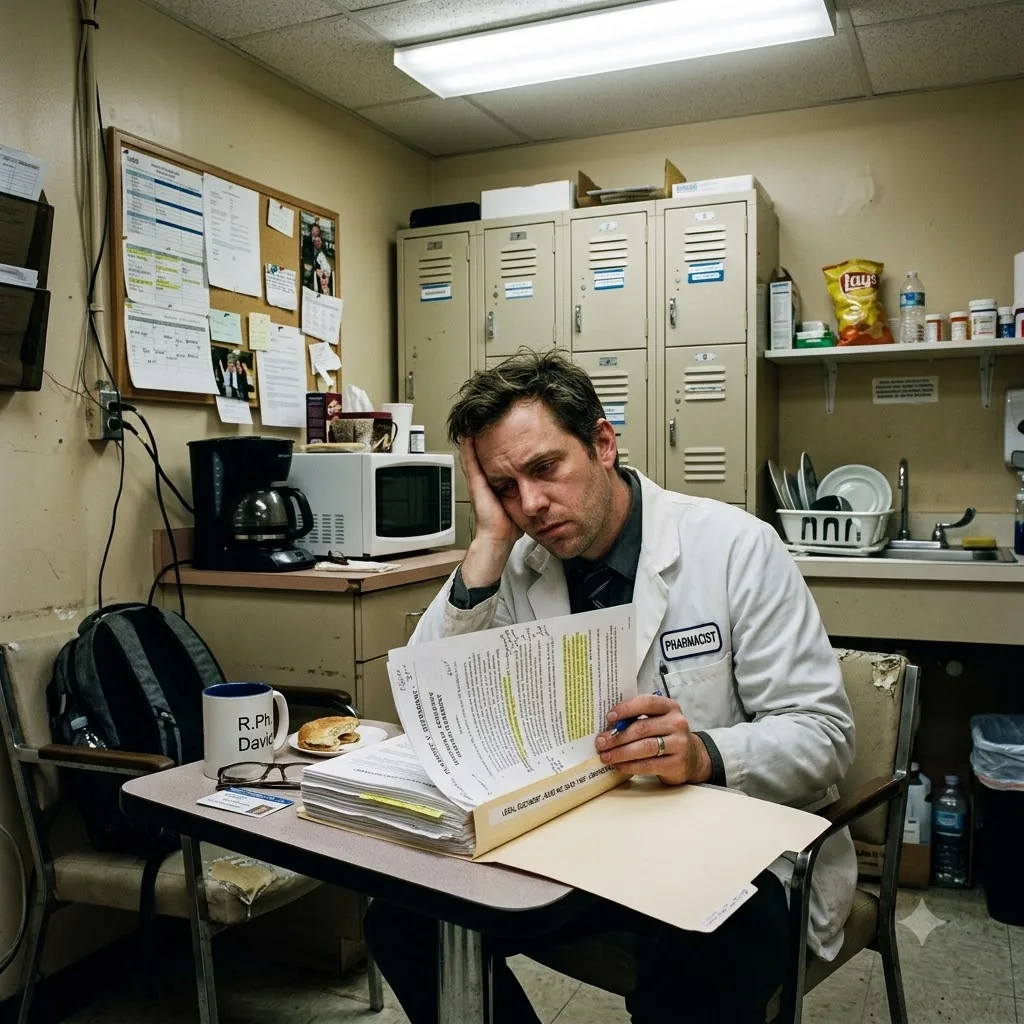
Marcus stared at the thick ivory paper of the civil summons, his thumb tracing the embossed, gold-foil logo of Sterling, Vance, and Hayes. He sat on a rigid plastic folding chair in the pharmacy’s windowless breakroom, surrounded by towering cardboard boxes of saline solution and the relentless mechanical hum of a dying mini-refrigerator. The premier law firm printed on the letterhead charged more per hour than his entire monthly take-home pay. He ran the brutal math in his head, weighing those hourly billing rates against the two hundred thousand dollars of pharmacy school student loans currently crushing his chest. The document in his trembling hands accused him of gross negligence, malicious practice, and wrongful death. He pressed the heels of his hands into his tired eyes, trying to block out the fluorescent glare. This entire nightmare stemmed from a completely mundane Tuesday afternoon exactly three weeks ago, a standard bureaucratic rejection he delivered a dozen times a week without a second thought.
Three weeks prior, the pharmacy had been a relentless madhouse of ringing phones and impatient customers. Marcus stood behind the raised verification counter, checking interactions, when Arthur Vance approached the drop-off window. Arthur was a titan of local commercial real estate, a man who wore pristine custom wool suits even in the sweltering, unforgiving humidity of a July afternoon. He slapped a glossy paper prescription onto the laminate counter alongside a heavy gold money clip. The script was for ninety oxycodone tablets, dated that very morning.
Marcus scanned the patient profile on his dual monitors. The pharmacy software instantly flashed a bright red warning banner across the screen. Arthur had picked up a thirty-day supply of the exact same narcotic medication just eighteen days prior. Marcus tapped the screen, switching over to the state prescription monitoring program portal to ensure there were no simple data entry errors or duplicate profiles. The state database confirmed the early fill attempt, showing the previous pickup logged at a competitor’s pharmacy across town. Under strict Drug Enforcement Administration regulations and rigid corporate policy, dispensing this medication twelve days early was a fast track to facing criminal charges and losing his hard-earned license.
Marcus stepped up to the consultation window. He slid the paper prescription back across the counter, keeping his voice perfectly level and professional. He explained that federal law prohibited dispensing the narcotic before the twenty-eighth day of the current cycle. Arthur did not reach for the paper. The older man stood perfectly still, his pale eyes locked onto Marcus. The skin around Arthur’s jaw tightened, turning a mottled, angry purple. He leaned in, placing both palms flat on the counter, invading the small space between the glass dividers.
Arthur stated he was going on an extended business trip to Europe and required his pain management for the long flights. Marcus pointed to the corporate policy placard taped to the plexiglass. He offered to call the prescribing physician to discuss an alternative non-narcotic or a highly documented bridge prescription. Arthur slammed his flat hand down on the counter, rattling the plastic display stands and knocking over a stack of promotional flyers. The mogul informed Marcus that his family holding company owned the very shopping plaza housing the pharmacy, adding a cold, terrifying promise that Marcus would be ringing up registers at a roadside gas station by the end of the month. Marcus held his ground, placing the denied script inside a privacy envelope and handing it back. Arthur snatched it, turned on his Italian leather heel, and stormed out the automatic sliding doors.
That had been the end of it, or so Marcus wrongly assumed. It was just a routine enforcement of federal law. Then came the urgent phone call from the district manager, the sudden corporate inquiry, and finally, the shocking news of Arthur’s fatal overdose exactly four days after the denied refill. The official narrative spun by the wealthy family was swift and legally devastating. They claimed Marcus had arbitrarily and cruelly denied a desperate, suffering man his legitimate medication, forcing him into a state of severe physical withdrawal. The family alleged this agony led to a tragic, accidental misuse of older, expired pills Arthur found in a guest bathroom cabinet.
Now, sitting alone in the cramped breakroom, Marcus flipped to the second page of the summons. The primary plaintiff was Arthur’s eldest son, Julian Vance. The lawsuit demanded millions in compensatory damages and the immediate, permanent revocation of Marcus’s state pharmacy license. The aggressive legal language painted Marcus as a rogue, power-hungry clerk playing god with a prominent citizen’s life.
Marcus checked his digital watch. His fifteen-minute break was over. He folded the thick legal document, shoved it into the bottom of his canvas backpack, and tied the strings of his white coat tight around his waist. The crushing weight of the pending litigation threatened to buckle his knees as he pushed open the breakroom door. He stepped back onto the raised pharmacy platform, greeted by the blinding lights and the chaotic noise of the retail floor.
His lead technician, Sarah, grabbed his forearm the second he appeared. She pointed a trembling finger toward the drive-thru window. A sleek, black luxury sedan idled directly outside the thick bulletproof glass. The driver’s side window rolled down smoothly, revealing Julian Vance resting his forearm on the door frame, holding up a bright orange prescription bottle with Marcus’s initials circled in thick black marker.
Marcus stared at the thick ivory paper of the civil summons, his thumb tracing the embossed, gold-foil logo of Sterling, Vance, and Hayes. He sat on a rigid plastic folding chair in the pharmacy’s windowless breakroom, surrounded by towering cardboard boxes of saline solution and the relentless mechanical hum of a dying mini-refrigerator. The premier law firm printed on the letterhead charged more per hour than his entire monthly take-home pay. He ran the brutal math in his head, weighing those hourly billing rates against the two hundred thousand dollars of pharmacy school student loans currently crushing his chest. The document in his trembling hands accused him of gross negligence, malicious practice, and wrongful death. He pressed the heels of his hands into his tired eyes, trying to block out the fluorescent glare. This entire nightmare stemmed from a completely mundane Tuesday afternoon exactly three weeks ago, a standard bureaucratic rejection he delivered a dozen times a week without a second thought.
Three weeks prior, the pharmacy had been a relentless madhouse of ringing phones and impatient customers. Marcus stood behind the raised verification counter, checking interactions, when Arthur Vance approached the drop-off window. Arthur was a titan of local commercial real estate, a man who wore pristine custom wool suits even in the sweltering, unforgiving humidity of a July afternoon. He slapped a glossy paper prescription onto the laminate counter alongside a heavy gold money clip. The script was for ninety oxycodone tablets, dated that very morning.
Marcus scanned the patient profile on his dual monitors. The pharmacy software instantly flashed a bright red warning banner across the screen. Arthur had picked up a thirty-day supply of the exact same narcotic medication just eighteen days prior. Marcus tapped the screen, switching over to the state prescription monitoring program portal to ensure there were no simple data entry errors or duplicate profiles. The state database confirmed the early fill attempt, showing the previous pickup logged at a competitor’s pharmacy across town. Under strict Drug Enforcement Administration regulations and rigid corporate policy, dispensing this medication twelve days early was a fast track to facing criminal charges and losing his hard-earned license.
Marcus stepped up to the consultation window. He slid the paper prescription back across the counter, keeping his voice perfectly level and professional. He explained that federal law prohibited dispensing the narcotic before the twenty-eighth day of the current cycle. Arthur did not reach for the paper. The older man stood perfectly still, his pale eyes locked onto Marcus. The skin around Arthur’s jaw tightened, turning a mottled, angry purple. He leaned in, placing both palms flat on the counter, invading the small space between the glass dividers.
Arthur stated he was going on an extended business trip to Europe and required his pain management for the long flights. Marcus pointed to the corporate policy placard taped to the plexiglass. He offered to call the prescribing physician to discuss an alternative non-narcotic or a highly documented bridge prescription. Arthur slammed his flat hand down on the counter, rattling the plastic display stands and knocking over a stack of promotional flyers. The mogul informed Marcus that his family holding company owned the very shopping plaza housing the pharmacy, adding a cold, terrifying promise that Marcus would be ringing up registers at a roadside gas station by the end of the month. Marcus held his ground, placing the denied script inside a privacy envelope and handing it back. Arthur snatched it, turned on his Italian leather heel, and stormed out the automatic sliding doors.
That had been the end of it, or so Marcus wrongly assumed. It was just a routine enforcement of federal law. Then came the urgent phone call from the district manager, the sudden corporate inquiry, and finally, the shocking news of Arthur’s fatal overdose exactly four days after the denied refill. The official narrative spun by the wealthy family was swift and legally devastating. They claimed Marcus had arbitrarily and cruelly denied a desperate, suffering man his legitimate medication, forcing him into a state of severe physical withdrawal. The family alleged this agony led to a tragic, accidental misuse of older, expired pills Arthur found in a guest bathroom cabinet.
Now, sitting alone in the cramped breakroom, Marcus flipped to the second page of the summons. The primary plaintiff was Arthur’s eldest son, Julian Vance. The lawsuit demanded millions in compensatory damages and the immediate, permanent revocation of Marcus’s state pharmacy license. The aggressive legal language painted Marcus as a rogue, power-hungry clerk playing god with a prominent citizen’s life.
Marcus checked his digital watch. His fifteen-minute break was over. He folded the thick legal document, shoved it into the bottom of his canvas backpack, and tied the strings of his white coat tight around his waist. The crushing weight of the pending litigation threatened to buckle his knees as he pushed open the breakroom door. He stepped back onto the raised pharmacy platform, greeted by the blinding lights and the chaotic noise of the retail floor.
His lead technician, Sarah, grabbed his forearm the second he appeared. She pointed a trembling finger toward the drive-thru window. A sleek, black luxury sedan idled directly outside the thick bulletproof glass. The driver’s side window rolled down smoothly, revealing Julian Vance resting his forearm on the door frame, holding up a bright orange prescription bottle with Marcus’s initials circled in thick black marker.