Story code: ST-001241
Part 1: The Blank Board
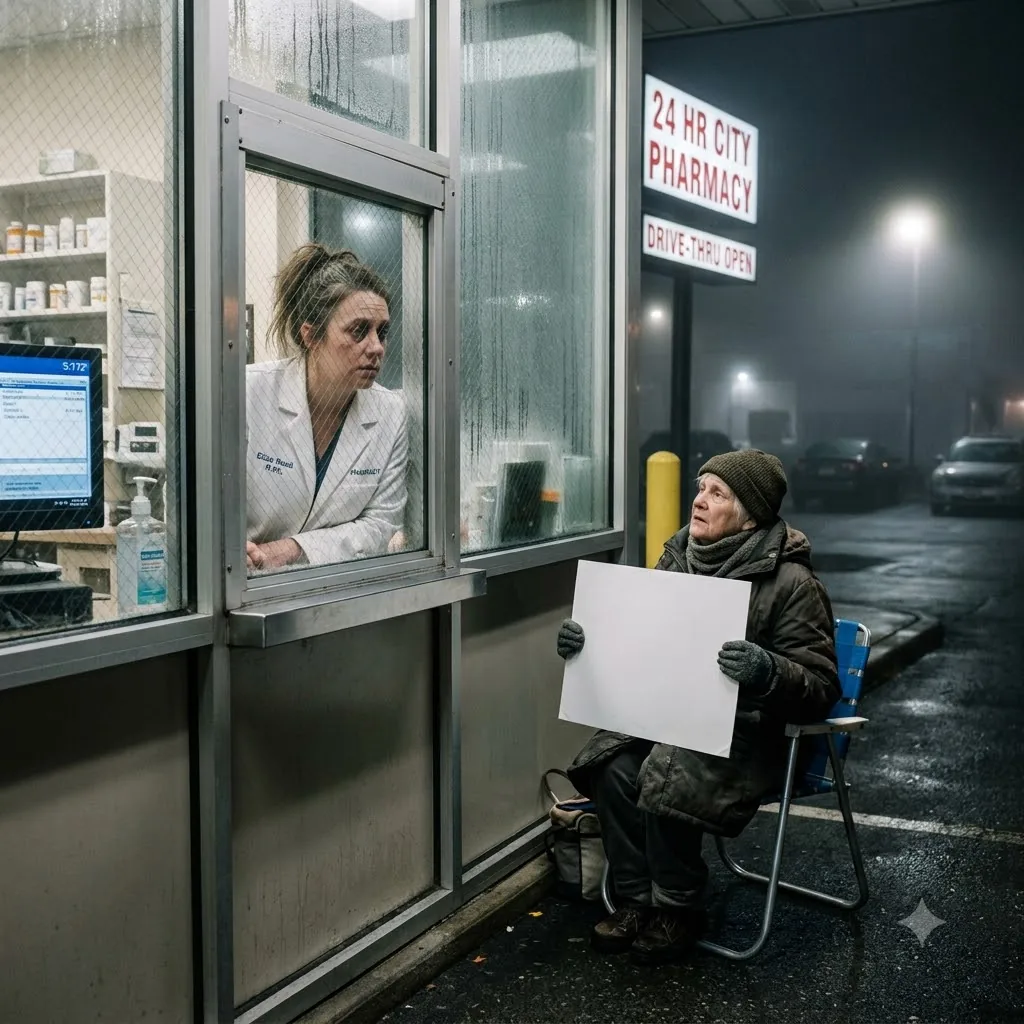
At 5:45 AM, the harsh scrape of aluminum legs dragging across frost-covered concrete echoed through the reinforced drive-thru glass. David pressed a hand to his cramping stomach and watched Helen methodically unfold her chair in the pre-dawn gloom directly outside the pharmacy’s automatic doors. She sat down, adjusted the collar of her heavy wool coat, and rested a completely blank sheet of white poster board against her knees. She did not look toward the building or attempt to catch his eye. She simply stared straight ahead into the empty strip mall parking lot.
David turned away from the window and leaned against the cold metal of the medication dispensing robot. His phone vibrated violently against his thigh, the first of the morning’s relentless automated corporate metric alerts. He pulled it from his white coat pocket and stared at the glowing screen.
DISTRICT 4 ALERT: PRESCRIPTION VERIFICATION QUEUE EXCEEDS 50. ALLOCATE RESOURCES TO REDUCE TO ZERO BY 9 AM.
He dismissed the notification and swiped his keycard to boot up the main terminal. The green cursor of the legacy inventory system blinked in the dimly lit pharmacy. Outside, the sky was a bruised, dark purple. Helen remained perfectly still. A grieving mother with a protest sign covered in angry words was a problem corporate could solve. They could send public relations representatives. They could issue a carefully worded statement about community tragedies and protocol. But Helen never brought words. The blank poster board terrified David more than any shouted accusation ever could. It demanded nothing and absorbed everything.
He unlocked the time-delay safe for the Schedule II narcotics. A digital timer appeared on the small LED screen, ticking down from five minutes. This was his daily purgatory. Five minutes of dead time where he could do nothing but wait and watch the woman outside. He paced the narrow aisle between the alphabetized bays of amber vials. The fluorescent lights overhead flickered to life, buzzing with a high-pitched mechanical hum that made the tight knot in his stomach twist harder.
He paused at the front window, staying hidden behind a cardboard display of seasonal allergy medication. The streetlights illuminated the edges of Helen’s blank sign. He knew her profile perfectly by now. He had filled the prescriptions. He had followed every single mandatory step the automated system required of him. The state database had shown no red flags. The doctor’s DEA number was active and valid. He had done his job exactly the way the metrics demanded. He told himself this every single morning, repeating the corporate policy in his head like a protective mantra.
His phone buzzed again.
OPERATIONS ALERT: IMMUNIZATION GOALS AT 82 PERCENT. CORRECTIVE ACTION REQUIRED FROM PHARMACY MANAGER.
He shoved the phone back into his pocket. The safe clicked open with a heavy metallic clunk. David knelt and began the morning back-count. Oxycodone. Hydrocodone. Amphetamine salts. He logged every pill into the system, his hands shaking slightly as he aligned the plastic bottles. He needed to focus on the numbers. Numbers were safe. Numbers kept the district manager away and the regional director off his back.
But his gaze kept drifting back to the reinforced drive-thru glass. The sun was breaching the horizon now, casting long, sharp shadows across the asphalt. Helen had not shifted her weight. She had not reached for a thermos or checked a phone. The absolute stillness of her body suggested something far more deliberate than mere grief. She was waiting for a specific moment.
The phone vibrated a third time. Then a fourth. The rapid succession of alerts usually meant the automated system was flagging the drive-thru sensor, detecting a car waiting before the store was officially open. David grabbed a stack of plastic baskets and moved toward the drive-thru terminal to reset the alarm. The cramping in his gut flared up, sharp and hot, as he imagined the chaotic rush of the incoming morning shift.
He reached into his pocket to silence the device. He braced himself for another unyielding demand from the automated server, another warning about wait times or payroll hour deficits.
He unlocked the screen. The notification was not from a five-digit corporate shortcode. It was a standard text message from an unknown local number.
David tapped the screen. The pharmacy around him seemed to lose all its oxygen.
There was no text in the message. It was a single, high-resolution image file. David stared at the flash-lit photograph of his own driveway. The bright burst of the camera flash illuminated his wife’s silver sedan parked near the garage, the basketball hoop casting a distorted shadow across the wet pavement, all surrounded by the pitch black of the middle of the night.
At 5:45 AM, the harsh scrape of aluminum legs dragging across frost-covered concrete echoed through the reinforced drive-thru glass. David pressed a hand to his cramping stomach and watched Helen methodically unfold her chair in the pre-dawn gloom directly outside the pharmacy’s automatic doors. She sat down, adjusted the collar of her heavy wool coat, and rested a completely blank sheet of white poster board against her knees. She did not look toward the building or attempt to catch his eye. She simply stared straight ahead into the empty strip mall parking lot.
David turned away from the window and leaned against the cold metal of the medication dispensing robot. His phone vibrated violently against his thigh, the first of the morning’s relentless automated corporate metric alerts. He pulled it from his white coat pocket and stared at the glowing screen.
DISTRICT 4 ALERT: PRESCRIPTION VERIFICATION QUEUE EXCEEDS 50. ALLOCATE RESOURCES TO REDUCE TO ZERO BY 9 AM.
He dismissed the notification and swiped his keycard to boot up the main terminal. The green cursor of the legacy inventory system blinked in the dimly lit pharmacy. Outside, the sky was a bruised, dark purple. Helen remained perfectly still. A grieving mother with a protest sign covered in angry words was a problem corporate could solve. They could send public relations representatives. They could issue a carefully worded statement about community tragedies and protocol. But Helen never brought words. The blank poster board terrified David more than any shouted accusation ever could. It demanded nothing and absorbed everything.
He unlocked the time-delay safe for the Schedule II narcotics. A digital timer appeared on the small LED screen, ticking down from five minutes. This was his daily purgatory. Five minutes of dead time where he could do nothing but wait and watch the woman outside. He paced the narrow aisle between the alphabetized bays of amber vials. The fluorescent lights overhead flickered to life, buzzing with a high-pitched mechanical hum that made the tight knot in his stomach twist harder.
He paused at the front window, staying hidden behind a cardboard display of seasonal allergy medication. The streetlights illuminated the edges of Helen’s blank sign. He knew her profile perfectly by now. He had filled the prescriptions. He had followed every single mandatory step the automated system required of him. The state database had shown no red flags. The doctor’s DEA number was active and valid. He had done his job exactly the way the metrics demanded. He told himself this every single morning, repeating the corporate policy in his head like a protective mantra.
His phone buzzed again.
OPERATIONS ALERT: IMMUNIZATION GOALS AT 82 PERCENT. CORRECTIVE ACTION REQUIRED FROM PHARMACY MANAGER.
He shoved the phone back into his pocket. The safe clicked open with a heavy metallic clunk. David knelt and began the morning back-count. Oxycodone. Hydrocodone. Amphetamine salts. He logged every pill into the system, his hands shaking slightly as he aligned the plastic bottles. He needed to focus on the numbers. Numbers were safe. Numbers kept the district manager away and the regional director off his back.
But his gaze kept drifting back to the reinforced drive-thru glass. The sun was breaching the horizon now, casting long, sharp shadows across the asphalt. Helen had not shifted her weight. She had not reached for a thermos or checked a phone. The absolute stillness of her body suggested something far more deliberate than mere grief. She was waiting for a specific moment.
The phone vibrated a third time. Then a fourth. The rapid succession of alerts usually meant the automated system was flagging the drive-thru sensor, detecting a car waiting before the store was officially open. David grabbed a stack of plastic baskets and moved toward the drive-thru terminal to reset the alarm. The cramping in his gut flared up, sharp and hot, as he imagined the chaotic rush of the incoming morning shift.
He reached into his pocket to silence the device. He braced himself for another unyielding demand from the automated server, another warning about wait times or payroll hour deficits.
He unlocked the screen. The notification was not from a five-digit corporate shortcode. It was a standard text message from an unknown local number.
David tapped the screen. The pharmacy around him seemed to lose all its oxygen.
There was no text in the message. It was a single, high-resolution image file. David stared at the flash-lit photograph of his own driveway. The bright burst of the camera flash illuminated his wife’s silver sedan parked near the garage, the basketball hoop casting a distorted shadow across the wet pavement, all surrounded by the pitch black of the middle of the night.