Story code: ST-001246
Part 1: Asset Verification
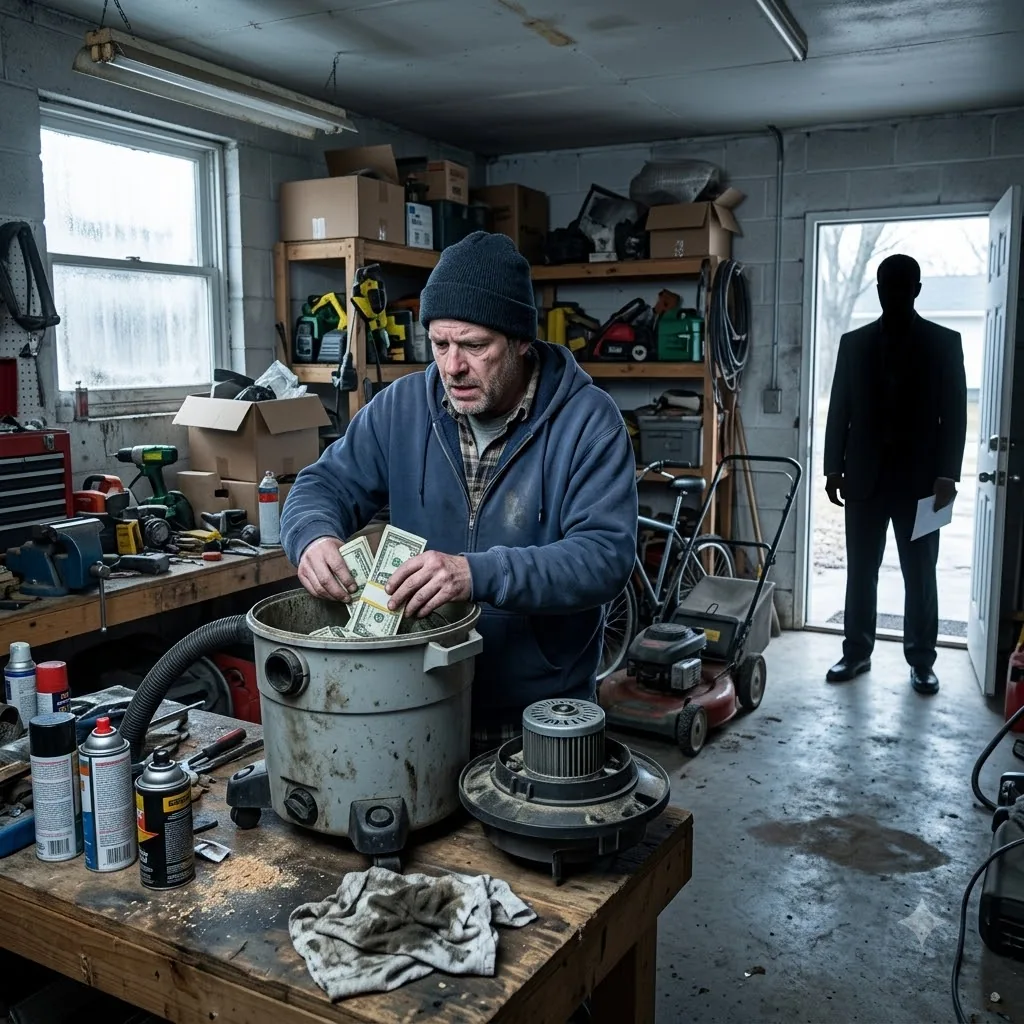
Elias shoved the fourth thick bundle of hundred-dollar bills past the dust filter of the rigid shop vacuum. The freezing Ohio draft cutting under the garage door made his fingers clumsy, but he forced the rubber casing wide enough to accept the next brick of cash. His phone vibrated violently against the cold concrete workbench. The screen lit up with an automated alert from the county clerk, flashing the word LIEN next to the name of his former oncology provider.
Elias froze, the fifty-dollar bills still gripped in his right hand. The medical debt was supposed to remain in a holding pattern while he appealed the coverage denial. A lien meant they were moving on the house. He had exactly three minutes to get the vacuum sealed and shoved into the rafter storage before his wife came out to check the breaker box. She thought he was just winterizing the mower.
He reached for the heavy plastic motor lid.
The side door of the garage clicked. The brass knob turned with a loud, metallic scrape.
Elias dropped the cash into the canister and slammed the black lid down just as the hinges whined open. He spun around, leaning his hip against the vacuum to block it from view.
A man in a wrinkled charcoal suit stepped over the threshold, letting the door swing shut behind him to cut off the winter wind. He did not look like a neighbor. He did not look like a delivery driver. He had the sharp, tired eyes of someone who spent his life tallying other people’s disasters.
In his left hand, the stranger held a glossy piece of paper. Elias recognized the bold red and blue typography instantly. It was one of the phantom campaign flyers he had printed last month.
The man flicked the flyer with his thumb. “Elias Thorne.”
Elias crossed his arms to keep his hands from shaking. He nodded once, keeping his face entirely blank.
“My name is Marcus,” the man said, stepping closer to the workbench. “I represent Vanguard Recovery Holdings. Your account was flagged for immediate asset verification this morning.”
Elias calculated the distance between Marcus and the shop vacuum. Two feet. Vanguard was the agency handling the six-figure hospital bills from his chemo treatments. Vanguard agents made phone calls. They sent threatening letters on red paper. They did not show up in unheated residential garages holding fake political mailers.
“You are trespassing,” Elias said, keeping his voice low so the sound would not carry through the drywall to the kitchen.
Marcus ignored the statement. He looked around the dimly lit garage, his gaze sweeping over the rusted tools, the stacked cardboard boxes, and finally resting on the orange and black plastic cylinder Elias was leaning against.
“Interesting piece of literature,” Marcus said, holding the flyer up to the single fluorescent bulb. “The address on this mailer traces back to a commercial mail drop you opened three days before your medical account went to final collections. The donor registry lists zero official contributions. Yet you paid for a bulk mailing of ten thousand units in cash.”
Elias pressed his weight harder against the vacuum lid. The latch had not engaged properly when he slammed it down. A sliver of the internal dust bag, pushed aside by the stacked bricks of hundreds, was visible if one knew where to look.
“I am telling you to leave my property,” Elias said.
Marcus took another step forward. The cheap fabric of his suit rustled. He looked down at the workbench, noting the open drawer, the scattered rubber bands, and the heavy leather duffel bag that still held another fifty thousand dollars Elias had yet to transfer.
Elias needed Marcus out of the garage immediately. If his wife opened the internal door right now, she would see the Vanguard agent. She would see the duffel bag. She would learn exactly how Elias had secured their survival over the last month, destroying the carefully constructed lie that his former employer had approved a disability settlement.
“Your financial affidavit states you have no liquid assets,” Marcus continued, his voice perfectly level. “It states you are legally insolvent. Vanguard sent me to verify the condition of the vehicles listed on your title history. Then I saw your garage door was cracked open a few inches.”
Marcus lowered the flyer. He stared at the leather duffel bag, then let his eyes drift to the edge of the shop vacuum. He reached out and tapped the plastic lid right next to Elias’s hip.
“Heavy-duty model,” Marcus noted. “Takes a lot of suction to clean up a big mess.”
Elias felt the adrenaline spike through his chest, erasing the chill of the concrete floor. He shifted his stance, planting his boots firmly on the oil-stained mat. He braced himself to do whatever was necessary to keep the man from lifting that lid.
“Last warning,” Elias said softly. “Get out.”
Marcus did not back toward the door. Instead, he placed his hand flat on the top of the vacuum and wrapped his fingers firmly around the release latch.
Elias shoved the fourth thick bundle of hundred-dollar bills past the dust filter of the rigid shop vacuum. The freezing Ohio draft cutting under the garage door made his fingers clumsy, but he forced the rubber casing wide enough to accept the next brick of cash. His phone vibrated violently against the cold concrete workbench. The screen lit up with an automated alert from the county clerk, flashing the word LIEN next to the name of his former oncology provider.
Elias froze, the fifty-dollar bills still gripped in his right hand. The medical debt was supposed to remain in a holding pattern while he appealed the coverage denial. A lien meant they were moving on the house. He had exactly three minutes to get the vacuum sealed and shoved into the rafter storage before his wife came out to check the breaker box. She thought he was just winterizing the mower.
He reached for the heavy plastic motor lid.
The side door of the garage clicked. The brass knob turned with a loud, metallic scrape.
Elias dropped the cash into the canister and slammed the black lid down just as the hinges whined open. He spun around, leaning his hip against the vacuum to block it from view.
A man in a wrinkled charcoal suit stepped over the threshold, letting the door swing shut behind him to cut off the winter wind. He did not look like a neighbor. He did not look like a delivery driver. He had the sharp, tired eyes of someone who spent his life tallying other people’s disasters.
In his left hand, the stranger held a glossy piece of paper. Elias recognized the bold red and blue typography instantly. It was one of the phantom campaign flyers he had printed last month.
The man flicked the flyer with his thumb. “Elias Thorne.”
Elias crossed his arms to keep his hands from shaking. He nodded once, keeping his face entirely blank.
“My name is Marcus,” the man said, stepping closer to the workbench. “I represent Vanguard Recovery Holdings. Your account was flagged for immediate asset verification this morning.”
Elias calculated the distance between Marcus and the shop vacuum. Two feet. Vanguard was the agency handling the six-figure hospital bills from his chemo treatments. Vanguard agents made phone calls. They sent threatening letters on red paper. They did not show up in unheated residential garages holding fake political mailers.
“You are trespassing,” Elias said, keeping his voice low so the sound would not carry through the drywall to the kitchen.
Marcus ignored the statement. He looked around the dimly lit garage, his gaze sweeping over the rusted tools, the stacked cardboard boxes, and finally resting on the orange and black plastic cylinder Elias was leaning against.
“Interesting piece of literature,” Marcus said, holding the flyer up to the single fluorescent bulb. “The address on this mailer traces back to a commercial mail drop you opened three days before your medical account went to final collections. The donor registry lists zero official contributions. Yet you paid for a bulk mailing of ten thousand units in cash.”
Elias pressed his weight harder against the vacuum lid. The latch had not engaged properly when he slammed it down. A sliver of the internal dust bag, pushed aside by the stacked bricks of hundreds, was visible if one knew where to look.
“I am telling you to leave my property,” Elias said.
Marcus took another step forward. The cheap fabric of his suit rustled. He looked down at the workbench, noting the open drawer, the scattered rubber bands, and the heavy leather duffel bag that still held another fifty thousand dollars Elias had yet to transfer.
Elias needed Marcus out of the garage immediately. If his wife opened the internal door right now, she would see the Vanguard agent. She would see the duffel bag. She would learn exactly how Elias had secured their survival over the last month, destroying the carefully constructed lie that his former employer had approved a disability settlement.
“Your financial affidavit states you have no liquid assets,” Marcus continued, his voice perfectly level. “It states you are legally insolvent. Vanguard sent me to verify the condition of the vehicles listed on your title history. Then I saw your garage door was cracked open a few inches.”
Marcus lowered the flyer. He stared at the leather duffel bag, then let his eyes drift to the edge of the shop vacuum. He reached out and tapped the plastic lid right next to Elias’s hip.
“Heavy-duty model,” Marcus noted. “Takes a lot of suction to clean up a big mess.”
Elias felt the adrenaline spike through his chest, erasing the chill of the concrete floor. He shifted his stance, planting his boots firmly on the oil-stained mat. He braced himself to do whatever was necessary to keep the man from lifting that lid.
“Last warning,” Elias said softly. “Get out.”
Marcus did not back toward the door. Instead, he placed his hand flat on the top of the vacuum and wrapped his fingers firmly around the release latch.