Story code: ST-001243
Part 1: The Glass Wall
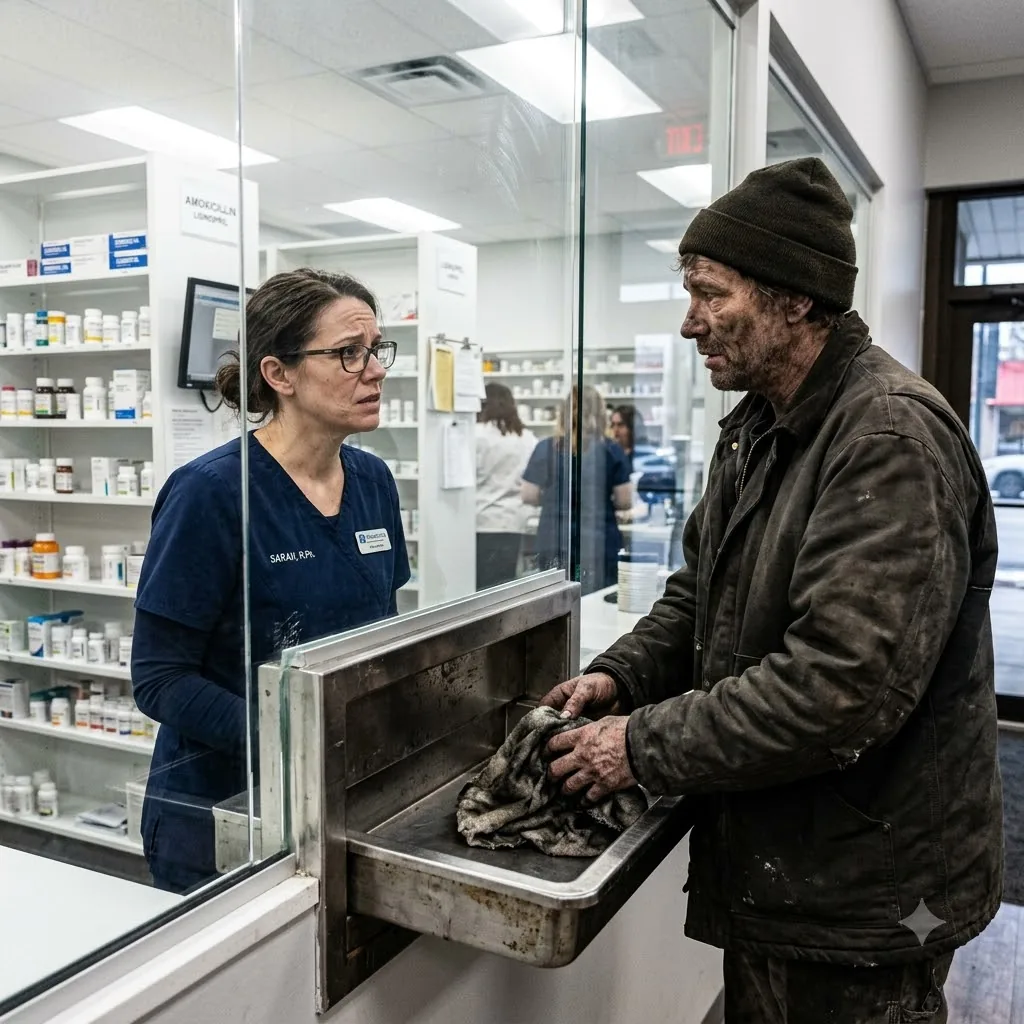
The new ballistic glass separating the pharmacy counter from the waiting area caught the harsh fluorescent light, distorting the flashing red alert on David’s monitor. The screen blinked in a steady, rhythmic warning: DENIED – DISASTER ZONE RISK TIER 4. On the other side of the inch-thick acrylic barrier stood Elias, his heavy canvas work coat blackened with fresh soot and smelling fiercely of scorched industrial insulation. Elias braced his thick, scarred forearms against the small metal transaction tray, his breath coming in shallow, ragged hitches that fogged the lower corner of the pristine glass.
David tapped the refresh key on his keyboard with a trembling finger. The crimson banner remained fixed across the top of the pharmacy management software, casting a bloody glow over his workstation. The new corporate algorithm had rolled out exactly at midnight, locking down all manual overrides for any zip code affected by the ongoing perimeter fires. The automated system classified the entire residential grid as a high-risk liability zone. There were no exceptions coded into the software.
Elias let out a low, guttural groan and shifted his weight on the linoleum floor. His left hand was pressed tight against his side, buried deep under the heavy, stiff layers of his ruined coat. His right hand clutched a heavy, grease-stained shop rag, his knuckles turning stark white with the sheer strain of his grip.
David clicked the mouse, dragging the cursor over the override button. The button was grayed out, totally unresponsive. He typed in the supervisor credential shortcut. A sterile pop-up box informed him that Tier 4 restrictions required regional director approval. It was a Sunday evening, and the regional corporate office was completely shut down until Monday at eight in the morning.
Elias tapped the acrylic with a soot-stained fingernail. The sound was dull, flat, and desperate. His face was pale beneath the smeared layers of ash and sweat. His dark eyes remained fixed entirely on the small white paper bag sitting just out of reach behind David’s terminal. That bag contained the heavy-duty analgesics the emergency clinic had called in less than an hour ago.
David leaned closer to the silver microphone bolted to the counter. He told Elias the system was entirely locked down. He explained the new Tier 4 restriction protocol. He recited the corporate liability policy exactly as the morning memo had dictated, feeling sick as the empty words left his dry mouth.
He watched Elias process the refusal. The contractor’s jaw muscles flexed, grinding together as a fresh wave of physical agony visibly rolled through his large frame. Elias swayed on his feet, catching himself hard against the counter edge. The greasy rag in his right hand twitched.
The silence in the store felt impossibly heavy. It was broken only by the low hum of the refrigerated drink coolers and the relentless, frantic clicking of David’s keyboard as he desperately tried an outdated backdoor pharmacy code he had not used in five years. The system immediately rejected that attempt, too, throwing up a secondary warning about unauthorized access.
Elias took a ragged, wet-sounding breath and leaned his full weight into the glass. He told David the pain was spreading fast. He stated, in a voice scraped completely raw by smoke and screaming, that he could not possibly wait for Monday morning. The clinic doctor had told him the medication was utterly mandatory to prevent a severe shock response.
David stared at the red flashing screen. He looked back up at Elias. The thick soot on Elias’s face was streaked where he had wiped away heavy sweat. The dark stains on his canvas coat looked slick and damp under the harsh overhead lights. David could not see the actual injury, only the terrifying way Elias curled around his own center of gravity like a man trying to hold his shattered ribs together by sheer force of will.
The algorithm did not care about the soot, the sweat, or the shallow breathing. It only registered a high-risk zip code and a highly restricted narcotic class. David pressed the intercom button again. He told Elias he could call an ambulance to take him back to the hospital.
Elias shook his head violently. He said the ambulances were all staged at the refinery fire on the southern edge of town. He said dispatch was ignoring all calls to the residential sectors. The contractor’s breathing grew significantly faster, bordering on hyperventilation. He stared at the white paper bag on David’s counter, then looked down at the greasy, wadded shop rag in his own hand.
David felt a cold, heavy knot form in the pit of his stomach. The thick security glass had been installed specifically because of violent incidents at other branches. People in pain did desperate, unpredictable things. Elias was a quiet man, a regular, dependable customer who usually picked up nothing stronger than routine blood pressure medication. Now, he looked exactly like a cornered animal preparing to tear its way out of a trap.
Elias shifted his stance, planting his heavy steel-toed boots wide. He pulled his left arm out from the dark, hidden depths of his coat. The movement was jerky, stiff, and highly uncoordinated. He grabbed the greasy shop rag with both hands, clutching it directly over the small gap of the metal transaction tray.
The dark stains on the rag were not just old engine grease. They were fresh, wet, and seeping rapidly through the heavy red fabric, dripping a dark substance onto the polished steel.
David took a fast half-step back from the counter, his heart hammering against his ribs. He told Elias to keep his hands completely visible. He warned the contractor not to do anything foolish that would trigger the silent alarm.
Elias did not look up at the pharmacist. He stared intensely down at the metal transaction tray. He told David the corporate algorithm was wrong. He stated clearly that the system did not understand the true nature of the situation. His voice dropped to a low, dangerous whisper that barely registered through the crackling intercom speaker.
Elias gripped the corners of the heavily stained fabric and began to unroll the greasy shop rag right there on the steel surface.
The new ballistic glass separating the pharmacy counter from the waiting area caught the harsh fluorescent light, distorting the flashing red alert on David’s monitor. The screen blinked in a steady, rhythmic warning: DENIED – DISASTER ZONE RISK TIER 4. On the other side of the inch-thick acrylic barrier stood Elias, his heavy canvas work coat blackened with fresh soot and smelling fiercely of scorched industrial insulation. Elias braced his thick, scarred forearms against the small metal transaction tray, his breath coming in shallow, ragged hitches that fogged the lower corner of the pristine glass.
David tapped the refresh key on his keyboard with a trembling finger. The crimson banner remained fixed across the top of the pharmacy management software, casting a bloody glow over his workstation. The new corporate algorithm had rolled out exactly at midnight, locking down all manual overrides for any zip code affected by the ongoing perimeter fires. The automated system classified the entire residential grid as a high-risk liability zone. There were no exceptions coded into the software.
Elias let out a low, guttural groan and shifted his weight on the linoleum floor. His left hand was pressed tight against his side, buried deep under the heavy, stiff layers of his ruined coat. His right hand clutched a heavy, grease-stained shop rag, his knuckles turning stark white with the sheer strain of his grip.
David clicked the mouse, dragging the cursor over the override button. The button was grayed out, totally unresponsive. He typed in the supervisor credential shortcut. A sterile pop-up box informed him that Tier 4 restrictions required regional director approval. It was a Sunday evening, and the regional corporate office was completely shut down until Monday at eight in the morning.
Elias tapped the acrylic with a soot-stained fingernail. The sound was dull, flat, and desperate. His face was pale beneath the smeared layers of ash and sweat. His dark eyes remained fixed entirely on the small white paper bag sitting just out of reach behind David’s terminal. That bag contained the heavy-duty analgesics the emergency clinic had called in less than an hour ago.
David leaned closer to the silver microphone bolted to the counter. He told Elias the system was entirely locked down. He explained the new Tier 4 restriction protocol. He recited the corporate liability policy exactly as the morning memo had dictated, feeling sick as the empty words left his dry mouth.
He watched Elias process the refusal. The contractor’s jaw muscles flexed, grinding together as a fresh wave of physical agony visibly rolled through his large frame. Elias swayed on his feet, catching himself hard against the counter edge. The greasy rag in his right hand twitched.
The silence in the store felt impossibly heavy. It was broken only by the low hum of the refrigerated drink coolers and the relentless, frantic clicking of David’s keyboard as he desperately tried an outdated backdoor pharmacy code he had not used in five years. The system immediately rejected that attempt, too, throwing up a secondary warning about unauthorized access.
Elias took a ragged, wet-sounding breath and leaned his full weight into the glass. He told David the pain was spreading fast. He stated, in a voice scraped completely raw by smoke and screaming, that he could not possibly wait for Monday morning. The clinic doctor had told him the medication was utterly mandatory to prevent a severe shock response.
David stared at the red flashing screen. He looked back up at Elias. The thick soot on Elias’s face was streaked where he had wiped away heavy sweat. The dark stains on his canvas coat looked slick and damp under the harsh overhead lights. David could not see the actual injury, only the terrifying way Elias curled around his own center of gravity like a man trying to hold his shattered ribs together by sheer force of will.
The algorithm did not care about the soot, the sweat, or the shallow breathing. It only registered a high-risk zip code and a highly restricted narcotic class. David pressed the intercom button again. He told Elias he could call an ambulance to take him back to the hospital.
Elias shook his head violently. He said the ambulances were all staged at the refinery fire on the southern edge of town. He said dispatch was ignoring all calls to the residential sectors. The contractor’s breathing grew significantly faster, bordering on hyperventilation. He stared at the white paper bag on David’s counter, then looked down at the greasy, wadded shop rag in his own hand.
David felt a cold, heavy knot form in the pit of his stomach. The thick security glass had been installed specifically because of violent incidents at other branches. People in pain did desperate, unpredictable things. Elias was a quiet man, a regular, dependable customer who usually picked up nothing stronger than routine blood pressure medication. Now, he looked exactly like a cornered animal preparing to tear its way out of a trap.
Elias shifted his stance, planting his heavy steel-toed boots wide. He pulled his left arm out from the dark, hidden depths of his coat. The movement was jerky, stiff, and highly uncoordinated. He grabbed the greasy shop rag with both hands, clutching it directly over the small gap of the metal transaction tray.
The dark stains on the rag were not just old engine grease. They were fresh, wet, and seeping rapidly through the heavy red fabric, dripping a dark substance onto the polished steel.
David took a fast half-step back from the counter, his heart hammering against his ribs. He told Elias to keep his hands completely visible. He warned the contractor not to do anything foolish that would trigger the silent alarm.
Elias did not look up at the pharmacist. He stared intensely down at the metal transaction tray. He told David the corporate algorithm was wrong. He stated clearly that the system did not understand the true nature of the situation. His voice dropped to a low, dangerous whisper that barely registered through the crackling intercom speaker.
Elias gripped the corners of the heavily stained fabric and began to unroll the greasy shop rag right there on the steel surface.