Story code: ST-000268
Part 1: She Asked at the Trash Bins
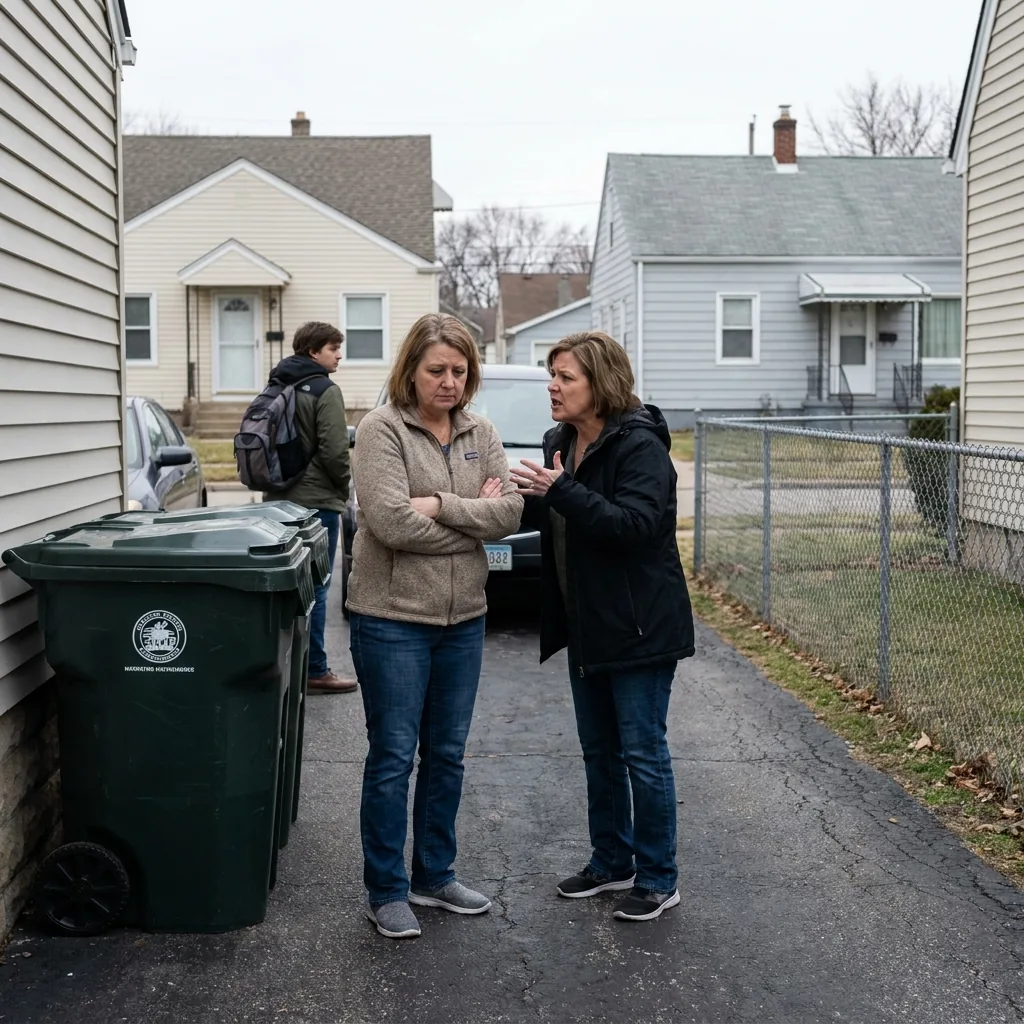
Danielle Porter stopped me beside the trash bin in our shared driveway, asked for money in Tessa’s name, and when I said we couldn’t do that, she said, loud enough for both houses to hear, that some people could look a family in the face and still choose to be cold. I was standing there with one hand on the recycling lid and the other holding my phone because I had just finished paying one of our own bills, and somehow that ordinary Tuesday chore turned into my neighbor acting like I had failed some public test. The worst part was how fast she made it sound like I owed her an answer just because our driveways touched and her voice carried.
Our houses sit so close that if one garage is open, the other one might as well be part of the same picture. That evening Luis was at the garage threshold breaking down a shipping box, and I was dragging the bins to the curb. Danielle came down her side walk fast, one arm folded under herself, the other hand already lifted before she even reached me.
“Mara, I need a favor,” she said.
I kept hold of the trash bin handle. “What kind of favor?”
She looked past me toward the garage where Luis was standing and lowered her voice just enough to make me step closer. “I need to borrow some money for Tessa. It’s important. I wouldn’t ask if it wasn’t family-level serious.”
That phrase landed first. Family-level serious. Not emergency room. Not exact bill. Not amount with a due date. Just a phrase built to make a no sound ugly.
Luis set the box cutter down on the workbench and came a little closer without leaving the garage. “How much?” he asked.
Danielle turned toward him like he had interrupted a private thing. “It’s not a huge amount. I just need to get through this week. Tessa needs help, and I figured you two would understand because you’re decent people.”
I asked, “Help with what?”
She paused, shifted her weight, and touched the recycling bin lid with two fingers like she needed something solid there. “A bill. Just something that can’t wait.”
Luis asked, “What bill?”
Danielle gave a quick little laugh that didn’t match anything funny. “I’m not asking you to audit me. I’m asking you to help a neighbor when it matters.”
That was the first turn. One minute it was a favor. The next minute wanting a number was treated like an insult.
I said, as evenly as I could, “We don’t lend money without knowing what it’s for, and right now we can’t take on somebody else’s bill anyway.”
Her face didn’t change much, but her chin came up. She looked from me to Luis and back again. “Wow,” she said. “So that’s where we’re at. Tessa’s involved, and your answer is basically too bad.”
I said, “My answer is that we can’t do it.”
Danielle stepped back into the center strip of the driveway where neither side really belongs to anybody alone. “Must be nice,” she said, louder now, “to act like money is only your problem when it’s your own house.”
Luis stayed where he was. “Danielle, don’t do that.”
But she was already doing it. Tessa came out their front door then, backpack over one shoulder, phone in her hand. She didn’t come toward us. She just crossed the front walk and headed to a car parked at the curb. Danielle turned enough to make sure Tessa was in view and said, “Some people see a kid needing help and start asking for paperwork.”
I still had my phone in my hand. My payment confirmation screen had gone dark. The recycling lid kept swinging half-shut and tapping my wrist because I hadn’t let go of it.
I said, “Don’t put that on me.”
She spread both hands. “I’m not putting anything on you. I’m just saying I know who shows up when it counts.”
That line sat there in the driveway like she had hung a sign between our houses.
After she went back inside, Luis came out to the bins with me. He didn’t say much at first. He just took the heavier trash bag from my hand and tied it tighter before dropping it in. Then he said, “She never named the bill.”
“I know.”
“And she didn’t name an amount until after I asked.”
“I know.”
He nodded toward my phone. “Write down what she said while it’s fresh.”
So I did. I stood at the curb with the bins lined up and typed the time, the words family-level serious, and the part where she said we chose to be cold. It felt ridiculous to make notes over a driveway conversation, but it also felt necessary, because Danielle had a way of repeating a thing later like the first version had never happened.
The next morning she gave me a stiff little smile while rolling her own trash bin back from the curb. That afternoon she said to me, from her porch but aimed toward the driveway, “Some people sleep fine after saying no to a kid.”
By the third time she worked Tessa’s name into a comment without ever naming the bill, the story started sounding less urgent and more rehearsed. And late Friday, when I pulled our bins back from the curb, I noticed something on Danielle’s side yard by the patio door that had definitely not been there during trash night.
Danielle Porter stopped me beside the trash bin in our shared driveway, asked for money in Tessa’s name, and when I said we couldn’t do that, she said, loud enough for both houses to hear, that some people could look a family in the face and still choose to be cold. I was standing there with one hand on the recycling lid and the other holding my phone because I had just finished paying one of our own bills, and somehow that ordinary Tuesday chore turned into my neighbor acting like I had failed some public test. The worst part was how fast she made it sound like I owed her an answer just because our driveways touched and her voice carried.
Our houses sit so close that if one garage is open, the other one might as well be part of the same picture. That evening Luis was at the garage threshold breaking down a shipping box, and I was dragging the bins to the curb. Danielle came down her side walk fast, one arm folded under herself, the other hand already lifted before she even reached me.
“Mara, I need a favor,” she said.
I kept hold of the trash bin handle. “What kind of favor?”
She looked past me toward the garage where Luis was standing and lowered her voice just enough to make me step closer. “I need to borrow some money for Tessa. It’s important. I wouldn’t ask if it wasn’t family-level serious.”
That phrase landed first. Family-level serious. Not emergency room. Not exact bill. Not amount with a due date. Just a phrase built to make a no sound ugly.
Luis set the box cutter down on the workbench and came a little closer without leaving the garage. “How much?” he asked.
Danielle turned toward him like he had interrupted a private thing. “It’s not a huge amount. I just need to get through this week. Tessa needs help, and I figured you two would understand because you’re decent people.”
I asked, “Help with what?”
She paused, shifted her weight, and touched the recycling bin lid with two fingers like she needed something solid there. “A bill. Just something that can’t wait.”
Luis asked, “What bill?”
Danielle gave a quick little laugh that didn’t match anything funny. “I’m not asking you to audit me. I’m asking you to help a neighbor when it matters.”
That was the first turn. One minute it was a favor. The next minute wanting a number was treated like an insult.
I said, as evenly as I could, “We don’t lend money without knowing what it’s for, and right now we can’t take on somebody else’s bill anyway.”
Her face didn’t change much, but her chin came up. She looked from me to Luis and back again. “Wow,” she said. “So that’s where we’re at. Tessa’s involved, and your answer is basically too bad.”
I said, “My answer is that we can’t do it.”
Danielle stepped back into the center strip of the driveway where neither side really belongs to anybody alone. “Must be nice,” she said, louder now, “to act like money is only your problem when it’s your own house.”
Luis stayed where he was. “Danielle, don’t do that.”
But she was already doing it. Tessa came out their front door then, backpack over one shoulder, phone in her hand. She didn’t come toward us. She just crossed the front walk and headed to a car parked at the curb. Danielle turned enough to make sure Tessa was in view and said, “Some people see a kid needing help and start asking for paperwork.”
I still had my phone in my hand. My payment confirmation screen had gone dark. The recycling lid kept swinging half-shut and tapping my wrist because I hadn’t let go of it.
I said, “Don’t put that on me.”
She spread both hands. “I’m not putting anything on you. I’m just saying I know who shows up when it counts.”
That line sat there in the driveway like she had hung a sign between our houses.
After she went back inside, Luis came out to the bins with me. He didn’t say much at first. He just took the heavier trash bag from my hand and tied it tighter before dropping it in. Then he said, “She never named the bill.”
“I know.”
“And she didn’t name an amount until after I asked.”
“I know.”
He nodded toward my phone. “Write down what she said while it’s fresh.”
So I did. I stood at the curb with the bins lined up and typed the time, the words family-level serious, and the part where she said we chose to be cold. It felt ridiculous to make notes over a driveway conversation, but it also felt necessary, because Danielle had a way of repeating a thing later like the first version had never happened.
The next morning she gave me a stiff little smile while rolling her own trash bin back from the curb. That afternoon she said to me, from her porch but aimed toward the driveway, “Some people sleep fine after saying no to a kid.”
By the third time she worked Tessa’s name into a comment without ever naming the bill, the story started sounding less urgent and more rehearsed. And late Friday, when I pulled our bins back from the curb, I noticed something on Danielle’s side yard by the patio door that had definitely not been there during trash night.