Story code: ST-001325
Part 1: The Viral Freeze
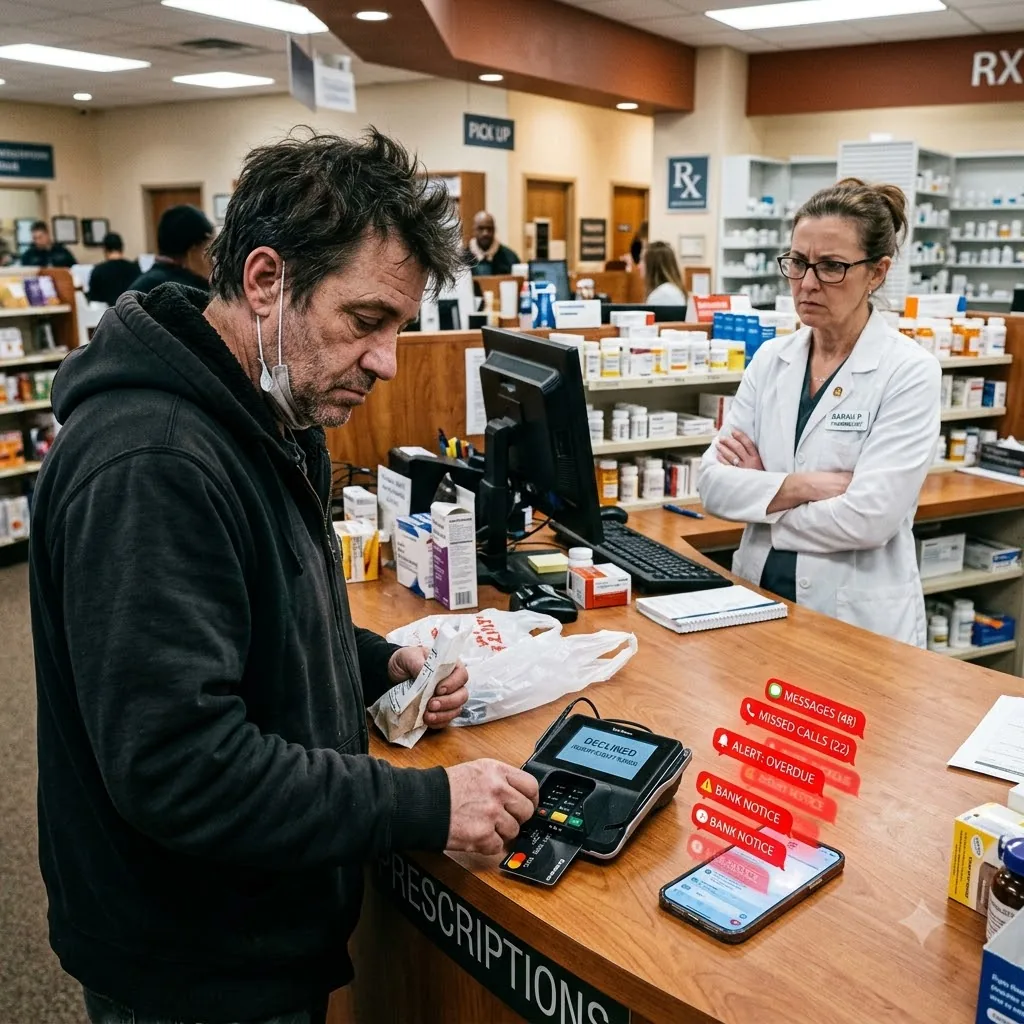
The card reader at the pharmacy counter emitted a harsh, flat beep, flashing a red ‘DECLINED’ message across its digital display. Mark tapped the plastic against the screen again, but the pharmacist just stepped back, arms crossed, staring at him with undisguised contempt. In his pocket, Mark’s phone vibrated in a relentless, buzzing rhythm that hadn’t stopped since he walked through the sliding glass doors.
The pharmacy’s fluorescent lights hummed above the sudden silence. Mark stared at the red text on the terminal. The pharmacist, a man named Gary who usually asked about Mark’s weekend, stood rigid with his lips pressed into a thin, bloodless line. Gary slid the stapled white bag off the counter and dropped it into a plastic bin by his knee.
Mark pulled out his backup card. Gary shook his head and stepped away from the register. He did not offer to run it.
The buzzing in Mark’s coat pocket felt like a live hornet. He reached in and pulled out his phone. The lock screen was completely obscured by a cascading wall of alerts. Direct messages, tags, and local neighborhood group pings flooded in faster than his phone could render them.
He swiped the screen open. The top notification was a forward from his neighbor. It linked to a thread by an account called ‘DebtHawk’. The avatar was a cartoon vulture wearing a suit. The view count on the initial post was already climbing past two million.
Mark tapped the link. The screen loaded a masterclass in digital assassination.
The lead post featured a split-screen image. On the left was the community fundraiser page Mark had set up three weeks ago, the one that had finally reached its goal. On the right was a zoomed-in, grainy photograph of Mark walking out of a local bank branch, carrying a thick manila envelope.
The caption read: “Local father Mark creates tear-jerker charity drive. Reality check: he is using your donations to hoard cash, dodge his underwater mortgage, and hide assets from his rightful creditors.”
Mark’s stomach dropped out. The manila envelope in that photo contained cash withdrawals he had explicitly organized for the upcoming out-of-state specialist appointment. It was a strict requirement for the admission deposit, a hurdle he had spent hours on the phone negotiating. Now, stripped of all context, it looked like a cartoonish heist.
DebtHawk had not stopped at one post. The thread was a twenty-tweet barrage of out-of-context financial documents. They posted public records of his late mortgage payments. They posted a screenshot of a debt collection letter, subtly redacting the name of the agency but leaving Mark’s address visible. They framed the narrative with surgical precision, painting him as a deadbeat scammer who had weaponized public sympathy to fund a lavish, debt-dodging lifestyle.
The comments underneath were a cesspool of outrage.
People he had never met were calling for his arrest. Local business owners were pledging to ban him from their stores. One user had posted the make and model of his car. Another had dug up his old workplace.
Mark looked up from the screen. The atmosphere in the pharmacy had shifted from impatience to outright hostility. A woman two spots back in the line was staring at him. She looked down at her phone, thumb scrolling rapidly, and then looked back up, her eyes wide with recognition and disgust. She nudged the man standing next to her.
They knew. The algorithm had pushed the localized drama straight to the top of their feeds.
Gary leaned over the counter, his voice dropping to a harsh whisper. He told Mark to leave the store before he called security.
Mark tried to form a defense, to explain that the account freeze was a mistake, an automated trigger pulled by a malicious mass-reporting campaign. DebtHawk had clearly rallied their followers to flag his bank accounts for fraud, triggering an algorithmic lockdown of his funds right when he needed them most.
Gary simply pointed toward the automatic sliding doors.
Mark backed away from the counter. The white stapled bag containing the lifeline he desperately needed remained in the bin behind the register. He had twenty-four hours to secure the funds for the specialist, and his accounts were completely frozen.
The collection agency behind the DebtHawk account had executed a flawless pressure campaign. They could not legally garnish a charity fund, so they had decided to destroy his life until he surrendered the money voluntarily. They wanted to make him so radioactive, so utterly despised by his own community, that he would drain the account just to make the harassment stop.
He pushed through the pharmacy doors and stepped out into the cold parking lot. The winter air bit at his face, but it did nothing to cool the panic rising in his chest. His phone vibrated again, an endless, terrifying pulse against his palm.
He unlocked it to see a new message, this one a direct SMS from an unknown number.
It was a picture of his own driveway, taken from across the street.
The text beneath the image was brief and explicit. It told him exactly what was going to happen to his house if he did not wire the charity funds to a specific routing number by midnight.
Mark tightened his grip on the phone and sprinted toward his sedan. He yanked the driver’s side door handle, sliding into the cold leather seat, and jammed his key into the ignition.
A heavy fist slammed against the driver’s side window.
The card reader at the pharmacy counter emitted a harsh, flat beep, flashing a red ‘DECLINED’ message across its digital display. Mark tapped the plastic against the screen again, but the pharmacist just stepped back, arms crossed, staring at him with undisguised contempt. In his pocket, Mark’s phone vibrated in a relentless, buzzing rhythm that hadn’t stopped since he walked through the sliding glass doors.
The pharmacy’s fluorescent lights hummed above the sudden silence. Mark stared at the red text on the terminal. The pharmacist, a man named Gary who usually asked about Mark’s weekend, stood rigid with his lips pressed into a thin, bloodless line. Gary slid the stapled white bag off the counter and dropped it into a plastic bin by his knee.
Mark pulled out his backup card. Gary shook his head and stepped away from the register. He did not offer to run it.
The buzzing in Mark’s coat pocket felt like a live hornet. He reached in and pulled out his phone. The lock screen was completely obscured by a cascading wall of alerts. Direct messages, tags, and local neighborhood group pings flooded in faster than his phone could render them.
He swiped the screen open. The top notification was a forward from his neighbor. It linked to a thread by an account called ‘DebtHawk’. The avatar was a cartoon vulture wearing a suit. The view count on the initial post was already climbing past two million.
Mark tapped the link. The screen loaded a masterclass in digital assassination.
The lead post featured a split-screen image. On the left was the community fundraiser page Mark had set up three weeks ago, the one that had finally reached its goal. On the right was a zoomed-in, grainy photograph of Mark walking out of a local bank branch, carrying a thick manila envelope.
The caption read: “Local father Mark creates tear-jerker charity drive. Reality check: he is using your donations to hoard cash, dodge his underwater mortgage, and hide assets from his rightful creditors.”
Mark’s stomach dropped out. The manila envelope in that photo contained cash withdrawals he had explicitly organized for the upcoming out-of-state specialist appointment. It was a strict requirement for the admission deposit, a hurdle he had spent hours on the phone negotiating. Now, stripped of all context, it looked like a cartoonish heist.
DebtHawk had not stopped at one post. The thread was a twenty-tweet barrage of out-of-context financial documents. They posted public records of his late mortgage payments. They posted a screenshot of a debt collection letter, subtly redacting the name of the agency but leaving Mark’s address visible. They framed the narrative with surgical precision, painting him as a deadbeat scammer who had weaponized public sympathy to fund a lavish, debt-dodging lifestyle.
The comments underneath were a cesspool of outrage.
People he had never met were calling for his arrest. Local business owners were pledging to ban him from their stores. One user had posted the make and model of his car. Another had dug up his old workplace.
Mark looked up from the screen. The atmosphere in the pharmacy had shifted from impatience to outright hostility. A woman two spots back in the line was staring at him. She looked down at her phone, thumb scrolling rapidly, and then looked back up, her eyes wide with recognition and disgust. She nudged the man standing next to her.
They knew. The algorithm had pushed the localized drama straight to the top of their feeds.
Gary leaned over the counter, his voice dropping to a harsh whisper. He told Mark to leave the store before he called security.
Mark tried to form a defense, to explain that the account freeze was a mistake, an automated trigger pulled by a malicious mass-reporting campaign. DebtHawk had clearly rallied their followers to flag his bank accounts for fraud, triggering an algorithmic lockdown of his funds right when he needed them most.
Gary simply pointed toward the automatic sliding doors.
Mark backed away from the counter. The white stapled bag containing the lifeline he desperately needed remained in the bin behind the register. He had twenty-four hours to secure the funds for the specialist, and his accounts were completely frozen.
The collection agency behind the DebtHawk account had executed a flawless pressure campaign. They could not legally garnish a charity fund, so they had decided to destroy his life until he surrendered the money voluntarily. They wanted to make him so radioactive, so utterly despised by his own community, that he would drain the account just to make the harassment stop.
He pushed through the pharmacy doors and stepped out into the cold parking lot. The winter air bit at his face, but it did nothing to cool the panic rising in his chest. His phone vibrated again, an endless, terrifying pulse against his palm.
He unlocked it to see a new message, this one a direct SMS from an unknown number.
It was a picture of his own driveway, taken from across the street.
The text beneath the image was brief and explicit. It told him exactly what was going to happen to his house if he did not wire the charity funds to a specific routing number by midnight.
Mark tightened his grip on the phone and sprinted toward his sedan. He yanked the driver’s side door handle, sliding into the cold leather seat, and jammed his key into the ignition.
A heavy fist slammed against the driver’s side window.