Story code: ST-000270
Part 1: He Hit Play at the Meeting Desk
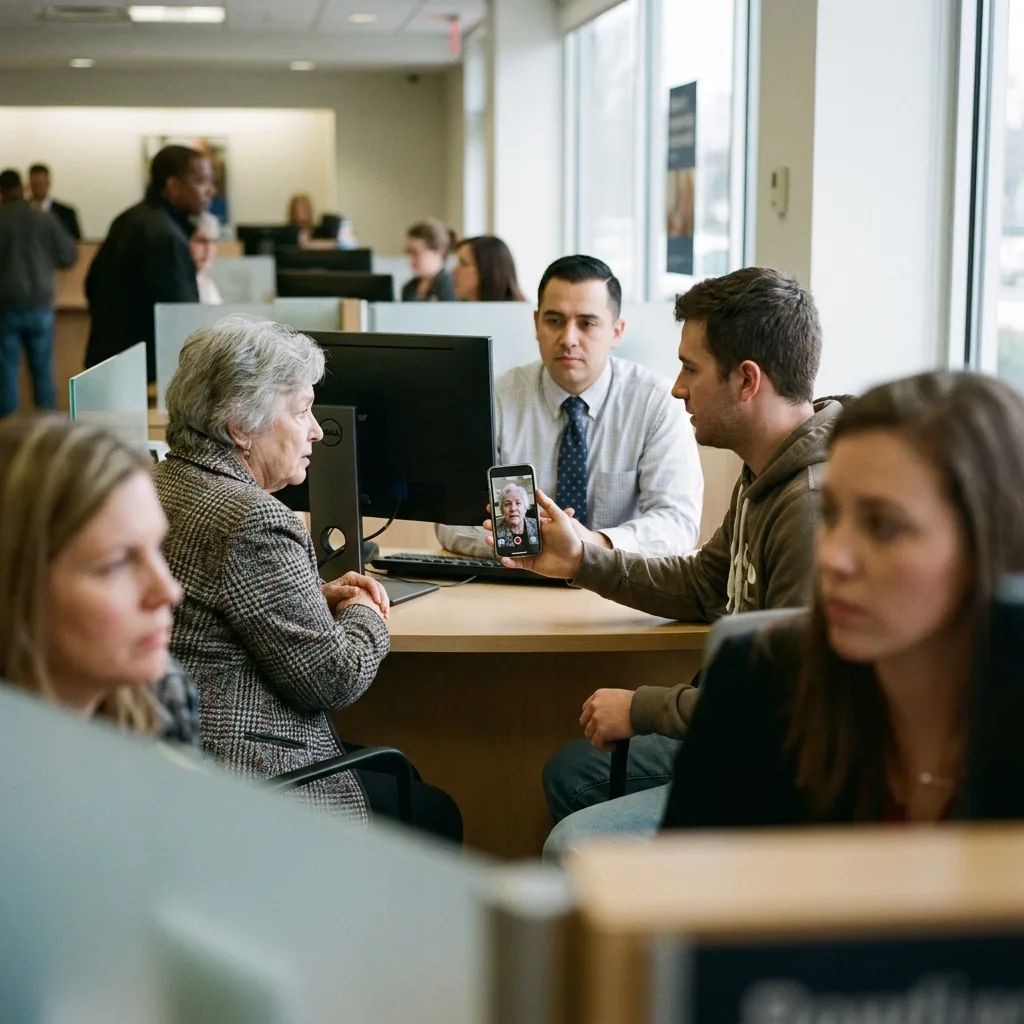
Dylan Mercer turned his phone outward in the middle of a bank meeting and played a private video of his own grandmother at full volume like it was evidence. At the glass-walled meeting desk near the platform area at Mercy Community Bank, with customers flipping through brochures ten feet away, he used that clip and a paper he kept tapping with two fingers to make Ruth Mercer look confused before she could finish one sentence.
Tessa Alvarez had started the appointment the same way she started dozens of others. She had the bank forms squared on the desk, a notepad angled toward her right hand, and Ruth’s name pulled up on the screen behind the privacy filter. Ruth sat with a handbag tucked close against her side and a paper folder on her lap. Her posture was so straight it looked effortful. Dylan took the chair closest to the open aisle instead of the chair beside Ruth, which meant anyone walking past could see his phone if he lifted it.
He did exactly that.
“I’m trying to stop a bad situation before she signs something else she doesn’t understand,” he said, and before Tessa could answer, the phone was already up.
The video showed Ruth in what looked like a kitchen, hair loose, voice raised, one hand braced on a counter outside the frame. The clip lasted only a few seconds. In it, Ruth said, “Just give it here if you’re going to keep pushing me,” then the video cut. Dylan let it replay once. Not loudly enough to trigger the whole lobby, but loudly enough that the waiting chairs beyond the glass turned toward the sound.
Ruth went very still. Her hands tightened on the folder until the paper edges bent.
“That was from my phone,” she said. Her voice stayed controlled, but it dropped lower after the first four words. “You had no permission to show that here.”
Dylan didn’t lower the screen. “This is what I’m talking about. She gets agitated, she forgets what she agreed to, and then everybody else has to clean it up.”
Tessa kept her own voice even. “Sir, I need you to take the phone down while we discuss account authority.”
Instead, he slid a sheet of paper across the desk with a small flourish, as if he had been waiting to time it with the clip. “And here’s the support for that. She already signed paperwork saying I can help manage things.”
The paper had the look of something prepared in a hurry but printed on expensive stock. There was a heading in larger font, a block of formal language, a signature line, and Ruth’s name typed twice. Tessa did not touch it first. She looked at Ruth.
Ruth leaned forward, paused over the document, and stared at it long enough for Dylan to say, “See?”
Then she looked up at Tessa, not at him.
“I have never seen that page in my life,” she said.
Dylan gave a short laugh that landed badly in the small meeting space. “Grandma, come on.”
At the edge of the desk, Tessa could see several things at once: Ruth’s bent folder corners, Dylan’s phone angled so the platform banker behind him could also see it, and the signature on the paper sitting too clean and dark against the rest of the print, as if it had been added differently. She did not call it fake. Not yet. Bank staff were allowed to pause, question, document, and refuse. They were not allowed to turn a customer meeting into a courtroom.
So she did what policy gave her.
“I can’t accept family claims by themselves,” she said. “I need to verify what authority is current, what was executed, and what identification supports the request.”
Dylan’s rhythm changed for half a beat. Then he came back fast.
“I brought ID. I brought the paperwork. And I brought proof she’s not stable about this.” He lifted the phone again. “Do you want to hear the rest of what she was saying?”
Ruth’s shoulders pulled in a fraction. “There is no ‘rest’ that belongs in this bank.”
A customer walking past slowed down. Marianne Cole, the senior employee on the platform, looked over from two desks away. Tessa caught her eye and gave the smallest possible signal with her pen.
Dylan saw it and pressed harder, speaking louder now that he had an audience. “I’m the one trying to protect family assets here. She was ready to hand money over after that scene at the house. Everybody knows it.”
“Everybody?” Ruth asked.
He snapped the paper with one finger. “This says enough.”
Marianne approached at a measured pace, badge visible, expression neutral. “What seems to be the issue?”
Before Tessa could answer, Dylan turned the phone toward her too, recruiting one more witness by force. The clip played again. Ruth’s voice. The cut. The implication left hanging in the air for strangers to finish.
Then Marianne looked at the paper, looked at Ruth, and said, “Ma’am, did you bring any of your own documents today?”
Ruth opened her folder with careful hands. Inside were account notes, an appointment printout, and a smaller envelope tucked under the flap. Before she could pull anything free, fast footsteps came across the tile from the lobby.
A younger woman stopped just outside the glass and raised her own phone chest-high. “Don’t let him play that without the beginning,” she said. “I have the version he cut.”
Dylan’s head turned so sharply the phone nearly slipped, and for the first time since he sat down, the paper in front of him looked less like proof than a prop waiting for somebody to explain where it really came from.
Dylan Mercer turned his phone outward in the middle of a bank meeting and played a private video of his own grandmother at full volume like it was evidence. At the glass-walled meeting desk near the platform area at Mercy Community Bank, with customers flipping through brochures ten feet away, he used that clip and a paper he kept tapping with two fingers to make Ruth Mercer look confused before she could finish one sentence.
Tessa Alvarez had started the appointment the same way she started dozens of others. She had the bank forms squared on the desk, a notepad angled toward her right hand, and Ruth’s name pulled up on the screen behind the privacy filter. Ruth sat with a handbag tucked close against her side and a paper folder on her lap. Her posture was so straight it looked effortful. Dylan took the chair closest to the open aisle instead of the chair beside Ruth, which meant anyone walking past could see his phone if he lifted it.
He did exactly that.
“I’m trying to stop a bad situation before she signs something else she doesn’t understand,” he said, and before Tessa could answer, the phone was already up.
The video showed Ruth in what looked like a kitchen, hair loose, voice raised, one hand braced on a counter outside the frame. The clip lasted only a few seconds. In it, Ruth said, “Just give it here if you’re going to keep pushing me,” then the video cut. Dylan let it replay once. Not loudly enough to trigger the whole lobby, but loudly enough that the waiting chairs beyond the glass turned toward the sound.
Ruth went very still. Her hands tightened on the folder until the paper edges bent.
“That was from my phone,” she said. Her voice stayed controlled, but it dropped lower after the first four words. “You had no permission to show that here.”
Dylan didn’t lower the screen. “This is what I’m talking about. She gets agitated, she forgets what she agreed to, and then everybody else has to clean it up.”
Tessa kept her own voice even. “Sir, I need you to take the phone down while we discuss account authority.”
Instead, he slid a sheet of paper across the desk with a small flourish, as if he had been waiting to time it with the clip. “And here’s the support for that. She already signed paperwork saying I can help manage things.”
The paper had the look of something prepared in a hurry but printed on expensive stock. There was a heading in larger font, a block of formal language, a signature line, and Ruth’s name typed twice. Tessa did not touch it first. She looked at Ruth.
Ruth leaned forward, paused over the document, and stared at it long enough for Dylan to say, “See?”
Then she looked up at Tessa, not at him.
“I have never seen that page in my life,” she said.
Dylan gave a short laugh that landed badly in the small meeting space. “Grandma, come on.”
At the edge of the desk, Tessa could see several things at once: Ruth’s bent folder corners, Dylan’s phone angled so the platform banker behind him could also see it, and the signature on the paper sitting too clean and dark against the rest of the print, as if it had been added differently. She did not call it fake. Not yet. Bank staff were allowed to pause, question, document, and refuse. They were not allowed to turn a customer meeting into a courtroom.
So she did what policy gave her.
“I can’t accept family claims by themselves,” she said. “I need to verify what authority is current, what was executed, and what identification supports the request.”
Dylan’s rhythm changed for half a beat. Then he came back fast.
“I brought ID. I brought the paperwork. And I brought proof she’s not stable about this.” He lifted the phone again. “Do you want to hear the rest of what she was saying?”
Ruth’s shoulders pulled in a fraction. “There is no ‘rest’ that belongs in this bank.”
A customer walking past slowed down. Marianne Cole, the senior employee on the platform, looked over from two desks away. Tessa caught her eye and gave the smallest possible signal with her pen.
Dylan saw it and pressed harder, speaking louder now that he had an audience. “I’m the one trying to protect family assets here. She was ready to hand money over after that scene at the house. Everybody knows it.”
“Everybody?” Ruth asked.
He snapped the paper with one finger. “This says enough.”
Marianne approached at a measured pace, badge visible, expression neutral. “What seems to be the issue?”
Before Tessa could answer, Dylan turned the phone toward her too, recruiting one more witness by force. The clip played again. Ruth’s voice. The cut. The implication left hanging in the air for strangers to finish.
Then Marianne looked at the paper, looked at Ruth, and said, “Ma’am, did you bring any of your own documents today?”
Ruth opened her folder with careful hands. Inside were account notes, an appointment printout, and a smaller envelope tucked under the flap. Before she could pull anything free, fast footsteps came across the tile from the lobby.
A younger woman stopped just outside the glass and raised her own phone chest-high. “Don’t let him play that without the beginning,” she said. “I have the version he cut.”
Dylan’s head turned so sharply the phone nearly slipped, and for the first time since he sat down, the paper in front of him looked less like proof than a prop waiting for somebody to explain where it really came from.