Story code: ST-001342
Part 1: The Morning Shift
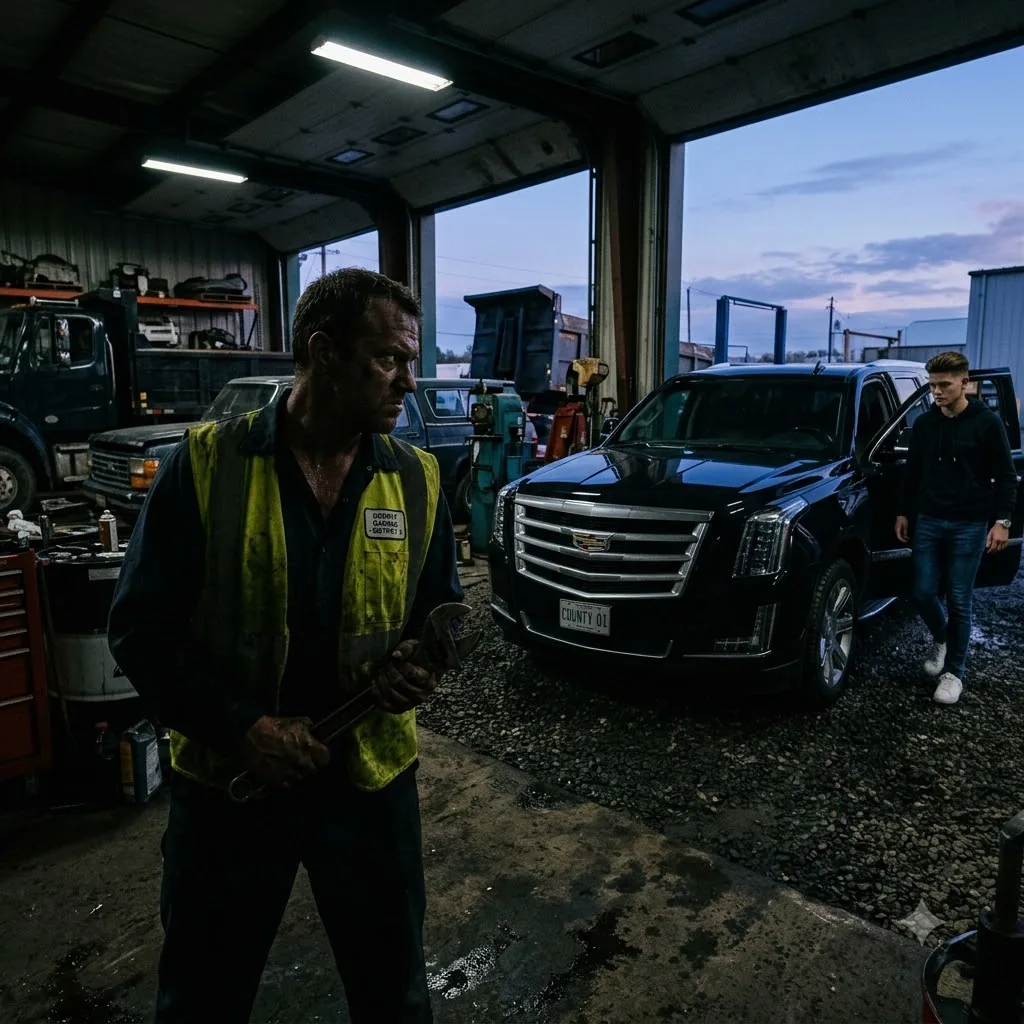
The 6 AM floodlights of the county impound and maintenance garage buzzed with a sick, flickering hum that bored straight into Marcus’s skull. He stood ankle-deep in oil-stained gravel, organizing bent highway signs and tossing massive steel wrenches into oxidized bins. The freezing morning air tasted like diesel exhaust and damp rust. He was just another anonymous body on the mandatory municipal cleanup crew, a man sweating a pending possession charge and trying to survive until his trial date. The threat of prison sat on his chest like an anvil. Every breath he took in the freezing yard served as a harsh reminder of the thin ice cracking beneath his steel-toed boots. His public defender had been brutally clear about his chances. One slip, one confrontation, one missed hour of labor, and the probationary plea deal would evaporate entirely. All Marcus had to do was keep his head down, organize the heavy equipment, and remain invisible.
He grabbed a two-inch steel wrench from a pile of scattered tools. The metal was freezing, coated in a thin layer of grime that seeped through his canvas work gloves. Around him, a dozen other men shuffled through the dawn gloom in silence. They were ghosts in high-visibility vests, united only by their shared need to satisfy the county court system.
Tires crunched violently over the limestone driveway, breaking the steady rhythm of clanking metal. Marcus did not look up immediately. The maintenance yard usually only saw rusted dump trucks, city street sweepers, and the occasional armored Department of Corrections van. But the engine idling near the chain-link gate purred with a tuned, expensive silence that did not belong in this part of the city. Marcus wiped a slick of freezing sweat and grease from his forehead with the back of his wrist and turned his attention to the perimeter.
A massive black SUV had parked directly in front of the supervisor’s dilapidated plywood shed. Its heavily tinted windows and flawless wax job mirrored the harsh security lights, making the vehicle look like a luxury spacecraft dropped into an industrial landfill. A man wearing a tailored dark suit stepped out of the driver’s side. He walked around the hood with practiced efficiency and pulled open the rear passenger door.
The teenager who emerged looked like a catalog model forced onto a toxic waste site. He wore pristine white sneakers that had never touched dirt, crisp designer jeans, and a layered, insulated jacket that easily cost more than Marcus’s entire bail amount. The boy stretched his arms, looking around the grimy yard with an expression of profound, unfiltered distaste. In his right hand, he held a crisp, white piece of paper. It was a court-ordered community service timesheet, completely uncreased. The driver gave the boy a brief, reassuring nod before retreating to the climate-controlled cabin of the SUV, leaving the engine running.
Marcus tightened his grip on the steel wrench. The cold metal bit hard against his palm through the canvas. He stared at the side profile of the teenager standing twenty feet away. He studied the swept-back hair, the sharp line of the jaw, the casual, entitled slouch of a kid who believed consequences were things that only happened to other people.
Marcus recognized the face.
The air in his lungs instantly solidified into concrete. A roaring wall of static filled his ears, completely drowning out the hum of the floodlights and the distant rumble of the interstate. His stomach dropped into a bottomless, icy void. A sudden, terrifying heat spiked behind his eyes, burning away the exhaustion of the morning. His physiological crash was total and immediate. The surrounding gravel yard, the supervisor’s shed, and the other crew members all bled away into a meaningless gray blur. There was only the kid.
Blood pounded in Marcus’s temples with the brutal, steady rhythm of a sledgehammer. His knuckles turned bone-white around the shaft of the wrench. The solid piece of iron suddenly felt entirely weightless in his hand, a natural extension of his arm. In a fraction of a second, he forgot the drug charge hanging over his head. He forgot the strict warnings from his lawyer. He forgot the absolute necessity of staying invisible to the state. A violent, suffocating pressure seized his chest, an unstoppable tectonic shift in his nervous system that demanded immediate forward motion. The world narrowed entirely to the space between him and the boy.
The teenager sauntered toward the shed, completely unaware of the crosshairs resting squarely on his back. The kid casually smoothed the front of his expensive jacket and lifted the pristine timesheet. The exhausted crew chief pushed open the door of the plywood office, holding a clipboard and a mug of steaming coffee. The teenager opened his mouth, preparing to announce his arrival to the man in charge.
Marcus moved. He did not make a conscious decision to walk. His heavy boots crushed the gravel with deliberate, violent strikes, closing the distance in seconds. He stepped out of the deep shadow cast by the salt-spreader truck, the heavy steel wrench still locked in a death grip at his side. He inserted his body directly into the teenager’s path, planting his boots wide, cutting the boy off right in the middle of his first syllable.
The 6 AM floodlights of the county impound and maintenance garage buzzed with a sick, flickering hum that bored straight into Marcus’s skull. He stood ankle-deep in oil-stained gravel, organizing bent highway signs and tossing massive steel wrenches into oxidized bins. The freezing morning air tasted like diesel exhaust and damp rust. He was just another anonymous body on the mandatory municipal cleanup crew, a man sweating a pending possession charge and trying to survive until his trial date. The threat of prison sat on his chest like an anvil. Every breath he took in the freezing yard served as a harsh reminder of the thin ice cracking beneath his steel-toed boots. His public defender had been brutally clear about his chances. One slip, one confrontation, one missed hour of labor, and the probationary plea deal would evaporate entirely. All Marcus had to do was keep his head down, organize the heavy equipment, and remain invisible.
He grabbed a two-inch steel wrench from a pile of scattered tools. The metal was freezing, coated in a thin layer of grime that seeped through his canvas work gloves. Around him, a dozen other men shuffled through the dawn gloom in silence. They were ghosts in high-visibility vests, united only by their shared need to satisfy the county court system.
Tires crunched violently over the limestone driveway, breaking the steady rhythm of clanking metal. Marcus did not look up immediately. The maintenance yard usually only saw rusted dump trucks, city street sweepers, and the occasional armored Department of Corrections van. But the engine idling near the chain-link gate purred with a tuned, expensive silence that did not belong in this part of the city. Marcus wiped a slick of freezing sweat and grease from his forehead with the back of his wrist and turned his attention to the perimeter.
A massive black SUV had parked directly in front of the supervisor’s dilapidated plywood shed. Its heavily tinted windows and flawless wax job mirrored the harsh security lights, making the vehicle look like a luxury spacecraft dropped into an industrial landfill. A man wearing a tailored dark suit stepped out of the driver’s side. He walked around the hood with practiced efficiency and pulled open the rear passenger door.
The teenager who emerged looked like a catalog model forced onto a toxic waste site. He wore pristine white sneakers that had never touched dirt, crisp designer jeans, and a layered, insulated jacket that easily cost more than Marcus’s entire bail amount. The boy stretched his arms, looking around the grimy yard with an expression of profound, unfiltered distaste. In his right hand, he held a crisp, white piece of paper. It was a court-ordered community service timesheet, completely uncreased. The driver gave the boy a brief, reassuring nod before retreating to the climate-controlled cabin of the SUV, leaving the engine running.
Marcus tightened his grip on the steel wrench. The cold metal bit hard against his palm through the canvas. He stared at the side profile of the teenager standing twenty feet away. He studied the swept-back hair, the sharp line of the jaw, the casual, entitled slouch of a kid who believed consequences were things that only happened to other people.
Marcus recognized the face.
The air in his lungs instantly solidified into concrete. A roaring wall of static filled his ears, completely drowning out the hum of the floodlights and the distant rumble of the interstate. His stomach dropped into a bottomless, icy void. A sudden, terrifying heat spiked behind his eyes, burning away the exhaustion of the morning. His physiological crash was total and immediate. The surrounding gravel yard, the supervisor’s shed, and the other crew members all bled away into a meaningless gray blur. There was only the kid.
Blood pounded in Marcus’s temples with the brutal, steady rhythm of a sledgehammer. His knuckles turned bone-white around the shaft of the wrench. The solid piece of iron suddenly felt entirely weightless in his hand, a natural extension of his arm. In a fraction of a second, he forgot the drug charge hanging over his head. He forgot the strict warnings from his lawyer. He forgot the absolute necessity of staying invisible to the state. A violent, suffocating pressure seized his chest, an unstoppable tectonic shift in his nervous system that demanded immediate forward motion. The world narrowed entirely to the space between him and the boy.
The teenager sauntered toward the shed, completely unaware of the crosshairs resting squarely on his back. The kid casually smoothed the front of his expensive jacket and lifted the pristine timesheet. The exhausted crew chief pushed open the door of the plywood office, holding a clipboard and a mug of steaming coffee. The teenager opened his mouth, preparing to announce his arrival to the man in charge.
Marcus moved. He did not make a conscious decision to walk. His heavy boots crushed the gravel with deliberate, violent strikes, closing the distance in seconds. He stepped out of the deep shadow cast by the salt-spreader truck, the heavy steel wrench still locked in a death grip at his side. He inserted his body directly into the teenager’s path, planting his boots wide, cutting the boy off right in the middle of his first syllable.