Story code: ST-001403
Part 1: The Last Dry Floor
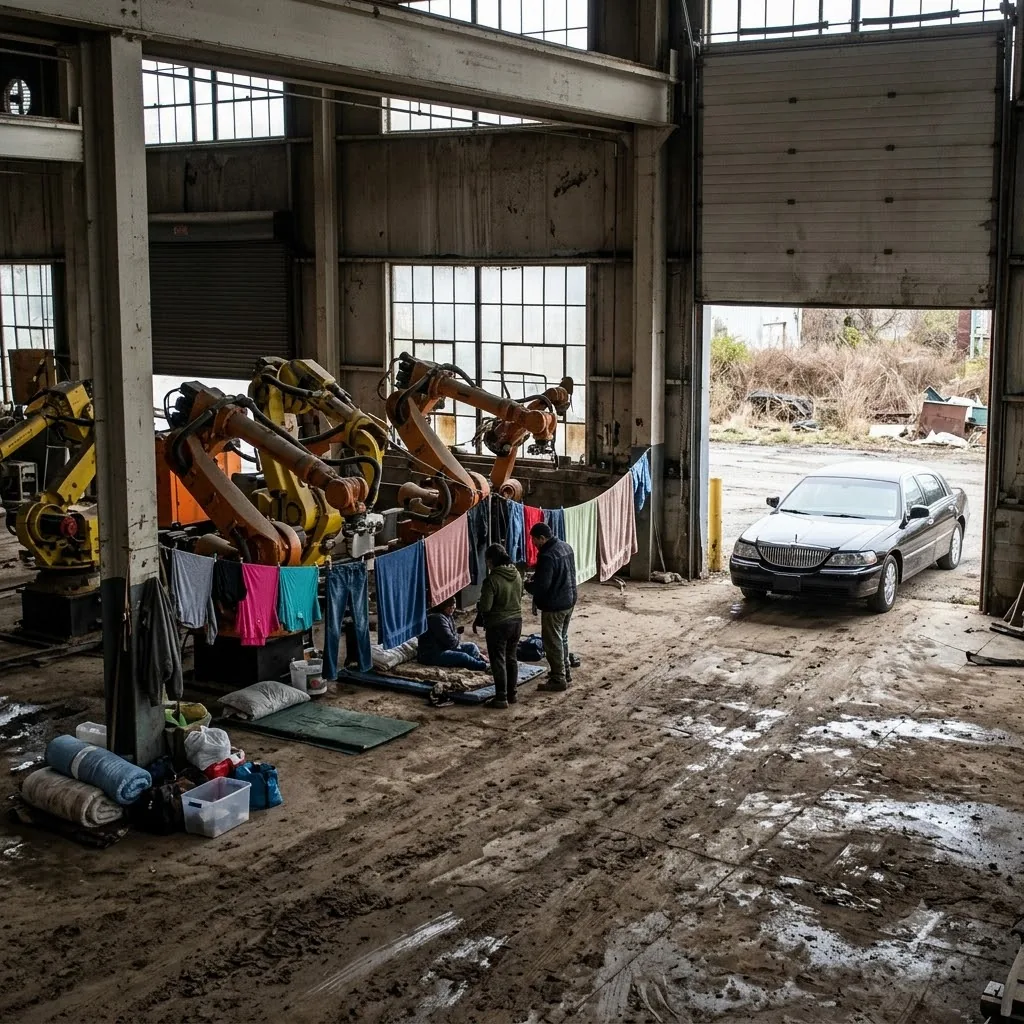
Marcus watched Mrs. Gable drape a dripping, mud-stained quilt over the dormant claw of assembly line arm number four just as a sleek black towncar crunched to a halt outside the mud-caked loading docks. The vehicle looked violently out of place against the wreckage of the flooded valley, its polished grille reflecting the stagnant brown water that had swallowed their neighborhood. For three days, the high ground of the stamping plant had been their only sanctuary. Now, the heavy doors of the towncar swung open.
A woman stepped out. Her tan trench coat was entirely devoid of the gray sludge that coated everything else in a ten-mile radius, her shoes pristine black leather. She did not look at the makeshift clotheslines strung between the heavy machinery. She did not look at the wooden shipping pallets where thirty desperate families huddled over camp stoves trying to stay warm. Her gaze remained fixed straight ahead, locked onto the far wall of the production floor. Behind her, a burly man in work boots and a high-vis vest climbed out of the driver’s side, pulling a massive cordless drill from the trunk.
Marcus pushed away from the foreman’s desk. He wiped his greasy hands on his denim overalls, stepping into the center aisle to intercept her. They assumed FEMA would eventually show up, or an insurance adjuster sent from the capital to survey the catastrophic damage. The woman’s unyielding posture and sharp, rhythmic footsteps suggested authority, the kind that usually came with clipboards and disaster relief forms. Yet she carried nothing but a slim, unmarked leather folio.
“Ma’am,” Marcus said, raising a hand to signal his presence. “The main office is locked up, but we have most of the folks stationed near the loading bays for ventilation.”
She walked right past him. She did not slow her pace, nor did she acknowledge his voice. The air displaced by her movement carried a faint scent of expensive floral perfume, an alien, sterile odor cutting through the heavy stench of damp drywall and rotting river mud. Marcus turned, falling into step a few paces behind her. He exchanged a bewildered look with Elias, who was currently boiling river water on a single burner near the breakroom doors. Elias shook his head, gripping a wrench tight in his hand.
“Hey,” Marcus called out, raising his voice to cut through the echoing murmurs of the displaced families. “You cannot just wander through the production line. There are children sleeping under those conveyor belts.”
The woman stopped abruptly in front of a pair of heavy steel doors at the rear of the facility. The stenciled yellow letters read MAIN ELECTRICAL ROOM – AUTHORIZED PERSONNEL ONLY. The iron handle was secured by a thick chain and a heavy brass padlock. She leaned in, tapping the cold metal lock with a manicured fingernail.
“Drill it,” she told the man in the high-vis vest.
The contractor stepped forward, raising the heavy-duty power tool. The whining shriek of the drill bit biting into hardened metal shattered the exhausted quiet of the factory floor. Several children woke up crying instantly. Mothers clutched their damp blankets, staring in shock at the intrusion. Marcus broke into a jog, closing the distance between them, his heavy steel-toed boots echoing over the mechanical screeching.
“Hold on,” Marcus shouted, waving his arms wide. “Stop doing that right now. You cannot break into the breaker room. That is the only thing keeping the emergency lights on, and we need the exhaust fans running or this place turns into a humid oven by noon.”
The woman finally turned her head, offering Marcus a look of profound, icy irritation. Her expression held no sympathy, no recognition of the tragedy that had forced his community to turn the dry factory into a desperate refugee camp. She checked a thin silver watch on her left wrist, smoothed a crease in her coat, then looked back at the contractor.
“Use the carbide bit,” she instructed, her voice calm and entirely devoid of human warmth. “I need that panel open before the hour is up, and I do not have time for delays.”
Marcus stepped directly between the contractor and the door, holding his hands up to physically block the drill. The contractor lowered the tool, looking to the woman for direction. Marcus felt his heart hammering a frantic rhythm against his ribs. They had lost their houses, their cars, and their worldly possessions to the sudden crest of the river. This concrete floor was the absolute last refuge they possessed, and he would not let a stranger tear away their final shred of security.
“I am the floor supervisor here,” Marcus said, keeping his tone as level as possible despite the rising panic tightening his chest. “I do not care if you are with the government or the insurance agency. You are not cutting our power.”
The woman reached into her slim leather folio and withdrew a single sheet of heavy stock paper. She did not speak. She simply held it out. It was not a disaster relief form, nor was it a damage assessment from a municipal agency. Marcus stared at the bold black lettering at the top of the page, a sick feeling of dread pooling in his stomach as the woman gave a silent nod to the contractor, and the man revved the drill again.
Marcus watched Mrs. Gable drape a dripping, mud-stained quilt over the dormant claw of assembly line arm number four just as a sleek black towncar crunched to a halt outside the mud-caked loading docks. The vehicle looked violently out of place against the wreckage of the flooded valley, its polished grille reflecting the stagnant brown water that had swallowed their neighborhood. For three days, the high ground of the stamping plant had been their only sanctuary. Now, the heavy doors of the towncar swung open.
A woman stepped out. Her tan trench coat was entirely devoid of the gray sludge that coated everything else in a ten-mile radius, her shoes pristine black leather. She did not look at the makeshift clotheslines strung between the heavy machinery. She did not look at the wooden shipping pallets where thirty desperate families huddled over camp stoves trying to stay warm. Her gaze remained fixed straight ahead, locked onto the far wall of the production floor. Behind her, a burly man in work boots and a high-vis vest climbed out of the driver’s side, pulling a massive cordless drill from the trunk.
Marcus pushed away from the foreman’s desk. He wiped his greasy hands on his denim overalls, stepping into the center aisle to intercept her. They assumed FEMA would eventually show up, or an insurance adjuster sent from the capital to survey the catastrophic damage. The woman’s unyielding posture and sharp, rhythmic footsteps suggested authority, the kind that usually came with clipboards and disaster relief forms. Yet she carried nothing but a slim, unmarked leather folio.
“Ma’am,” Marcus said, raising a hand to signal his presence. “The main office is locked up, but we have most of the folks stationed near the loading bays for ventilation.”
She walked right past him. She did not slow her pace, nor did she acknowledge his voice. The air displaced by her movement carried a faint scent of expensive floral perfume, an alien, sterile odor cutting through the heavy stench of damp drywall and rotting river mud. Marcus turned, falling into step a few paces behind her. He exchanged a bewildered look with Elias, who was currently boiling river water on a single burner near the breakroom doors. Elias shook his head, gripping a wrench tight in his hand.
“Hey,” Marcus called out, raising his voice to cut through the echoing murmurs of the displaced families. “You cannot just wander through the production line. There are children sleeping under those conveyor belts.”
The woman stopped abruptly in front of a pair of heavy steel doors at the rear of the facility. The stenciled yellow letters read MAIN ELECTRICAL ROOM – AUTHORIZED PERSONNEL ONLY. The iron handle was secured by a thick chain and a heavy brass padlock. She leaned in, tapping the cold metal lock with a manicured fingernail.
“Drill it,” she told the man in the high-vis vest.
The contractor stepped forward, raising the heavy-duty power tool. The whining shriek of the drill bit biting into hardened metal shattered the exhausted quiet of the factory floor. Several children woke up crying instantly. Mothers clutched their damp blankets, staring in shock at the intrusion. Marcus broke into a jog, closing the distance between them, his heavy steel-toed boots echoing over the mechanical screeching.
“Hold on,” Marcus shouted, waving his arms wide. “Stop doing that right now. You cannot break into the breaker room. That is the only thing keeping the emergency lights on, and we need the exhaust fans running or this place turns into a humid oven by noon.”
The woman finally turned her head, offering Marcus a look of profound, icy irritation. Her expression held no sympathy, no recognition of the tragedy that had forced his community to turn the dry factory into a desperate refugee camp. She checked a thin silver watch on her left wrist, smoothed a crease in her coat, then looked back at the contractor.
“Use the carbide bit,” she instructed, her voice calm and entirely devoid of human warmth. “I need that panel open before the hour is up, and I do not have time for delays.”
Marcus stepped directly between the contractor and the door, holding his hands up to physically block the drill. The contractor lowered the tool, looking to the woman for direction. Marcus felt his heart hammering a frantic rhythm against his ribs. They had lost their houses, their cars, and their worldly possessions to the sudden crest of the river. This concrete floor was the absolute last refuge they possessed, and he would not let a stranger tear away their final shred of security.
“I am the floor supervisor here,” Marcus said, keeping his tone as level as possible despite the rising panic tightening his chest. “I do not care if you are with the government or the insurance agency. You are not cutting our power.”
The woman reached into her slim leather folio and withdrew a single sheet of heavy stock paper. She did not speak. She simply held it out. It was not a disaster relief form, nor was it a damage assessment from a municipal agency. Marcus stared at the bold black lettering at the top of the page, a sick feeling of dread pooling in his stomach as the woman gave a silent nod to the contractor, and the man revved the drill again.