Story code: ST-001405
Part 1: The Weight of the Harvest
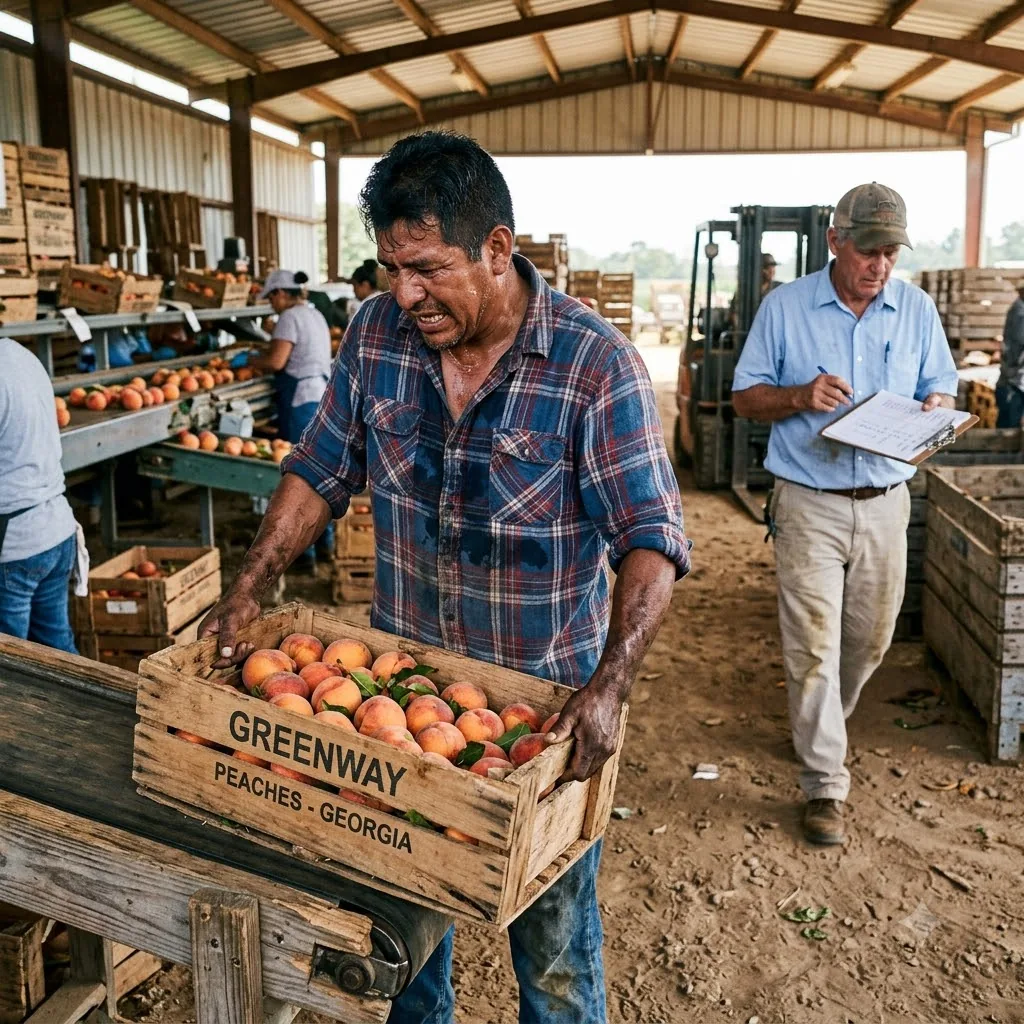
Mateo hoisted the wooden crate of peaches against his chest, the rough slats pressing directly into the weeping blisters hidden beneath his thick flannel shirt. The packing shed temperature hovered near a hundred degrees, baking the stagnant air with the sickly-sweet smell of overripe fruit, but he kept both heavy sleeves buttoned tight to his wrists. Every movement tore at the raw, oozing flesh on his forearms. He locked his jaw against the searing heat of the chemical burns and stacked the heavy crate onto the wooden pallet. He needed this harvest pay to survive the month, which meant he could not let anyone see the damage under the fabric.
Across the concrete floor, Dale paced in jagged, frantic lines. The farm owner held a clipboard clamped tightly in his right hand, his thumb furiously flipping through a thick stack of stiff white envelopes and brightly colored financial notices. Dale’s heavy boots slapped hard against the cement, echoing over the low hum of the sorting belts. He did not look at the mounds of peaches. He did not look at the loading dock. He just stared at the papers, his face flushed a dangerous, mottled red that had nothing to do with the suffocating summer heat in the shed.
Mateo turned back to the conveyor belt, keeping his arms as stiff as possible. Another wooden crate slammed into the metal stopper. He gripped the edges, his canvas work gloves slipping slightly on the damp wood. The winter flannel was becoming a medieval torture device. Sweat soaked through the thick cotton, carrying stinging salt directly into the open sores. He imagined the fabric fusing permanently to his skin. He breathed through his nose, a slow, shallow rhythm, trying to detach his mind from the fire in his arms. He lifted the crate, pivoting toward the pallet.
“Move it faster,” Dale shouted, his voice cracking loudly over the machinery.
Mateo flinched. Dale had stopped pacing and was glaring at the loading crew, waving the clipboard in the air. The red-stamped past-due notices on the clip fluttered wildly.
“We are completely behind schedule,” Dale yelled, marching toward the sorting belt. “I have transport trucks waiting. I have the bank calling my house every morning. Stop moving like you are underwater and load the damn pallets.”
Mateo lowered his head and reached for the next crate. His left arm trembled involuntarily. The agricultural chemical spray from two days ago had soaked right through his thin cotton undershirt, and the resulting burns were spreading, turning the skin a furious, bubbling purple. He had scavenged the heavy winter flannel from a church donation bin specifically to hide the damage. If Dale knew he was injured, Mateo would be sent home without pay. If the other workers saw the burns, they would talk. So Mateo cooked inside the heavy shirt, letting the sweat and the ruptured blisters merge into a constant, blinding agony.
Dale stepped closer to Mateo’s station, his eyes darting frantically between the unstacked fruit and the numbers on his clipboard. He muttered a string of harsh curses under his breath, tapping a ballpoint pen against the metal clip.
“Three pallets by noon,” Dale said, his voice dropping to a strained, breathless whisper as he stopped right next to Mateo. “If this load does not clear the packing house today, we are completely under.”
Mateo did not look up. He focused entirely on his hands. Grip the wood. Lift with the legs. Keep the arms rigid. Do not let the rough fabric rub against the blisters. He swung a crate over to the pallet. The pain spiked, a sharp, electric jolt shooting from his wrist all the way to his shoulder. He swallowed a groan and turned back for the next one.
The belt kept churning out fruit. Mateo grabbed the next crate. This one was damp on the bottom, the wood softened by crushed peaches. As he hoisted it, his left hand slipped. He compensated by clamping his forearm tight against the bottom edge to keep the box from falling. The rough wood sheared directly across his worst cluster of blisters.
His breath hitched. His muscles spasmed instinctively, rejecting the massive wave of pain. The left side of the crate dipped. Mateo tried to catch it, twisting his body, but his grip completely failed.
The wooden slats splintered violently against the concrete floor. Forty pounds of peaches burst outward, rolling and smashing into a pulpy mess around Dale’s boots.
The packing shed went dead silent. The conveyor belt hummed, but no one on the floor moved.
Dale stared at the ruined fruit, his chest heaving. The clipboard shook in his hand. He took a slow, deliberate step forward, his boot squashing a bruised peach into the cement.
“What,” Dale said, his voice dangerously low, “are you doing.”
Mateo scrambled to his knees, desperate to clean up the mess before Dale fired him. He reached for the broken pieces of wood, his movements panicked and clumsy. He kept his head down, grabbing handfuls of the slippery fruit.
Dale stepped forward and grabbed Mateo by the left arm to haul him to his feet.
Dale’s thick fingers clamped directly over the hidden burns.
Mateo screamed. The sound tore out of his throat, raw and involuntary. He violently wrenched his arm away, falling backward onto the wet concrete. The sudden, violent motion was too much for the old flannel shirt. The fabric caught on a sharp splinter of the broken crate.
The sleeve ripped open from the wrist to the elbow.
Mateo clutched his arm to his chest, but he was too late. The heavy fabric hung in shreds, completely exposing the furious, weeping chemical burns, the angry red flesh slick with clear fluid and sweat.
Dale stood frozen over him. The frantic anger vanished from the farm owner’s face, replaced by a sudden, rigid stillness as his eyes locked onto the ruined skin.
Mateo hoisted the wooden crate of peaches against his chest, the rough slats pressing directly into the weeping blisters hidden beneath his thick flannel shirt. The packing shed temperature hovered near a hundred degrees, baking the stagnant air with the sickly-sweet smell of overripe fruit, but he kept both heavy sleeves buttoned tight to his wrists. Every movement tore at the raw, oozing flesh on his forearms. He locked his jaw against the searing heat of the chemical burns and stacked the heavy crate onto the wooden pallet. He needed this harvest pay to survive the month, which meant he could not let anyone see the damage under the fabric.
Across the concrete floor, Dale paced in jagged, frantic lines. The farm owner held a clipboard clamped tightly in his right hand, his thumb furiously flipping through a thick stack of stiff white envelopes and brightly colored financial notices. Dale’s heavy boots slapped hard against the cement, echoing over the low hum of the sorting belts. He did not look at the mounds of peaches. He did not look at the loading dock. He just stared at the papers, his face flushed a dangerous, mottled red that had nothing to do with the suffocating summer heat in the shed.
Mateo turned back to the conveyor belt, keeping his arms as stiff as possible. Another wooden crate slammed into the metal stopper. He gripped the edges, his canvas work gloves slipping slightly on the damp wood. The winter flannel was becoming a medieval torture device. Sweat soaked through the thick cotton, carrying stinging salt directly into the open sores. He imagined the fabric fusing permanently to his skin. He breathed through his nose, a slow, shallow rhythm, trying to detach his mind from the fire in his arms. He lifted the crate, pivoting toward the pallet.
“Move it faster,” Dale shouted, his voice cracking loudly over the machinery.
Mateo flinched. Dale had stopped pacing and was glaring at the loading crew, waving the clipboard in the air. The red-stamped past-due notices on the clip fluttered wildly.
“We are completely behind schedule,” Dale yelled, marching toward the sorting belt. “I have transport trucks waiting. I have the bank calling my house every morning. Stop moving like you are underwater and load the damn pallets.”
Mateo lowered his head and reached for the next crate. His left arm trembled involuntarily. The agricultural chemical spray from two days ago had soaked right through his thin cotton undershirt, and the resulting burns were spreading, turning the skin a furious, bubbling purple. He had scavenged the heavy winter flannel from a church donation bin specifically to hide the damage. If Dale knew he was injured, Mateo would be sent home without pay. If the other workers saw the burns, they would talk. So Mateo cooked inside the heavy shirt, letting the sweat and the ruptured blisters merge into a constant, blinding agony.
Dale stepped closer to Mateo’s station, his eyes darting frantically between the unstacked fruit and the numbers on his clipboard. He muttered a string of harsh curses under his breath, tapping a ballpoint pen against the metal clip.
“Three pallets by noon,” Dale said, his voice dropping to a strained, breathless whisper as he stopped right next to Mateo. “If this load does not clear the packing house today, we are completely under.”
Mateo did not look up. He focused entirely on his hands. Grip the wood. Lift with the legs. Keep the arms rigid. Do not let the rough fabric rub against the blisters. He swung a crate over to the pallet. The pain spiked, a sharp, electric jolt shooting from his wrist all the way to his shoulder. He swallowed a groan and turned back for the next one.
The belt kept churning out fruit. Mateo grabbed the next crate. This one was damp on the bottom, the wood softened by crushed peaches. As he hoisted it, his left hand slipped. He compensated by clamping his forearm tight against the bottom edge to keep the box from falling. The rough wood sheared directly across his worst cluster of blisters.
His breath hitched. His muscles spasmed instinctively, rejecting the massive wave of pain. The left side of the crate dipped. Mateo tried to catch it, twisting his body, but his grip completely failed.
The wooden slats splintered violently against the concrete floor. Forty pounds of peaches burst outward, rolling and smashing into a pulpy mess around Dale’s boots.
The packing shed went dead silent. The conveyor belt hummed, but no one on the floor moved.
Dale stared at the ruined fruit, his chest heaving. The clipboard shook in his hand. He took a slow, deliberate step forward, his boot squashing a bruised peach into the cement.
“What,” Dale said, his voice dangerously low, “are you doing.”
Mateo scrambled to his knees, desperate to clean up the mess before Dale fired him. He reached for the broken pieces of wood, his movements panicked and clumsy. He kept his head down, grabbing handfuls of the slippery fruit.
Dale stepped forward and grabbed Mateo by the left arm to haul him to his feet.
Dale’s thick fingers clamped directly over the hidden burns.
Mateo screamed. The sound tore out of his throat, raw and involuntary. He violently wrenched his arm away, falling backward onto the wet concrete. The sudden, violent motion was too much for the old flannel shirt. The fabric caught on a sharp splinter of the broken crate.
The sleeve ripped open from the wrist to the elbow.
Mateo clutched his arm to his chest, but he was too late. The heavy fabric hung in shreds, completely exposing the furious, weeping chemical burns, the angry red flesh slick with clear fluid and sweat.
Dale stood frozen over him. The frantic anger vanished from the farm owner’s face, replaced by a sudden, rigid stillness as his eyes locked onto the ruined skin.