Story code: ST-001418
Part 1: The Tribune
The silence in Principal Martinez’s office was so absolute that Elias could hear the faint, mechanical sweep of the platinum watch on Richard Vance’s wrist. It was an ambush, scheduled forty minutes ago under the guise of a routine parent-teacher introduction, now violently transformed into a tribunal. Vance sat in the low vinyl guest chair, yet he somehow managed to project the physical dominance of a man looking down from a balcony. His charcoal suit was bespoke, the fabric catching the fluorescent light with an expensive sheen that stood in stark contrast to the scuffed linoleum floor.
Principal Martinez kept her eyes fixed on her leather desk blotter. Her usual commanding presence had evaporated the moment Vance walked through the door. Vance was not just a parent. His name was on the bronze plaque outside the new athletic center. He commanded resources that could bankrupt the district in legal fees or fund it for a decade, and he wielded that power with casual, terrifying precision.
Vance leaned forward and placed a single sheet of paper on the glass desktop. It was Elias’s syllabus for the advanced senior civics seminar. A thick black line of permanent marker obliterated one of the supplementary reading assignments.
Vance spoke in a smooth, practiced baritone that never shifted from a conversational hum. He informed Elias that the assignment was a direct threat to the moral fabric of the community. He used phrases constructed for maximum political yield, stating that his duty was to safeguard the innocence of the youth from ideological rot. He declared the reading material to be deliberate indoctrination, a weapon designed to twist young minds and turn children against the values of their own homes.
Elias stared at the blacked-out line on the paper. The text was a standard historical analysis. It was a dry, academic look at local civic infrastructure and municipal development, utilized in classrooms across the state. There was nothing radical about it. Elias kept his hands folded in his lap to hide the slight tremor in his fingers. He stated that the material was pulled directly from the state-approved curriculum matrix. He pointed out that the assignment focused strictly on municipal zoning and historical redlining, devoid of any personal commentary.
Vance did not blink. He silenced Elias by raising a single, manicured hand. The gesture was small but carried the weight of a gavel strike.
He stated that he did not care about the state matrix. He cared about protecting children from predators who hid behind academic freedom. He promised to make Elias the center of a very loud, very public crusade. Vance detailed the exact mechanics of the destruction he was prepared to unleash. He would organize the parent coalition. He would flood the next school board meeting with television cameras and screaming protestors. He would ensure Elias’s name became synonymous with the corruption of minors in every local news broadcast and social media feed in the county.
Martinez finally attempted to speak. She offered to suspend the reading assignment pending a formal committee review, her voice thin and accommodating.
Vance ignored her completely, keeping his cold, unblinking gaze locked on Elias. The suffocating pressure in the room shifted into something sharper, something entirely disconnected from a high school civics class. Elias realized with a cold spike of dread that Vance had not quoted a single sentence from the book. He had not referenced the author. He had not made a single specific claim about the text itself. The political outrage was a theatrical production, a loud, blinding smokescreen deployed to cover a deeply personal, hidden agenda. Vance was not here to debate municipal history. He was here to execute a threat.
Vance smoothed the lapel of his jacket and stated that he preferred to handle things efficiently. He explained that he always offered a graceful exit before he resorted to total ruin. He demanded Elias’s immediate resignation, effective by the end of the school day.
Elias refused, stating flatly that he had done nothing wrong and would not abandon his students over a fabricated controversy.
A slow, chilling smile spread across Vance’s face. It was the expression of a man who had anticipated the exact move his opponent just made. He reached into the interior breast pocket of his bespoke jacket.
He said he was hoping Elias would choose the hard way.
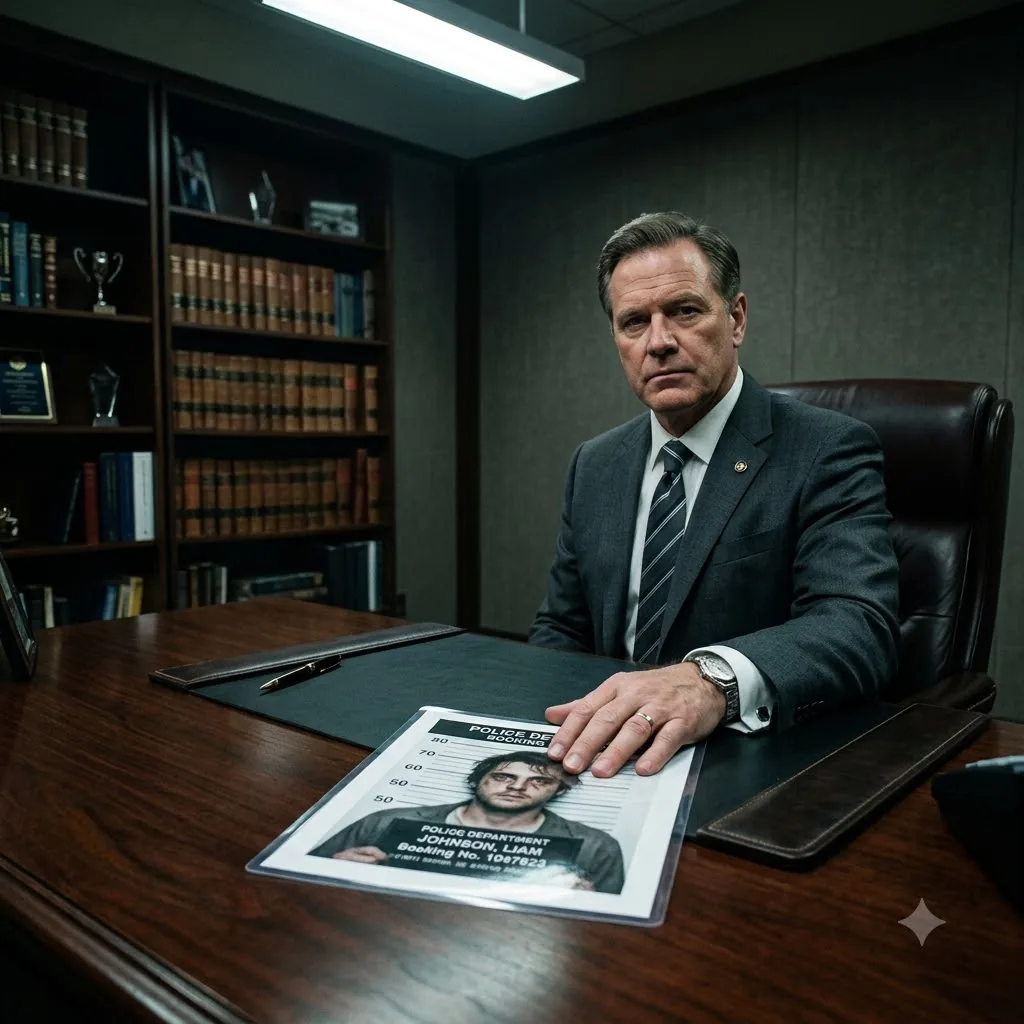
Vance withdrew a flat, heavy rectangle and slid it face-up across the polished glass of the desk. It stopped inches from Elias’s folded hands. It was not a curriculum complaint, a legal summons, or a drafted resignation letter.
It was a laminated police mugshot.
The silence in Principal Martinez’s office was so absolute that Elias could hear the faint, mechanical sweep of the platinum watch on Richard Vance’s wrist. It was an ambush, scheduled forty minutes ago under the guise of a routine parent-teacher introduction, now violently transformed into a tribunal. Vance sat in the low vinyl guest chair, yet he somehow managed to project the physical dominance of a man looking down from a balcony. His charcoal suit was bespoke, the fabric catching the fluorescent light with an expensive sheen that stood in stark contrast to the scuffed linoleum floor.
Principal Martinez kept her eyes fixed on her leather desk blotter. Her usual commanding presence had evaporated the moment Vance walked through the door. Vance was not just a parent. His name was on the bronze plaque outside the new athletic center. He commanded resources that could bankrupt the district in legal fees or fund it for a decade, and he wielded that power with casual, terrifying precision.
Vance leaned forward and placed a single sheet of paper on the glass desktop. It was Elias’s syllabus for the advanced senior civics seminar. A thick black line of permanent marker obliterated one of the supplementary reading assignments.
Vance spoke in a smooth, practiced baritone that never shifted from a conversational hum. He informed Elias that the assignment was a direct threat to the moral fabric of the community. He used phrases constructed for maximum political yield, stating that his duty was to safeguard the innocence of the youth from ideological rot. He declared the reading material to be deliberate indoctrination, a weapon designed to twist young minds and turn children against the values of their own homes.
Elias stared at the blacked-out line on the paper. The text was a standard historical analysis. It was a dry, academic look at local civic infrastructure and municipal development, utilized in classrooms across the state. There was nothing radical about it. Elias kept his hands folded in his lap to hide the slight tremor in his fingers. He stated that the material was pulled directly from the state-approved curriculum matrix. He pointed out that the assignment focused strictly on municipal zoning and historical redlining, devoid of any personal commentary.
Vance did not blink. He silenced Elias by raising a single, manicured hand. The gesture was small but carried the weight of a gavel strike.
He stated that he did not care about the state matrix. He cared about protecting children from predators who hid behind academic freedom. He promised to make Elias the center of a very loud, very public crusade. Vance detailed the exact mechanics of the destruction he was prepared to unleash. He would organize the parent coalition. He would flood the next school board meeting with television cameras and screaming protestors. He would ensure Elias’s name became synonymous with the corruption of minors in every local news broadcast and social media feed in the county.
Martinez finally attempted to speak. She offered to suspend the reading assignment pending a formal committee review, her voice thin and accommodating.
Vance ignored her completely, keeping his cold, unblinking gaze locked on Elias. The suffocating pressure in the room shifted into something sharper, something entirely disconnected from a high school civics class. Elias realized with a cold spike of dread that Vance had not quoted a single sentence from the book. He had not referenced the author. He had not made a single specific claim about the text itself. The political outrage was a theatrical production, a loud, blinding smokescreen deployed to cover a deeply personal, hidden agenda. Vance was not here to debate municipal history. He was here to execute a threat.
Vance smoothed the lapel of his jacket and stated that he preferred to handle things efficiently. He explained that he always offered a graceful exit before he resorted to total ruin. He demanded Elias’s immediate resignation, effective by the end of the school day.
Elias refused, stating flatly that he had done nothing wrong and would not abandon his students over a fabricated controversy.
A slow, chilling smile spread across Vance’s face. It was the expression of a man who had anticipated the exact move his opponent just made. He reached into the interior breast pocket of his bespoke jacket.
He said he was hoping Elias would choose the hard way.
Vance withdrew a flat, heavy rectangle and slid it face-up across the polished glass of the desk. It stopped inches from Elias’s folded hands. It was not a curriculum complaint, a legal summons, or a drafted resignation letter.
It was a laminated police mugshot.