Story code: ST-001420
Part 2: The Shadow Profile
The metallic crack of the deadbolt echoed through the stifling house, finalizing the shift from a family home to a holding cell. Elias stood frozen in the hallway. The ambient hum of the central air conditioner remained dead, leaving the stagnant air suffocatingly hot. The faint, rhythmic squeak of Pastor Miller’s leather shoes shifting under the dining table was the only sound that pierced the silence.
His father pulled the brass key from the lock, the metal scraping loudly, and dropped it into his slacks pocket. He turned and marched back toward the dining room, his heavy boots thudding against the hardwood. He did not sit at the table with his wife and the pastor. Instead, he took a position by the sliding glass doors leading to the backyard patio, crossing his arms and planting his feet wide. He had effectively blocked the only two exits on the ground floor.
“Sit down, Elias,” Pastor Miller said. The clergyman’s voice was remarkably soft, coated in a practiced, syrupy cadence designed to project authority wrapped in faux compassion. He gestured again to the empty chair.
Elias didn’t move. He felt the phantom weight of his smartphone in his front pocket. It felt like a useless, heavy brick. If he reached for it, if he even twitched toward dialing for help, his father would cross the room in two strides and wrestle it away. The physical distance between the hallway and the dining table felt like a canyon, but the distance to the front door was entirely insurmountable without the key.
“I said, sit,” his father commanded, the words rumbling low and dangerous in his chest.
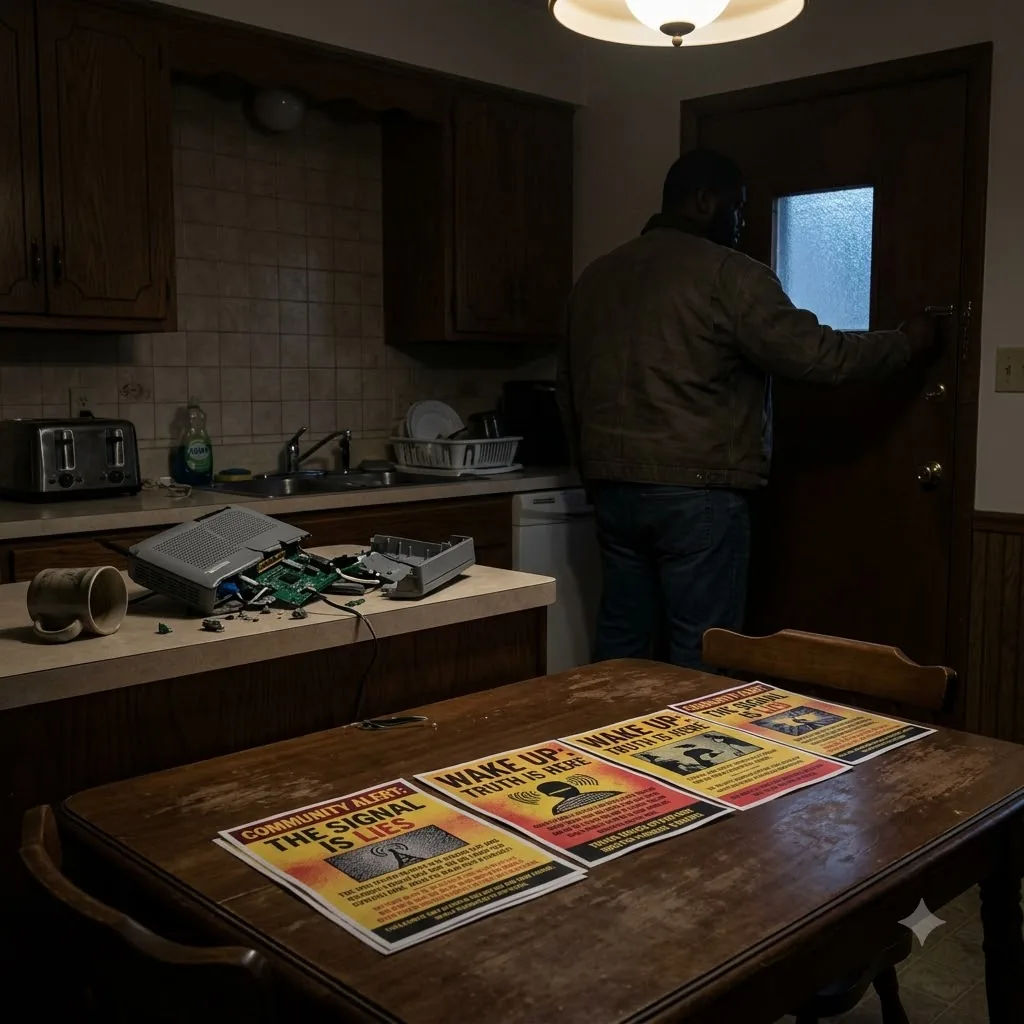
Elias swallowed hard, his throat dry as dust. He stepped forward, leaving his backpack abandoned in the hall, and lowered himself onto the edge of the wooden chair. The grid of glossy printouts glared up at him from the oak table. Now that he was closer, he could see the horrifying, granular detail of the algorithmic betrayal.
His mother reached out with a trembling hand, her fingernail tapping a printed spreadsheet. “You thought you were being careful,” she whispered, her voice tight with restrained hysteria. “You thought paying in cash and taking the bus would keep this… this sickness hidden from us.”
Elias kept his eyes on the paper under her finger. It wasn’t just a list of ads; it was a data log from their family cellular provider.
“The internet doesn’t keep secrets, Elias,” Pastor Miller chimed in, leaning forward over his steepled fingers. “It recognizes sin. It categorizes it.”
“It categorizes location data,” his father snapped, glaring past Elias toward the smashed ruins of the router in the kitchen. “The devices talk to each other. You share a network with us. You share a data plan. For three weeks, your mother has been bombarded with advertisements for secular youth counseling and atheist support groups. It invaded her phone. It invaded my tablet. The algorithms saw where your phone was spending every Tuesday afternoon, grouped our profiles together based on our home address and shared IP, and served us the rot you’ve been seeking out.”
Elias felt the blood drain from his face. The invisible machinery hadn’t just tracked him; it had actively marketed his secret to his family. His desperate attempts at privacy-the cash, the burner email, the convoluted bus routes-were utterly rendered useless by the silent background pinging of his phone’s GPS, syncing seamlessly to a household advertising ID.
“I destroyed the router,” his father continued, his jaw working furiously. “I cut the conduit. But the damage is done. The poison is already in this house.”
“We are here to extract it,” Pastor Miller said smoothly. He reached down to his briefcase on the floor and lifted a thick manila folder, placing it over the targeted ads. He flipped it open to reveal a multi-page contract bearing the logo of the wilderness retreat-the exact same logo from the banner ads on the table.
“Camp Maranatha,” his mother said, a single tear finally spilling over her lashes and cutting a clean line through her makeup. “It’s a specialized facility, Elias. Ninety days. Intensive spiritual realignment and behavioral modification. They know exactly how to handle youths who have been corrupted by these secular clinics.”
Pastor Miller unclipped a black ballpoint pen from his suit jacket and slid it across the polished oak table. It rolled smoothly, stopping mere inches from Elias’s hand. “This is a voluntary intake form. We want you to choose this path, Elias. We want you to walk into the light willingly.”
Elias stared at the pen. He looked at his mother’s hollow, desperate eyes, then to the pastor’s grim, unyielding expression, and finally to his father, who stood like a sentinel blocking the patio doors. The air in the room felt impossibly thin.
“And if I don’t sign it?” Elias asked. His voice cracked, sounding small and foreign in his own ears.
His father’s expression darkened into something violent. “You are seventeen years old. You are under my roof. You will go, whether your signature is on that paper or mine.”
Elias calculated his options, the panic rising in his chest like floodwater. He couldn’t overpower his father. He couldn’t outrun the pastor to the front door, not with the deadbolt locked and the key buried in his father’s pocket. He looked back toward the kitchen. The smashed router. The heavy steel claw hammer rested right next to it on the granite island, dusted in black plastic shavings. If he could flip the heavy dining table backward, scramble into the kitchen, and grab the hammer, he might be able to smash the glass of the patio door before they caught him. It was reckless. It was dangerous. But as the walls closed in, it was his only physical chance at escape.
He shifted his weight, pressing his sneakers firmly against the hardwood, preparing his leg muscles to spring. He took a slow, shallow breath, his eyes locked on the pen, waiting for his father to look away for just a fraction of a second.
Before he could move, a low, mechanical rumble vibrated through the floorboards.
Elias froze. The heavy, unmistakable sound of a diesel engine grew louder, rattling the drawn blinds of the living room windows. Heavy tires crunched over the gravel of their driveway, stopping directly outside the front door.
Pastor Miller smiled, a cold, thin line stretching across his face. He reached out and calmly pulled the pen back across the table. “The signature was merely a courtesy, Elias. The transport team prefers a cooperative passenger, but they are fully trained and legally authorized for the alternative.”
Heavy, booted footsteps pounded onto the front porch, followed by three loud, rhythmic knocks hammering against the wood of the locked door.