Story code: ST-001466
Part 2: The Collateral Sink
Arthur stared at the glowing screen of his smartphone, the cold morning air stinging his bare knuckles. His thumb hovered over the zoomed-in section of the architectural schematic. The reinforced concrete trench wasn’t just a foundation reinforcement. He dragged the digital blueprint sideways, tracing the thick red lines of the proposed excavation as it branched outward from the neighboring property.
The trench originated in the center of the vacant retail unit, branching outward like a skeletal root system before terminating directly beneath the load-bearing pillars of his coffee shop. The schematic labeled these terminating points as “Directional Expansion Vents.”
Arthur recognized the terminology instantly. During his decade at the defense contractor, he had modeled casualty projections for urban containment protocols. “Directional Expansion” was sanitized contractor-speak for a sacrificial blowout zone. If the state clinic’s containment failed-whether it was holding an aggressive pathogen, a volatile chemical hazard, or something worse-the facility was not designed to lock down perfectly. Perfect lockdown was a myth. Instead, the failsafe was engineered to vent the catastrophic pressure and heat laterally, away from the suburban residential grid behind the building, and funnel it directly into the adjacent commercial space.
His coffee shop. His quiet sanctuary of water, heat, pressure, and time. The municipal plans designated it as the facility’s blast cushion.
A low, rhythmic vibration shuddered through the soles of his boots. The pneumatic hammer drill on the other side of the barricade had started up again, the grinding noise echoing off the brick walls of the alley.
Arthur shoved the phone into his pocket and walked quickly around the perimeter of the building, his boots crunching on the frost-covered sidewalk. The sun was just beginning to breach the horizon, casting a gray, anemic light over the strip mall. The front windows of the neighboring unit, completely opaque with black film, offered no view of the interior. A heavy, unmarked steel door had already replaced the standard glass storefront.
He grabbed the heavy metal handle and pulled. Locked. He slammed the side of his fist against the reinforced steel, the impact jarring his wrist.
A moment later, a sequence of heavy deadbolts retracted. The door swung open a few inches. A woman in a charcoal gray suit, with a heavy-duty respirator mask hanging loose around her neck, looked out at him. Her eyes were flat, assessing him with the detached, bloodless efficiency of a logistics algorithm.
Arthur demanded an immediate halt to the excavation. He cited the zoning logs, the blowout vents, and the direct threat to his property. He told her she was turning his business into a containment sink.
The woman did not blink. She pulled a laminated folder from a heavy plastic crate just inside the doorway and handed him a single sheet of paper. It was a Notice of Eminent Domain Annexation, authorized under the State Emergency Public Health Act.
She explained, her voice devoid of inflection, that his commercial lease contained a standard municipal subordination clause. Given the urgent nature of the Department of Health’s new initiative, the state had already annexed his sub-foundation. She pointed out that he was legally entitled to operate his above-ground business for another thirty days before the state officially condemned his structure for “ancillary renovations,” at which point he would receive a standard fair-market buyout.
Arthur stared at the document. Thirty days. By then, the vents would be poured, sealed, and active. If a containment breach occurred tomorrow, his shop-and anyone inside it-would be vaporized by a failsafe purge. He told her she was putting civilian lives at risk to fast-track a hazardous facility.
The woman stepped back and pulled the heavy steel door shut without another word. The deadbolts slid back into place with a series of loud, metallic snaps.
Arthur stood on the empty sidewalk, gripping the state notice. The vibration in the ground was growing stronger, sending faint tremors up his legs. He walked back to his coffee shop, unlocking the front door and stepping into the warm, coffee-scented interior.
The digital clock on the wall read five-fifteen. His morning commuters would begin arriving in exactly forty-five minutes.
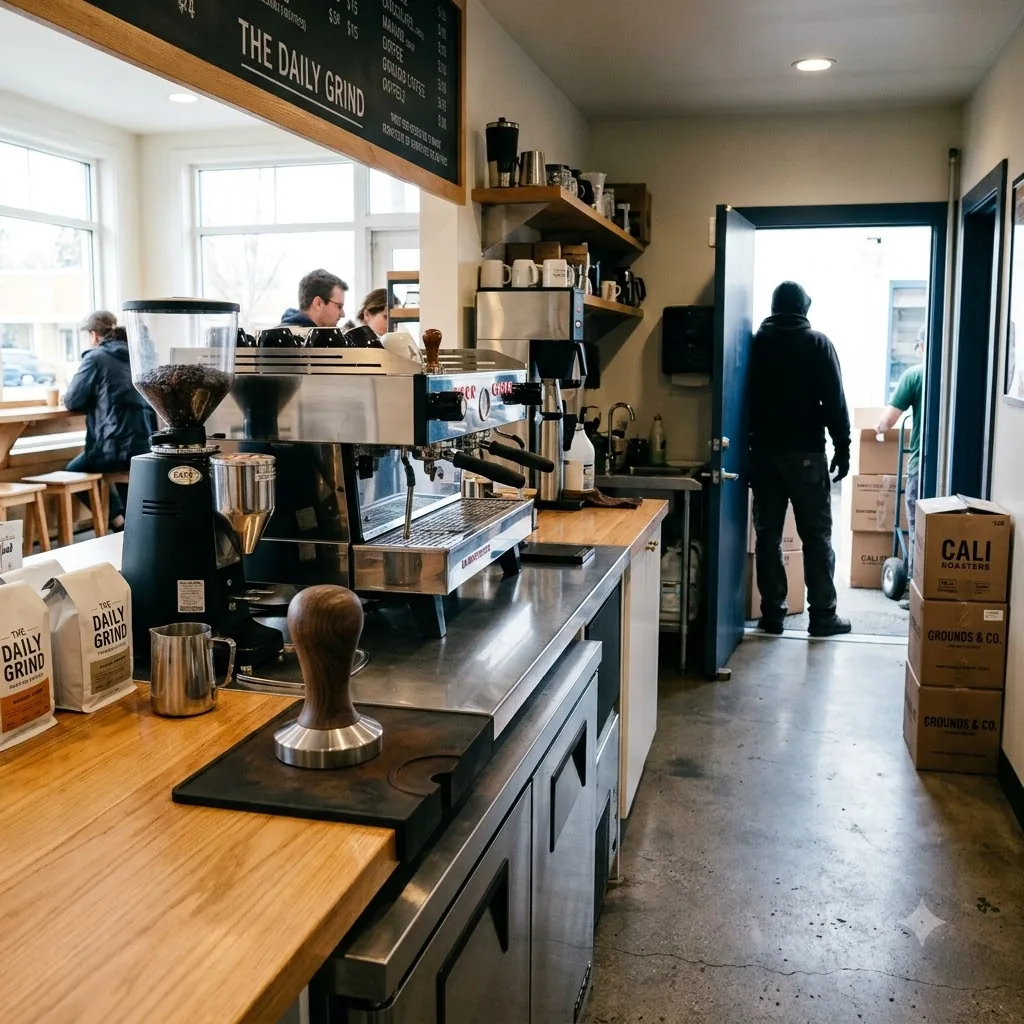
He walked behind the counter, staring at the gleaming quartz countertop and the pristine espresso machine. His entire life savings was tied into this room. The manual labor, the tactile reality-it was supposed to be his permanent escape from the calculus of risk mitigation and acceptable losses.
Beneath the back counter, his laptop sat inside a dusty canvas messenger bag. He hadn’t powered it on since the day he signed his severance paperwork.
Arthur knelt and pulled the laptop out, feeling the cold, brushed aluminum chassis. He set it on the quartz counter, right next to his precision coffee scale.
If he filed an injunction, the municipal courts would take six months to process the hearing. The clinic’s construction crew would finish the concrete trench in forty-eight hours. The state had infinite resources and absolute legal immunity. Playing by the rules of the physical world would only result in his shop, and possibly his customers, being quietly erased.
He opened the laptop. The screen flared to life, casting a harsh, pale light across his face.
During his time at the defense contractor, Arthur had designed the very logistics networks and automated supply chain protocols the state used to supply these containment facilities. He knew the hidden backdoors into the municipal grid. He knew how to falsify structural stability reports, how to trigger automated hazard lockdowns, and how to reroute highly volatile chemical deliveries to catastrophic effect.
Doing so was a federal felony. It meant actively weaponizing the digital infrastructure he had sworn to leave behind. It meant ruining lives, destroying million-dollar supply chains, and initiating offensive digital warfare against a government entity. It was the exact moral event horizon he had bought this coffee shop to avoid crossing.
Arthur listened to the low, grinding vibration of the drill biting into the concrete directly beneath his floorboards. The ceramic espresso cups stacked on top of the machine began to rattle, a high-pitched chattering that filled the empty shop.
He cracked his knuckles, brought up a black command terminal, and began typing.