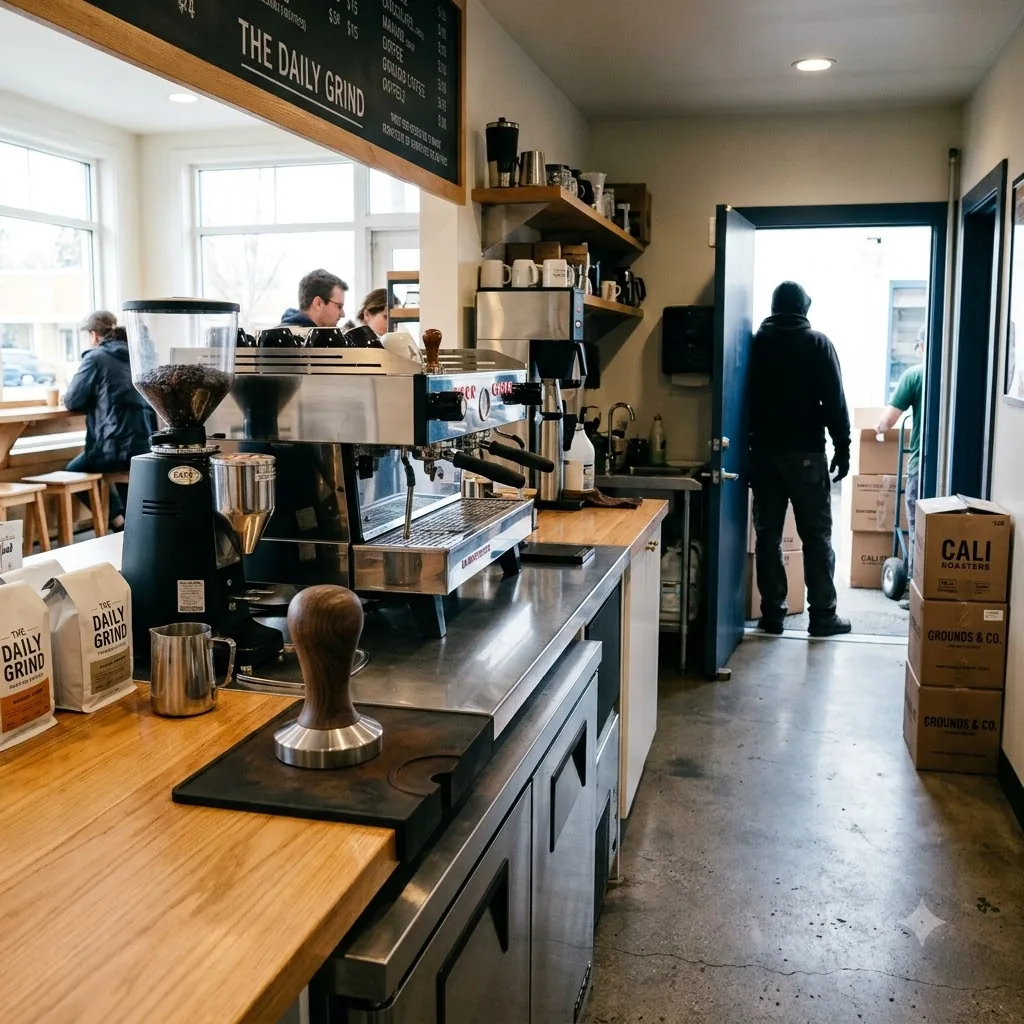
Story code: ST-001466
Part 4: The Permanent Buffer
Chairman Miller did not use his wooden rubber stamp. Instead, he reached for the heavy wooden gavel resting at the edge of his desk and brought it down hard against the veneer table. The sharp, percussive crack echoed through the fluorescent-lit annex, officially logging an indefinite injunction against the Department of Health’s zoning variance, pending a full federal topological audit.
Director Vance did not argue. She did not offer a sanitized bureaucratic countermeasure. She simply closed her laminated folder, placed it into her leather briefcase, and walked down the center aisle of the folding chairs. As she passed Arthur, she did not look at him. She just walked out into the cold evening, leaving the heavy municipal door to swing shut behind her.
Arthur closed his laptop. The projector screen behind the board members flashed blue, then black. The digital warfare was over, but as Arthur slipped the brushed aluminum chassis under his arm, the victory felt entirely hollow.
The next morning, the digital clock on his shop wall read four forty-five. Arthur stood at the counter, leveling his digital scale to exactly eighteen point zero grams of Ethiopian Yirgacheffe. He swiped the microfiber cloth across the quartz countertop. He locked the stainless steel portafilter into the group head and flipped the mechanical switch.
Water, heat, pressure, and time.
The dark crema dropped into the ceramic demitasse, perfectly thick. Yet, the ambient environment of the shop was entirely wrong. There was no low, rhythmic vibration shuddering through the floorboards. There was no grinding pneumatic drill biting into the concrete sub-foundation next door. The silence was absolute, but it was not the peaceful isolation Arthur had purchased with his severance package. It was the heavy, suffocating silence of a bureaucratic freeze.
Arthur draped his canvas apron over the espresso machine and walked down the back hallway. He pushed open the heavy steel fire door and stepped out onto the loading dock.
The galvanized steel barricade was exactly where the state crew had left it yesterday. The heavy-gauge chain was still looped around the structural poles, sealed by the massive industrial padlock. But the workers in the high-visibility vests were gone. The heavy plastic crates of equipment had vanished.
In their place, a thick band of bright yellow municipal tape stretched across the entire width of the shared alcove, stamped with bold black lettering: STOP WORK ORDER – BY AUTHORITY OF THE COUNTY SURVEYOR. Parked sideways at the far end of the alley, blocking the entrance completely, was a state police cruiser. Its engine idled quietly in the morning frost, a trooper sitting inside, guarding a contaminated legal dead zone.
Just beyond the steel barricade, Arthur’s four tall stacks of plastic pastry trays still sat exactly where Hector had dropped them yesterday morning. The cardboard boxes had soaked through from the damp asphalt, the ruined inventory sagging and splitting under its own weight. Hector had texted Arthur ten minutes ago, stating that until the alley was cleared of state police, his company’s liability insurance prohibited him from making the route.
Arthur gripped the cold steel wire of the fence. He looked at the half-dug concrete trench disappearing beneath the foundation of his own building.
The township had stopped the clinic from opening, but the state still held the eminent domain claim on Arthur’s sub-foundation. The collision of the two jurisdictions meant the entire commercial block was now locked in an indefinite legal stasis. The federal audit of the blast radius would take eighteen to twenty-four months. During that time, the state could not pour the concrete, but they also refused to backfill the trench or remove the barricade.
Arthur was trapped in the collateral zone. He could not receive bulk deliveries. He could not legally sell a building with an active, contested eminent domain claim attached to its deed. He was allowed to operate his shop, but he was entirely cut off from the supply chains required to keep it alive.
He walked back inside, letting the heavy fire door click shut against the cold. The coffee-scented air of his shop offered no comfort.
He walked behind the counter. Next to his precision coffee scale, resting squarely on the polished quartz, was his laptop. He had not put it back into the dusty canvas messenger bag beneath the counter.
Arthur ran a hand over the cold aluminum lid. He had abandoned his decade of data-mining and predictive algorithms to build a life in the tangible present, trusting in the weight of physical things. But looking at the frozen, half-destroyed construction site out back, he finally understood the permanence of his mistake. He had proven that the physical world-the concrete, the espresso machines, the brick walls-was completely subservient to the invisible architecture of zoning codes and logistics algorithms.
He had used the digital grid to save his physical sanctuary, and in doing so, had proven to himself that his sanctuary had never truly existed. It was always just a line of code on a municipal server, easily deleted, easily annexed, and now, permanently frozen.