Story code: ST-001467
Part 1: The Denial
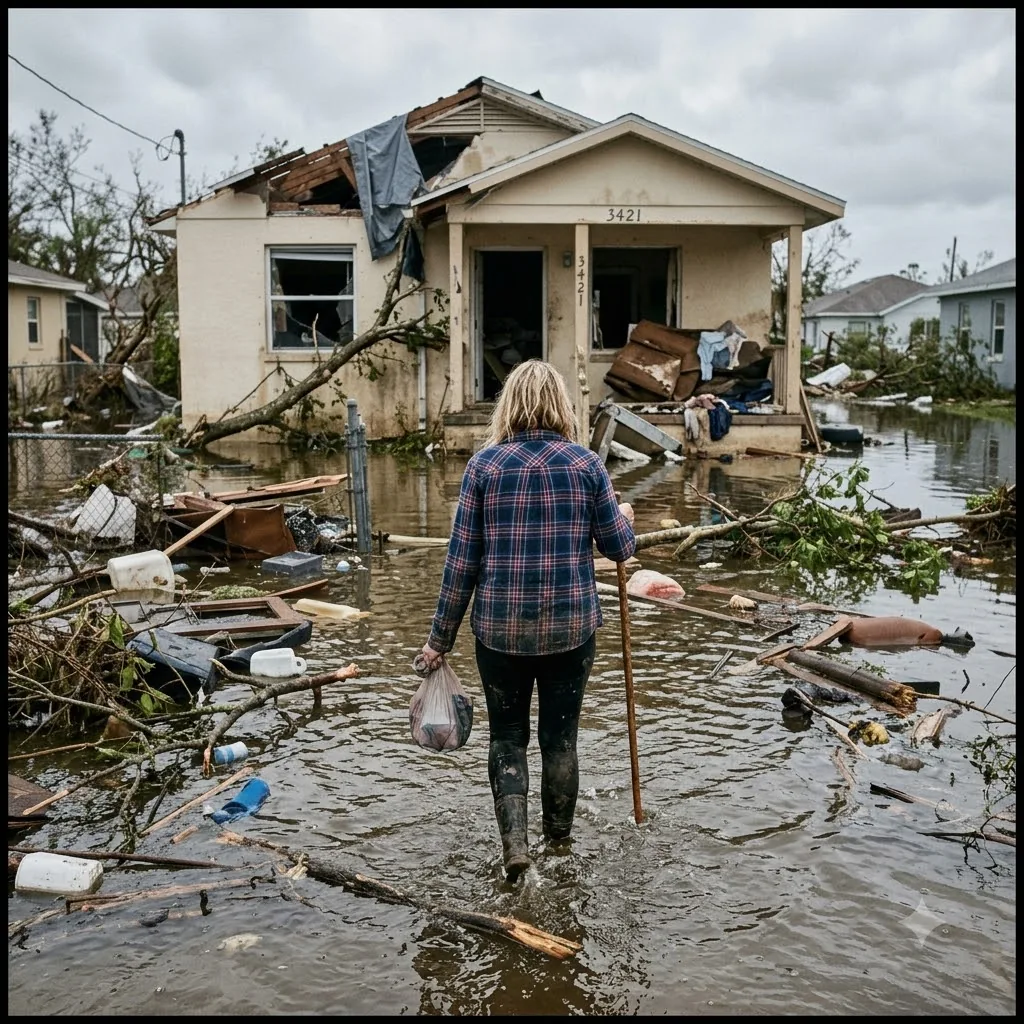
Elaine dragged her heavy rubber boots through the slick, gray sludge that used to be Arthur’s pristine front lawn. The Florida sun beat down on the standing water, baking the debris and lifting a thick, suffocating stench of mildew, sewage, and rotting drywall into the humid air. Every step required a conscious effort to break the suction of the mud, but she kept her eyes fixed on the house, dreading the impending political fight with her father far more than the physical labor of gutting the ruined property. Convincing Arthur to abandon his home of forty years was going to be a brutal, exhausting war of attrition.
The water line stained the pale yellow stucco a dirty brown a full three feet above the foundation. Debris from neighboring yards-a plastic flamingo, a shattered patio chair, fragments of roof shingles-littered the driveway. Elaine reached the concrete steps of the porch, the only dry surface left on the property. That was when she saw the piece of paper.
Taped squarely at eye level on the warped wood of the front door was a bright white notice, enclosed in a waterproof plastic sleeve. Elaine peeled the tape back, her stomach dropping as she slid the document out. The bold, red header belonged to Arthur’s insurance carrier. A heavy black stamp across the center of the page declared a total denial of the flood claim. The inspector had cited a loophole regarding storm surge versus ground seepage. The house was an absolute loss, and they were getting absolutely nothing to rebuild.
She stood on the porch for a long moment, clutching the crisp denial letter. The toxic smell of mold was already seeping through the doorframe. She braced herself for the worst. She fully expected to find her father sitting in the dark, defeated by the realization that he was bankrupt, or perhaps frantically throwing wet, ruined clothes into garbage bags in a state of panic.
Elaine leaned her shoulder against the swollen door and shoved it open. The hinges screamed in protest.
The smell inside was ten times worse, a heavy, suffocating blanket of wet rot. The living room carpet was a squelching sponge of black mud. The baseboards were peeling away from the walls. Yet, cutting through the heavy silence of the ruined house was the cheerful, blaring theme song of a daytime game show.
Arthur sat in his faded green recliner in the center of the room. By some miracle of elevation, a tiny patch of rug beneath his chair had remained damp but not submerged. He was not packing. He was not crying. He was calmly eating a sleeve of saltine crackers and watching television.
Elaine waded into the living room, the muddy water sloshing against the rubber of her boots. She held up the insurance letter, her voice shaking with a mixture of anger and exhaustion as she told him they had to leave immediately. She stated that the claim was denied and the house was medically unsafe.
Arthur did not even look away from the glowing screen. He took a slow bite of a cracker, brushed the crumbs from his plaid shirt, and stated that he had already handled the adjuster this morning.
Elaine stopped dead in the center of the room. She stared at the back of his head, the damp, spore-filled air clinging to her skin. She repeated her statement, pointing out the official denial letter in her hand and demanding to know how he could have possibly handled a total rejection of their policy.
Her father let out a dry, rattling cough but waved a dismissive hand in her direction. He told her in a maddeningly serene tone that the man came by an hour ago, they had a nice long chat on the porch, and they reached an understanding. He instructed her to put her boots away and stop tracking mud into the house.
The absolute lack of urgency made Elaine’s chest tighten until she could barely draw breath. She looked around the devastated room. The drywall was blooming with dark, fuzzy patches of toxic mold. The antique wooden coffee table was splintered and warped beyond repair. The idea that they could simply sit here was insane. She took another step toward him, raising her voice to tell him that the mold was going to kill him if the structural collapse did not happen first. She ordered him to get up and pack a single bag of dry clothes.
Arthur simply picked up the television remote and turned the volume up three notches.
Elaine marched over to the recliner, determined to physically pull him out of the chair if necessary. As she reached out to grab his shoulder, her eyes fell on the aluminum TV tray positioned next to his elbow.
Resting on the metal surface, right beside his half-empty glass of iced tea, was a piece of paper. It was not an official insurance document. It was a thin, yellow carbon copy, the delicate kind torn from a heavy legal pad. The handwriting pressed into the paper was jagged and aggressive, bleeding through the cheap material in deep black ink.
Elaine slowly lowered her hand from his shoulder. She leaned in closer to the tray. The top of the yellow page bore no corporate logo, no letterhead, and no official stamp. It was simply a handwritten contract, entirely filled out in a script she did not recognize. At the very bottom of the page, pressing so hard it had nearly torn the yellow tissue paper, was Arthur’s signature.
She reached out and picked up the yellow sheet, her thumb sliding over a strange, dark red smudge right next to his name.
Elaine dragged her heavy rubber boots through the slick, gray sludge that used to be Arthur’s pristine front lawn. The Florida sun beat down on the standing water, baking the debris and lifting a thick, suffocating stench of mildew, sewage, and rotting drywall into the humid air. Every step required a conscious effort to break the suction of the mud, but she kept her eyes fixed on the house, dreading the impending political fight with her father far more than the physical labor of gutting the ruined property. Convincing Arthur to abandon his home of forty years was going to be a brutal, exhausting war of attrition.
The water line stained the pale yellow stucco a dirty brown a full three feet above the foundation. Debris from neighboring yards-a plastic flamingo, a shattered patio chair, fragments of roof shingles-littered the driveway. Elaine reached the concrete steps of the porch, the only dry surface left on the property. That was when she saw the piece of paper.
Taped squarely at eye level on the warped wood of the front door was a bright white notice, enclosed in a waterproof plastic sleeve. Elaine peeled the tape back, her stomach dropping as she slid the document out. The bold, red header belonged to Arthur’s insurance carrier. A heavy black stamp across the center of the page declared a total denial of the flood claim. The inspector had cited a loophole regarding storm surge versus ground seepage. The house was an absolute loss, and they were getting absolutely nothing to rebuild.
She stood on the porch for a long moment, clutching the crisp denial letter. The toxic smell of mold was already seeping through the doorframe. She braced herself for the worst. She fully expected to find her father sitting in the dark, defeated by the realization that he was bankrupt, or perhaps frantically throwing wet, ruined clothes into garbage bags in a state of panic.
Elaine leaned her shoulder against the swollen door and shoved it open. The hinges screamed in protest.
The smell inside was ten times worse, a heavy, suffocating blanket of wet rot. The living room carpet was a squelching sponge of black mud. The baseboards were peeling away from the walls. Yet, cutting through the heavy silence of the ruined house was the cheerful, blaring theme song of a daytime game show.
Arthur sat in his faded green recliner in the center of the room. By some miracle of elevation, a tiny patch of rug beneath his chair had remained damp but not submerged. He was not packing. He was not crying. He was calmly eating a sleeve of saltine crackers and watching television.
Elaine waded into the living room, the muddy water sloshing against the rubber of her boots. She held up the insurance letter, her voice shaking with a mixture of anger and exhaustion as she told him they had to leave immediately. She stated that the claim was denied and the house was medically unsafe.
Arthur did not even look away from the glowing screen. He took a slow bite of a cracker, brushed the crumbs from his plaid shirt, and stated that he had already handled the adjuster this morning.
Elaine stopped dead in the center of the room. She stared at the back of his head, the damp, spore-filled air clinging to her skin. She repeated her statement, pointing out the official denial letter in her hand and demanding to know how he could have possibly handled a total rejection of their policy.
Her father let out a dry, rattling cough but waved a dismissive hand in her direction. He told her in a maddeningly serene tone that the man came by an hour ago, they had a nice long chat on the porch, and they reached an understanding. He instructed her to put her boots away and stop tracking mud into the house.
The absolute lack of urgency made Elaine’s chest tighten until she could barely draw breath. She looked around the devastated room. The drywall was blooming with dark, fuzzy patches of toxic mold. The antique wooden coffee table was splintered and warped beyond repair. The idea that they could simply sit here was insane. She took another step toward him, raising her voice to tell him that the mold was going to kill him if the structural collapse did not happen first. She ordered him to get up and pack a single bag of dry clothes.
Arthur simply picked up the television remote and turned the volume up three notches.
Elaine marched over to the recliner, determined to physically pull him out of the chair if necessary. As she reached out to grab his shoulder, her eyes fell on the aluminum TV tray positioned next to his elbow.
Resting on the metal surface, right beside his half-empty glass of iced tea, was a piece of paper. It was not an official insurance document. It was a thin, yellow carbon copy, the delicate kind torn from a heavy legal pad. The handwriting pressed into the paper was jagged and aggressive, bleeding through the cheap material in deep black ink.
Elaine slowly lowered her hand from his shoulder. She leaned in closer to the tray. The top of the yellow page bore no corporate logo, no letterhead, and no official stamp. It was simply a handwritten contract, entirely filled out in a script she did not recognize. At the very bottom of the page, pressing so hard it had nearly torn the yellow tissue paper, was Arthur’s signature.
She reached out and picked up the yellow sheet, her thumb sliding over a strange, dark red smudge right next to his name.