Story code: ST-001470
Part 1: The Scrap Weight of Two Million Dollars
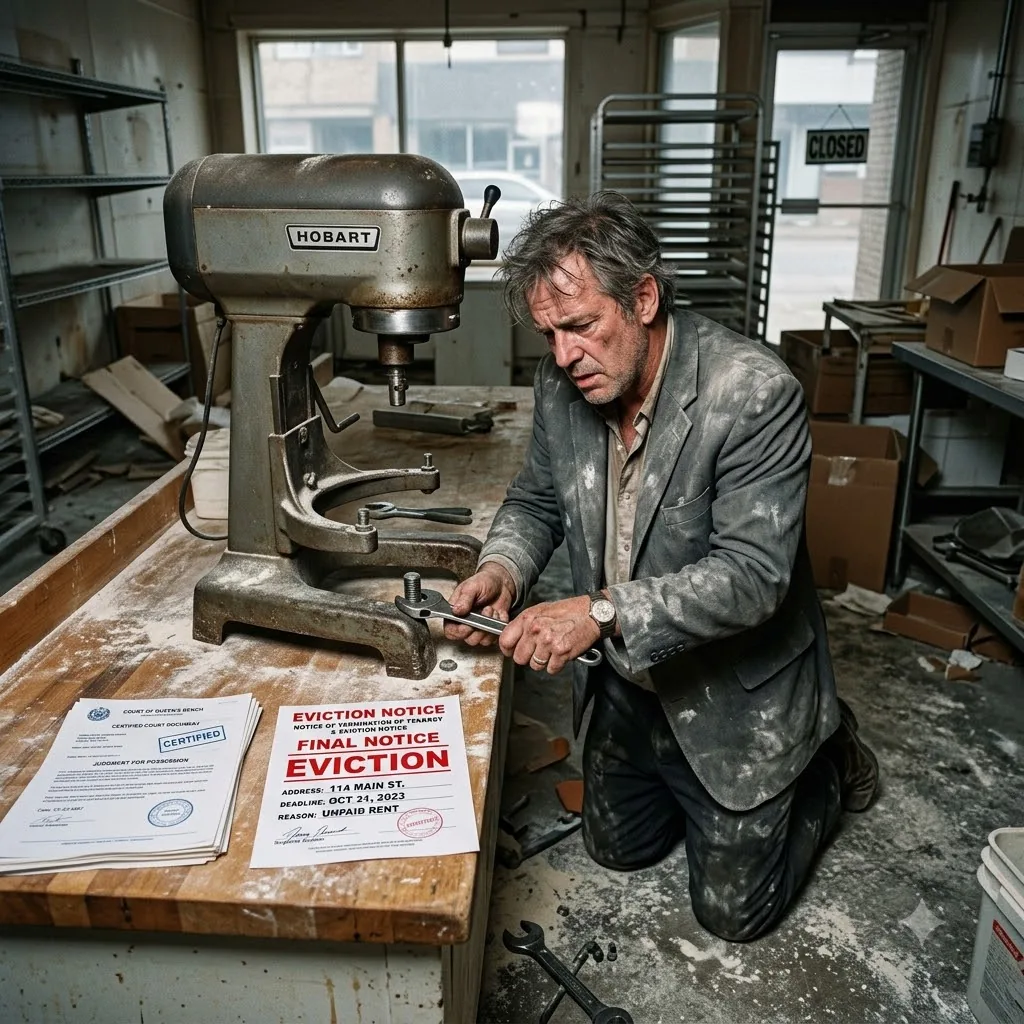
The wrench slipped, taking a layer of skin off Elias’s knuckles, but he only wiped the blood on the wool thigh of his charcoal-gray court suit. He threw his weight against the steel handle again. The base bolt of the Hobart sixty-quart commercial stand mixer groaned, finally giving way with a sharp metallic crack. Elias dropped the wrench onto the flour-dusted floor tiles. He was panting, his silk tie loosened and hanging over the grease-stained collar of his dress shirt. This suit had cost him a thousand dollars three weeks ago, purchased for a single, specific room, and now it was getting ruined in the dead, humid air of his own kitchen.
He turned his back to the mixer and leaned against the stainless steel prep island. Next to his left hand sat two pieces of paper. They were the only clean things left in the building. The first was a court judgment stamped with the official seal of the county, featuring a bold, underlined figure: two million, five hundred thousand dollars and zero cents, awarded to Elias. The second, resting so close that the corners overlapped, was a bright orange Notice to Vacate. The landlord’s signature was slashed across the bottom, granting him exactly forty-eight hours to remove his property before the locks were changed.
Elias stared at the zeroes on the court document. Two and a half million dollars. A monumental legal victory. It was a staggering amount of wealth captured entirely in black printer ink, completely useless for stopping the orange paper next to it. The judgment would take months to process, appeal, and distribute. The eviction was happening on Friday.
He pushed off the counter and returned to the Hobart. He gripped the heavy cast-iron base, planting his expensive leather dress shoes against the cracked grout of the floor. With a sharp exhale, he heaved the three-hundred-pound machine backward. It dragged with a terrible screech across the tiles. He walked it backward toward the rear alley loading dock, muscle and bone straining against the dead weight. Every yank pulled the seams of his suit jacket tighter.
Outside in the alley, a flatbed truck sat idling. Ray, a local scrapper who smelled constantly of diesel and stale tobacco, leaned against the tailgate. Ray watched Elias wrestle the pristine baking equipment into the sunlight. The Hobart was a legendary machine, built to knead eighty pounds of dough at a time without breaking a sweat, worth thousands on the used market.
Elias shoved the mixer to the edge of the concrete dock. Ray stepped up, inspecting the heavy motor housing. He did not look at the immaculate condition of the gears or the stainless steel bowl. He only looked at the weight of the cast iron and the thick copper wiring visible through the rear vent. Ray pulled a roll of crumpled twenties from his denim jacket. He peeled off six bills and held them out. One hundred and twenty dollars. The scrap metal value.
Elias took the money. He did not argue. He shoved the bills into his suit pocket and turned back into the sweltering kitchen. The silence of the empty bakery pressed in on him. For six years, this room had hummed with the sound of cooling racks, proofing cabinets, and the roar of the ventilation hoods. Now, the power was cut. The display cases in the front of the shop were dark and entirely empty. The only sound was the scuff of his own shoes as he walked past the prep tables to the main wall.
The deck ovens were next. They were massive, triple-tiered beasts of steel and stone, bolted directly into the masonry. Elias picked up his wrench and a heavy claw hammer. He crawled onto his hands and knees, ignoring the sharp pain as a stray shard of dried hardened caramel pierced his trousers. He wedged the wrench onto the first mounting bracket. The bolts on the ovens were older, rusted in place from years of ambient moisture and high heat.
He struck the handle of the wrench with the hammer. The sharp clang echoed through the empty storefront. He struck it again, harder this time, putting the entire force of his ruined livelihood behind the blow. The bolt shifted a fraction of an inch. He needed the ovens out. He needed the heavy steel panels broken down and dragged to the alley. The orange paper on the counter demanded an empty space, and the scrap money in his pocket was the only currency he actually possessed. The two and a half million dollars sitting on the counter was a ghost.
He swung the hammer a third time. The metal shrieked. Sweat dripped from his chin, spotting the dusty floor. He was preparing to swing again when a sharp, authoritative rapping sound came from the front of the shop.
Elias froze, the hammer raised above his head. He looked down the long, dark corridor of the kitchen, past the empty display cases, toward the street-facing windows. A silhouette was standing on the sidewalk, knocking hard against the glass of the locked front door. The figure was flanked by a dark town car parked illegally at the curb. The person raised a hand and knocked again, holding up a thick, unmarked manila envelope against the glass.
The wrench slipped, taking a layer of skin off Elias’s knuckles, but he only wiped the blood on the wool thigh of his charcoal-gray court suit. He threw his weight against the steel handle again. The base bolt of the Hobart sixty-quart commercial stand mixer groaned, finally giving way with a sharp metallic crack. Elias dropped the wrench onto the flour-dusted floor tiles. He was panting, his silk tie loosened and hanging over the grease-stained collar of his dress shirt. This suit had cost him a thousand dollars three weeks ago, purchased for a single, specific room, and now it was getting ruined in the dead, humid air of his own kitchen.
He turned his back to the mixer and leaned against the stainless steel prep island. Next to his left hand sat two pieces of paper. They were the only clean things left in the building. The first was a court judgment stamped with the official seal of the county, featuring a bold, underlined figure: two million, five hundred thousand dollars and zero cents, awarded to Elias. The second, resting so close that the corners overlapped, was a bright orange Notice to Vacate. The landlord’s signature was slashed across the bottom, granting him exactly forty-eight hours to remove his property before the locks were changed.
Elias stared at the zeroes on the court document. Two and a half million dollars. A monumental legal victory. It was a staggering amount of wealth captured entirely in black printer ink, completely useless for stopping the orange paper next to it. The judgment would take months to process, appeal, and distribute. The eviction was happening on Friday.
He pushed off the counter and returned to the Hobart. He gripped the heavy cast-iron base, planting his expensive leather dress shoes against the cracked grout of the floor. With a sharp exhale, he heaved the three-hundred-pound machine backward. It dragged with a terrible screech across the tiles. He walked it backward toward the rear alley loading dock, muscle and bone straining against the dead weight. Every yank pulled the seams of his suit jacket tighter.
Outside in the alley, a flatbed truck sat idling. Ray, a local scrapper who smelled constantly of diesel and stale tobacco, leaned against the tailgate. Ray watched Elias wrestle the pristine baking equipment into the sunlight. The Hobart was a legendary machine, built to knead eighty pounds of dough at a time without breaking a sweat, worth thousands on the used market.
Elias shoved the mixer to the edge of the concrete dock. Ray stepped up, inspecting the heavy motor housing. He did not look at the immaculate condition of the gears or the stainless steel bowl. He only looked at the weight of the cast iron and the thick copper wiring visible through the rear vent. Ray pulled a roll of crumpled twenties from his denim jacket. He peeled off six bills and held them out. One hundred and twenty dollars. The scrap metal value.
Elias took the money. He did not argue. He shoved the bills into his suit pocket and turned back into the sweltering kitchen. The silence of the empty bakery pressed in on him. For six years, this room had hummed with the sound of cooling racks, proofing cabinets, and the roar of the ventilation hoods. Now, the power was cut. The display cases in the front of the shop were dark and entirely empty. The only sound was the scuff of his own shoes as he walked past the prep tables to the main wall.
The deck ovens were next. They were massive, triple-tiered beasts of steel and stone, bolted directly into the masonry. Elias picked up his wrench and a heavy claw hammer. He crawled onto his hands and knees, ignoring the sharp pain as a stray shard of dried hardened caramel pierced his trousers. He wedged the wrench onto the first mounting bracket. The bolts on the ovens were older, rusted in place from years of ambient moisture and high heat.
He struck the handle of the wrench with the hammer. The sharp clang echoed through the empty storefront. He struck it again, harder this time, putting the entire force of his ruined livelihood behind the blow. The bolt shifted a fraction of an inch. He needed the ovens out. He needed the heavy steel panels broken down and dragged to the alley. The orange paper on the counter demanded an empty space, and the scrap money in his pocket was the only currency he actually possessed. The two and a half million dollars sitting on the counter was a ghost.
He swung the hammer a third time. The metal shrieked. Sweat dripped from his chin, spotting the dusty floor. He was preparing to swing again when a sharp, authoritative rapping sound came from the front of the shop.
Elias froze, the hammer raised above his head. He looked down the long, dark corridor of the kitchen, past the empty display cases, toward the street-facing windows. A silhouette was standing on the sidewalk, knocking hard against the glass of the locked front door. The figure was flanked by a dark town car parked illegally at the curb. The person raised a hand and knocked again, holding up a thick, unmarked manila envelope against the glass.