Story code: ST-001491
Part 1: The Hazard Line
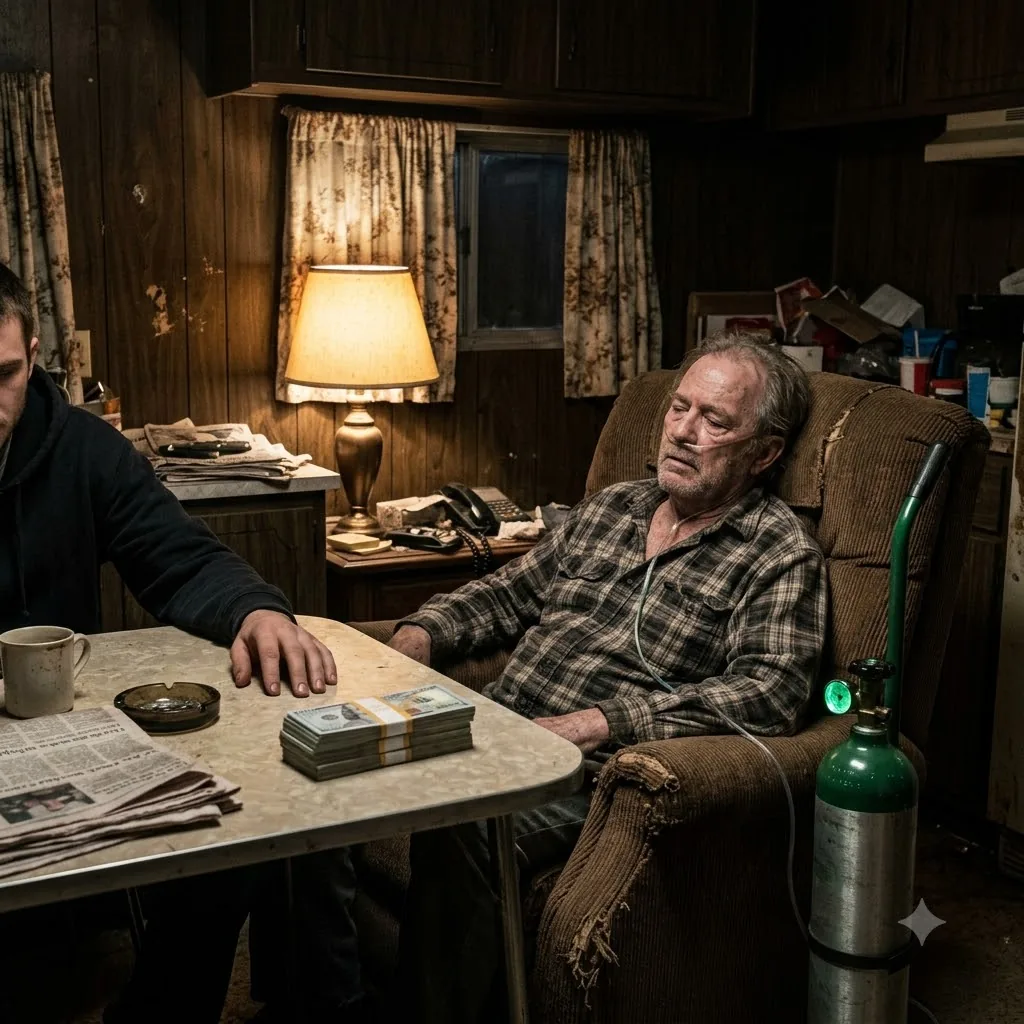
The plastic tubing dug a permanent trench across Harlan’s cheekbones, vibrating with every forced pump of the rented oxygen concentrator. The rhythmic thump-hiss was the only thing keeping the wet concrete in his chest from setting completely as he watched the needle on the analog gauge hover a hairsbreadth above the red hazard line. The medical supply company had promised a fresh tank delivery by Tuesday, and the wall clock now read Thursday night.
The heavy wooden front door slammed shut with enough force to rattle the single-pane windows in their dry-rotted frames. Harlan didn’t flinch, merely tightening his grip on the frayed armrests of his vinyl recliner.
Ty walked into the narrow kitchen with a stiff, unnatural gait. The boy’s steel-toed boots left thick, wet tracks of red clay across the faded linoleum, but Harlan lacked the breath to issue a scolding. Ty didn’t even bother to take off his canvas jacket. He marched straight to the center of the room, reached deep into his interior pocket, and pulled out a heavy block of paper. He slammed it down next to Harlan’s empty coffee mug.
It was cash. Banded stacks of crisp, mint-green hundred-dollar bills, packed so tight they looked like paving stones.
Harlan stared at the small mountain of currency. His mind, perpetually clouded by a baseline level of hypoxia and exhaustion, moved sluggishly toward the most logical conclusion. The Blackwood Coal lawsuit. His legal aid lawyers had been fighting for three years, trying to squeeze a black-lung settlement out of the corporate office before Harlan expired. He reached out with a trembling, calloused hand, brushing the coarse paper band on the top stack. The print read ten thousand. There were at least five stacks sitting there. The settlement had actually come through. They could finally buy the oxygen compressor outright instead of renting it. They could fix the transmission on the truck. They could get Ty out of this dead-end holler and send him to the trade school down in Knoxville.
Harlan looked up, a rare, genuine smile cracking the deep lines around his mouth, the plastic cannula shifting under his nose.
Then he saw the boy’s hands.
Ty was leaning his weight on the edge of the table, his knuckles pressed flat against the scarred wood. The skin across those knuckles was completely split open. Bright, wet blood pooled in the deep creases, dripping slowly down to stain his fingernails and the edge of the table. The blood was fresh, standing out in sharp, terrible contrast to the black grease usually ground into Ty’s cuticles.
Harlan’s gaze drifted from the split knuckles to the webbing between Ty’s thumb and index finger. The skin there was angry, red, and raised, smeared with excess ink and clear plasma. A fresh, crude tattoo sat right in the center of the inflammation. Two jagged peaks crossed with a crude pickaxe. It was the mark of the Carver syndicate. They were the meth and fentanyl runners who controlled the entire ridge, the ruthless outfit that had systematically swallowed up every desperate, broke kid from the hollows since the last of the deep mines shut down.
The smile died on Harlan’s face instantly. The relentless hissing of the oxygen machine suddenly sounded less like a lifeline and more like a ticking countdown.
This was not coal company money.
Ty started talking fast, his words spilling over each other. The boy’s voice was pitched unnaturally high, tight with a dangerous mix of adrenaline and sheer terror. He paced the narrow strip of floor between the rusted sink and the kitchen table, waving his bleeding hands, explaining how they were finally set for life. He insisted the money was entirely clean, claiming he just had to make one simple collection, that the Carvers took care of their own people. He swore the man in the trailer down the valley had just slipped, that the blood was a massive misunderstanding, that absolutely no one would come looking for them.
Harlan heard the raw panic vibrating beneath the hollow bravado. He looked back at the stacks of bills, then at the fresh, oozing ink claiming permanent ownership of his grandson’s flesh. The Carver syndicate did not let people just walk away. They certainly did not hand nineteen-year-old kids fifty thousand dollars and let them retire to the suburbs. Ty had either stolen the drop, or he had crossed a brutal line he could never uncross.
The compressor kicked into a higher gear, whining as it struggled against a clogged intake filter. The needle on the pressure gauge finally ticked down, resting dead center in the solid red line. Harlan’s chest seized tight. He took a shallow, scraping breath, forcing the dangerously thin air into his failing, scarred lungs.
He had raised Ty since the boy was in diapers. He had promised his daughter on her deathbed he would keep the kid out of the dirt and away from the local poison. He had clearly failed to protect him from the gravitational pull of the ridge, but he could still sever the chain before it dragged the boy all the way to a shallow grave.
Ty stopped pacing and grabbed the edges of the table again, leaning close enough for Harlan to smell the copper tang of blood and the sharp chemical sting of gunpowder on his clothes. The boy begged the old man to pack a bag immediately. He said they needed to leave tonight, head out west, disappear into the desert where the air was dry for his lungs and the Carvers couldn’t ever reach them.
Harlan completely ignored the frantic plea. He slid his right hand off the frayed armrest. He let it drop slowly to his side, slipping beneath the overhang of the heavy oak table. His rough fingertips brushed the cold, raw edge of old duct tape. He pressed his hand higher, feeling the heavy, dense steel of the sawed-off twelve-gauge pump action he had strapped under the wood eight years ago when the break-ins first started hitting the holler.
He curled his index finger carefully around the cold metal of the trigger guard.
Outside, the distinct, heavy crunch of mud-caked tires tore through the quiet mountain night, immediately followed by the blinding sweep of halogen headlights slashing across the kitchen wall.
The plastic tubing dug a permanent trench across Harlan’s cheekbones, vibrating with every forced pump of the rented oxygen concentrator. The rhythmic thump-hiss was the only thing keeping the wet concrete in his chest from setting completely as he watched the needle on the analog gauge hover a hairsbreadth above the red hazard line. The medical supply company had promised a fresh tank delivery by Tuesday, and the wall clock now read Thursday night.
The heavy wooden front door slammed shut with enough force to rattle the single-pane windows in their dry-rotted frames. Harlan didn’t flinch, merely tightening his grip on the frayed armrests of his vinyl recliner.
Ty walked into the narrow kitchen with a stiff, unnatural gait. The boy’s steel-toed boots left thick, wet tracks of red clay across the faded linoleum, but Harlan lacked the breath to issue a scolding. Ty didn’t even bother to take off his canvas jacket. He marched straight to the center of the room, reached deep into his interior pocket, and pulled out a heavy block of paper. He slammed it down next to Harlan’s empty coffee mug.
It was cash. Banded stacks of crisp, mint-green hundred-dollar bills, packed so tight they looked like paving stones.
Harlan stared at the small mountain of currency. His mind, perpetually clouded by a baseline level of hypoxia and exhaustion, moved sluggishly toward the most logical conclusion. The Blackwood Coal lawsuit. His legal aid lawyers had been fighting for three years, trying to squeeze a black-lung settlement out of the corporate office before Harlan expired. He reached out with a trembling, calloused hand, brushing the coarse paper band on the top stack. The print read ten thousand. There were at least five stacks sitting there. The settlement had actually come through. They could finally buy the oxygen compressor outright instead of renting it. They could fix the transmission on the truck. They could get Ty out of this dead-end holler and send him to the trade school down in Knoxville.
Harlan looked up, a rare, genuine smile cracking the deep lines around his mouth, the plastic cannula shifting under his nose.
Then he saw the boy’s hands.
Ty was leaning his weight on the edge of the table, his knuckles pressed flat against the scarred wood. The skin across those knuckles was completely split open. Bright, wet blood pooled in the deep creases, dripping slowly down to stain his fingernails and the edge of the table. The blood was fresh, standing out in sharp, terrible contrast to the black grease usually ground into Ty’s cuticles.
Harlan’s gaze drifted from the split knuckles to the webbing between Ty’s thumb and index finger. The skin there was angry, red, and raised, smeared with excess ink and clear plasma. A fresh, crude tattoo sat right in the center of the inflammation. Two jagged peaks crossed with a crude pickaxe. It was the mark of the Carver syndicate. They were the meth and fentanyl runners who controlled the entire ridge, the ruthless outfit that had systematically swallowed up every desperate, broke kid from the hollows since the last of the deep mines shut down.
The smile died on Harlan’s face instantly. The relentless hissing of the oxygen machine suddenly sounded less like a lifeline and more like a ticking countdown.
This was not coal company money.
Ty started talking fast, his words spilling over each other. The boy’s voice was pitched unnaturally high, tight with a dangerous mix of adrenaline and sheer terror. He paced the narrow strip of floor between the rusted sink and the kitchen table, waving his bleeding hands, explaining how they were finally set for life. He insisted the money was entirely clean, claiming he just had to make one simple collection, that the Carvers took care of their own people. He swore the man in the trailer down the valley had just slipped, that the blood was a massive misunderstanding, that absolutely no one would come looking for them.
Harlan heard the raw panic vibrating beneath the hollow bravado. He looked back at the stacks of bills, then at the fresh, oozing ink claiming permanent ownership of his grandson’s flesh. The Carver syndicate did not let people just walk away. They certainly did not hand nineteen-year-old kids fifty thousand dollars and let them retire to the suburbs. Ty had either stolen the drop, or he had crossed a brutal line he could never uncross.
The compressor kicked into a higher gear, whining as it struggled against a clogged intake filter. The needle on the pressure gauge finally ticked down, resting dead center in the solid red line. Harlan’s chest seized tight. He took a shallow, scraping breath, forcing the dangerously thin air into his failing, scarred lungs.
He had raised Ty since the boy was in diapers. He had promised his daughter on her deathbed he would keep the kid out of the dirt and away from the local poison. He had clearly failed to protect him from the gravitational pull of the ridge, but he could still sever the chain before it dragged the boy all the way to a shallow grave.
Ty stopped pacing and grabbed the edges of the table again, leaning close enough for Harlan to smell the copper tang of blood and the sharp chemical sting of gunpowder on his clothes. The boy begged the old man to pack a bag immediately. He said they needed to leave tonight, head out west, disappear into the desert where the air was dry for his lungs and the Carvers couldn’t ever reach them.
Harlan completely ignored the frantic plea. He slid his right hand off the frayed armrest. He let it drop slowly to his side, slipping beneath the overhang of the heavy oak table. His rough fingertips brushed the cold, raw edge of old duct tape. He pressed his hand higher, feeling the heavy, dense steel of the sawed-off twelve-gauge pump action he had strapped under the wood eight years ago when the break-ins first started hitting the holler.
He curled his index finger carefully around the cold metal of the trigger guard.
Outside, the distinct, heavy crunch of mud-caked tires tore through the quiet mountain night, immediately followed by the blinding sweep of halogen headlights slashing across the kitchen wall.