Story code: ST-001526
Part 1: The 4 AM Collection
Scalding water ran over Kevin’s raw knuckles as he attacked the inside of a peanut butter jar with a wire-bristled bottle brush. The digital clock on the microwave glowed 4:12 AM in the otherwise dark kitchen. He needed to get the remaining oil out of the plastic ridges, or the neighborhood compliance committee would leave another neon orange warning tag on his front door.
He rinsed the jar, held it up to the harsh fluorescent light above the sink, and deemed it acceptable. He placed it in the blue bin designated for number one plastics. Six other bins sat in a neat row across his kitchen floor, each a different color, each representing an unyielding rule imposed by the Oakridge Estates Homeowners Association. The red bin held clear glass, the yellow held colored glass, the green was for mixed paper, the gray for corrugated cardboard, the purple for metals, and the standard black for the tiny amount of actual garbage his household produced.
Kevin dried his cracked hands on a dish towel. His lower back throbbed from standing over the sink for two straight hours. Every Tuesday night bled into Wednesday morning like this. The pressure to be the model resident felt like a physical weight on his chest. His neighbors, the Vance family, had received a public citation in the monthly newsletter for placing an unwashed mayonnaise jar in the wrong receptacle. Kevin refused to be humiliated in front of the entire subdivision. He scrubbed the labels off tin cans, broke down cardboard boxes with a box cutter until they were uniform squares, and separated his daily newspapers from his glossy magazines.
He dragged the seven heavy bins down the driveway one by one. The autumn air bit at his neck, but the physical exertion kept him sweating beneath his flannel shirt. He aligned the bins on the curb with a steel tape measure, ensuring exactly twelve inches of space between each container as mandated by page forty-two of the community guidelines. He checked the lids. All secure. All perfectly compliant.
Back inside, Kevin collapsed into the armchair by the front window. He did not turn on the living room lights. He just sat in the dark, waiting for the familiar rumble of the specialized sorting truck to validate his exhaustion. His eyelids drooped. The silence of the suburban street felt heavy and expectant.
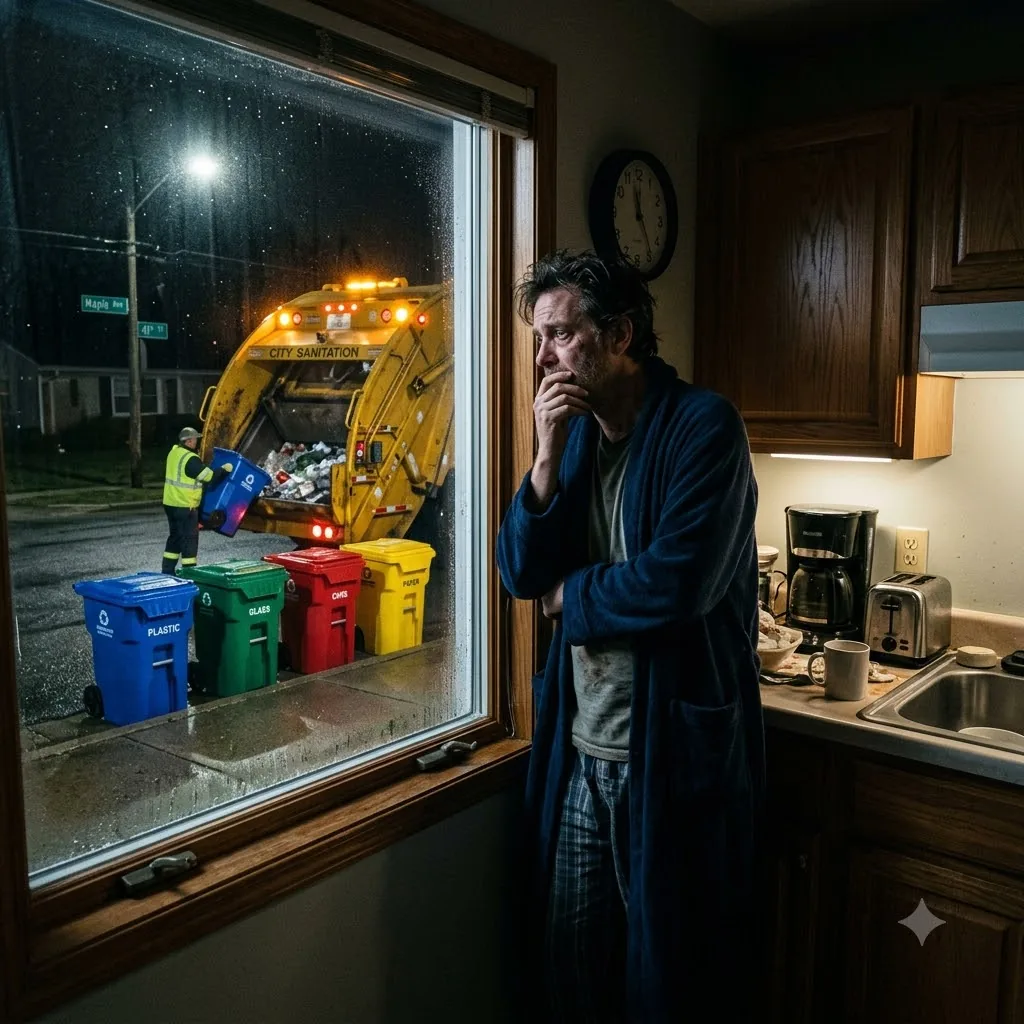
At 4:48 AM, the low growl of a diesel engine rattled the single-pane glass of his front window. Air brakes hissed, echoing off the sleeping houses. Amber strobe lights painted the walls of Kevin’s living room in rhythmic, jarring flashes. He stood up and parted the blinds with two fingers to watch the pickup.
He expected the sleek, multi-compartment recycling vehicle the city had proudly showcased in their environmental brochures. Instead, a massive, grime-covered municipal garbage truck idled at his curb. It was the standard model, the one equipped with a single rear-loading hopper and a massive hydraulic compactor blade.
Two men in high-visibility vests hopped off the back steps of the truck. They moved with a hurried, mechanical efficiency. Kevin watched, his breath fogging the cold windowpane, assuming a separate truck would follow for the sorted materials.
The first worker grabbed the black garbage bin and upended it into the hopper. The black bags tumbled into the steel belly of the machine. The worker tossed the empty bin onto the wet grass.
Then, the second worker grabbed the red bin holding the clear glass Kevin had washed and dried. He hauled it to the exact same hopper. He tipped it forward.
The pristine glass shattered against the greasy black garbage bags.
Kevin gripped the windowsill. The first worker was already lifting the blue bin of plastics. The peanut butter jar he had just spent twenty minutes scalding his hands to clean tumbled into the same dark pit. The yellow bin followed. Then the green. The workers were not sorting. They were not inspecting the materials for compliance. They were indiscriminately dumping every single meticulously separated category into the exact same maw of general refuse.
The driver hit a lever on the side of the truck. The massive steel compactor blade groaned to life. It descended with a terrifying, industrial finality. Kevin heard the sickening crunch of metal cans, the explosive popping of plastic bottles, and the sharp grinding of his sorted glass being pulverized into the rotting food waste and general garbage.
All of his labor, all the community threats, all the late-night panic over compliance standards, vanished in a single hydraulic stroke.
The workers tossed the last empty bin onto his driveway and signaled the driver. The truck lurched forward toward the Vance house next door.
Kevin dropped the blinds. He looked at his raw, red hands. He walked out of the living room, turned the heavy brass deadbolt on the front door, and stepped out onto the frosty porch in his socks, marching straight toward the idling truck to confront the men in the vests.
Scalding water ran over Kevin’s raw knuckles as he attacked the inside of a peanut butter jar with a wire-bristled bottle brush. The digital clock on the microwave glowed 4:12 AM in the otherwise dark kitchen. He needed to get the remaining oil out of the plastic ridges, or the neighborhood compliance committee would leave another neon orange warning tag on his front door.
He rinsed the jar, held it up to the harsh fluorescent light above the sink, and deemed it acceptable. He placed it in the blue bin designated for number one plastics. Six other bins sat in a neat row across his kitchen floor, each a different color, each representing an unyielding rule imposed by the Oakridge Estates Homeowners Association. The red bin held clear glass, the yellow held colored glass, the green was for mixed paper, the gray for corrugated cardboard, the purple for metals, and the standard black for the tiny amount of actual garbage his household produced.
Kevin dried his cracked hands on a dish towel. His lower back throbbed from standing over the sink for two straight hours. Every Tuesday night bled into Wednesday morning like this. The pressure to be the model resident felt like a physical weight on his chest. His neighbors, the Vance family, had received a public citation in the monthly newsletter for placing an unwashed mayonnaise jar in the wrong receptacle. Kevin refused to be humiliated in front of the entire subdivision. He scrubbed the labels off tin cans, broke down cardboard boxes with a box cutter until they were uniform squares, and separated his daily newspapers from his glossy magazines.
He dragged the seven heavy bins down the driveway one by one. The autumn air bit at his neck, but the physical exertion kept him sweating beneath his flannel shirt. He aligned the bins on the curb with a steel tape measure, ensuring exactly twelve inches of space between each container as mandated by page forty-two of the community guidelines. He checked the lids. All secure. All perfectly compliant.
Back inside, Kevin collapsed into the armchair by the front window. He did not turn on the living room lights. He just sat in the dark, waiting for the familiar rumble of the specialized sorting truck to validate his exhaustion. His eyelids drooped. The silence of the suburban street felt heavy and expectant.
At 4:48 AM, the low growl of a diesel engine rattled the single-pane glass of his front window. Air brakes hissed, echoing off the sleeping houses. Amber strobe lights painted the walls of Kevin’s living room in rhythmic, jarring flashes. He stood up and parted the blinds with two fingers to watch the pickup.
He expected the sleek, multi-compartment recycling vehicle the city had proudly showcased in their environmental brochures. Instead, a massive, grime-covered municipal garbage truck idled at his curb. It was the standard model, the one equipped with a single rear-loading hopper and a massive hydraulic compactor blade.
Two men in high-visibility vests hopped off the back steps of the truck. They moved with a hurried, mechanical efficiency. Kevin watched, his breath fogging the cold windowpane, assuming a separate truck would follow for the sorted materials.
The first worker grabbed the black garbage bin and upended it into the hopper. The black bags tumbled into the steel belly of the machine. The worker tossed the empty bin onto the wet grass.
Then, the second worker grabbed the red bin holding the clear glass Kevin had washed and dried. He hauled it to the exact same hopper. He tipped it forward.
The pristine glass shattered against the greasy black garbage bags.
Kevin gripped the windowsill. The first worker was already lifting the blue bin of plastics. The peanut butter jar he had just spent twenty minutes scalding his hands to clean tumbled into the same dark pit. The yellow bin followed. Then the green. The workers were not sorting. They were not inspecting the materials for compliance. They were indiscriminately dumping every single meticulously separated category into the exact same maw of general refuse.
The driver hit a lever on the side of the truck. The massive steel compactor blade groaned to life. It descended with a terrifying, industrial finality. Kevin heard the sickening crunch of metal cans, the explosive popping of plastic bottles, and the sharp grinding of his sorted glass being pulverized into the rotting food waste and general garbage.
All of his labor, all the community threats, all the late-night panic over compliance standards, vanished in a single hydraulic stroke.
The workers tossed the last empty bin onto his driveway and signaled the driver. The truck lurched forward toward the Vance house next door.
Kevin dropped the blinds. He looked at his raw, red hands. He walked out of the living room, turned the heavy brass deadbolt on the front door, and stepped out onto the frosty porch in his socks, marching straight toward the idling truck to confront the men in the vests.