Story code: ST-001523
Part 1: The Name on Page Two
The brass bell above the heavy glass door chimed, shattering the quiet hum of the cooling ovens and the rhythmic dripping of the industrial sink. Marcus did not look up from the stainless steel prep table. He dragged a damp cloth in slow, overlapping circles, letting the harsh scent of bleach overtake the lingering, comforting notes of vanilla extract and burnt sugar. The heavy footsteps crossing the hexagonal floor tiles belonged to expensive leather dress shoes, a sharp, clicking cadence that had no place among work boots and flour-dusted sneakers.
“Marcus Vance.” The voice was loud, rehearsed, and echoing off the pressed-tin ceiling.
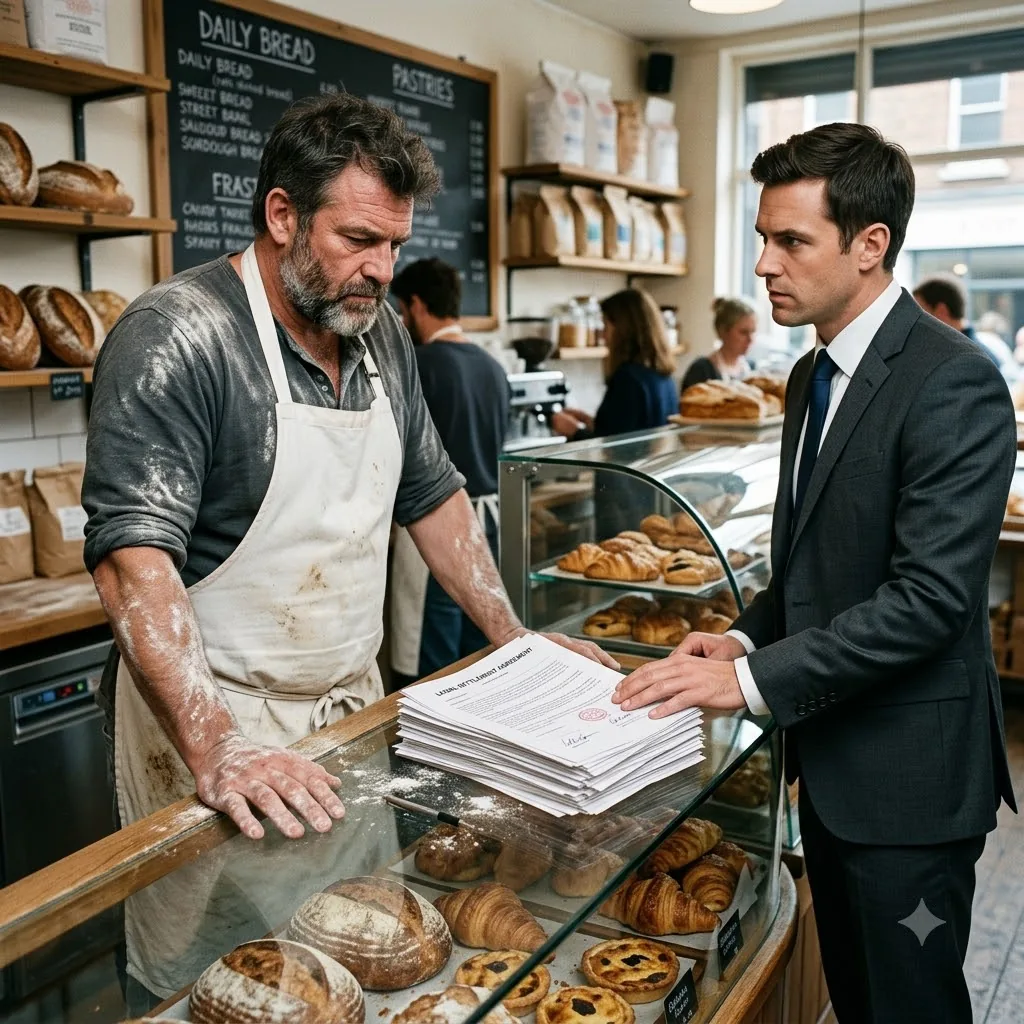
Marcus folded the cloth into a perfect square, aligned it with the edge of the cutting board, and set it down. He turned to face the front counter, his expression entirely blank. A man in a tailored navy suit stood there, grinning with a kind of hungry theatricality. The man slapped a thick, professionally bound stack of legal documents onto the display glass, right above the last remaining row of almond croissants.
“Federal discrimination,” the man announced, projecting his voice as if playing to a packed courtroom gallery rather than an empty, small-town storefront. “You made a very expensive mistake on Tuesday, Mr. Vance. My clients are seeking massive punitive damages, loss of business revenue, and severe emotional distress. We are going to completely bankrupt this little flour shop, and then we are going to take the building, too.”
Marcus walked slowly to the register. He did not speak. He did not offer a defense for his refusal to bake the cake, nor did he try to explain the brief, ugly altercation from Tuesday afternoon. He simply reached out and placed his large, calloused hand flat on the thick cover page. The attorney, a man whose glossy business card earlier in the week read Elias Thorne, leaned back on his heels, waiting for the inevitable panic. He wanted the desperate pleading. He wanted the red-faced outrage. He fed on the destruction of small business owners.
Instead, Marcus experienced a massive physiological shift, an automatic response he had spent the last seven years trying to bury under mounds of dough and routine. His resting heart rate plummeted. The ambient noise of the passing street traffic outside vanished from his perception. His posture straightened, the slight, protective stoop of a tired baker disappearing in an instant. It was replaced by the rigid, terrifying stillness of a man accustomed to standing in rooms where people did not walk out alive.
He flipped past the cover sheet. He ignored the bolded headers citing specific civil rights violations and the extensive, dramatic paragraphs detailing his alleged bigotry and intolerance. His eyes scanned the dense boilerplate text, hunting for the structural details of the lawsuit, until they snagged on a single line buried on the second page. It was a list of corporate entities and silent financial backers attached to the plaintiffs.
Marcus stopped breathing for three full seconds.
His right thumb, still dusted with a faint trace of powdered sugar, hovered over one specific name. The black typed letters seemed to burn through the thick white stock paper. The bakery, the peaceful early mornings, the legitimate, quiet life he had painstakingly built brick by brick over five years-it all dissolved into ash in the space of a single heartbeat.
“Look at you,” Elias scoffed, entirely misreading the absolute, suffocating silence for shock and surrender. “You are completely frozen. You should have just baked the damn cake, old man. Now you lose everything you own.”
Marcus kept his eyes locked on the second page. He committed the name, the exact address printed next to it, and the obscure corporate shell company to memory. The muscles in his heavy jaw locked tight. He felt a familiar, cold weight settling deep in his chest, a hollow sensation he associated entirely with the damp, freezing alleys of Chicago and the distinct, metallic smell of copper.
Elias tapped the display glass twice with his knuckles, his smug smile widening. “See you in court, Mr. Vance. Or rather, see you at the bankruptcy auction.”
The attorney turned and strode out, throwing his shoulders back in absolute triumph. The hydraulic hinge hissed as the door swung open, and then it clicked shut, the brass deadbolt rattling slightly in the wooden frame.
Marcus did not watch Elias walk down the sidewalk to his illegally parked luxury sedan. He closed the legal document, ensuring the pages were perfectly aligned. He picked up the manila folder and set it carefully on top of the cash register. Moving with absolute mechanical precision, he walked to the front door. He reached up and turned the plastic sign from Open to Closed. He grasped the woven drawstrings of the heavy linen blinds and pulled them down, plunging the bright storefront into dim, late-afternoon shadows.
He walked back past the counter, past the towering cooling racks, and into the cramped office near the rear alley exit. He firmly closed the office door and slid the chain lock into place. He knelt beside his worn wooden desk and pulled out the bottom drawer, tipping it completely upside down onto the floor. He pressed his thick fingers against the false wooden bottom, applying pressure until it popped loose.
Inside lay an outdated prepaid cellular phone, encased in dust and securely wrapped in a plastic zip-top bag.
Marcus tore the thick plastic open. He powered the device on, watching the cracked monochrome screen flicker to life in the dark room, illuminating his hardened features. He had sworn to God, to himself, and to a man currently serving life in a maximum-security federal prison that he would never dial the ten digits etched permanently into his memory.
He punched in the 773 area code. He entered the remaining seven numbers without hesitation. He pressed the green call button and raised the cold plastic speaker to his ear, listening to the first hollow ring.
The brass bell above the heavy glass door chimed, shattering the quiet hum of the cooling ovens and the rhythmic dripping of the industrial sink. Marcus did not look up from the stainless steel prep table. He dragged a damp cloth in slow, overlapping circles, letting the harsh scent of bleach overtake the lingering, comforting notes of vanilla extract and burnt sugar. The heavy footsteps crossing the hexagonal floor tiles belonged to expensive leather dress shoes, a sharp, clicking cadence that had no place among work boots and flour-dusted sneakers.
“Marcus Vance.” The voice was loud, rehearsed, and echoing off the pressed-tin ceiling.
Marcus folded the cloth into a perfect square, aligned it with the edge of the cutting board, and set it down. He turned to face the front counter, his expression entirely blank. A man in a tailored navy suit stood there, grinning with a kind of hungry theatricality. The man slapped a thick, professionally bound stack of legal documents onto the display glass, right above the last remaining row of almond croissants.
“Federal discrimination,” the man announced, projecting his voice as if playing to a packed courtroom gallery rather than an empty, small-town storefront. “You made a very expensive mistake on Tuesday, Mr. Vance. My clients are seeking massive punitive damages, loss of business revenue, and severe emotional distress. We are going to completely bankrupt this little flour shop, and then we are going to take the building, too.”
Marcus walked slowly to the register. He did not speak. He did not offer a defense for his refusal to bake the cake, nor did he try to explain the brief, ugly altercation from Tuesday afternoon. He simply reached out and placed his large, calloused hand flat on the thick cover page. The attorney, a man whose glossy business card earlier in the week read Elias Thorne, leaned back on his heels, waiting for the inevitable panic. He wanted the desperate pleading. He wanted the red-faced outrage. He fed on the destruction of small business owners.
Instead, Marcus experienced a massive physiological shift, an automatic response he had spent the last seven years trying to bury under mounds of dough and routine. His resting heart rate plummeted. The ambient noise of the passing street traffic outside vanished from his perception. His posture straightened, the slight, protective stoop of a tired baker disappearing in an instant. It was replaced by the rigid, terrifying stillness of a man accustomed to standing in rooms where people did not walk out alive.
He flipped past the cover sheet. He ignored the bolded headers citing specific civil rights violations and the extensive, dramatic paragraphs detailing his alleged bigotry and intolerance. His eyes scanned the dense boilerplate text, hunting for the structural details of the lawsuit, until they snagged on a single line buried on the second page. It was a list of corporate entities and silent financial backers attached to the plaintiffs.
Marcus stopped breathing for three full seconds.
His right thumb, still dusted with a faint trace of powdered sugar, hovered over one specific name. The black typed letters seemed to burn through the thick white stock paper. The bakery, the peaceful early mornings, the legitimate, quiet life he had painstakingly built brick by brick over five years-it all dissolved into ash in the space of a single heartbeat.
“Look at you,” Elias scoffed, entirely misreading the absolute, suffocating silence for shock and surrender. “You are completely frozen. You should have just baked the damn cake, old man. Now you lose everything you own.”
Marcus kept his eyes locked on the second page. He committed the name, the exact address printed next to it, and the obscure corporate shell company to memory. The muscles in his heavy jaw locked tight. He felt a familiar, cold weight settling deep in his chest, a hollow sensation he associated entirely with the damp, freezing alleys of Chicago and the distinct, metallic smell of copper.
Elias tapped the display glass twice with his knuckles, his smug smile widening. “See you in court, Mr. Vance. Or rather, see you at the bankruptcy auction.”
The attorney turned and strode out, throwing his shoulders back in absolute triumph. The hydraulic hinge hissed as the door swung open, and then it clicked shut, the brass deadbolt rattling slightly in the wooden frame.
Marcus did not watch Elias walk down the sidewalk to his illegally parked luxury sedan. He closed the legal document, ensuring the pages were perfectly aligned. He picked up the manila folder and set it carefully on top of the cash register. Moving with absolute mechanical precision, he walked to the front door. He reached up and turned the plastic sign from Open to Closed. He grasped the woven drawstrings of the heavy linen blinds and pulled them down, plunging the bright storefront into dim, late-afternoon shadows.
He walked back past the counter, past the towering cooling racks, and into the cramped office near the rear alley exit. He firmly closed the office door and slid the chain lock into place. He knelt beside his worn wooden desk and pulled out the bottom drawer, tipping it completely upside down onto the floor. He pressed his thick fingers against the false wooden bottom, applying pressure until it popped loose.
Inside lay an outdated prepaid cellular phone, encased in dust and securely wrapped in a plastic zip-top bag.
Marcus tore the thick plastic open. He powered the device on, watching the cracked monochrome screen flicker to life in the dark room, illuminating his hardened features. He had sworn to God, to himself, and to a man currently serving life in a maximum-security federal prison that he would never dial the ten digits etched permanently into his memory.
He punched in the 773 area code. He entered the remaining seven numbers without hesitation. He pressed the green call button and raised the cold plastic speaker to his ear, listening to the first hollow ring.