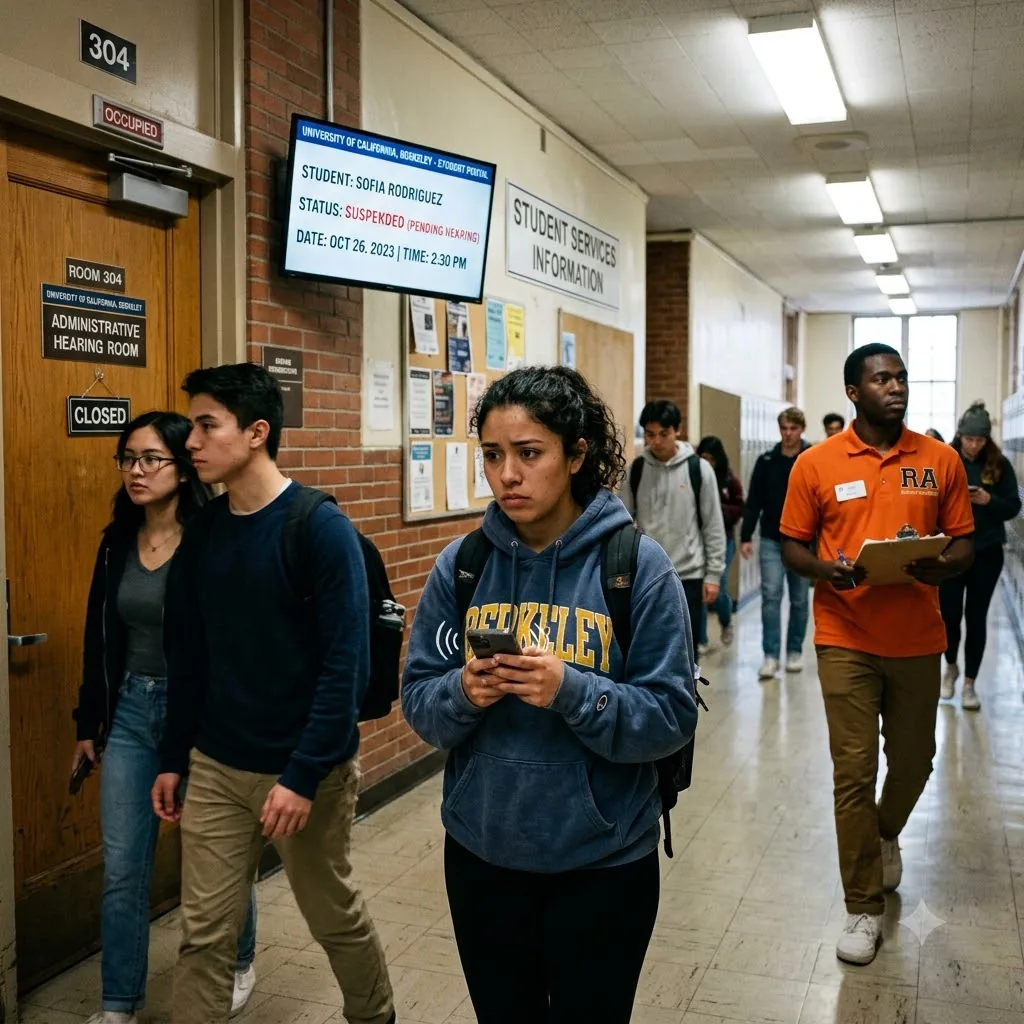
Story code: ST-001575
Part 3: The Human Override
No one in the doorway said a word.
Marisol looked from face to face, waiting for somebody to deny what was on her screen, or explain it, or at least pretend this was not the first moment that morning when a system had moved against her before any person would speak plainly.
Instead the man with the silver-framed glasses said, very carefully, “Your access credentials may be temporarily adjusted during active review.”
“Adjusted,” Marisol said.
The gray login screen still sat in her hand like a verdict.
At the far end of the hallway, the elevator dinged. The sound made her think, suddenly and sharply, of Theo Morgan in September, standing outside West Hall in pajama pants and an expensive quarter-zip, laughing while he waited for a staff member to let him back in after curfew lockout. Marisol had been coming back from the library then, balancing a coffee and a stack of photocopied readings, and the desk worker had said, with the indulgent tone people used around students whose names opened doors, that the mobile credential system was being “weird” again.
Then she had leaned over the desk, typed something, and the side entrance had clicked open.
Theo had grinned. “Perks of being loved by the institution.”
At the time Marisol had rolled her eyes and kept walking.
Now the memory landed differently.
She looked at the RA. “If the app stops working, there’s a manual override, right?”
The RA’s mouth parted, then closed.
The cardigan administrator cut in first. “This is not the place to discuss access protocols.”
“So there is one.”
“Marisol-” the RA started.
“There is one,” Marisol repeated, louder now, because the refusal itself had become an answer. She turned toward the students at the stairwell, then back to the doorway. “You can open the building without the app. You’ve done it before.”
The man with the glasses put one hand on the edge of the door. “You need to stop performing this for an audience.”
“Performing?”
The word hit hard enough that she took a step toward him before she caught herself. Around them the fake-casual crowd had thickened: two students by the vending machine, Dana from financial aid halfway down the hall and no longer pretending she was just passing through, a tour group pausing at the corner until their guide hurried them away.
Marisol held up her phone again. “You shut off my room key while I’m standing here. You won’t let me into the room where you’re talking about me. You told me not to contact anybody outside the university and then you changed my access without notice. What part of that is a performance?”
The seated woman inside the hearing room pushed back her chair.
It was the first decisive movement anyone in that room had made. She stood, legal pad still in hand, and came into fuller view behind the man in glasses. Mid-forties maybe, plain blouse, university badge clipped at her waist. Not conduct, Marisol thought. Not housing either. Registrar, maybe. Compliance. One of the offices nobody noticed until something got frozen.
“We should move this conversation,” the woman said.
“Into the room?” Marisol asked.
The woman hesitated.
That tiny pause told the truth before any sentence did.
“Into a private office,” she said.
“Not the room where you’re already discussing my case.”
No answer.
Dana had come closer without Marisol noticing. She stood near the water fountain with her coffee still in both hands, eyes fixed on the floor. The embroidered name on her fleece flashed white under the fluorescent lights.
Marisol looked right at her. “The report he started to mention. The external verification. Is that why aid got flagged?”
Dana flinched.
The man with the glasses said sharply, “Staff should not engage on this matter outside designated channels.”
But he said it to Dana, not to Marisol.
That mattered too.
“Outside designated channels,” Marisol said. “Like in a locked room I’m not allowed into?”
The cardigan administrator’s voice thinned. “You were not excluded from your process. There are preliminary steps that must occur before student participation.”
Marisol stared at her. “Student participation. You mean me.”
The administrator pressed her folders tighter against her ribs. “There are identity-related discrepancies that required administrative coordination across departments.”
Identity-related.
Not conduct. Not safety. Not some sudden emergency in housing.
The phrase opened something cold and clear in Marisol’s chest.
“So this is because of my records,” she said.
Nobody corrected her.
She thought of Mr. Talbot on the phone, the line cut off just as he said the name on the external verification did not match the-what? The student file? The aid documents? The university’s version of her? She thought of every form she had ever filled out twice, every office that had needed one name on one line and another on an older document she no longer used, every staff person who had lowered their voice and called it a technical issue when they meant something more dangerous.
She felt the hallway watching.
“If this is about records,” she said, more steadily now, “then why did you touch housing before speaking to me? Why touch aid before showing me anything?”
The woman with the legal pad answered this time, too quickly. “Because system-linked status changes propagate automatically.”
Then, as soon as the words were out, the RA looked down.
Marisol caught it.
“Automatically,” she said. “But not really.”
The man in glasses frowned. “That is not what she said.”
“It’s exactly what she said.” Marisol turned toward the RA. “Manual override. Yes or no?”
The RA whispered, “There are emergency access procedures.”
The hallway seemed to go still around the words.
The cardigan administrator snapped, “That is enough.”
But it was too late.
Marisol looked back at the hearing room. “So the system can be stopped.”
“That is an oversimplification,” the man said.
“Can it be stopped?”
He did not answer.
Marisol kept going, the pattern coming into focus so fast she almost felt it physically, like a picture sharpening. “Theo got let back in when his credential failed. The front desk overrode it. Everybody knows athletes get exceptions when billing locks their registration for a day. People get walked through forms all the time when offices want to help them. So don’t stand there and tell me this all just happened automatically. Somebody chose not to stop it.”
A few heads in the hall lifted at Theo’s name. The RA looked stricken now, not because Marisol was wrong but because she had said it where other students could hear.
The woman with the legal pad tightened her grip on the pad until the top sheet bent. “You are conflating unrelated administrative circumstances.”
“Am I?” Marisol asked. “Then tell me I’m wrong. Tell me nobody in this building can keep a student in her room while records are reviewed. Tell me nobody can delay a hold until after an actual conversation. Tell me there isn’t a single person in that room who knew this would hit housing and said do it anyway.”
Silence.
Not the procedural kind from before. Not the polished kind. This one had edges.
Dana finally spoke, still looking down. “The outage last month hit mobile credentials campus-wide for three hours. Housing kept everyone on manual desk check-in until the system came back.”
The cardigan administrator turned on her. “Dana.”
Dana’s face went white, but she kept talking in the small stunned voice of somebody who had crossed the line and could not uncross it. “And when linked reviews trigger on protected accounts, offices can place a temporary exception code while documentation is being resolved. That’s standard if there’s risk of immediate displacement.”
Protected accounts.
Temporary exception code.
Standard.
The words dropped into the hall one by one.
Marisol did not look at Dana now. She looked at the people in the doorway, because their faces were answer enough. The man with the glasses had gone rigid. The legal-pad woman had stopped trying to write anything down. The RA’s eyes shone with panic.
“Protected students like Theo,” Marisol said.
No one said yes.
No one said no.
She heard her own breathing, the buzz of the fluorescent lights, the faint rattle of the maintenance cart by the fountain. Her phone was still in her hand, gray access-denied screen dimming toward black.
“So it wasn’t the system,” she said. “It was a choice.”
The man with the silver-framed glasses opened his mouth.
And for the first time that morning, nothing clean came out.