Story code: ST-001633
Part 1: The Silent Dinner
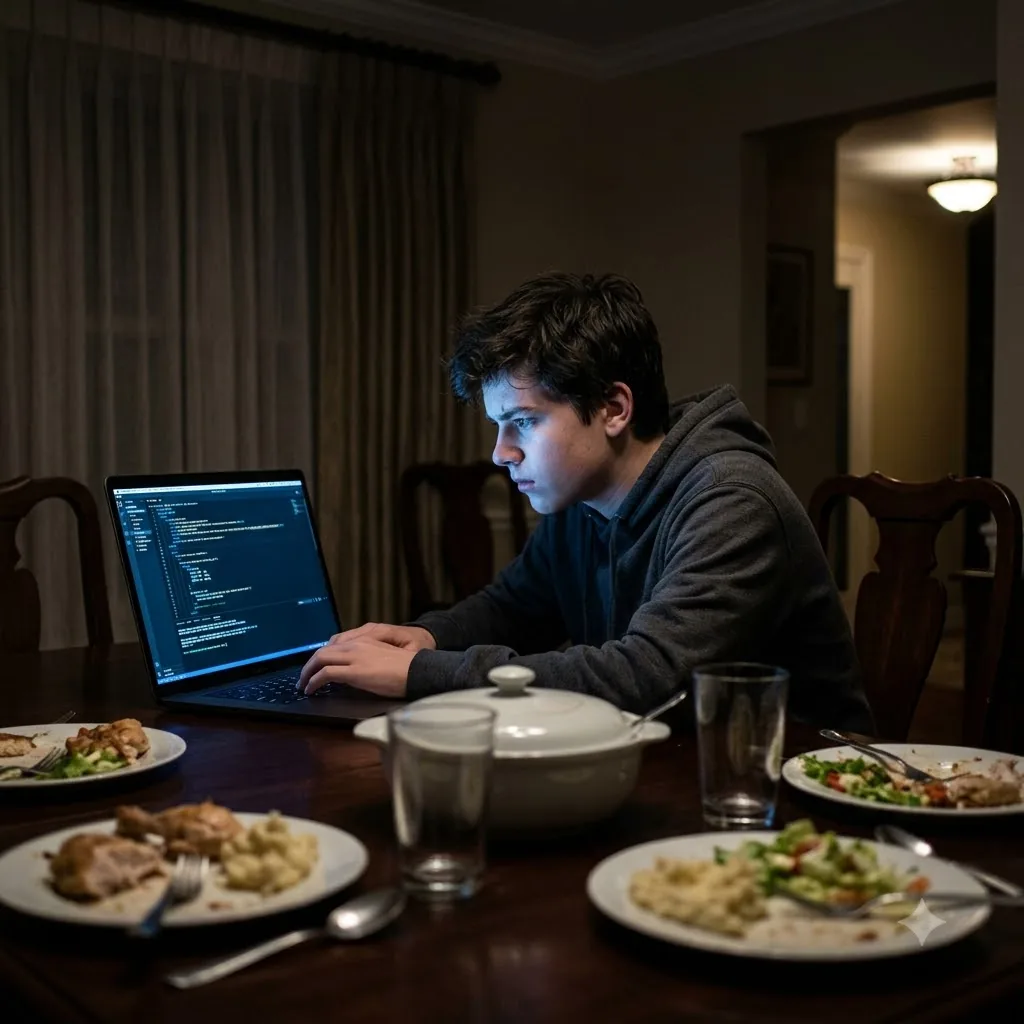
The only sound in the dining room was the dull scrape of a stainless steel fork across ceramic. David sat rigidly at the head of the table, his untouched chicken cooling on the plate in front of him. To his left, his mother kept pushing a small pile of green beans from one side of her dish to the other, her gaze fixed on the tablecloth. His father sat opposite him, staring intensely at a condensation ring left by his water glass. No one spoke.
The silence was dense and heavy, suffocating the air out of the room. It had been twenty minutes since David opened his laptop on the kitchen island and checked his email. The status update from the admissions office had arrived right on schedule at five o’clock. The word “Regret” had jumped out from the very first line, rendering the rest of the text a meaningless, blurry block of gray.
He had done everything right. His SAT score was a perfect 1600. His GPA was an unblemished 4.0, weighed down with every Advanced Placement course his high school offered. He was the debate team captain and had spent his summers volunteering at the local structural engineering firm. The rejection made absolutely no sense. The quiet shame radiating from his parents told him they felt the exact same confusion, morphing into a deep embarrassment they did not deserve. They had sacrificed for four years for this outcome. They had bragged to the neighbors. They had already bought the college pennant for his bedroom wall.
David pushed his chair back. The wooden legs screeched sharply against the hardwood floor. His parents flinched, but neither of them looked up.
He walked back to the kitchen island and pulled his open laptop toward him. The glowing screen illuminated the darkening kitchen. The portal was still open, the digital letter sitting there, crisp and final. He stared at the blue and gold university crest at the top of the page. He needed to find the appeals process. There had to be a mistake, a missing transcript, a clerical error in their database that swapped his profile with someone else.
He clicked the browser’s back button to return to his main applicant dashboard. The page was agonizingly bare. There were large, friendly links for ‘Financial Aid’, ‘Housing Options’, and ‘Campus Tours’, but nothing about contesting a decision. He scrolled to the very bottom of the page, searching the footer for a tiny text link or a support email address. He found nothing but standard copyright text and a privacy policy.
Frustration tightened his chest. He tapped his fingers rhythmically against the edge of the aluminum chassis. In a moment of restless desperation, he right-clicked on the blank white space right next to his glowing red ‘Status: Denied’ badge and selected ‘Inspect’.
The screen immediately split in half. The right side filled with dense blocks of HTML and CSS code, a cascading waterfall of multi-colored text. David was not a software engineer, but he had taken enough computer science electives to understand the basic structure of a web application. He stared at the nested elements, looking for a hidden ‘div’ container that might hold the appeal instructions. Developers often coded administrative buttons but set their display properties to ‘none’ until a specific date or condition was met.
He expanded a folder labeled ‘application-status-container’. Inside, there were several lines of standard styling. He clicked further down, opening a section tagged ‘committee-review-metadata’.
Most of it was boring layout data regarding margins and fonts. Then a string of text caught his eye, buried beneath a block of messy inline CSS. It was an anchor tag, unformatted and entirely invisible on the public side of the webpage. The text color was set to perfectly match the white background of the portal, and the font size was zero.
His eyes scanned the raw code. The destination attribute pointed to a secure document repository instead of a standard public webpage. The text read: href=”/docs/internal/secure/Comm_Eval_Notes_Internal.pdf”.
David stopped breathing. The dining room behind him remained dead silent, the faint clinking of silverware entirely fading from his awareness. The abbreviation clearly stood for Committee Evaluation. This was not a generic rejection letter template. This was a direct, accidental pathway into the private server where the admissions officers kept their actual decision notes.
He hovered his cursor over the blue hyperlink in the inspection panel. His index finger rested heavily on the trackpad. If he clicked it, the server might register his IP address and flag his account for unauthorized access. He did not care. He needed to know what they had said about him behind those closed doors to justify ruining his life.
He pressed down on the trackpad.
A new tab snapped open in his browser. A dark gray screen appeared, featuring a spinning white loading wheel in the dead center. It spun for two agonizing seconds. Then the screen flashed stark white.
A heavily redacted PDF document materialized on the screen. The official seal of the university sat in the top left corner. Across the top, stamped in aggressive red letters, was the phrase ‘CONFIDENTIAL – DO NOT DISTRIBUTE’. Below the header was a clean table containing his applicant ID, his demographics, and his perfect test scores.
The bottom half of the page consisted of a large text box titled ‘Final Reviewer Comments’. Most of the paragraph was typed in standard black font, but the very first sentence was highlighted in a blinding, neon yellow. David leaned closer to the screen, his eyes locking onto the highlighted text as he read the words the director of admissions had typed about him.
The only sound in the dining room was the dull scrape of a stainless steel fork across ceramic. David sat rigidly at the head of the table, his untouched chicken cooling on the plate in front of him. To his left, his mother kept pushing a small pile of green beans from one side of her dish to the other, her gaze fixed on the tablecloth. His father sat opposite him, staring intensely at a condensation ring left by his water glass. No one spoke.
The silence was dense and heavy, suffocating the air out of the room. It had been twenty minutes since David opened his laptop on the kitchen island and checked his email. The status update from the admissions office had arrived right on schedule at five o’clock. The word “Regret” had jumped out from the very first line, rendering the rest of the text a meaningless, blurry block of gray.
He had done everything right. His SAT score was a perfect 1600. His GPA was an unblemished 4.0, weighed down with every Advanced Placement course his high school offered. He was the debate team captain and had spent his summers volunteering at the local structural engineering firm. The rejection made absolutely no sense. The quiet shame radiating from his parents told him they felt the exact same confusion, morphing into a deep embarrassment they did not deserve. They had sacrificed for four years for this outcome. They had bragged to the neighbors. They had already bought the college pennant for his bedroom wall.
David pushed his chair back. The wooden legs screeched sharply against the hardwood floor. His parents flinched, but neither of them looked up.
He walked back to the kitchen island and pulled his open laptop toward him. The glowing screen illuminated the darkening kitchen. The portal was still open, the digital letter sitting there, crisp and final. He stared at the blue and gold university crest at the top of the page. He needed to find the appeals process. There had to be a mistake, a missing transcript, a clerical error in their database that swapped his profile with someone else.
He clicked the browser’s back button to return to his main applicant dashboard. The page was agonizingly bare. There were large, friendly links for ‘Financial Aid’, ‘Housing Options’, and ‘Campus Tours’, but nothing about contesting a decision. He scrolled to the very bottom of the page, searching the footer for a tiny text link or a support email address. He found nothing but standard copyright text and a privacy policy.
Frustration tightened his chest. He tapped his fingers rhythmically against the edge of the aluminum chassis. In a moment of restless desperation, he right-clicked on the blank white space right next to his glowing red ‘Status: Denied’ badge and selected ‘Inspect’.
The screen immediately split in half. The right side filled with dense blocks of HTML and CSS code, a cascading waterfall of multi-colored text. David was not a software engineer, but he had taken enough computer science electives to understand the basic structure of a web application. He stared at the nested elements, looking for a hidden ‘div’ container that might hold the appeal instructions. Developers often coded administrative buttons but set their display properties to ‘none’ until a specific date or condition was met.
He expanded a folder labeled ‘application-status-container’. Inside, there were several lines of standard styling. He clicked further down, opening a section tagged ‘committee-review-metadata’.
Most of it was boring layout data regarding margins and fonts. Then a string of text caught his eye, buried beneath a block of messy inline CSS. It was an anchor tag, unformatted and entirely invisible on the public side of the webpage. The text color was set to perfectly match the white background of the portal, and the font size was zero.
His eyes scanned the raw code. The destination attribute pointed to a secure document repository instead of a standard public webpage. The text read: href=”/docs/internal/secure/Comm_Eval_Notes_Internal.pdf”.
David stopped breathing. The dining room behind him remained dead silent, the faint clinking of silverware entirely fading from his awareness. The abbreviation clearly stood for Committee Evaluation. This was not a generic rejection letter template. This was a direct, accidental pathway into the private server where the admissions officers kept their actual decision notes.
He hovered his cursor over the blue hyperlink in the inspection panel. His index finger rested heavily on the trackpad. If he clicked it, the server might register his IP address and flag his account for unauthorized access. He did not care. He needed to know what they had said about him behind those closed doors to justify ruining his life.
He pressed down on the trackpad.
A new tab snapped open in his browser. A dark gray screen appeared, featuring a spinning white loading wheel in the dead center. It spun for two agonizing seconds. Then the screen flashed stark white.
A heavily redacted PDF document materialized on the screen. The official seal of the university sat in the top left corner. Across the top, stamped in aggressive red letters, was the phrase ‘CONFIDENTIAL – DO NOT DISTRIBUTE’. Below the header was a clean table containing his applicant ID, his demographics, and his perfect test scores.
The bottom half of the page consisted of a large text box titled ‘Final Reviewer Comments’. Most of the paragraph was typed in standard black font, but the very first sentence was highlighted in a blinding, neon yellow. David leaned closer to the screen, his eyes locking onto the highlighted text as he read the words the director of admissions had typed about him.