Story code: ST-001635
Part 1: The Feed Store
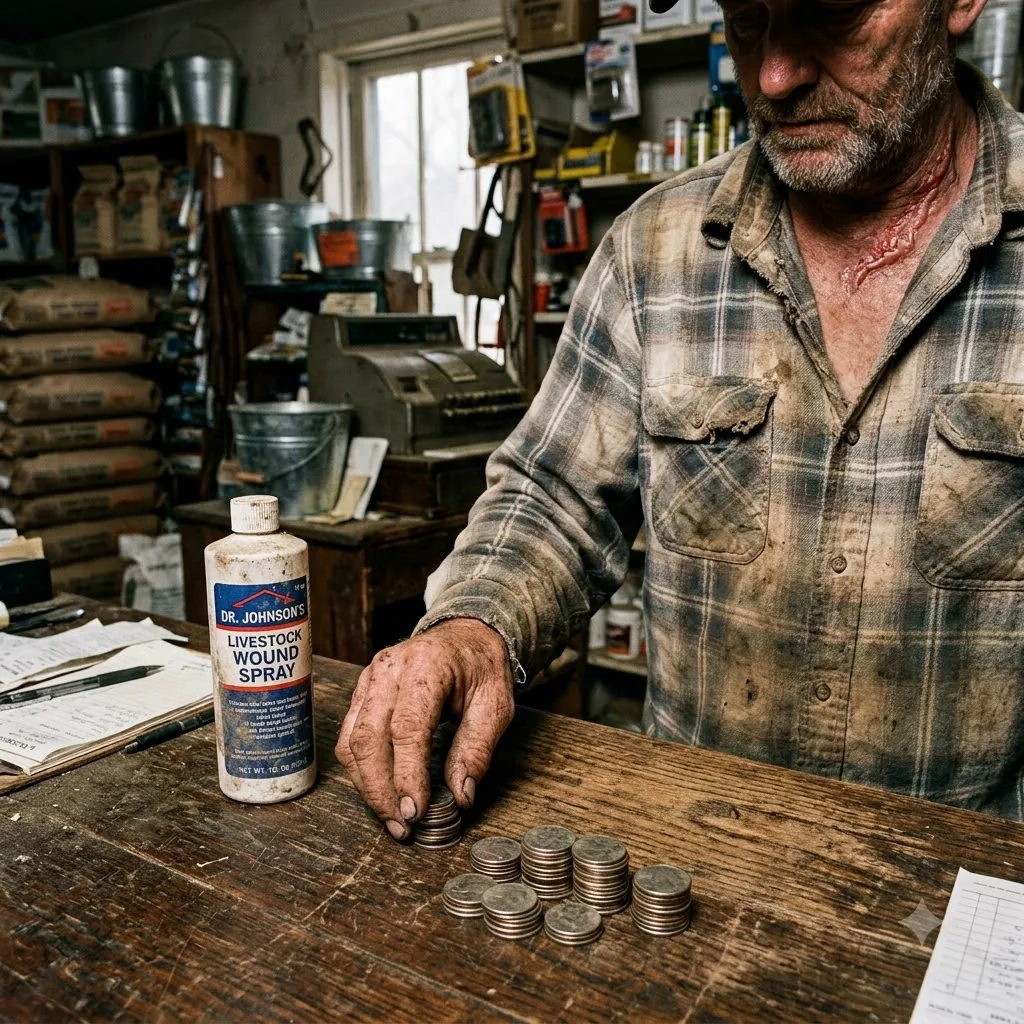
The metallic clink of quarters on the scratched laminate counter filled the dusty silence of Miller’s Feed and Seed. Sarah stood three feet behind the man in the checkout line, clutching a twenty-pound bag of senior dog food she had no intention of buying. The air smelled of sweet alfalfa, pesticide, and old leather, but beneath it hung something sharp and metallic. The man in front of her wore a faded green flannel shirt, unbuttoned at the top, his shoulders hunched inward as if trying to shrink his physical footprint. He was counting out coins, pushing them in uneven, trembling stacks toward the cashier.
Next to the mountain of silver sat a purple aerosol can of horse Wound-Kote and two thick plastic bottles of livestock amoxicillin.
As the man shifted his weight to reach deeper into his denim pocket, the collar of his flannel slid an inch lower. Sarah froze. A jagged, blistering path of melted skin crawled up from his collarbone, disappearing beneath the fabric of his shirt. It was a weeping, raw chemical burn, glistening angrily under the flickering fluorescent ceiling lights. The skin at the outer edges was curled and blackened, while the center bubbled with fresh yellow fluid and raw, exposed tissue. The sharp, acrid scent of ammonia and burnt flesh drifted backward.
He winced, a sharp intake of breath hissing through his teeth, as he retrieved another handful of quarters. He was buying fish antibiotics and spray-on livestock antiseptic for a wound that required a sterilized hospital burn unit and intravenous morphine.
The cashier, a teenager with a bored expression and a smartphone resting on the register, swept the coins into the till without looking up. The injured man grabbed the plastic bag, his knuckles white and split, dirt packed deep into the nail beds. Sarah tracked his movements. She noted the heavy steel-toed boots caked in fresh red clay, the slight limp as he favored his left side, the way he kept his chin tucked to his chest to avoid eye contact with anyone.
A heavy, suffocating knot tightened in her throat. She knew exactly what this meant. She knew the exact kind of terror that drove a person to self-medicate a third-degree chemical burn with animal supplies in a rural hardware store. She knew it intimately. Her mind flashed to her own kitchen table, to the neat stacks of final medical notices, the denial letters from the insurance adjudicators, the oxygen machine humming next to her husband’s armchair.
The bell above the door jingled as the man stepped out into the blinding afternoon sun. Sarah set the bag of dog food down on a pallet of salt licks. She pushed through the heavy glass door, stepping out onto the crunching gravel of the parking lot. The heat radiating from the pavement smelled of diesel exhaust and dry earth.
The man was moving entirely too quickly for someone in that much agonizing pain. He beelined for a rusted Ford pickup parked near the chain-link fence at the far edge of the lot, his boots kicking up small clouds of white dust.
Sarah kept her pace steady, her sensible flats crunching rhythmically against the rocks. The rigid rules of her employment hammered in her head, fighting a violent war against the crushing weight of her own reality. Her husband needed his weekly infusion treatments. Keeping his life-saving insurance meant following the strict protocol of her agency. No exceptions. No looking the other way. No unauthorized compassion.
The department tracked every audit, every field verification, every biometric anomaly. She had been sent to this county for a specific compliance sweep. If she let this man go, the regional algorithm would eventually flag her geolocation data and cross-reference it with the unreported incident. If she reported him, this man’s fragile existence would be utterly dismantled. The federal database did not care about the cost of human survival.
He reached the driver’s side door and yanked the heavy metal handle. He threw the plastic bag onto the passenger seat, climbing in awkwardly. A low groan escaped him as the fabric of his shirt scraped against the bubbling flesh of his neck. Sarah crossed the remaining distance just as he slammed the rusted door shut.
Through the glass, she watched him jam a worn key into the ignition. The engine choked, coughed loudly, and died. He cursed, pounding his fist against the steering wheel, his chest heaving with exertion.
Sarah stepped up to the driver’s side window. She reached into her tailored blazer pocket, her fingers closing around the cold leather of her credentials wallet. She pulled it out, flipped the leather open, and pressed the heavy silver government medallion flat against the dusty glass.
The man’s head snapped toward the sound. His eyes, wide, bloodshot, and feral, dropped instantly from her face to the federal seal pressed against his window. The color drained completely from his weathered cheeks. His chest heaved in a sudden, violent panic as he threw himself forward, lunging his right hand deep beneath the dark space of the dashboard.
The metallic clink of quarters on the scratched laminate counter filled the dusty silence of Miller’s Feed and Seed. Sarah stood three feet behind the man in the checkout line, clutching a twenty-pound bag of senior dog food she had no intention of buying. The air smelled of sweet alfalfa, pesticide, and old leather, but beneath it hung something sharp and metallic. The man in front of her wore a faded green flannel shirt, unbuttoned at the top, his shoulders hunched inward as if trying to shrink his physical footprint. He was counting out coins, pushing them in uneven, trembling stacks toward the cashier.
Next to the mountain of silver sat a purple aerosol can of horse Wound-Kote and two thick plastic bottles of livestock amoxicillin.
As the man shifted his weight to reach deeper into his denim pocket, the collar of his flannel slid an inch lower. Sarah froze. A jagged, blistering path of melted skin crawled up from his collarbone, disappearing beneath the fabric of his shirt. It was a weeping, raw chemical burn, glistening angrily under the flickering fluorescent ceiling lights. The skin at the outer edges was curled and blackened, while the center bubbled with fresh yellow fluid and raw, exposed tissue. The sharp, acrid scent of ammonia and burnt flesh drifted backward.
He winced, a sharp intake of breath hissing through his teeth, as he retrieved another handful of quarters. He was buying fish antibiotics and spray-on livestock antiseptic for a wound that required a sterilized hospital burn unit and intravenous morphine.
The cashier, a teenager with a bored expression and a smartphone resting on the register, swept the coins into the till without looking up. The injured man grabbed the plastic bag, his knuckles white and split, dirt packed deep into the nail beds. Sarah tracked his movements. She noted the heavy steel-toed boots caked in fresh red clay, the slight limp as he favored his left side, the way he kept his chin tucked to his chest to avoid eye contact with anyone.
A heavy, suffocating knot tightened in her throat. She knew exactly what this meant. She knew the exact kind of terror that drove a person to self-medicate a third-degree chemical burn with animal supplies in a rural hardware store. She knew it intimately. Her mind flashed to her own kitchen table, to the neat stacks of final medical notices, the denial letters from the insurance adjudicators, the oxygen machine humming next to her husband’s armchair.
The bell above the door jingled as the man stepped out into the blinding afternoon sun. Sarah set the bag of dog food down on a pallet of salt licks. She pushed through the heavy glass door, stepping out onto the crunching gravel of the parking lot. The heat radiating from the pavement smelled of diesel exhaust and dry earth.
The man was moving entirely too quickly for someone in that much agonizing pain. He beelined for a rusted Ford pickup parked near the chain-link fence at the far edge of the lot, his boots kicking up small clouds of white dust.
Sarah kept her pace steady, her sensible flats crunching rhythmically against the rocks. The rigid rules of her employment hammered in her head, fighting a violent war against the crushing weight of her own reality. Her husband needed his weekly infusion treatments. Keeping his life-saving insurance meant following the strict protocol of her agency. No exceptions. No looking the other way. No unauthorized compassion.
The department tracked every audit, every field verification, every biometric anomaly. She had been sent to this county for a specific compliance sweep. If she let this man go, the regional algorithm would eventually flag her geolocation data and cross-reference it with the unreported incident. If she reported him, this man’s fragile existence would be utterly dismantled. The federal database did not care about the cost of human survival.
He reached the driver’s side door and yanked the heavy metal handle. He threw the plastic bag onto the passenger seat, climbing in awkwardly. A low groan escaped him as the fabric of his shirt scraped against the bubbling flesh of his neck. Sarah crossed the remaining distance just as he slammed the rusted door shut.
Through the glass, she watched him jam a worn key into the ignition. The engine choked, coughed loudly, and died. He cursed, pounding his fist against the steering wheel, his chest heaving with exertion.
Sarah stepped up to the driver’s side window. She reached into her tailored blazer pocket, her fingers closing around the cold leather of her credentials wallet. She pulled it out, flipped the leather open, and pressed the heavy silver government medallion flat against the dusty glass.
The man’s head snapped toward the sound. His eyes, wide, bloodshot, and feral, dropped instantly from her face to the federal seal pressed against his window. The color drained completely from his weathered cheeks. His chest heaved in a sudden, violent panic as he threw himself forward, lunging his right hand deep beneath the dark space of the dashboard.