Story code: ST-001638
Part 1: Acceptable Trauma
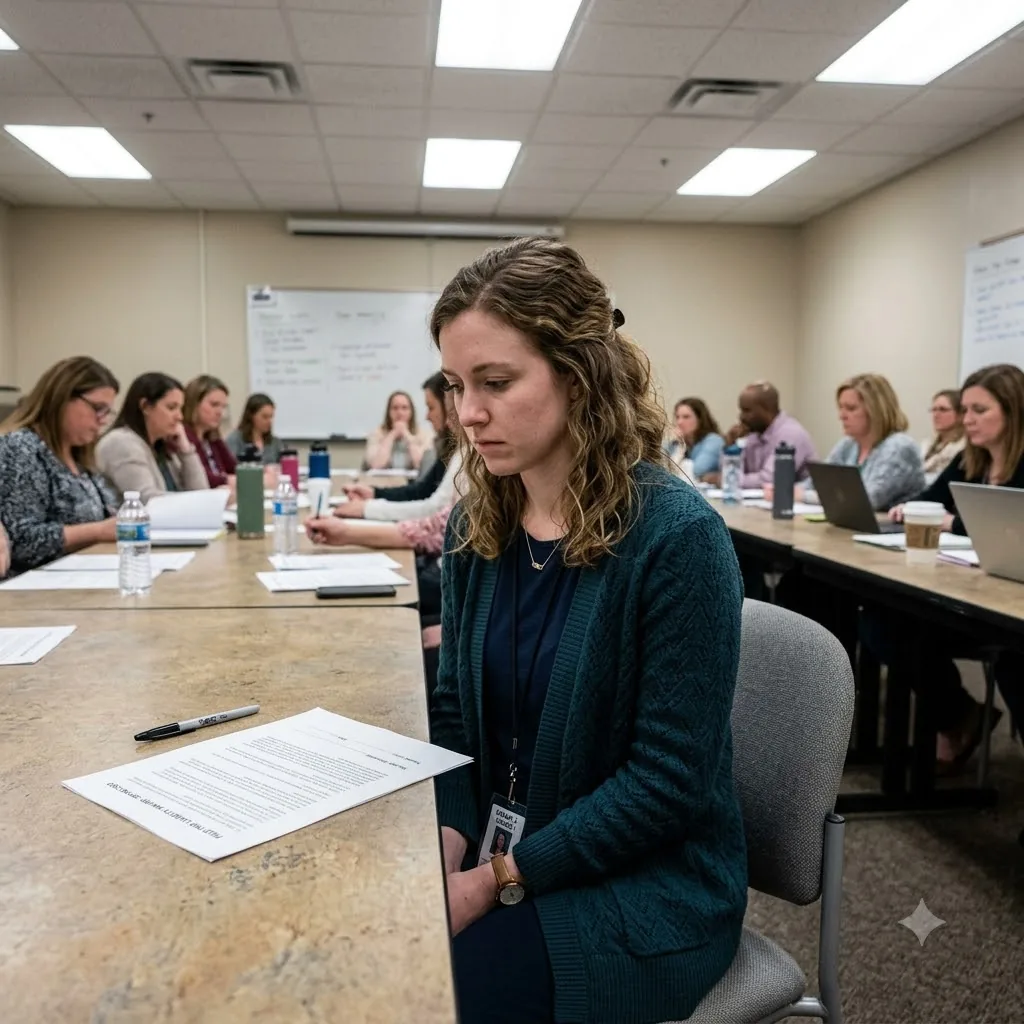
The hum of the fluorescent lights in the windowless breakroom felt heavy, pressing down on the fifteen teachers crammed around a faux-wood laminate table designed to seat eight. Clara sat with her knees pinned against the metal table leg, staring at the thick stack of stapled packets making its way down the line. The stagnant air smelled faintly of burnt coffee and dry-erase markers.
Marcus Thorne stood at the head of the cramped room. Wearing a tight black polo tucked into tactical trousers, his rigid posture was glaringly out of place among the tired educators. He slid a packet toward Clara. The bold, black letters at the top of the page vibrated under the harsh lighting.
Waiver of Liability and Consent for Simulated Auditory Stressors.
Thorne cleared his throat, projecting his voice as if addressing a battalion. He spoke in a steady, sanitized rhythm, weaving words that did not belong in a building filled with crayons and cubbies. He spoke of immersive baseline testing, dynamic threat environments, and stress inoculation.
Clara traced the dense legal jargon down to the third paragraph. The text detailed the scheduled use of blank rounds discharging in the primary corridors. They were going to fire blanks outside her first-grade classroom.
Thorne continued his briefing casually. He insisted that exposing the school to controlled, high-decibel acoustic triggers was the only way to ensure compliance with new municipal safety mandates. He used the phrase ‘acceptable trauma parameters.’ A brief spike in physiological arousal, he explained, would build vital resilience, conditioning the children to respond optimally during a genuine event.
Clara gripped her hands together in her lap, her fingernails digging painfully into her palms. She thought of Leo, who cried when the cafeteria blender turned on. She thought of Maya, who still wet herself if someone spoke too sharply. Thorne was talking about acceptable trauma for six-year-olds. He was talking about firing blanks ten feet from where her students sat crisscross applesauce on a rainbow-colored rug.
The principal offered a weak, obliging nod, urging the staff to sign at the bottom. Around the cramped table, the synchronized clicking of retractable pens echoed like tiny firecrackers. Teachers signed their names, their shoulders slumped in resigned compliance.
Clara looked at the cheap, blue-capped ballpoint resting next to her waiver. She picked it up. The plastic felt cold and brittle.
Thorne caught her hesitation. He leveled a flat, practiced gaze at her, offering a tight-lipped smile. He told the room that the auditory simulation was completely safe, merely a tool to shatter the illusion of security so they could rebuild it stronger.
Clara stared at the tip of her pen. The room felt entirely devoid of oxygen. The walls, plastered with faded union notices, seemed to close in on her. The droning sound of Thorne’s voice faded into a dull, rushing static in her ears.
With excruciating slowness, Clara brought the cap to the back of the pen. She pressed it down until it locked with a sharp, definitive snap.
The sound cut cleanly through Thorne’s monologue. He paused, his brow furrowing as he looked down at her.
Clara placed the pen horizontally across the top of the waiver. She placed her fingertips on the edge of the crisp white paper and pushed. The document slid smoothly across the slick laminate surface, coming to a halt directly in front of Thorne’s clipboard. The signature line remained blank.
Without a single word, Clara pushed her chair back. The metal legs screeched violently against the linoleum floor, a raw, ugly sound that forced two teachers to wince. She stood up and walked toward the door.
Thorne called out her name, his sanitized professionalism slipping into authoritative command. He stated that the exercise was not optional.
Clara did not turn around. She pushed through the heavy wooden door of the breakroom and let it slam shut behind her.
The hallway stretched out before her, lined with finger-painted turkeys and wonky, uneven alphabet letters. The digital clock above the water fountain glowed a harsh red. It was one-fourteen. Her students were in the art room until one-thirty. She had sixteen minutes before the unannounced drill was scheduled to initiate.
She broke into a sprint. Her flat shoes slapped against the waxed floors as she navigated the familiar turns toward Room 12. She burst through her own classroom door, breathing hard, taking in the tiny blue chairs pushed neatly under the low tables.
Thorne’s tactical simulation required them to turn off the lights, lock the door, huddle in the corner, and wait in terrified silence while the blanks went off in the hall. Clara refused to let her kids sit in the dark and wait for the noise.
She moved to the heavy oak bookshelf near the teacher’s desk. Packed with picture books and plastic bins of math manipulatives, it weighed easily over two hundred pounds. She planted her boots against the floor, gripped the thick wooden edge, and threw her entire body weight backward. The shelf groaned in protest. She hauled it across the carpet, inch by agonizing inch, dragging it directly in front of the door.
She reached for a roll of heavy black construction paper and a roll of duct tape. As she lifted the paper to cover the narrow rectangular window on the door, the heavy brass handle suddenly clicked, twisting downward as a fist began to pound against the thin wood.
The hum of the fluorescent lights in the windowless breakroom felt heavy, pressing down on the fifteen teachers crammed around a faux-wood laminate table designed to seat eight. Clara sat with her knees pinned against the metal table leg, staring at the thick stack of stapled packets making its way down the line. The stagnant air smelled faintly of burnt coffee and dry-erase markers.
Marcus Thorne stood at the head of the cramped room. Wearing a tight black polo tucked into tactical trousers, his rigid posture was glaringly out of place among the tired educators. He slid a packet toward Clara. The bold, black letters at the top of the page vibrated under the harsh lighting.
Waiver of Liability and Consent for Simulated Auditory Stressors.
Thorne cleared his throat, projecting his voice as if addressing a battalion. He spoke in a steady, sanitized rhythm, weaving words that did not belong in a building filled with crayons and cubbies. He spoke of immersive baseline testing, dynamic threat environments, and stress inoculation.
Clara traced the dense legal jargon down to the third paragraph. The text detailed the scheduled use of blank rounds discharging in the primary corridors. They were going to fire blanks outside her first-grade classroom.
Thorne continued his briefing casually. He insisted that exposing the school to controlled, high-decibel acoustic triggers was the only way to ensure compliance with new municipal safety mandates. He used the phrase ‘acceptable trauma parameters.’ A brief spike in physiological arousal, he explained, would build vital resilience, conditioning the children to respond optimally during a genuine event.
Clara gripped her hands together in her lap, her fingernails digging painfully into her palms. She thought of Leo, who cried when the cafeteria blender turned on. She thought of Maya, who still wet herself if someone spoke too sharply. Thorne was talking about acceptable trauma for six-year-olds. He was talking about firing blanks ten feet from where her students sat crisscross applesauce on a rainbow-colored rug.
The principal offered a weak, obliging nod, urging the staff to sign at the bottom. Around the cramped table, the synchronized clicking of retractable pens echoed like tiny firecrackers. Teachers signed their names, their shoulders slumped in resigned compliance.
Clara looked at the cheap, blue-capped ballpoint resting next to her waiver. She picked it up. The plastic felt cold and brittle.
Thorne caught her hesitation. He leveled a flat, practiced gaze at her, offering a tight-lipped smile. He told the room that the auditory simulation was completely safe, merely a tool to shatter the illusion of security so they could rebuild it stronger.
Clara stared at the tip of her pen. The room felt entirely devoid of oxygen. The walls, plastered with faded union notices, seemed to close in on her. The droning sound of Thorne’s voice faded into a dull, rushing static in her ears.
With excruciating slowness, Clara brought the cap to the back of the pen. She pressed it down until it locked with a sharp, definitive snap.
The sound cut cleanly through Thorne’s monologue. He paused, his brow furrowing as he looked down at her.
Clara placed the pen horizontally across the top of the waiver. She placed her fingertips on the edge of the crisp white paper and pushed. The document slid smoothly across the slick laminate surface, coming to a halt directly in front of Thorne’s clipboard. The signature line remained blank.
Without a single word, Clara pushed her chair back. The metal legs screeched violently against the linoleum floor, a raw, ugly sound that forced two teachers to wince. She stood up and walked toward the door.
Thorne called out her name, his sanitized professionalism slipping into authoritative command. He stated that the exercise was not optional.
Clara did not turn around. She pushed through the heavy wooden door of the breakroom and let it slam shut behind her.
The hallway stretched out before her, lined with finger-painted turkeys and wonky, uneven alphabet letters. The digital clock above the water fountain glowed a harsh red. It was one-fourteen. Her students were in the art room until one-thirty. She had sixteen minutes before the unannounced drill was scheduled to initiate.
She broke into a sprint. Her flat shoes slapped against the waxed floors as she navigated the familiar turns toward Room 12. She burst through her own classroom door, breathing hard, taking in the tiny blue chairs pushed neatly under the low tables.
Thorne’s tactical simulation required them to turn off the lights, lock the door, huddle in the corner, and wait in terrified silence while the blanks went off in the hall. Clara refused to let her kids sit in the dark and wait for the noise.
She moved to the heavy oak bookshelf near the teacher’s desk. Packed with picture books and plastic bins of math manipulatives, it weighed easily over two hundred pounds. She planted her boots against the floor, gripped the thick wooden edge, and threw her entire body weight backward. The shelf groaned in protest. She hauled it across the carpet, inch by agonizing inch, dragging it directly in front of the door.
She reached for a roll of heavy black construction paper and a roll of duct tape. As she lifted the paper to cover the narrow rectangular window on the door, the heavy brass handle suddenly clicked, twisting downward as a fist began to pound against the thin wood.