Story code: ST-001647
Part 1: The Broken Frame
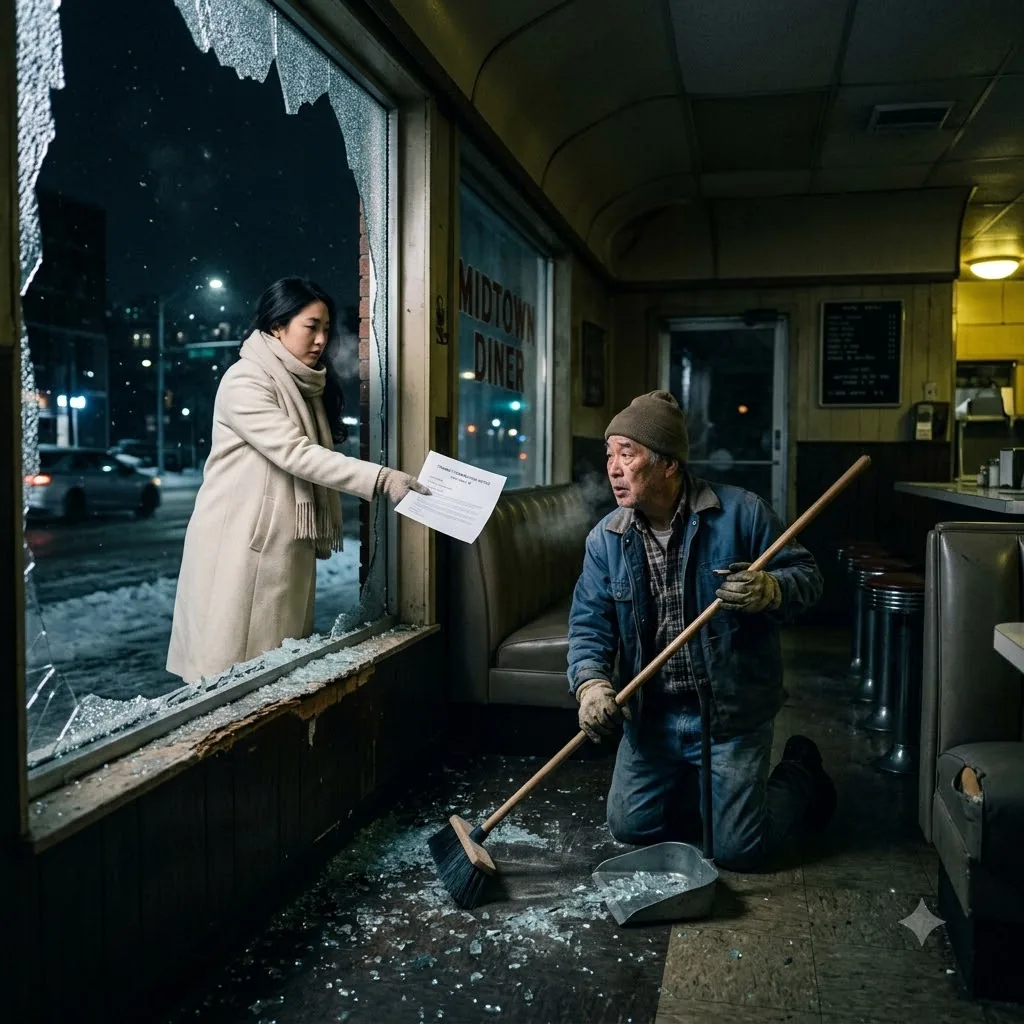
The wind whipped straight off the avenue and into the dining room, carrying a spray of road salt and freezing sleet over the linoleum. Arthur stood behind the counter, watching his breath form white plumes in the exact spot where his custom, gold-leafed front window used to be. The glass was entirely gone. A five-thousand-dollar sheet of reinforced plate now covered the floor in jagged heaps. The cold was already biting into the walls. Behind the espresso machine, the exposed copper water lines groaned. If the temperature dropped another two degrees, the main pipes would freeze, crack, and flood whatever was left of the place. He had maybe an hour to find plywood, but he had no money for lumber and no way to leave the diner unsecured.
Arthur grabbed a heavy canvas drop cloth from the utility closet. He dragged it toward the front, his boots grinding the shattered glass into fine powder. The sound was deafening in the empty restaurant. He tried to drape the canvas over the twisted metal frame, but a gust of wind caught the fabric, ripping it out of his numb hands and sending it flying over the counter. It knocked a stack of ceramic mugs into the sink. They shattered on impact.
He knelt by the plumbing access panel under the register. The metal was ice-cold. He wrapped his wool scarf around the primary intake valve, hoping the meager insulation would buy him a little time. The boycott had already bled his accounts dry over the last three weeks. Every day, crowds had gathered across the avenue, ensuring no one crossed the invisible line to buy a cup of coffee or a plate of eggs. Suppliers had noticed the drop in orders and started demanding cash on delivery. Now, the protest had reached his doorstep, graduating from a silent blockade to active demolition, leaving him a physical ruin to match his empty ledger.
He stood up and surveyed the dining room. The custom lettering that had spelled out the diner’s name was currently resting in three distinct chunks near the jukebox. Someone had used a heavy steel barricade to bash through the center of the pane. He had called four emergency repair services, but none would drive a truck into this neighborhood. He was completely on his own.
He grabbed a push broom from the corner and started sweeping, moving on pure autopilot. He pushed a mountain of glass toward the vestibule, the bristles scraping loudly against the tiles. He paused to blow hot breath into his cupped hands, staring at the frost creeping up the inside of the stainless steel refrigerator doors.
A sharp crunch echoed from the sidewalk outside.
Arthur looked up, tightening his grip on the broom handle. The street was supposed to be cordoned off. But a young woman was standing on the pavement, staring into the ruin of his livelihood. She wore a pristine, cream-colored wool coat that belonged in a high-end boutique. Her tall leather boots were spotless, untouched by the dirty slush choking the gutters. She did not look horrified by the destruction of a local business. She looked entirely placid, her chin tilted up in a posture bordering on absolute arrogance.
Instead of walking toward the front door, she stepped straight onto the concrete sill of the smashed window.
Arthur dropped the broom. He took a step forward, raising a hand to warn her about the jagged, guillotine-like shards still clinging to the upper metal frame. She ignored his gesture completely. She ducked her head slightly, her immaculate coat brushing against the twisted aluminum, and stepped directly into the dining room. She stood right on the pile of broken glass he had just swept together, her boots grinding down on the shattered remnants of the gold-leaf lettering.
She reached into her coat pocket and pulled out a crisp, folded piece of thick stock paper. It had the heavy, expensive texture of a formal invitation.
Arthur stared at her across the desolate room, waiting for an apology or some explanation for trespassing. He rubbed his freezing hands together, feeling the sting of a deep cut on his knuckle from the cleanup.
The student took two confident steps forward, closing the distance to the counter. She did not glance at the shattered ceramic mugs on the floor or the desperate wool scarf wrapped around the freezing pipes. She held the folded paper out over the faded Formica countertop, keeping it perfectly level. Her expression was one of profound, condescending pity. She looked at Arthur the way a weary missionary might look at a hopeless sinner.
She placed the paper firmly on the counter and tapped it once with a leather-gloved finger.
Arthur looked down at the document. He could see heavy black type bleeding through the thick paper, distinct paragraphs and aggressive bullet points aligned in rigid, uncompromising rows. He did not reach for it.
She kept her hand hovering over the manifesto and took a slow, deep breath.
“It did not have to come to this,” she said, her clear voice carrying over the howling wind. “But your choices left us no other option.”
She tapped the top of the page, tracing the heavy black lettering of the opening sentence.
“This is what you are going to do to make it right.”
The wind whipped straight off the avenue and into the dining room, carrying a spray of road salt and freezing sleet over the linoleum. Arthur stood behind the counter, watching his breath form white plumes in the exact spot where his custom, gold-leafed front window used to be. The glass was entirely gone. A five-thousand-dollar sheet of reinforced plate now covered the floor in jagged heaps. The cold was already biting into the walls. Behind the espresso machine, the exposed copper water lines groaned. If the temperature dropped another two degrees, the main pipes would freeze, crack, and flood whatever was left of the place. He had maybe an hour to find plywood, but he had no money for lumber and no way to leave the diner unsecured.
Arthur grabbed a heavy canvas drop cloth from the utility closet. He dragged it toward the front, his boots grinding the shattered glass into fine powder. The sound was deafening in the empty restaurant. He tried to drape the canvas over the twisted metal frame, but a gust of wind caught the fabric, ripping it out of his numb hands and sending it flying over the counter. It knocked a stack of ceramic mugs into the sink. They shattered on impact.
He knelt by the plumbing access panel under the register. The metal was ice-cold. He wrapped his wool scarf around the primary intake valve, hoping the meager insulation would buy him a little time. The boycott had already bled his accounts dry over the last three weeks. Every day, crowds had gathered across the avenue, ensuring no one crossed the invisible line to buy a cup of coffee or a plate of eggs. Suppliers had noticed the drop in orders and started demanding cash on delivery. Now, the protest had reached his doorstep, graduating from a silent blockade to active demolition, leaving him a physical ruin to match his empty ledger.
He stood up and surveyed the dining room. The custom lettering that had spelled out the diner’s name was currently resting in three distinct chunks near the jukebox. Someone had used a heavy steel barricade to bash through the center of the pane. He had called four emergency repair services, but none would drive a truck into this neighborhood. He was completely on his own.
He grabbed a push broom from the corner and started sweeping, moving on pure autopilot. He pushed a mountain of glass toward the vestibule, the bristles scraping loudly against the tiles. He paused to blow hot breath into his cupped hands, staring at the frost creeping up the inside of the stainless steel refrigerator doors.
A sharp crunch echoed from the sidewalk outside.
Arthur looked up, tightening his grip on the broom handle. The street was supposed to be cordoned off. But a young woman was standing on the pavement, staring into the ruin of his livelihood. She wore a pristine, cream-colored wool coat that belonged in a high-end boutique. Her tall leather boots were spotless, untouched by the dirty slush choking the gutters. She did not look horrified by the destruction of a local business. She looked entirely placid, her chin tilted up in a posture bordering on absolute arrogance.
Instead of walking toward the front door, she stepped straight onto the concrete sill of the smashed window.
Arthur dropped the broom. He took a step forward, raising a hand to warn her about the jagged, guillotine-like shards still clinging to the upper metal frame. She ignored his gesture completely. She ducked her head slightly, her immaculate coat brushing against the twisted aluminum, and stepped directly into the dining room. She stood right on the pile of broken glass he had just swept together, her boots grinding down on the shattered remnants of the gold-leaf lettering.
She reached into her coat pocket and pulled out a crisp, folded piece of thick stock paper. It had the heavy, expensive texture of a formal invitation.
Arthur stared at her across the desolate room, waiting for an apology or some explanation for trespassing. He rubbed his freezing hands together, feeling the sting of a deep cut on his knuckle from the cleanup.
The student took two confident steps forward, closing the distance to the counter. She did not glance at the shattered ceramic mugs on the floor or the desperate wool scarf wrapped around the freezing pipes. She held the folded paper out over the faded Formica countertop, keeping it perfectly level. Her expression was one of profound, condescending pity. She looked at Arthur the way a weary missionary might look at a hopeless sinner.
She placed the paper firmly on the counter and tapped it once with a leather-gloved finger.
Arthur looked down at the document. He could see heavy black type bleeding through the thick paper, distinct paragraphs and aggressive bullet points aligned in rigid, uncompromising rows. He did not reach for it.
She kept her hand hovering over the manifesto and took a slow, deep breath.
“It did not have to come to this,” she said, her clear voice carrying over the howling wind. “But your choices left us no other option.”
She tapped the top of the page, tracing the heavy black lettering of the opening sentence.
“This is what you are going to do to make it right.”