Story code: ST-001653
Part 1: The Intervention
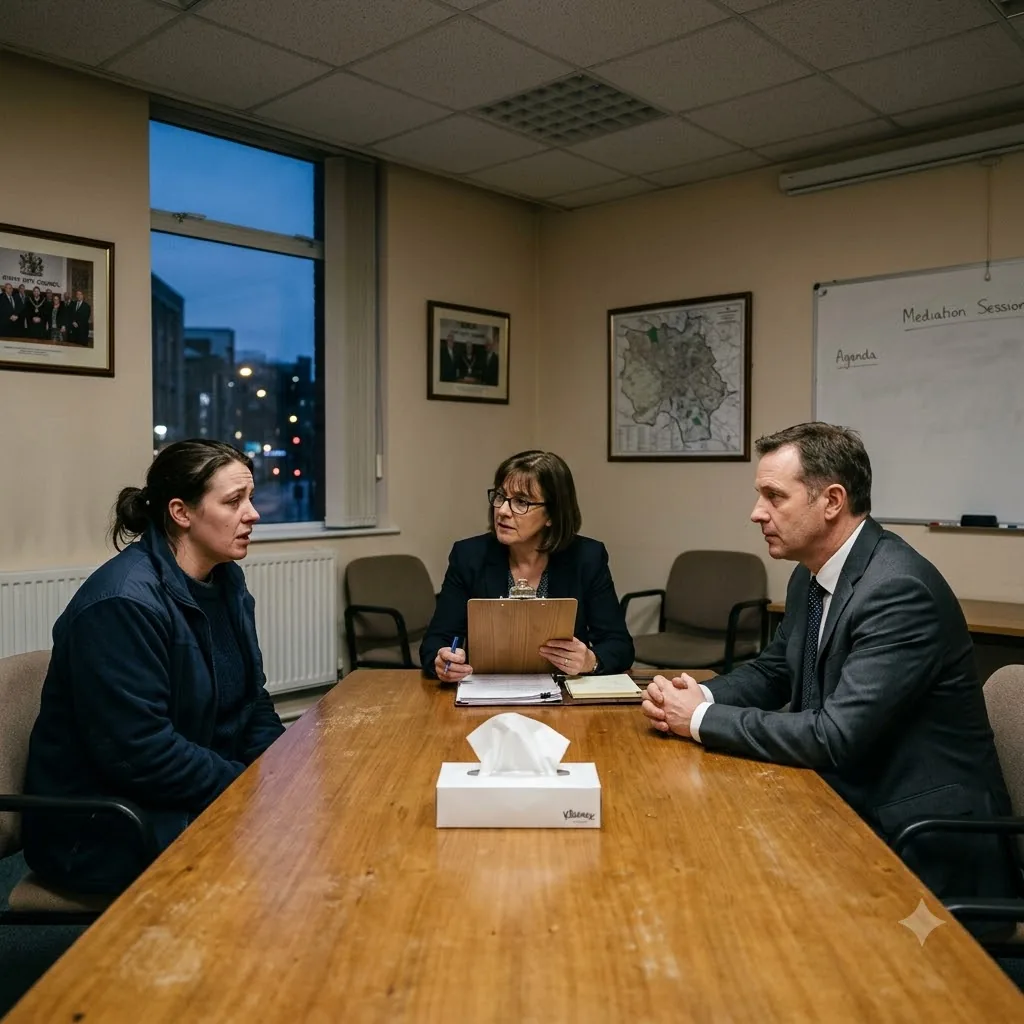
The fluorescent lights in Conference Room B had been dialed down to a warm, sleepy amber, which was Maya’s first indication the East Ward highway expansion was not actually canceled. She placed her favorite silver pen on the faux-maple table, ready to sign the finalized halt memorandum, but city planner David was busy pushing a boutique box of lotion-infused tissues across the laminate surface. Beside him sat a woman Maya had never seen before, wearing a draped linen cardigan and an expression of aggressive empathy.
Maya kept her hand hovering over the empty space on the table. She stated plainly that they were scheduled to finalize the injunction at two o’clock. She had the zoning board’s verbal agreement from Tuesday, the revised environmental impact studies in her heavy leather binder, and the signatures of four hundred East Ward residents who were tired of living in the shadow of impending demolition.
David did not reach for his briefcase to produce the city’s paperwork. He steepled his fingers, leaning back in his ergonomic mesh chair, and offered a soft, practiced sigh. He told Maya they needed to take a step back and look at the human cost of the entire planning process.
Maya opened her binder to the exact tab detailing the three hundred families slated for eviction if the bulldozers broke ground. She tapped the demographic breakdown, reminding him that the human cost was exactly what the halt memorandum prevented. She recited the exact number of local businesses that would be paved over by the new off-ramp.
The woman in the linen cardigan reached out and placed a soft, warm hand directly over Maya’s data tables. The woman introduced herself as Elise, a municipal culture mediator. Elise said she was there to hold space for the emotional toll of the community dialogue and to ensure everyone’s wellness was being prioritized. Elise tilted her head, her voice dropping to a hypnotic, NPR-host murmur, and noted that Maya’s body language seemed highly defensive.
Maya pulled her binder out from under Elise’s hand, locking her jaw. She informed David that they were running out of time before the Friday filing deadline and she had not come to discuss wellness.
David looked at Elise with the weary resignation of a man dealing with a deeply troubled relative. He gently tapped the tissue box closer to Maya. He said the city planning office was deeply concerned about the intensity of Maya’s advocacy over the past six months. He used words like abrasive, unsustainable, and toxic to the collaborative ecosystem.
Maya looked at the tissues. She looked at the dimmed lights and the sound machine humming softly in the corner, masking the noise of the city outside. The realization settled in her stomach like swallowing a stone. They were not here to review the traffic data or sign the legal halt order. They were staging an intervention.
Elise opened a sleek manila folder of her own. She said the city deeply valued Maya’s passion for the East Ward, but her recent behavior at the zoning meetings had created an unsafe environment for the planning staff. Elise referenced the specific moment last month when Maya had raised her voice to point out a fraudulent emissions chart. According to Elise, pointing out the data discrepancy was not the issue, but the combative energy Maya brought to the room had caused David significant emotional distress.
Maya stared at David in total disbelief. The man was orchestrating the demolition of six historic city blocks, yet he sat there with his shoulders slumped, radiating fragile victimhood. He murmured that he just wanted to find a path forward where everyone felt heard and respected, but Maya’s aggressive posturing made it impossible to maintain a trauma-informed workspace.
Maya closed her binder with a sharp snap that made David flinch. She stated they needed to stop wasting time and produce the memorandum they had agreed upon. She reminded them the neighborhood association had mobilized the local press, and the bulldozers were legally stalled until this specific paperwork was filed today.
Elise slid a single sheet of paper across the table. It was not the memorandum.
It was printed on heavy, cream-colored cardstock, topped with the city’s seal and a header that read Community Alignment and Wellness Agreement. Elise explained that in order to proceed with any further discussions regarding the East Ward infrastructure, Maya would need to commit to a baseline of restorative communication.
Maya read the first paragraph. The document required her to agree that all future advocacy would be channeled exclusively through private, mediated sessions with Elise. It mandated the immediate cessation of disruptive public demonstrations, explicitly listing speaking to the press, posting on social media, and organizing unapproved town halls as violations of the wellness pact.
David adjusted his glasses, his voice dripping with synthetic compassion. He said it was for her own well-being, to prevent activist burnout, and to ensure the planning office remained a safe space for his team to operate. He told her that once she signed it, they could begin a twelve-week healing dialogue about the highway route.
Twelve weeks. The bulldozers were scheduled to arrive in three.
Maya gripped the edge of the table. The language of care and inclusion was wrapping around her throat like a silk cord, suffocating her entire campaign. If she refused to sign, they would brand her as uncooperative and toxic, locking her out of the planning process entirely while they tore down her home. If she signed, she was legally gagging herself.
Elise uncapped a silver pen and held it out with a serene, devastating smile, waiting for Maya to choose her own silence.
The fluorescent lights in Conference Room B had been dialed down to a warm, sleepy amber, which was Maya’s first indication the East Ward highway expansion was not actually canceled. She placed her favorite silver pen on the faux-maple table, ready to sign the finalized halt memorandum, but city planner David was busy pushing a boutique box of lotion-infused tissues across the laminate surface. Beside him sat a woman Maya had never seen before, wearing a draped linen cardigan and an expression of aggressive empathy.
Maya kept her hand hovering over the empty space on the table. She stated plainly that they were scheduled to finalize the injunction at two o’clock. She had the zoning board’s verbal agreement from Tuesday, the revised environmental impact studies in her heavy leather binder, and the signatures of four hundred East Ward residents who were tired of living in the shadow of impending demolition.
David did not reach for his briefcase to produce the city’s paperwork. He steepled his fingers, leaning back in his ergonomic mesh chair, and offered a soft, practiced sigh. He told Maya they needed to take a step back and look at the human cost of the entire planning process.
Maya opened her binder to the exact tab detailing the three hundred families slated for eviction if the bulldozers broke ground. She tapped the demographic breakdown, reminding him that the human cost was exactly what the halt memorandum prevented. She recited the exact number of local businesses that would be paved over by the new off-ramp.
The woman in the linen cardigan reached out and placed a soft, warm hand directly over Maya’s data tables. The woman introduced herself as Elise, a municipal culture mediator. Elise said she was there to hold space for the emotional toll of the community dialogue and to ensure everyone’s wellness was being prioritized. Elise tilted her head, her voice dropping to a hypnotic, NPR-host murmur, and noted that Maya’s body language seemed highly defensive.
Maya pulled her binder out from under Elise’s hand, locking her jaw. She informed David that they were running out of time before the Friday filing deadline and she had not come to discuss wellness.
David looked at Elise with the weary resignation of a man dealing with a deeply troubled relative. He gently tapped the tissue box closer to Maya. He said the city planning office was deeply concerned about the intensity of Maya’s advocacy over the past six months. He used words like abrasive, unsustainable, and toxic to the collaborative ecosystem.
Maya looked at the tissues. She looked at the dimmed lights and the sound machine humming softly in the corner, masking the noise of the city outside. The realization settled in her stomach like swallowing a stone. They were not here to review the traffic data or sign the legal halt order. They were staging an intervention.
Elise opened a sleek manila folder of her own. She said the city deeply valued Maya’s passion for the East Ward, but her recent behavior at the zoning meetings had created an unsafe environment for the planning staff. Elise referenced the specific moment last month when Maya had raised her voice to point out a fraudulent emissions chart. According to Elise, pointing out the data discrepancy was not the issue, but the combative energy Maya brought to the room had caused David significant emotional distress.
Maya stared at David in total disbelief. The man was orchestrating the demolition of six historic city blocks, yet he sat there with his shoulders slumped, radiating fragile victimhood. He murmured that he just wanted to find a path forward where everyone felt heard and respected, but Maya’s aggressive posturing made it impossible to maintain a trauma-informed workspace.
Maya closed her binder with a sharp snap that made David flinch. She stated they needed to stop wasting time and produce the memorandum they had agreed upon. She reminded them the neighborhood association had mobilized the local press, and the bulldozers were legally stalled until this specific paperwork was filed today.
Elise slid a single sheet of paper across the table. It was not the memorandum.
It was printed on heavy, cream-colored cardstock, topped with the city’s seal and a header that read Community Alignment and Wellness Agreement. Elise explained that in order to proceed with any further discussions regarding the East Ward infrastructure, Maya would need to commit to a baseline of restorative communication.
Maya read the first paragraph. The document required her to agree that all future advocacy would be channeled exclusively through private, mediated sessions with Elise. It mandated the immediate cessation of disruptive public demonstrations, explicitly listing speaking to the press, posting on social media, and organizing unapproved town halls as violations of the wellness pact.
David adjusted his glasses, his voice dripping with synthetic compassion. He said it was for her own well-being, to prevent activist burnout, and to ensure the planning office remained a safe space for his team to operate. He told her that once she signed it, they could begin a twelve-week healing dialogue about the highway route.
Twelve weeks. The bulldozers were scheduled to arrive in three.
Maya gripped the edge of the table. The language of care and inclusion was wrapping around her throat like a silk cord, suffocating her entire campaign. If she refused to sign, they would brand her as uncooperative and toxic, locking her out of the planning process entirely while they tore down her home. If she signed, she was legally gagging herself.
Elise uncapped a silver pen and held it out with a serene, devastating smile, waiting for Maya to choose her own silence.