Story code: ST-001655
Part 1: The Price of Teak Oil
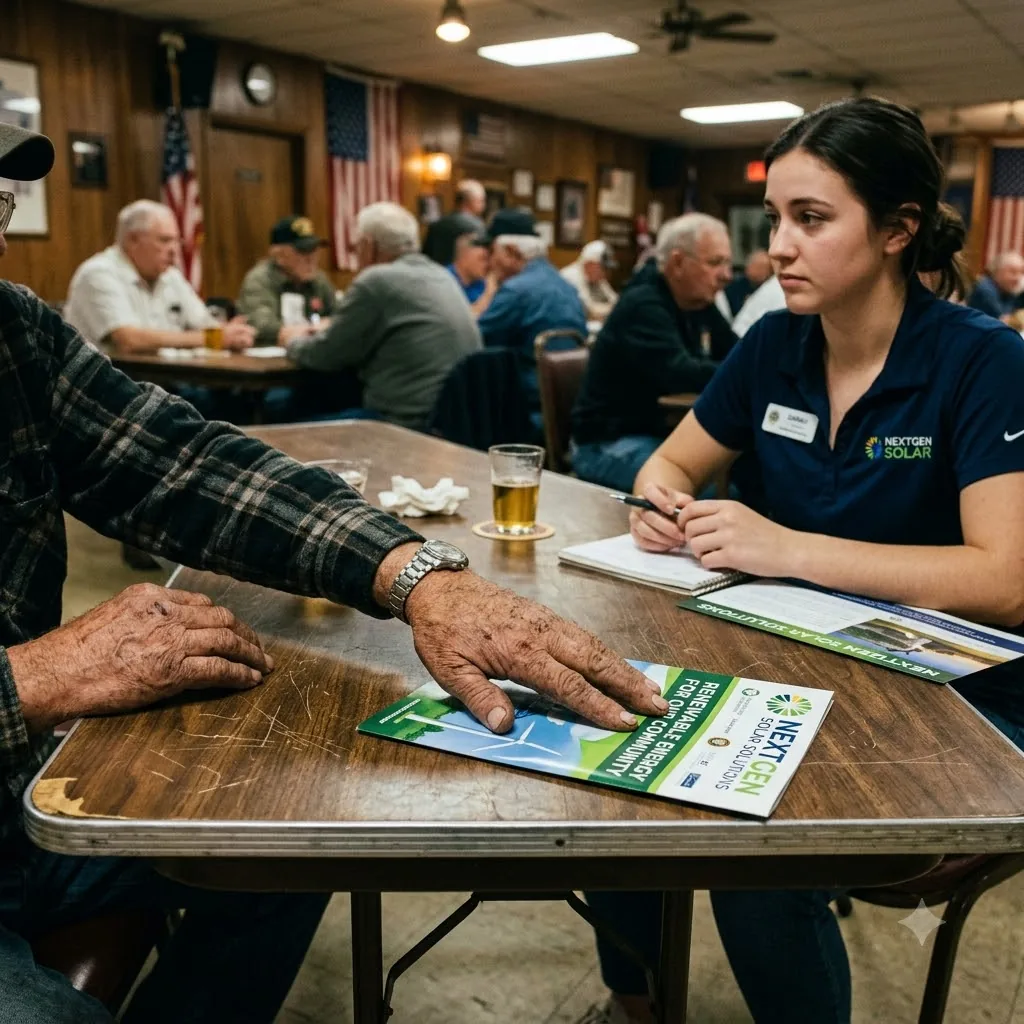
The stifling humidity inside the American Legion hall warped the edges of Chloe’s neatly stacked recruitment flyers. She slid the glossiest brochure-a vibrant green rendering of a modern solar assembly floor-across the scuffed plastic folding table. A thick, calloused thumb, knuckles white with old scar tissue, clamped down on the heavy cardstock and shoved it right back into her personal space.
“Nineteen an hour,” Gary stated, reading the bold print on the flyer as if it were an insult written in another language. He wore a faded steelworker’s union jacket, its sleeves frayed at the cuffs, but his posture lacked the heavy slump of the other unemployed men circling the job fair. He sat perfectly upright, his broad shoulders squared against the cheap metal chair. “Nineteen dollars.”
Chloe maintained the bright, unblinking expression mandated by the SunTech regional training manual. “It is a highly competitive starting wage for the assembly line, plus full medical after ninety days and a matching retirement plan.” She gestured toward the bullet points on the brochure, keeping her voice even over the drone of the overhead ceiling fans. “We are doing on-the-spot hiring today. You have the exact manufacturing background we need.”
Gary let out a sharp, dismissive exhale that ruffled the flyers on the table. He leaned back, making the folding chair groan in protest. “Thirty-eight thousand a year before taxes. That is a joke.”
Chloe kept her hands folded on the table to hide her white-knuckled grip. She had spent the last four hours listening to single mothers beg for third-shift rotations just to make rent, and watching men twice her age tear up with relief at the prospect of earning anything above minimum wage. The air smelled of stale beer and desperation. Gary was a different breed entirely.
“The cost of living in this county has stabilized,” Chloe said, reciting her corporate script with practiced ease. “Nineteen an hour provides a solid foundation.”
“A solid foundation,” Gary mocked, shaking his head. He leaned forward, resting his heavy forearms on the table. “Listen, sweetheart. My winter slip fees at the harbor just went up to four hundred a month. That is just to keep the Sea Ray in the water. Dry dock maintenance for the off-season is another three grand. Teak oil, fiberglass sealant, the custom shrink wrap to keep the snow off the deck-that all doubled since last year. And do not get me started on the premium gas for the F-250 I use to haul the trailer.”
Chloe stared at him. She waited for a punchline that never arrived. His expression remained entirely serious, completely devoid of irony. This man, sitting in a humid, dim community center for displaced blue-collar workers, was rejecting a full-time manufacturing job because it would not adequately subsidize his yacht maintenance and his luxury truck.
“You are turning down a career because of boat storage,” Chloe said, letting her corporate persona slip just a fraction.
“I am turning it down because it is poverty wages,” Gary shot back, his voice rising enough to draw the attention of the man handing out warehouse applications at the next table. “I worked the blast furnace for twenty-two years. I bought that boat free and clear. I am not trading forty hours a week just to let it rot in a municipal parking lot because I cannot afford the marina fees.”
The humid air in the hall felt suddenly suffocating. Chloe thought about her own apartment. She thought about the three roommates she needed just to afford the two-bedroom unit above the laundromat. She thought about her dinner the previous night, which consisted of generic brand pasta and tap water. She was the corporate recruiter, the professional face of SunTech, making exactly twenty dollars and fifty cents an hour.
Gary reached into his pocket and pulled out a brass money clip holding a meager fold of bills, dropping it onto the table for emphasis. “You people come in here offering peanuts and expect us to grovel. Nineteen an hour does not even cover a man’s basic overhead.”
Chloe felt a cold, sharp focus replace her exhaustion. She reached into her blazer pocket and pulled out a black permanent marker. She grabbed the glossy green brochure, the one he had shoved back at her, and flipped it over to its blank white back. She uncapped the marker with a sharp, aggressive snap.
“Let us talk about overhead,” Chloe said, her voice dropping the cheerful lilt entirely.
Gary frowned, watching her press the thick marker tip to the paper. “I do not need a lecture.”
“You need a calculator,” Chloe replied, drawing a harsh black line down the center of the paper. She wrote his requested marina fees on one side, adding the three thousand for dry dock maintenance and the premium gas. On the other side, she wrote her own monthly rent, her utility bill, and the exact cost of a thirty-day supply of groceries. She wrote the numbers in large, heavy strokes, pressing so hard the ink bled through the glossy paper.
Gary scoffed, looking away toward the exit doors. “This is exactly why this economy is in the toilet. Nobody respects a man’s earned standard of living.”
“Look at the paper,” Chloe commanded, tapping the plastic barrel of the marker against the cardstock. “Look at the actual numbers.”
He stubbornly kept his eyes fixed on the far wall. Chloe slid the paper directly under his chin, forcing it into his field of vision. She began writing the exact weekly take-home pay of a nineteen-dollar-an-hour wage, subtracting the federal and state taxes, the Social Security deductions, and the Medicare contributions with rapid, precise mathematics she knew by heart.
“You want to talk about reality,” Chloe said, her hand flying across the page. “Let us talk about what happens when your unemployment runs out in exactly fourteen days and you have to choose between fiberglass sealant and electricity.”
Gary’s eyes finally dropped to the sheet. The smug indignation drained from his face as he stared at a specific calculation she had circled twice in deep black ink. He slowly reached out, his thick fingers trembling slightly as he grabbed the edge of the brochure, his mouth opening to speak just as the loud shriek of a microphone feeding back echoed across the hall.
The stifling humidity inside the American Legion hall warped the edges of Chloe’s neatly stacked recruitment flyers. She slid the glossiest brochure-a vibrant green rendering of a modern solar assembly floor-across the scuffed plastic folding table. A thick, calloused thumb, knuckles white with old scar tissue, clamped down on the heavy cardstock and shoved it right back into her personal space.
“Nineteen an hour,” Gary stated, reading the bold print on the flyer as if it were an insult written in another language. He wore a faded steelworker’s union jacket, its sleeves frayed at the cuffs, but his posture lacked the heavy slump of the other unemployed men circling the job fair. He sat perfectly upright, his broad shoulders squared against the cheap metal chair. “Nineteen dollars.”
Chloe maintained the bright, unblinking expression mandated by the SunTech regional training manual. “It is a highly competitive starting wage for the assembly line, plus full medical after ninety days and a matching retirement plan.” She gestured toward the bullet points on the brochure, keeping her voice even over the drone of the overhead ceiling fans. “We are doing on-the-spot hiring today. You have the exact manufacturing background we need.”
Gary let out a sharp, dismissive exhale that ruffled the flyers on the table. He leaned back, making the folding chair groan in protest. “Thirty-eight thousand a year before taxes. That is a joke.”
Chloe kept her hands folded on the table to hide her white-knuckled grip. She had spent the last four hours listening to single mothers beg for third-shift rotations just to make rent, and watching men twice her age tear up with relief at the prospect of earning anything above minimum wage. The air smelled of stale beer and desperation. Gary was a different breed entirely.
“The cost of living in this county has stabilized,” Chloe said, reciting her corporate script with practiced ease. “Nineteen an hour provides a solid foundation.”
“A solid foundation,” Gary mocked, shaking his head. He leaned forward, resting his heavy forearms on the table. “Listen, sweetheart. My winter slip fees at the harbor just went up to four hundred a month. That is just to keep the Sea Ray in the water. Dry dock maintenance for the off-season is another three grand. Teak oil, fiberglass sealant, the custom shrink wrap to keep the snow off the deck-that all doubled since last year. And do not get me started on the premium gas for the F-250 I use to haul the trailer.”
Chloe stared at him. She waited for a punchline that never arrived. His expression remained entirely serious, completely devoid of irony. This man, sitting in a humid, dim community center for displaced blue-collar workers, was rejecting a full-time manufacturing job because it would not adequately subsidize his yacht maintenance and his luxury truck.
“You are turning down a career because of boat storage,” Chloe said, letting her corporate persona slip just a fraction.
“I am turning it down because it is poverty wages,” Gary shot back, his voice rising enough to draw the attention of the man handing out warehouse applications at the next table. “I worked the blast furnace for twenty-two years. I bought that boat free and clear. I am not trading forty hours a week just to let it rot in a municipal parking lot because I cannot afford the marina fees.”
The humid air in the hall felt suddenly suffocating. Chloe thought about her own apartment. She thought about the three roommates she needed just to afford the two-bedroom unit above the laundromat. She thought about her dinner the previous night, which consisted of generic brand pasta and tap water. She was the corporate recruiter, the professional face of SunTech, making exactly twenty dollars and fifty cents an hour.
Gary reached into his pocket and pulled out a brass money clip holding a meager fold of bills, dropping it onto the table for emphasis. “You people come in here offering peanuts and expect us to grovel. Nineteen an hour does not even cover a man’s basic overhead.”
Chloe felt a cold, sharp focus replace her exhaustion. She reached into her blazer pocket and pulled out a black permanent marker. She grabbed the glossy green brochure, the one he had shoved back at her, and flipped it over to its blank white back. She uncapped the marker with a sharp, aggressive snap.
“Let us talk about overhead,” Chloe said, her voice dropping the cheerful lilt entirely.
Gary frowned, watching her press the thick marker tip to the paper. “I do not need a lecture.”
“You need a calculator,” Chloe replied, drawing a harsh black line down the center of the paper. She wrote his requested marina fees on one side, adding the three thousand for dry dock maintenance and the premium gas. On the other side, she wrote her own monthly rent, her utility bill, and the exact cost of a thirty-day supply of groceries. She wrote the numbers in large, heavy strokes, pressing so hard the ink bled through the glossy paper.
Gary scoffed, looking away toward the exit doors. “This is exactly why this economy is in the toilet. Nobody respects a man’s earned standard of living.”
“Look at the paper,” Chloe commanded, tapping the plastic barrel of the marker against the cardstock. “Look at the actual numbers.”
He stubbornly kept his eyes fixed on the far wall. Chloe slid the paper directly under his chin, forcing it into his field of vision. She began writing the exact weekly take-home pay of a nineteen-dollar-an-hour wage, subtracting the federal and state taxes, the Social Security deductions, and the Medicare contributions with rapid, precise mathematics she knew by heart.
“You want to talk about reality,” Chloe said, her hand flying across the page. “Let us talk about what happens when your unemployment runs out in exactly fourteen days and you have to choose between fiberglass sealant and electricity.”
Gary’s eyes finally dropped to the sheet. The smug indignation drained from his face as he stared at a specific calculation she had circled twice in deep black ink. He slowly reached out, his thick fingers trembling slightly as he grabbed the edge of the brochure, his mouth opening to speak just as the loud shriek of a microphone feeding back echoed across the hall.