Story code: ST-001656
Part 1: The Raw Take
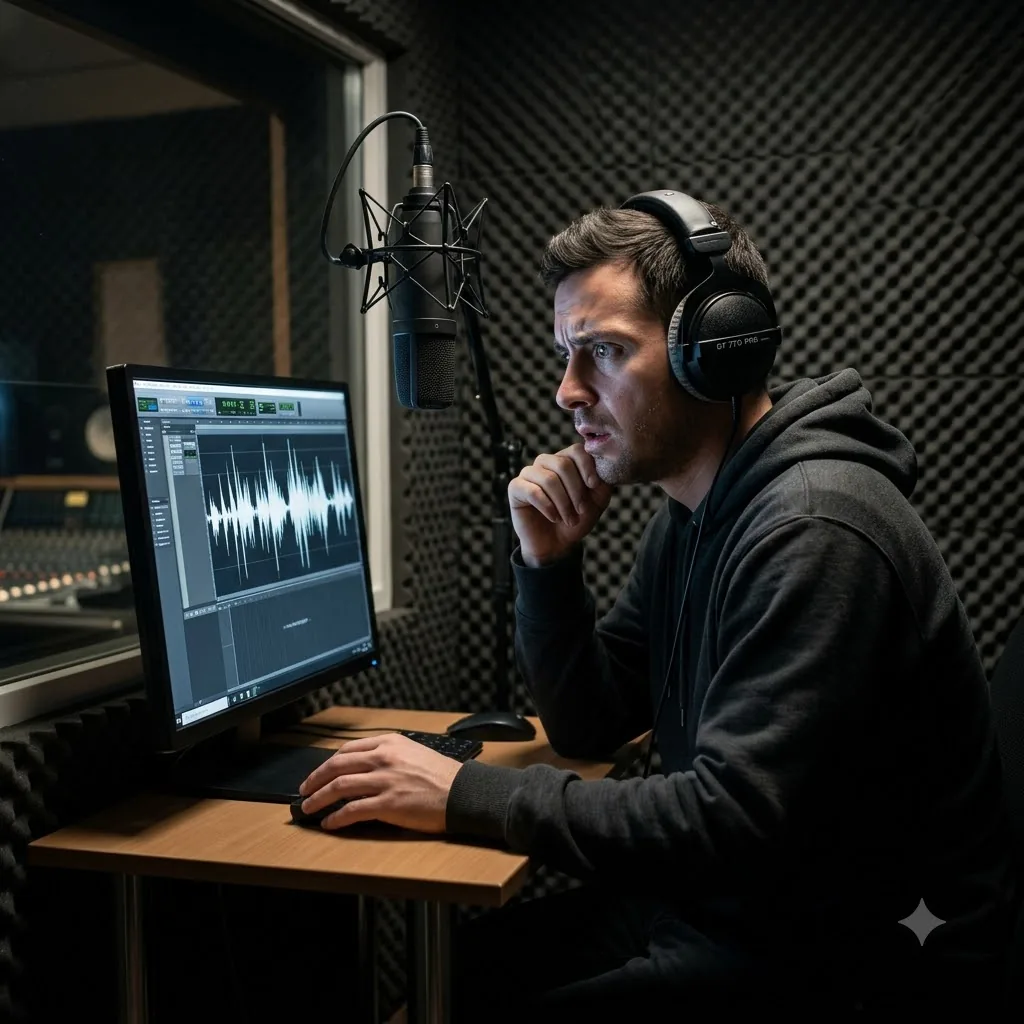
Elias pressed his palm flat against the gray acoustic foam of Booth B and dragged the playhead back to the twelve-second mark on his monitor. He was booked for a standard three-hour session to replace a stiff, synthetic placeholder track for a logistics company’s internal HR video, but the digital voice looping in his headphones had just stopped him cold. He hit the spacebar to play the segment again. The waveform scrolled past the vertical red playback line. The voice on the reference track was flat and slightly metallic, delivering generic corporate copy about synergistic compliance and workplace integrity over a bed of bland stock music.
Then came the pause. Between the words “workplace” and “integrity,” the synthetic voice took a breath.
It was a sharp, ragged intake of air, characterized by a distinct double-click in the back of the throat and a slight, rattling wheeze on the exhale. Elias froze, his hand hovering over the keyboard, staring at the jagged blue peaks on the monitor. He recognized that sound with sickening clarity. It was the exact noise his damaged left vocal cord made when he pushed himself past his physical limits in the recording booth. It was a physiological flaw, a highly specific physical signature of his own exhaustion. He spent countless unpaid hours meticulously scrubbing that exact noise out of every audiobook and commercial job he ever delivered. He had never submitted that ragged breath to a client in his entire fifteen-year career.
That sound only existed in his raw, unedited outtakes.
He grabbed his mouse, his hand suddenly unsteady, and isolated the center channel. He looped the breath, playing it on repeat. The acoustics of the breath were dry, entirely lacking the artificial reverb applied to the rest of the corporate track. It was untreated room tone. His room tone. He minimized the HR video script and opened the main project folder the agency had provided. The reference track was simply labeled as a temp AI generation. The production coordinator had claimed they used a cheap text-to-speech engine to time the video cuts, instructing Elias to match the pacing but inject real human emotion.
They had not mentioned that the generator was trained on him.
Elias muted his own microphone to ensure the booth was dead silent. He pulled up his personal archive on the secondary monitor, navigating to a folder of raw session dumps from a grueling fantasy audiobook he narrated six months prior. He found a ten-hour mark where his voice had started to give out. He dragged a raw, unedited take into his current timeline, placing it directly below the client’s AI reference track, and aligned the two waveforms.
The visual peaks and valleys of the breaths were identical. It was a pixel-perfect, microscopic match.
A cold knot tightened in his stomach as the implications settled into his mind. An AI model trained on his polished, published work would sound like his professional persona. It would breathe perfectly. It would speak smoothly, with perfect enunciation. But this model was fundamentally different. This model had been fed the garbage. Someone had trained it on his discarded audio, the deleted takes, the throat-clearing, the exhausted gasps he manually chopped out of his timelines late at night.
To build a synthetic voice with his physical flaws required intimate, unrestricted access to his raw local files.
He stared at the padded walls of the booth, feeling the sudden, suffocating weight of the soundproofing. The heavy steel door was shut tight, sealing him in total silence. He ran through the mental list of people who handled his audio. His primary engineer received edited stems. The clients received mastered tracks. Only Elias handled the raw, unfiltered session dumps, which lived exclusively on his studio’s encrypted network attached storage drive.
He right-clicked the client’s AI reference file and selected the properties menu, clicking over to the raw metadata tab. He scrolled past the bit rate and the sample rate, looking for the rendering software or the origin tag. The encoder field was blank. The author field was blank. He scrolled down to the original file path, the directory where the audio had been generated before it was bounced down and sent over by the agency.
The text in the origin path field was long, displaying a deeply nested folder structure.
Elias leaned closer to the glowing screen, his own breath catching in his throat. The drive name listed in the origin path was not a generic server or a cloud generator. It was the exact volume label of his own backup drive, pointing to a hidden directory buried inside his personal system files. Someone had not just scraped his public work. Someone had been siphoning his private, raw recordings directly from his own studio network. He reached for his phone on the console to call his network provider, but his hand stopped mid-air when he noticed the timestamp on the AI file’s creation date. It had not been generated weeks ago by a corporate agency. It was rendered less than four minutes ago, saving directly to his local drive while he was sitting alone in the sealed booth.
Elias pressed his palm flat against the gray acoustic foam of Booth B and dragged the playhead back to the twelve-second mark on his monitor. He was booked for a standard three-hour session to replace a stiff, synthetic placeholder track for a logistics company’s internal HR video, but the digital voice looping in his headphones had just stopped him cold. He hit the spacebar to play the segment again. The waveform scrolled past the vertical red playback line. The voice on the reference track was flat and slightly metallic, delivering generic corporate copy about synergistic compliance and workplace integrity over a bed of bland stock music.
Then came the pause. Between the words “workplace” and “integrity,” the synthetic voice took a breath.
It was a sharp, ragged intake of air, characterized by a distinct double-click in the back of the throat and a slight, rattling wheeze on the exhale. Elias froze, his hand hovering over the keyboard, staring at the jagged blue peaks on the monitor. He recognized that sound with sickening clarity. It was the exact noise his damaged left vocal cord made when he pushed himself past his physical limits in the recording booth. It was a physiological flaw, a highly specific physical signature of his own exhaustion. He spent countless unpaid hours meticulously scrubbing that exact noise out of every audiobook and commercial job he ever delivered. He had never submitted that ragged breath to a client in his entire fifteen-year career.
That sound only existed in his raw, unedited outtakes.
He grabbed his mouse, his hand suddenly unsteady, and isolated the center channel. He looped the breath, playing it on repeat. The acoustics of the breath were dry, entirely lacking the artificial reverb applied to the rest of the corporate track. It was untreated room tone. His room tone. He minimized the HR video script and opened the main project folder the agency had provided. The reference track was simply labeled as a temp AI generation. The production coordinator had claimed they used a cheap text-to-speech engine to time the video cuts, instructing Elias to match the pacing but inject real human emotion.
They had not mentioned that the generator was trained on him.
Elias muted his own microphone to ensure the booth was dead silent. He pulled up his personal archive on the secondary monitor, navigating to a folder of raw session dumps from a grueling fantasy audiobook he narrated six months prior. He found a ten-hour mark where his voice had started to give out. He dragged a raw, unedited take into his current timeline, placing it directly below the client’s AI reference track, and aligned the two waveforms.
The visual peaks and valleys of the breaths were identical. It was a pixel-perfect, microscopic match.
A cold knot tightened in his stomach as the implications settled into his mind. An AI model trained on his polished, published work would sound like his professional persona. It would breathe perfectly. It would speak smoothly, with perfect enunciation. But this model was fundamentally different. This model had been fed the garbage. Someone had trained it on his discarded audio, the deleted takes, the throat-clearing, the exhausted gasps he manually chopped out of his timelines late at night.
To build a synthetic voice with his physical flaws required intimate, unrestricted access to his raw local files.
He stared at the padded walls of the booth, feeling the sudden, suffocating weight of the soundproofing. The heavy steel door was shut tight, sealing him in total silence. He ran through the mental list of people who handled his audio. His primary engineer received edited stems. The clients received mastered tracks. Only Elias handled the raw, unfiltered session dumps, which lived exclusively on his studio’s encrypted network attached storage drive.
He right-clicked the client’s AI reference file and selected the properties menu, clicking over to the raw metadata tab. He scrolled past the bit rate and the sample rate, looking for the rendering software or the origin tag. The encoder field was blank. The author field was blank. He scrolled down to the original file path, the directory where the audio had been generated before it was bounced down and sent over by the agency.
The text in the origin path field was long, displaying a deeply nested folder structure.
Elias leaned closer to the glowing screen, his own breath catching in his throat. The drive name listed in the origin path was not a generic server or a cloud generator. It was the exact volume label of his own backup drive, pointing to a hidden directory buried inside his personal system files. Someone had not just scraped his public work. Someone had been siphoning his private, raw recordings directly from his own studio network. He reached for his phone on the console to call his network provider, but his hand stopped mid-air when he noticed the timestamp on the AI file’s creation date. It had not been generated weeks ago by a corporate agency. It was rendered less than four minutes ago, saving directly to his local drive while he was sitting alone in the sealed booth.