Story code: ST-001659
Part 1: The Heatwave Eviction
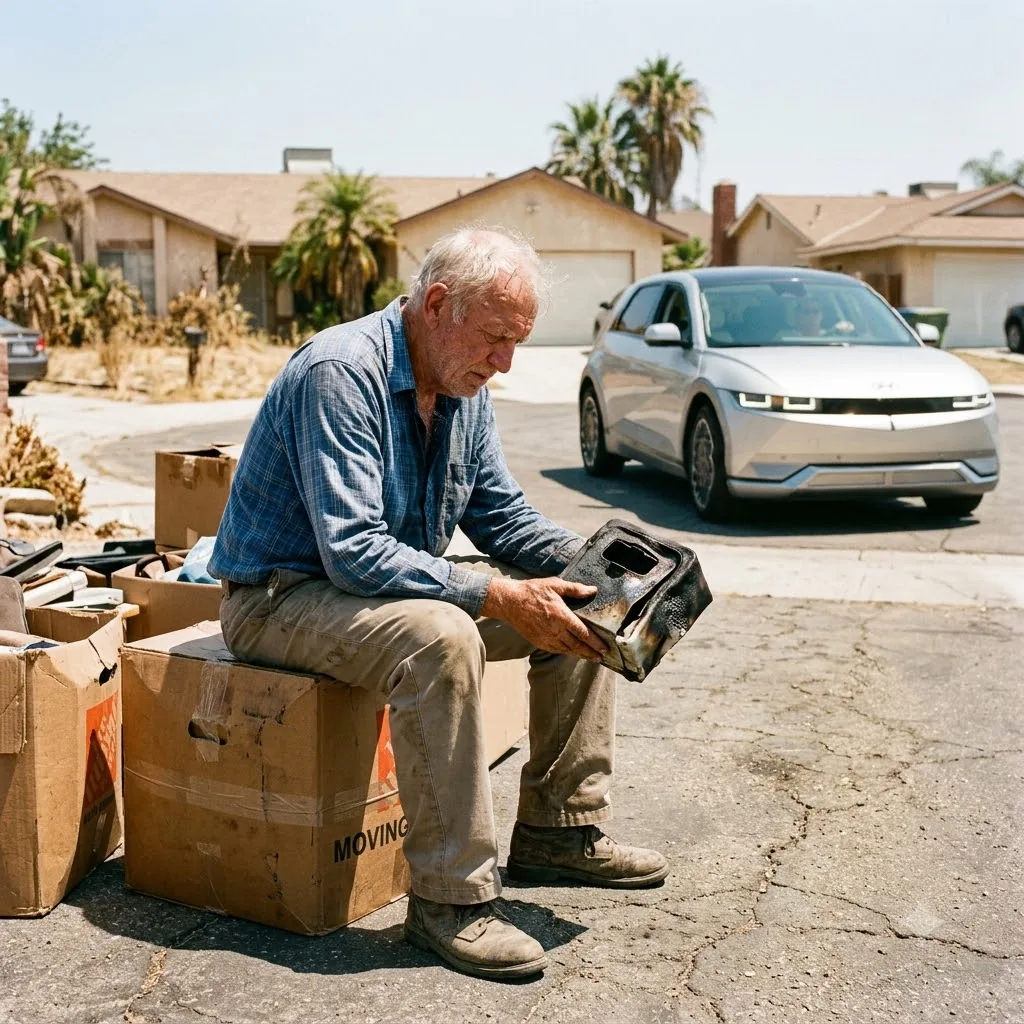
The pavement radiated a suffocating hundred-and-four degrees through the soles of Arthur’s boots as he stood at the edge of the driveway, his right hand gripping the warped, soot-stained metal of a melted lockbox. It was the only recognizable object he had pulled from the ashes of his previous life, and he held it tight against his hip while the brutal afternoon sun baked the stacked cardboard boxes in the back of his rented moving van. A silver sedan coasted to a halt at the curb, the passenger window gliding down to release a fleeting, agonizingly brief wave of air-conditioned chill. Landlord Mason stepped out onto the blistering concrete, his pale blue polo shirt perfectly crisp, clutching a clipboard stacked with sterile exit paperwork.
Arthur shifted the heavy, deformed metal box to his left hand and wiped a line of sweat from his brow. He watched Mason tap a silver pen against the clipboard. The landlord did not look at the moving van, nor did he look at the sagging tape on Arthur’s boxes.
Mason offered a practiced, mournful sigh and pointed his pen at the front door of the ground-floor unit. He launched into the same speech he had delivered thirty days prior. He insisted that the eviction was a matter of family tragedy. His elderly mother was deteriorating rapidly. She could no longer manage stairs, and she required constant medical supervision, making Arthur’s accessible, ground-floor apartment an absolute necessity. Mason recited the details with the polished rhythm of a man reading a teleprompter, emphasizing the severe arthritis and the impending arrival of a hospital bed.
Arthur said nothing. He stared at the smooth, unblemished surface of Mason’s clipboard. The sheer bureaucracy of his displacement felt heavier than the sweltering air. Two years ago, a catastrophic wildfire had erased his history, taking his home, his belongings, and his sense of security in a matter of hours. Now, a signature on a dotted line was erasing his recovery just as completely, albeit with much less smoke. He reached into his pocket and felt the jagged edges of the apartment keys, the metal biting into his calloused fingertips. He had spent the last two weeks packing his salvaged life into flimsy cardboard boxes, driven out by a man who claimed the universe had forced his hand.
“Just standard move-out forms,” Mason said, extending the clipboard. “Initial by the damage waiver, sign at the bottom. We have cleaners coming in an hour to prep the space for her medical equipment.”
Arthur took the clipboard. The plastic was cool to the touch, retaining the chill of the sedan’s interior. He leaned against the searing metal of the van to steady himself and signed his name. The ink flowed dark and final. The heatwave pressed down on them, silencing the usual neighborhood sounds. There were no children playing outside, no lawnmowers running. The entire street had surrendered to the oppressive temperature.
Mason snatched the clipboard back the second the pen lifted from the page. He flipped through the carbon copies with rapid, eager snaps of his wrists, checking for the initials. As the pages fluttered, Arthur noticed a small, brightly colored flyer tucked beneath the official lease addendums. It featured bold, stylish text and glossy, high-resolution photos, completely incongruous with the stark black-and-white legal forms of an eviction notice. Mason noticed Arthur’s gaze. The landlord quickly clamped his thumb over the edge of the paper, shoving it deeper beneath the heavy metal clip before Arthur could focus on the specific images or read the vibrant headline.
“I need the keys,” Mason said, extending his open palm. “The movers are bringing my mother’s things in at four o’clock sharp.”
Arthur pulled the keys from his pocket. The brass was hot, heated by the ambient temperature that seemed to seep through his heavy denim jeans. He hesitated, his thumb tracing the familiar grooves of the metal. He looked past Mason, toward the large bay window of the apartment he had painstakingly repainted last spring. He had fixed the loose hinges on those solid oak doors himself. He had replaced the weather stripping to keep out the winter drafts, investing his own time and money into preparing for a long stay that was now abruptly and legally canceled. He was handing over a sanctuary he had built with his own two hands.
Mason tapped his foot. He checked his heavy stainless-steel watch, then wiped a sudden bead of sweat from his temple. The landlord’s pristine composure was beginning to crack under the relentless sun. He reached into his pocket and pulled out his phone, his thumb swiping rapidly across the screen.
Arthur watched the reflection of the phone screen in Mason’s mirrored sunglasses. The screen displayed a grid of photographs, vibrant and sharp. It did not look like medical contacts or family text threads. It looked like a gallery.
“The keys, Arthur,” Mason repeated, his voice losing its fabricated sympathy. His tone grew flat and impatient. He shoved the phone back into his pocket without locking the screen.
Arthur extended his hand to drop the keys into Mason’s palm. As he moved, the landlord’s phone chirped a loud, continuous notification chime from inside his pocket. Mason flinched, his hand jerking away from the keys to silence the device. In his haste, the clipboard slipped from his grip. It hit the sun-baked concrete with a sharp crack, the metal clip popping open upon impact.
The stack of exit papers scattered across the hot driveway. The glossy flyer that had been hidden beneath the legal documents caught a slight breeze and slid straight toward the toe of Arthur’s heavy boot.
The pavement radiated a suffocating hundred-and-four degrees through the soles of Arthur’s boots as he stood at the edge of the driveway, his right hand gripping the warped, soot-stained metal of a melted lockbox. It was the only recognizable object he had pulled from the ashes of his previous life, and he held it tight against his hip while the brutal afternoon sun baked the stacked cardboard boxes in the back of his rented moving van. A silver sedan coasted to a halt at the curb, the passenger window gliding down to release a fleeting, agonizingly brief wave of air-conditioned chill. Landlord Mason stepped out onto the blistering concrete, his pale blue polo shirt perfectly crisp, clutching a clipboard stacked with sterile exit paperwork.
Arthur shifted the heavy, deformed metal box to his left hand and wiped a line of sweat from his brow. He watched Mason tap a silver pen against the clipboard. The landlord did not look at the moving van, nor did he look at the sagging tape on Arthur’s boxes.
Mason offered a practiced, mournful sigh and pointed his pen at the front door of the ground-floor unit. He launched into the same speech he had delivered thirty days prior. He insisted that the eviction was a matter of family tragedy. His elderly mother was deteriorating rapidly. She could no longer manage stairs, and she required constant medical supervision, making Arthur’s accessible, ground-floor apartment an absolute necessity. Mason recited the details with the polished rhythm of a man reading a teleprompter, emphasizing the severe arthritis and the impending arrival of a hospital bed.
Arthur said nothing. He stared at the smooth, unblemished surface of Mason’s clipboard. The sheer bureaucracy of his displacement felt heavier than the sweltering air. Two years ago, a catastrophic wildfire had erased his history, taking his home, his belongings, and his sense of security in a matter of hours. Now, a signature on a dotted line was erasing his recovery just as completely, albeit with much less smoke. He reached into his pocket and felt the jagged edges of the apartment keys, the metal biting into his calloused fingertips. He had spent the last two weeks packing his salvaged life into flimsy cardboard boxes, driven out by a man who claimed the universe had forced his hand.
“Just standard move-out forms,” Mason said, extending the clipboard. “Initial by the damage waiver, sign at the bottom. We have cleaners coming in an hour to prep the space for her medical equipment.”
Arthur took the clipboard. The plastic was cool to the touch, retaining the chill of the sedan’s interior. He leaned against the searing metal of the van to steady himself and signed his name. The ink flowed dark and final. The heatwave pressed down on them, silencing the usual neighborhood sounds. There were no children playing outside, no lawnmowers running. The entire street had surrendered to the oppressive temperature.
Mason snatched the clipboard back the second the pen lifted from the page. He flipped through the carbon copies with rapid, eager snaps of his wrists, checking for the initials. As the pages fluttered, Arthur noticed a small, brightly colored flyer tucked beneath the official lease addendums. It featured bold, stylish text and glossy, high-resolution photos, completely incongruous with the stark black-and-white legal forms of an eviction notice. Mason noticed Arthur’s gaze. The landlord quickly clamped his thumb over the edge of the paper, shoving it deeper beneath the heavy metal clip before Arthur could focus on the specific images or read the vibrant headline.
“I need the keys,” Mason said, extending his open palm. “The movers are bringing my mother’s things in at four o’clock sharp.”
Arthur pulled the keys from his pocket. The brass was hot, heated by the ambient temperature that seemed to seep through his heavy denim jeans. He hesitated, his thumb tracing the familiar grooves of the metal. He looked past Mason, toward the large bay window of the apartment he had painstakingly repainted last spring. He had fixed the loose hinges on those solid oak doors himself. He had replaced the weather stripping to keep out the winter drafts, investing his own time and money into preparing for a long stay that was now abruptly and legally canceled. He was handing over a sanctuary he had built with his own two hands.
Mason tapped his foot. He checked his heavy stainless-steel watch, then wiped a sudden bead of sweat from his temple. The landlord’s pristine composure was beginning to crack under the relentless sun. He reached into his pocket and pulled out his phone, his thumb swiping rapidly across the screen.
Arthur watched the reflection of the phone screen in Mason’s mirrored sunglasses. The screen displayed a grid of photographs, vibrant and sharp. It did not look like medical contacts or family text threads. It looked like a gallery.
“The keys, Arthur,” Mason repeated, his voice losing its fabricated sympathy. His tone grew flat and impatient. He shoved the phone back into his pocket without locking the screen.
Arthur extended his hand to drop the keys into Mason’s palm. As he moved, the landlord’s phone chirped a loud, continuous notification chime from inside his pocket. Mason flinched, his hand jerking away from the keys to silence the device. In his haste, the clipboard slipped from his grip. It hit the sun-baked concrete with a sharp crack, the metal clip popping open upon impact.
The stack of exit papers scattered across the hot driveway. The glossy flyer that had been hidden beneath the legal documents caught a slight breeze and slid straight toward the toe of Arthur’s heavy boot.