Story code: ST-001679
Part 2: The Visual Nuisance
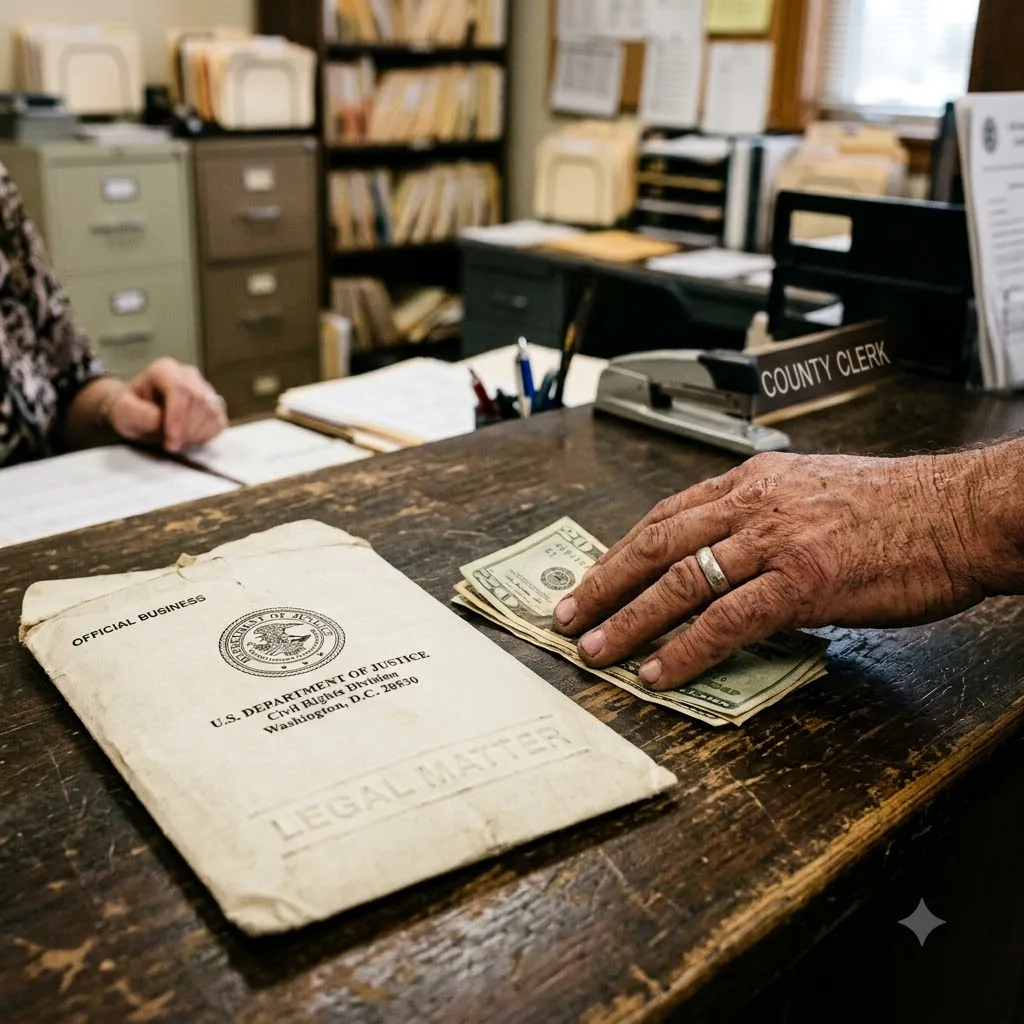
Ray shoved the heavy envelope into his jacket pocket and pushed through the glass doors of the municipal building. The icy wind hit him instantly, but he barely felt the cold. His mind was locked in a spinning loop. Over a thousand billable hours. The phrase repeated in his head as he unlocked his rusted ten-year-old pickup truck. He threw his neat stack of tax cash onto the passenger seat. The money, usually a source of immense pride, now looked pathetic and useless.
He drove back to Elm Street in silence, the heater blasting against his frozen knuckles. When he turned onto his dead-end road, his eyes immediately locked onto his front porch. The red paint looked dull in the flat winter light. It was just basic, weather-resistant exterior gloss from the local hardware store. It covered the splintering wood, sealing the dry rot. That was it. No structural changes, no historical markers disturbed. Just a man trying to keep his steps from caving in.
Inside the house, Ray cleared his kitchen table and spread the contents of the cream-colored envelope under the overhead light. There were forty pages of dense, single-spaced text, bound with a heavy brass grommet. The firm’s name, Vanguard & Croft LLC, dominated the header.
Ray traced his calloused finger down the first page. It was an injunction and notice of foreclosure. The second page contained the itemized bill of costs that had supposedly attached to his deed as a lien. Ray’s breath hitched as he read the line items.
*Satellite imaging and color-spectrum analysis: $14,500.*
*Expert witness retainer, architectural integration: $25,000.*
*Associate review hours, aesthetic compliance enforcement (1,140 hours at $450/hr): $513,000.*
The total lien amount sat at the bottom of the page in bold ink: $552,500.
Ray stared at the number. His house, on its best day, in a booming market, was worth sixty-five thousand dollars. It was a single-story vinyl-sided box with a drafty roof. The law firm was claiming half a million dollars in damages and legal fees over thirty dollars’ worth of red enamel.
He flipped frantically through the pages, hunting for an explanation. He found a section titled *Violation of Proprietary View-Shed and Aesthetic Contamination*. The document alleged that the specific wavelength of the red paint on Ray’s porch created a “visual nuisance” that interrupted the “curated atmospheric branding” of a corporate entity.
But there were no corporations on Elm Street. There was a defunct gas station, a line of identical aging starter homes, and a wall of dense pine trees at the end of the block. Beyond the pines sat a massive, private acreage that had been bought up by a holding company two years ago, but it had remained empty woods ever since.
Ray grabbed his cell phone from his pocket. He punched in the toll-free number printed at the bottom of the letterhead.
An automated voice answered, smooth and synthetic, routing him through six different menus. He pressed zero repeatedly, pacing the length of his small kitchen, the floorboards creaking under his boots. Finally, the line clicked. A live voice, clipped and professional, came through the speaker.
“Vanguard and Croft, Asset Reallocation, this is Mr. Hayes.”
“My name is Ray Vance,” Ray said, his voice trembling despite his effort to keep it steady. “I’m looking at a foreclosure notice. You put a lien on my house.”
“One moment, Mr. Vance,” Hayes said. The sound of rapid typing echoed over the line. “Yes. Parcel 88-4. Color compliance violation. The lien is active and verified.”
“It’s a mistake,” Ray said, gripping the edge of the kitchen table. “I painted my own porch on my own property. I don’t live in a homeowner’s association. I don’t have deed restrictions. You’re billing me half a million dollars for hours spent investigating a can of hardware store paint. The house isn’t even worth a fraction of that!”
“The value of your structure is irrelevant to the firm, Mr. Vance,” Hayes replied, his tone devoid of any empathy. “The lien represents the precise cost of our enforcement protocol. The visual contamination of your unauthorized exterior modification severely impacts our client’s adjoining development project.”
“What development?” Ray demanded. “It’s a patch of dead pine trees behind my lot! There’s nothing there!”
“The master plan is proprietary,” Hayes said. “However, your porch currently violates the strict, trademarked color palette of the incoming sector. The client attempted to mitigate the issue legally, and the resulting billable hours have been attached to your deed as a cure mechanism.”
“You can’t just invent a half-million-dollar bill and steal my house to pay for it,” Ray shouted, his pulse pounding in his ears. “I’ll paint it grey. I’ll strip the wood bare right now. I’ll take a sander to it today!”
“The mitigation window closed at midnight,” Hayes said smoothly. “The aesthetic damage has already been logged. The foreclosure is proceeding to satisfy the debt. We have generously offered a waiver of the remaining balance if you sign the quitclaim deed enclosed in your packet by 5:00 PM tomorrow.”
“I’m not signing anything. I’m getting a lawyer.”
“You are certainly entitled to seek counsel, Mr. Vance. However, be advised that our firm employs four hundred litigators on this specific account. Defending this action will cost you tens of thousands of dollars in retainer fees alone, which you will lose. We strongly advise you to sign the quitclaim and vacate the premises by the end of the week.”
The line went dead.
Ray pulled the phone away from his ear, staring at the blank screen. The silence of his kitchen suddenly felt suffocating. He looked back down at the dense stack of legal threats, feeling the sheer, crushing weight of a billion-dollar machine bearing down on his tiny sliver of the world.
A loud, metallic thud from the front yard broke the quiet.
Ray flinched. He walked slowly to the living room and parted the dusty curtains.
Parked at the curb was a sleek, black utility van with tinted windows. Two men in dark heavy coats were standing on his frozen front lawn. They weren’t looking at his house. They were hammering a heavy steel sign into the frozen earth, right next to his mailbox.
Ray squinted through the dirty window glass, reading the bold white letters stamped across the metal plate. It was not a ‘For Sale’ sign. It was a ‘Property of Vanguard & Croft’ notice, complete with a QR code and a strict warning against trespassing. They were already claiming the dirt he stood on.