Story code: ST-001690
Part 1: The Calibration Room
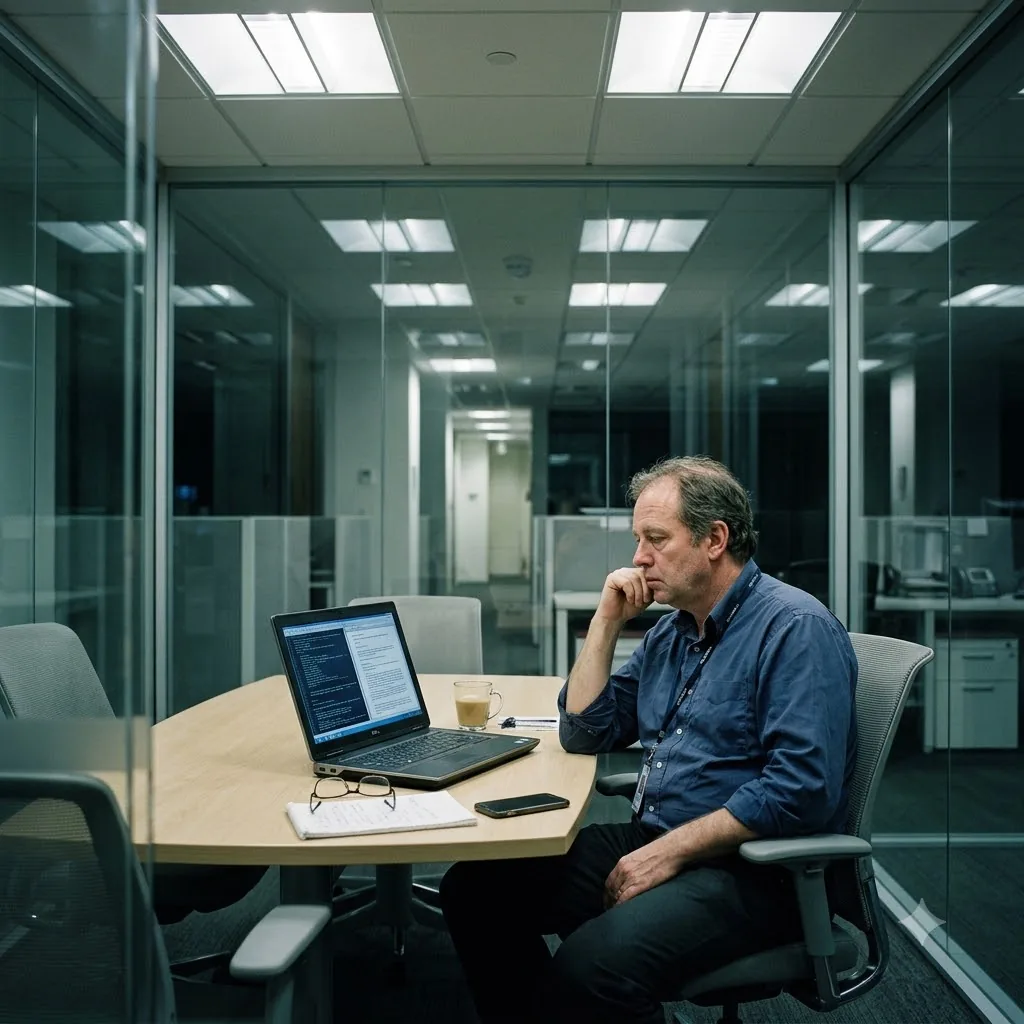
The biometric lock on Conference Room B flashed green, sealing Arthur inside a windowless acoustic pod that management insisted was an executive sanctuary. A chilled bottle of sparkling water sat on the glass table next to a single, heavily restricted laptop. His strict nondisclosure agreement required him to surrender his phone at the security desk two floors down. He was entirely alone with the machine.
Arthur settled into the ergonomic chair and tapped the spacebar to wake the screen. He had spent two decades defining the corporate voice for the entire company. Now, the Vice President of Marketing had pulled him off the main floor for a highly classified efficiency initiative. The assignment was framed as an immense honor. Vance had clapped him on the shoulder, praising his unmatched intuition, claiming the new proprietary language model needed the master’s touch to smooth out its clumsy phrasing.
The screen illuminated, displaying a split-view text editor. On the left sat the raw output from the AI. On the right, a blank space awaited Arthur’s corrections. He read the first paragraph and felt a cold knot form in his stomach.
The text was a pitch for the upcoming autumn initiative. It was not generic corporate speak. It was his exact rhythm. The machine used the same staccato sentence structures he had pioneered in the award-winning Blue Horizon campaign five years prior. It deployed his signature em-dashes and the precise, understated tone he had spent years perfecting. It was like looking into a distorted mirror. The phrasing was slightly off, the emotional resonance a bit flat, but the architectural blueprint of his mind was laid bare in the pixels.
He placed his hands on the keyboard to fix a particularly jarring transition. The machine had attempted his conversational pivot but ended up sounding like a dry textbook. Arthur highlighted the sentence, rewriting it in three quick keystrokes. A green checkmark appeared in the corner of the screen, followed by a system prompt thanking him for the reinforcement data.
He moved to the next block of text. The interface was exceptionally clunky, displaying raw backend metadata above each generated paragraph. Arthur squinted at the gray text strings hovering over a section of social media copy. The string read DATA_INGEST_EMP_4492_PHASE_1.
Arthur paused, his fingers hovering above the keys. The number four-four-nine-two meant something highly specific. It was not a random server node or a project code. He recognized it immediately from the quarterly department budgets he had to approve as a senior director. That was the employee payroll identification number for Marcus, his lead social media strategist.
Arthur scrolled down to the next module. It was a long-form press release, a specialized format usually handled by his deputy director, Elena. The metadata above the clumsy, robotic press release read DATA_INGEST_EMP_4118_PHASE_1. Four-one-one-eight was Elena.
The pod was perfectly silent, yet a loud rushing sound filled Arthur’s ears. He clicked the folder icon on the desktop, navigating away from the editing interface and into the local directory housing the training modules. The folders were laid out in a strict hierarchy. Each folder bore a title corresponding to a member of his creative team, mapped directly by their payroll ID.
He opened the folder labeled with Marcus’s ID. Inside were thousands of text files containing every email, every pitch deck, and every Slack message Marcus had ever written on the company servers. The machine was not just learning to mimic the overarching brand voice. It was methodically ingesting the distinct linguistic profiles of his entire department.
Arthur backed out and looked at the primary directory. There were twelve folders in total. He had exactly twelve people on his team.
At the very bottom of the list sat a master folder. Its title was MODEL_OVERRIDE_EMP_1002_FINAL. One-zero-zero-two. That was his own employee number. The security badge he had worn every day for twenty years bore that exact sequence.
The Vice President had not isolated him in this room to merely test a new tool. Vance had locked him in here to perform the final calibration on the very system designed to render his entire department obsolete. Every correction he typed, every nuanced fix he provided to the right side of the screen, served to sharpen the blade that would sever their livelihoods. He was actively debugging his own digital ghost.
Arthur stared at his hands. The cursor blinked steadily on the screen, waiting for his next input. He closed the training directory and brought the split-view editor back up, his eyes locking onto the green checkmark that recorded his previous correction. A heavy vibration sounded against the frosted glass of the pod door. A silhouette stopped just outside the biometric scanner, raising a hand to the keypad.
The biometric lock on Conference Room B flashed green, sealing Arthur inside a windowless acoustic pod that management insisted was an executive sanctuary. A chilled bottle of sparkling water sat on the glass table next to a single, heavily restricted laptop. His strict nondisclosure agreement required him to surrender his phone at the security desk two floors down. He was entirely alone with the machine.
Arthur settled into the ergonomic chair and tapped the spacebar to wake the screen. He had spent two decades defining the corporate voice for the entire company. Now, the Vice President of Marketing had pulled him off the main floor for a highly classified efficiency initiative. The assignment was framed as an immense honor. Vance had clapped him on the shoulder, praising his unmatched intuition, claiming the new proprietary language model needed the master’s touch to smooth out its clumsy phrasing.
The screen illuminated, displaying a split-view text editor. On the left sat the raw output from the AI. On the right, a blank space awaited Arthur’s corrections. He read the first paragraph and felt a cold knot form in his stomach.
The text was a pitch for the upcoming autumn initiative. It was not generic corporate speak. It was his exact rhythm. The machine used the same staccato sentence structures he had pioneered in the award-winning Blue Horizon campaign five years prior. It deployed his signature em-dashes and the precise, understated tone he had spent years perfecting. It was like looking into a distorted mirror. The phrasing was slightly off, the emotional resonance a bit flat, but the architectural blueprint of his mind was laid bare in the pixels.
He placed his hands on the keyboard to fix a particularly jarring transition. The machine had attempted his conversational pivot but ended up sounding like a dry textbook. Arthur highlighted the sentence, rewriting it in three quick keystrokes. A green checkmark appeared in the corner of the screen, followed by a system prompt thanking him for the reinforcement data.
He moved to the next block of text. The interface was exceptionally clunky, displaying raw backend metadata above each generated paragraph. Arthur squinted at the gray text strings hovering over a section of social media copy. The string read DATA_INGEST_EMP_4492_PHASE_1.
Arthur paused, his fingers hovering above the keys. The number four-four-nine-two meant something highly specific. It was not a random server node or a project code. He recognized it immediately from the quarterly department budgets he had to approve as a senior director. That was the employee payroll identification number for Marcus, his lead social media strategist.
Arthur scrolled down to the next module. It was a long-form press release, a specialized format usually handled by his deputy director, Elena. The metadata above the clumsy, robotic press release read DATA_INGEST_EMP_4118_PHASE_1. Four-one-one-eight was Elena.
The pod was perfectly silent, yet a loud rushing sound filled Arthur’s ears. He clicked the folder icon on the desktop, navigating away from the editing interface and into the local directory housing the training modules. The folders were laid out in a strict hierarchy. Each folder bore a title corresponding to a member of his creative team, mapped directly by their payroll ID.
He opened the folder labeled with Marcus’s ID. Inside were thousands of text files containing every email, every pitch deck, and every Slack message Marcus had ever written on the company servers. The machine was not just learning to mimic the overarching brand voice. It was methodically ingesting the distinct linguistic profiles of his entire department.
Arthur backed out and looked at the primary directory. There were twelve folders in total. He had exactly twelve people on his team.
At the very bottom of the list sat a master folder. Its title was MODEL_OVERRIDE_EMP_1002_FINAL. One-zero-zero-two. That was his own employee number. The security badge he had worn every day for twenty years bore that exact sequence.
The Vice President had not isolated him in this room to merely test a new tool. Vance had locked him in here to perform the final calibration on the very system designed to render his entire department obsolete. Every correction he typed, every nuanced fix he provided to the right side of the screen, served to sharpen the blade that would sever their livelihoods. He was actively debugging his own digital ghost.
Arthur stared at his hands. The cursor blinked steadily on the screen, waiting for his next input. He closed the training directory and brought the split-view editor back up, his eyes locking onto the green checkmark that recorded his previous correction. A heavy vibration sounded against the frosted glass of the pod door. A silhouette stopped just outside the biometric scanner, raising a hand to the keypad.