Story code: ST-001696
Part 4: The Lines of Reality
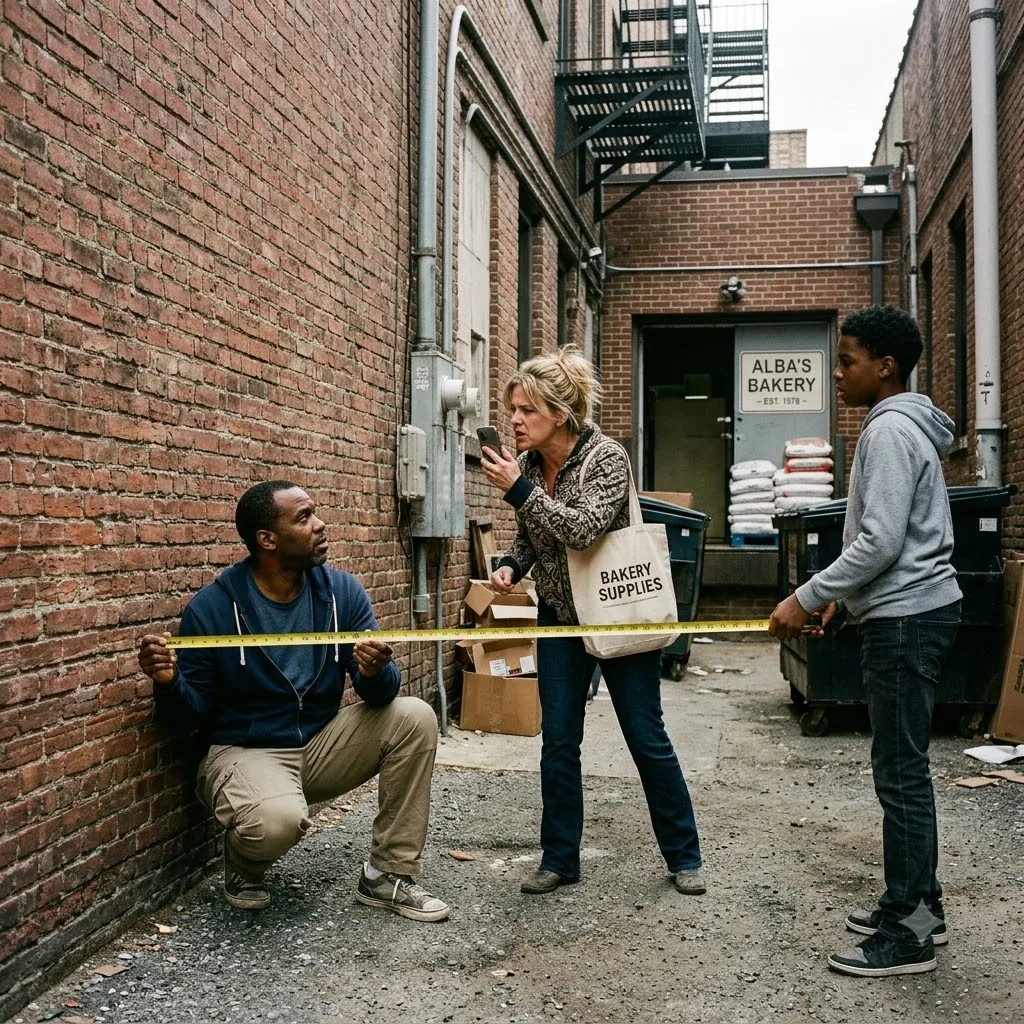
The silence in the alley lasted exactly as long as it took Chloe to realize logic had failed her. When the sheer weight of the police body cameras and her own contradictory lies offered no escape, her survival instinct simply bypassed logic altogether.
Her face crumpled. The blood rushed back into her cheeks in a mottled, blotchy red. She threw her hands up to her face, letting out a sharp, ragged gasp that cracked into a devastating sob.
“You’re intimidating me!” Chloe wailed, her knees buckling just enough to make her look small and fragile. She dropped the dog’s leash. The golden doodle sat beside her, perfectly calm, while its owner collapsed into a theatrical display of sheer terror. “Why are you doing this to me? I’m just trying to walk my dog, and you’re screaming at me!”
Marcus didn’t move, but the temperature in his blood dropped. He watched her reach into her fleece vest with shaking hands, pulling out her silver smartphone. In one fluid motion, she swiped to the camera, hit record, and shoved the lens toward Marcus’s face.
“He’s cornering me!” she sobbed into the phone, backing up against the brick wall, physically shrinking away from the space Marcus had never even entered. “Councilman Hayes is cornering me in my own alley! I told him I didn’t support his safe-injection sites, and now he’s trapping me!”
“Ma’am,” Officer Miller said, stepping forward, his hands raised in a placating gesture. “Nobody is cornering you. Put the phone down.”
“He had a man ready to zip-tie us,” Marcus said, his voice flat, gesturing to the private guard who had quietly slipped behind the SUV. But Marcus immediately realized it was useless. Chloe was shrieking over him, narrating a complete fabrication directly into the glowing lens of her phone, weaponizing her tears to flood the zone with a frantic, unassailable victimhood.
Marcus felt Malik trembling against his back. The geometry lesson was over. The truth was on the police body cameras, but the police weren’t the ones recording for the internet.
“Let’s go, Malik,” Marcus said quietly. He turned his back on the crying woman, put a firm hand on his nephew’s shoulder, and walked him out of the alley.
Three days later, the yellow tape measure sat like a dead weight on Marcus’s desk at City Hall.
On his computer monitor, Chloe’s video played on a loop. It was a masterpiece of selective editing. It was trimmed to exactly fifty seconds. The private security guard with the zip-ties was completely cut out. The part where she claimed to 911 that she didn’t know Marcus was gone. Officer Miller’s attempts to de-escalate her were entirely muted.
The final cut showed only this: Marcus, a large Black man in a faded hoodie, stepping aggressively toward the camera, while a woman sobbed hysterically about being trapped by a corrupt politician pushing radical zoning laws into her backyard. It had two million views.
The heavy oak door to Marcus’s office clicked open. His chief of staff, Elena, stepped inside, clutching a tablet to her chest. She looked exhausted.
“Did Sterling make a statement?” Marcus asked, muting the sobbing video on his screen.
Elena nodded, her expression grim. “He went on the morning news. He said he was ‘deeply troubled by the aggressive tactics used against residents in his district.’ He called for a formal ethics review of your conduct.”
Marcus let out a short, humorless breath. “Thomas Sterling watched a private guard pull zip-ties on my fifteen-year-old nephew, and then he hid in his house. Now he’s deeply troubled.”
“It gets worse,” Elena said softly, stepping closer to the desk. “The downtown coalition. The Monroe Foundation, the Oak Street benefactors-they’re pulling their funding for the housing initiative.”
Marcus sat up straight, a cold knot tightening in his stomach. “They backed this project for two years. They hosted galas for it. They know Chloe is lying. The police released a statement confirming her false 911 call.”
“It doesn’t matter to them, Marcus,” Elena said, her voice dropping. “The optics are toxic. The video makes them uncomfortable. They want the aesthetic of progressive change, not the messy reality of fighting wealthy homeowners for it. They’re redirecting their PAC money.” She paused, her fingers tight against the edge of the tablet. “They’re funding a recall petition against you, Marcus. It launched this morning.”
Marcus stared at Elena, the words settling heavily into the quiet of the office. The same donors who had clapped for his speeches about equity were now funding his political execution because a wealthy woman in a fleece vest had learned how to cry on demand.
He looked away from Elena, his eyes drifting to his cell phone. He had called Malik twice this morning. The boy hadn’t answered. Malik hadn’t spoken more than a handful of words since Saturday. He hadn’t gone to school. The teenager had learned the harshest geometry lesson of all: how quickly the lines of reality could be redrawn to protect the people who owned the neighborhood.
Marcus reached out and placed his hand over the cold metal casing of the tape measure, sitting perfectly still as the muffled sounds of the city moved on without him.