Story code: ST-001702
Part 1: The Glitch and the Gate
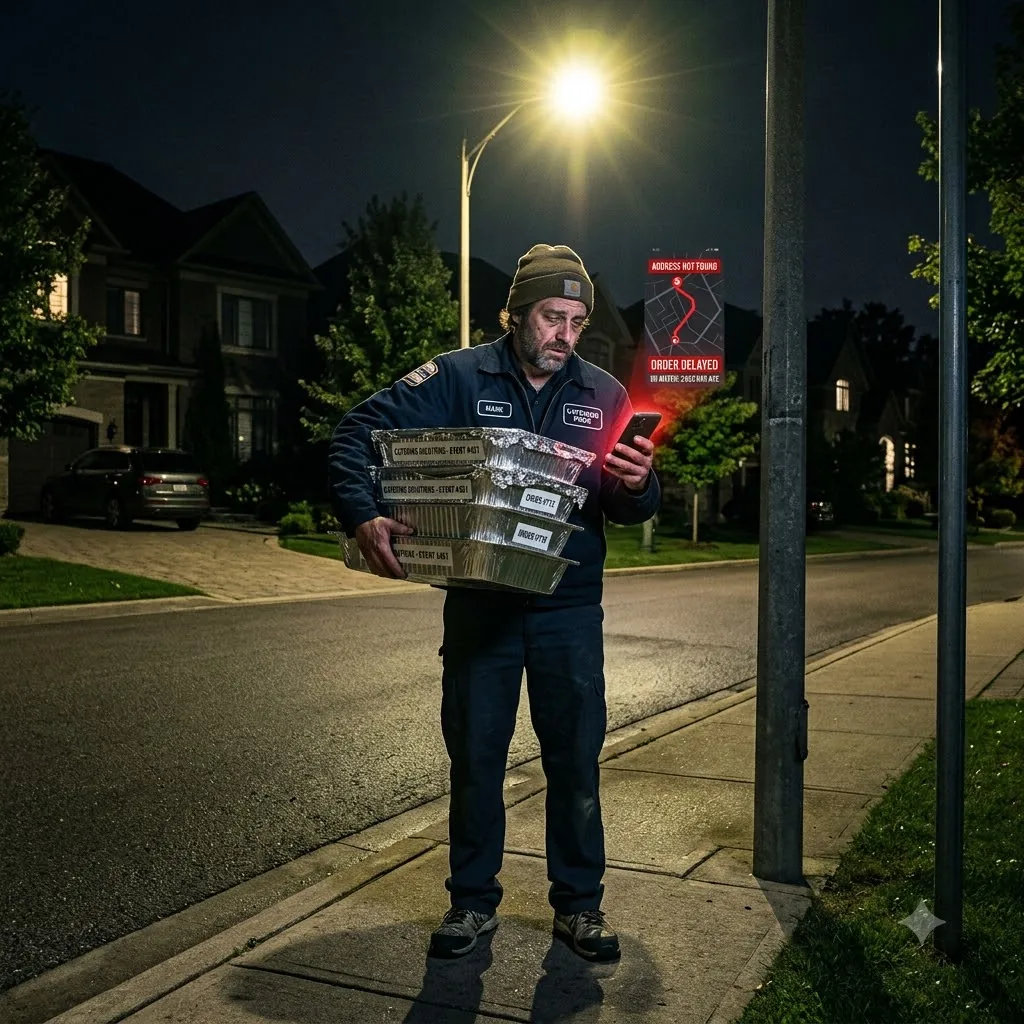
Forty pounds of braised short ribs and garlic mashed potatoes strained the nylon straps digging into Mateo’s shoulder. The streetlamp overhead emitted a harsh, blue-white anti-loitering glare, a frequency designed specifically to make human skin look corpselike and to make lingering intolerable. Under that blinding beam, the screen of his phone displayed a single, impassive red banner.
Account suspended pending review.
He shifted the massive thermal bags against his knee, the aluminum frame of the food carrier bruising his collarbone. Just two minutes ago, he had been wiping cold sweat from his brow when the delivery app demanded a random identity verification check. The blue LED glare had washed out his features, the camera failed to register the depth of his eyes, and the automated gig-tech algorithm ruthlessly executed its protocol. Mid-shift, inches from the drop-off, it wiped his screen clean of the delivery address, the gate code, and his livelihood.
Mateo stood on a narrow strip of asphalt outside a twelve-foot wrought-iron gate. There were no sidewalks here. The neighborhood architecture was sterile and hostile, designed explicitly to keep people like him contained within moving vehicles.
He tapped the tiny gray headset icon in the corner of his locked screen. The call connected instantly to a synthetic voice.
Press one for active delivery issues. Press two for account status.
He pressed two with a numb, trembling thumb. The automated voice informed him that support for deactivated accounts was handled exclusively via email within three to five business days. He pressed zero. The synthetic voice informed him that this was an invalid entry. He pressed one. The system cross-referenced his phone number, recognized his deactivated status, and seamlessly looped him back to the main menu.
This was a premier catering gig, a massive corporate drop-off that guaranteed a heavy payout. The pending deposit was the exact amount required to cover his past-due electric bill and the late fee on his rent. Now he was trapped in the cold, physically burdened with hundreds of dollars of elite cuisine he could not deliver, could not abandon, and could not return to a restaurant that had closed its kitchen an hour ago.
He stared at the callbox mounted to a stone pillar next to the gate. It was a sleek black glass panel featuring a QR reader and a keypad. The delivery app contained the encrypted entry barcode, but the app was now locked behind a gray padlock icon. He held his phone up to the reader anyway, desperate for a mechanical miracle. The glass merely reflected his exhausted face and the flashing red banner. A harsh buzzer sounded from the pillar, a single flat tone of digital rejection.
His arms began to shake. Forty pounds felt like eighty as the minutes ticked by. The straps cut off circulation to his fingers, sending a painful tingling sensation up to his elbows. He dialed support again. The identical synthetic voice greeted him, cheerful and utterly devoid of mercy. He spoke out loud into the phone, pleading with the algorithm to connect him to a human dispatcher, explaining that he had the food and was standing right outside the property. The voice told him his verbal input was not recognized.
The neighborhood remained utterly silent. There were no dogs barking, no wind chimes rattling, just the faint electric hum of the anti-loitering lamp. The mansions were pushed far back from the street, hidden behind manicured hedges and tall security walls. There was no one to flag down. No resident out for an evening walk.
He slowly lowered one of the thermal bags to the street, needing to stretch his shoulder before a muscle cramped permanently. The moment the nylon touched the cold asphalt, his phone vibrated in his hand. It was not a message from dispatch. It was a battery warning. Fifteen percent remaining.
He hastily picked the bag back up, gritting his teeth against the searing pain in his back. Leaving the food on the street would result in a permanent ban, a violation of health codes that no human reviewer would overturn even if they fixed the glitch. He pressed the physical intercom button on the callbox, hoping it bypassed the digital entry system. Static hissed out of the tiny speaker. He announced himself loudly, stating his name and the delivery service, reading the restaurant name off the side of the insulated bag.
The static continued for ten endless seconds before a sharp click cut it off. The intercom went dead. No answer.
Mateo leaned his forehead against the cold metal casing of the callbox. He dialed support one last time, bypassing the standard prompts and selecting the option for a physical safety emergency. It was a massive risk that could flag his account for abuse, but it was the only remaining path to a human being. The line rang once, twice, and a weary, living voice finally clicked over, asking for his driver identification number.
He began reading the long string of digits from his profile screen, shifting the heavy straps again, his voice trembling with the sheer physical effort of holding the massive bags upright. He made it halfway through the sequence when a loud mechanical clank echoed through the silent, sterile street.
The support agent told him to repeat the numbers, but Mateo froze, the words dying in his throat. The heavy wrought-iron gate groaned, vibrating against its track as it began to retract inward. He stepped back as a sliver of the long, dark driveway revealed itself, exposing a figure standing just inside the perimeter, stepping forward into the harsh blue glare of the streetlamp.
Forty pounds of braised short ribs and garlic mashed potatoes strained the nylon straps digging into Mateo’s shoulder. The streetlamp overhead emitted a harsh, blue-white anti-loitering glare, a frequency designed specifically to make human skin look corpselike and to make lingering intolerable. Under that blinding beam, the screen of his phone displayed a single, impassive red banner.
Account suspended pending review.
He shifted the massive thermal bags against his knee, the aluminum frame of the food carrier bruising his collarbone. Just two minutes ago, he had been wiping cold sweat from his brow when the delivery app demanded a random identity verification check. The blue LED glare had washed out his features, the camera failed to register the depth of his eyes, and the automated gig-tech algorithm ruthlessly executed its protocol. Mid-shift, inches from the drop-off, it wiped his screen clean of the delivery address, the gate code, and his livelihood.
Mateo stood on a narrow strip of asphalt outside a twelve-foot wrought-iron gate. There were no sidewalks here. The neighborhood architecture was sterile and hostile, designed explicitly to keep people like him contained within moving vehicles.
He tapped the tiny gray headset icon in the corner of his locked screen. The call connected instantly to a synthetic voice.
Press one for active delivery issues. Press two for account status.
He pressed two with a numb, trembling thumb. The automated voice informed him that support for deactivated accounts was handled exclusively via email within three to five business days. He pressed zero. The synthetic voice informed him that this was an invalid entry. He pressed one. The system cross-referenced his phone number, recognized his deactivated status, and seamlessly looped him back to the main menu.
This was a premier catering gig, a massive corporate drop-off that guaranteed a heavy payout. The pending deposit was the exact amount required to cover his past-due electric bill and the late fee on his rent. Now he was trapped in the cold, physically burdened with hundreds of dollars of elite cuisine he could not deliver, could not abandon, and could not return to a restaurant that had closed its kitchen an hour ago.
He stared at the callbox mounted to a stone pillar next to the gate. It was a sleek black glass panel featuring a QR reader and a keypad. The delivery app contained the encrypted entry barcode, but the app was now locked behind a gray padlock icon. He held his phone up to the reader anyway, desperate for a mechanical miracle. The glass merely reflected his exhausted face and the flashing red banner. A harsh buzzer sounded from the pillar, a single flat tone of digital rejection.
His arms began to shake. Forty pounds felt like eighty as the minutes ticked by. The straps cut off circulation to his fingers, sending a painful tingling sensation up to his elbows. He dialed support again. The identical synthetic voice greeted him, cheerful and utterly devoid of mercy. He spoke out loud into the phone, pleading with the algorithm to connect him to a human dispatcher, explaining that he had the food and was standing right outside the property. The voice told him his verbal input was not recognized.
The neighborhood remained utterly silent. There were no dogs barking, no wind chimes rattling, just the faint electric hum of the anti-loitering lamp. The mansions were pushed far back from the street, hidden behind manicured hedges and tall security walls. There was no one to flag down. No resident out for an evening walk.
He slowly lowered one of the thermal bags to the street, needing to stretch his shoulder before a muscle cramped permanently. The moment the nylon touched the cold asphalt, his phone vibrated in his hand. It was not a message from dispatch. It was a battery warning. Fifteen percent remaining.
He hastily picked the bag back up, gritting his teeth against the searing pain in his back. Leaving the food on the street would result in a permanent ban, a violation of health codes that no human reviewer would overturn even if they fixed the glitch. He pressed the physical intercom button on the callbox, hoping it bypassed the digital entry system. Static hissed out of the tiny speaker. He announced himself loudly, stating his name and the delivery service, reading the restaurant name off the side of the insulated bag.
The static continued for ten endless seconds before a sharp click cut it off. The intercom went dead. No answer.
Mateo leaned his forehead against the cold metal casing of the callbox. He dialed support one last time, bypassing the standard prompts and selecting the option for a physical safety emergency. It was a massive risk that could flag his account for abuse, but it was the only remaining path to a human being. The line rang once, twice, and a weary, living voice finally clicked over, asking for his driver identification number.
He began reading the long string of digits from his profile screen, shifting the heavy straps again, his voice trembling with the sheer physical effort of holding the massive bags upright. He made it halfway through the sequence when a loud mechanical clank echoed through the silent, sterile street.
The support agent told him to repeat the numbers, but Mateo froze, the words dying in his throat. The heavy wrought-iron gate groaned, vibrating against its track as it began to retract inward. He stepped back as a sliver of the long, dark driveway revealed itself, exposing a figure standing just inside the perimeter, stepping forward into the harsh blue glare of the streetlamp.