Story code: ST-001727
Part 1: The Drop-Down
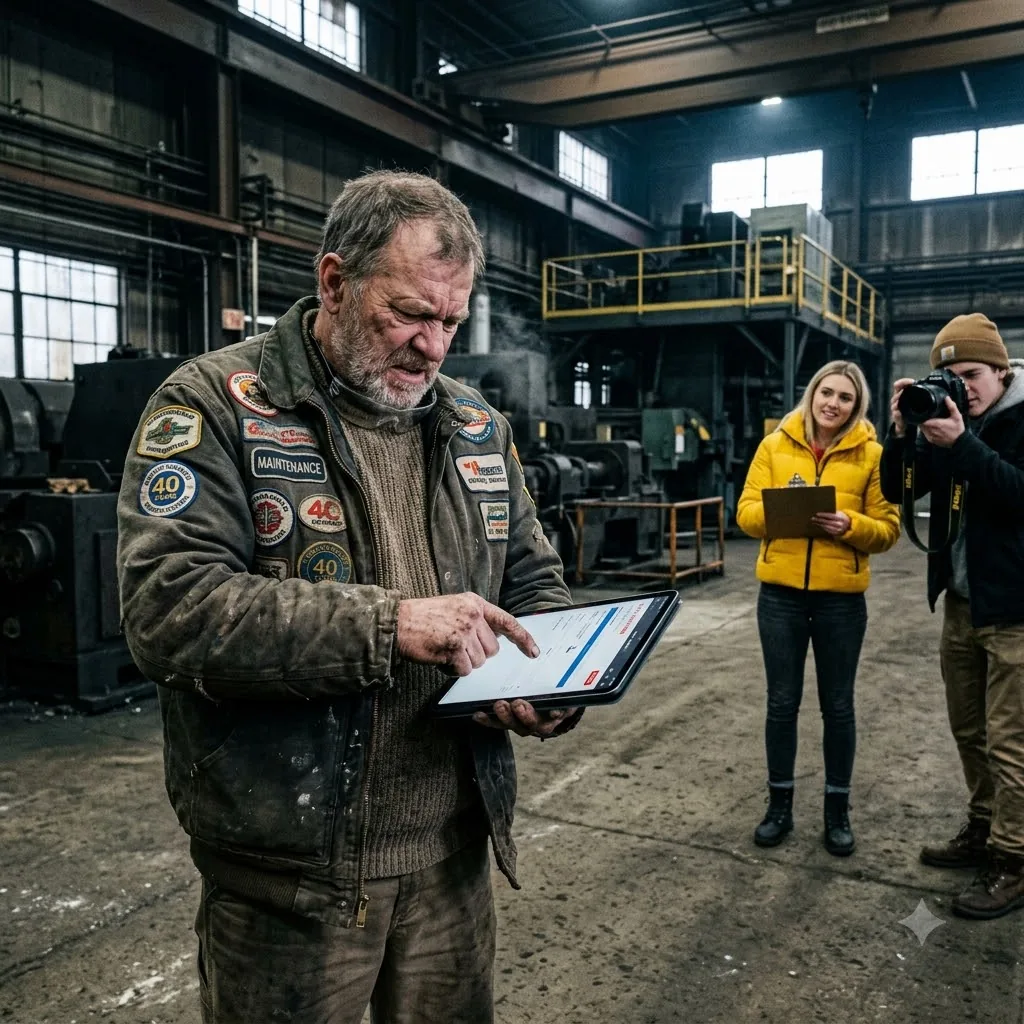
Arthur tapped the slick glass of the iPad, his calloused finger slipping on the cold screen as he tried to find a category that encompassed thirty-five years of building engines. The drop-down menu offered choices like Digital Operations and Synergistic Logistics, forcing him to scroll past the buzzwords until he finally hit a gray box simply labeled Other. His breath plumed in the freezing air of the gutted assembly floor, momentarily fogging the glass just as a blinding white camera flash erupted from the shadows near the old loading dock.
He blinked away the blue spots in his vision. The heavy stamping plant felt wrong without the deafening, rhythmic thud of the steel presses. For three decades, that noise had been the heartbeat of this building, vibrating up through the concrete and into his boots. Now, the cavernous space held nothing but echoing silence, structural pillars stripped of their wiring, and thirty plastic folding chairs arranged in a tight semicircle.
Arthur sat in chair number seven. The tablet felt entirely too delicate in his thick hands. The screen glared at him, demanding a maximum of fifty characters to explain his entire adult working life under the Other category. He typed out a line about machining custom gears and maintaining hydraulic robotics. The digital keyboard locked up midway through the word hydraulic. He had run out of characters. He stared at the truncated word, feeling the chill of the unheated factory seep through his heavy canvas jacket.
At the front of the semicircle, a man in a tailored, electric-blue puffer vest and immaculate white sneakers paced back and forth. This was the founder of the green-energy startup that had bought the plant for a fraction of its value. He had introduced himself as Julian, though he had not bothered to learn anyone else’s name. Julian was currently speaking rapidly into a wireless earpiece, gesturing wildly with a half-empty cup of artisanal coffee.
He treated the row of laid-off autoworkers as if they were a museum exhibit. Every few minutes, Julian pointed at one of the shivering men or women, then signaled to a photographer circling the perimeter. The photographer, a young woman wrapped in a thick scarf, would immediately hurry over, crouch low, and fire off a rapid burst of photos. She made sure to frame the applicants against the most broken, desolate sections of the gutted factory.
Arthur tried to advance to the next screen of the application. A red error message flashed, demanding he agree to a compulsory media release form. He tapped the terms of service, watching pages of dense legal text scroll past. The startup was securing massive state subsidies for retraining local legacy workers, and the application made it clear that their images would be used in promotional materials. They were not applying for jobs so much as auditioning for a marketing campaign.
The guy sitting next to Arthur, a former union steward named Marcus, let out a slow, steady breath. Marcus was staring at his own tablet, his jaw locked tight. Neither of them spoke. The rules of this transition program had been made clear during the mandatory orientation. Anyone who walked out forfeited their severance bridge payments. They had to complete the digital onboarding to keep their families fed through the winter.
Julian finished his call with a sharp tap to his ear. He clapped his hands together, the sound echoing harshly off the bare cinderblock walls. He began walking down the line of folding chairs, eyes darting from face to face. He bypassed Marcus entirely and stopped directly in front of Arthur.
The photographer rushed over, her boots squeaking loudly on the polished concrete. She lifted her heavy camera, twisting the focus ring. Julian did not look Arthur in the eye. Instead, his gaze locked onto the faded, grease-stained union patch stitched to the shoulder of Arthur’s coat.
Julian stepped directly into Arthur’s personal space. Without a word of warning or introduction, the founder reached out and grabbed the worn lapels of Arthur’s jacket, physically yanking the heavy fabric forward and pinning Arthur’s shoulders back against the hard plastic of the folding chair to angle the union patch straight toward the camera lens.
Arthur tapped the slick glass of the iPad, his calloused finger slipping on the cold screen as he tried to find a category that encompassed thirty-five years of building engines. The drop-down menu offered choices like Digital Operations and Synergistic Logistics, forcing him to scroll past the buzzwords until he finally hit a gray box simply labeled Other. His breath plumed in the freezing air of the gutted assembly floor, momentarily fogging the glass just as a blinding white camera flash erupted from the shadows near the old loading dock.
He blinked away the blue spots in his vision. The heavy stamping plant felt wrong without the deafening, rhythmic thud of the steel presses. For three decades, that noise had been the heartbeat of this building, vibrating up through the concrete and into his boots. Now, the cavernous space held nothing but echoing silence, structural pillars stripped of their wiring, and thirty plastic folding chairs arranged in a tight semicircle.
Arthur sat in chair number seven. The tablet felt entirely too delicate in his thick hands. The screen glared at him, demanding a maximum of fifty characters to explain his entire adult working life under the Other category. He typed out a line about machining custom gears and maintaining hydraulic robotics. The digital keyboard locked up midway through the word hydraulic. He had run out of characters. He stared at the truncated word, feeling the chill of the unheated factory seep through his heavy canvas jacket.
At the front of the semicircle, a man in a tailored, electric-blue puffer vest and immaculate white sneakers paced back and forth. This was the founder of the green-energy startup that had bought the plant for a fraction of its value. He had introduced himself as Julian, though he had not bothered to learn anyone else’s name. Julian was currently speaking rapidly into a wireless earpiece, gesturing wildly with a half-empty cup of artisanal coffee.
He treated the row of laid-off autoworkers as if they were a museum exhibit. Every few minutes, Julian pointed at one of the shivering men or women, then signaled to a photographer circling the perimeter. The photographer, a young woman wrapped in a thick scarf, would immediately hurry over, crouch low, and fire off a rapid burst of photos. She made sure to frame the applicants against the most broken, desolate sections of the gutted factory.
Arthur tried to advance to the next screen of the application. A red error message flashed, demanding he agree to a compulsory media release form. He tapped the terms of service, watching pages of dense legal text scroll past. The startup was securing massive state subsidies for retraining local legacy workers, and the application made it clear that their images would be used in promotional materials. They were not applying for jobs so much as auditioning for a marketing campaign.
The guy sitting next to Arthur, a former union steward named Marcus, let out a slow, steady breath. Marcus was staring at his own tablet, his jaw locked tight. Neither of them spoke. The rules of this transition program had been made clear during the mandatory orientation. Anyone who walked out forfeited their severance bridge payments. They had to complete the digital onboarding to keep their families fed through the winter.
Julian finished his call with a sharp tap to his ear. He clapped his hands together, the sound echoing harshly off the bare cinderblock walls. He began walking down the line of folding chairs, eyes darting from face to face. He bypassed Marcus entirely and stopped directly in front of Arthur.
The photographer rushed over, her boots squeaking loudly on the polished concrete. She lifted her heavy camera, twisting the focus ring. Julian did not look Arthur in the eye. Instead, his gaze locked onto the faded, grease-stained union patch stitched to the shoulder of Arthur’s coat.
Julian stepped directly into Arthur’s personal space. Without a word of warning or introduction, the founder reached out and grabbed the worn lapels of Arthur’s jacket, physically yanking the heavy fabric forward and pinning Arthur’s shoulders back against the hard plastic of the folding chair to angle the union patch straight toward the camera lens.