Story code: ST-001729
Part 1: The Nuisance Complaint
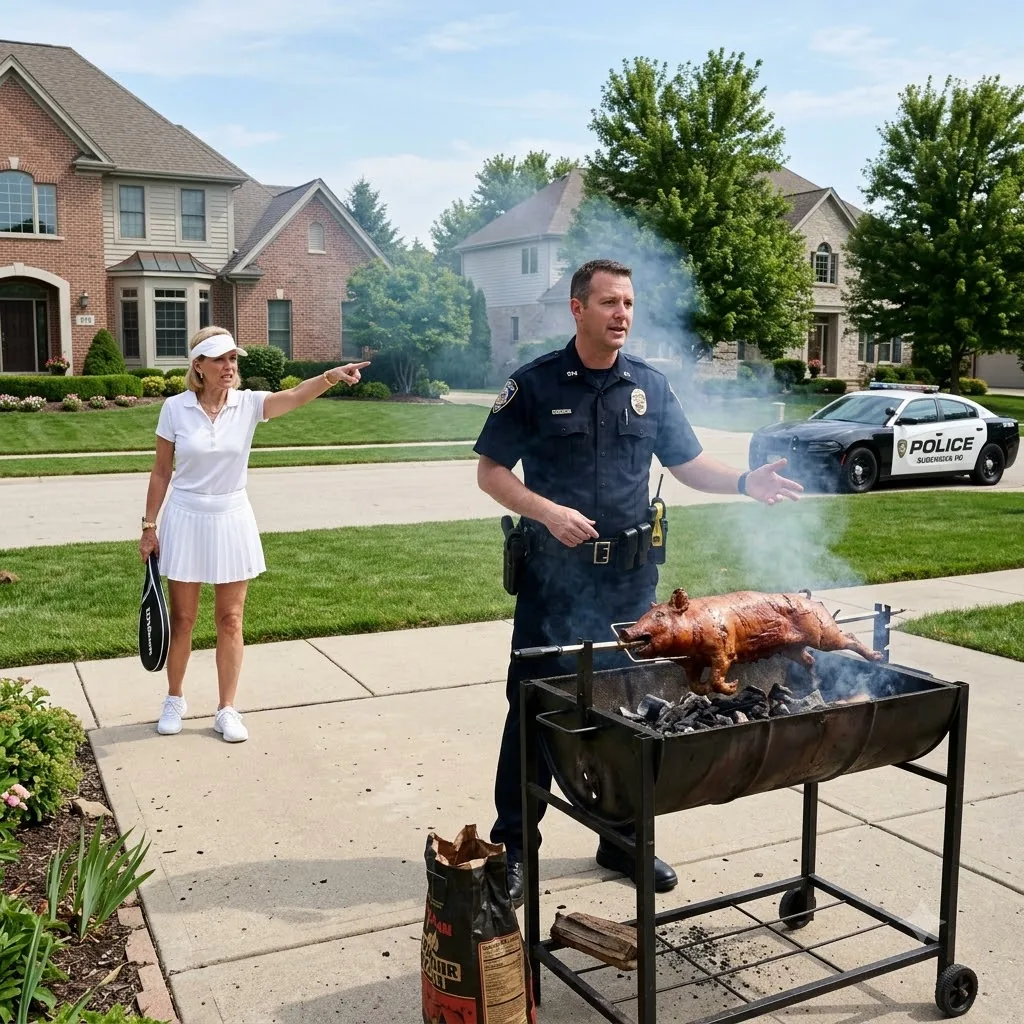
Red and blue lights strobe violently across the pale vinyl siding of the house, cutting right through the thick, sweet smoke of the cedar roasting box. Mateo freezes with the silicone basting brush suspended in his hand as a heavy county police cruiser lurches into his gravel driveway, its tires crunching loudly before it stops at a sharp angle, completely blocking in his brother’s parked work truck. Out on the curb, standing perfectly still under the sickly yellow glow of the streetlamp, HOA President Brenda Vance adjusts the collar of her pristine white tennis polo and raises a manicured hand, pointing a rigid finger directly at Mateo’s backyard.
The heavy reinforced doors of the cruiser slam shut, the sound echoing through the quiet suburban neighborhood. A uniformed officer steps onto the freshly cut grass, resting his thumbs heavily in his utility belt. The festive bachata music playing from the patio speakers dies instantly as someone yanks the auxiliary cord. Mateo’s brother, Hector, drops a stack of wooden folding chairs, letting them clatter aggressively against the paving stones. The entire backyard, filled with three dozen relatives, friends, and neighbors gathered to celebrate Elena’s graduation, goes completely, chillingly silent.
Mateo sets the basting brush down on the aluminum prep tray. He wipes his greasy hands on his canvas apron, feeling a sudden, sharp drop in the evening temperature. The ambient warmth of the fire vanishes, replaced by a cold, heavy knot of dread in his stomach. He walks toward the chain-link gate to intercept the officer before the man can push his way fully into the yard.
“Good evening,” Mateo says, keeping his empty hands open and clearly visible at his sides.
“Got a priority call about a nuisance violation and an illegal open burn,” the officer says. He does not look at Mateo. He looks right past him, staring at the large, custom-built wooden roasting box where a whole pig has been cooking for the last eight hours. The rich, mouth-watering smell of citrus marinade, crushed garlic, and rendering pork fat fills the humid air, but the officer simply frowns and pinches the bridge of his nose.
“It is a contained cooker,” Mateo explains, keeping his voice carefully level and painfully polite. “It is entirely enclosed by metal grating and a lid. We are just having a private family dinner for my daughter.”
“Municipal ordinance says no open flames within fifty feet of a primary dwelling,” the officer replies, pulling a small black notepad from his breast pocket. “And the caller states the smoke is crossing property lines. Creating a respiratory hazard and a public nuisance.”
Mateo glances over the officer’s shoulder toward the street. Brenda has not moved an inch. She stands on the edge of the sidewalk, her arms crossed firmly over her chest. Her bright white tennis skirt flutters slightly in the evening breeze. She holds her smartphone up, the screen glowing against her face, capturing the entire interaction on video. She had previously complained about Mateo’s work truck being visible from the street, the specific shade of wood stain on his mailbox, and the height of his garden sunflowers, but sending an armed police officer to a family dinner crosses a dark, unforgiving line.
“The box is entirely safe,” Hector says, stepping up beside Mateo. Hector’s voice carries a dangerous, vibrating edge. “We checked the county guidelines before we lit the kindling. It is completely legal to cook food on your own property.”
The officer shifts his stance, squaring his broad shoulders and dropping one hand back down to rest on his belt. “I am not arguing county codes with you people tonight. I am enforcing an active local HOA nuisance complaint. The fire goes out right now, or I start writing citations for every adult standing in this yard.”
Mateo puts a heavy, calloused hand on Hector’s shoulder, squeezing hard enough to make his brother wince. He has to keep Hector in place. A citation means a mandatory court date. A court date means lost wages they simply cannot afford to lose. More importantly, an escalation with a police officer in their own backyard, surrounded by their terrified children, is an impossible risk.
Mateo looks back at the concrete patio. Elena stands on the edge of the steps, wearing her brand-new floral dress, the one they saved up to buy just for tonight. She grips the wooden deck railing, her knuckles turning bone white, her expression caught between absolute fury and crushing humiliation. Tonight was supposed to be the joyful culmination of years of brutal, exhausting late-night studying. Now, the neighbors are peering through their slatted blinds, watching a police officer treat her family like common criminals.
“I understand,” Mateo tells the officer, his jaw aching intensely from clenching his teeth together. “I will handle it.”
“I need to see it out before I leave,” the officer insists, clicking on a heavy tactical flashlight and shining the blinding beam directly into Mateo’s eyes. “Completely extinguished.”
Mateo turns his back on the badge. He walks slowly, heavily, toward the roasting box. The coals inside are glowing a perfect, steady cherry red. The meat is in the very final hour of resting, the skin just beginning to crisp into the perfect, brittle crackling his family waits all year to eat. Eight hours of careful tending, turning, and basting. Hundreds of dollars of groceries. Weeks of meticulous planning to give his daughter the grand celebration she earned.
He picks up the heavy green garden hose coiled by the side of the house. He twists the brass spigot valve. The water pressure builds instantly, making the rubber hose stiffen and jerk in his grip. Out on the street, Brenda leans forward slightly, a deeply satisfied smirk breaking across her face in the harsh, strobing glare of the cruiser’s lightbar.
Mateo drags the heavy hose over to the roasting box. He uses a pair of long metal tongs to lift the hot lid. The incredible heat washes over his face, smelling of home and deep tradition and immense fatherly pride. He points the brass nozzle directly at the center of the glowing coals and squeezes the metal trigger.
A thick, violent cloud of gray ash and scalding steam explodes upward as the freezing water hits the fire. The wet, gritty ash coats the golden skin of the roast, turning it into a soggy, ruined mess. The bitter, toxic stench of extinguished charcoal drowns out the garlic and citrus. Mateo keeps his thumb clamped tightly on the trigger, flooding the metal tray, drowning the beautiful fire, and washing his daughter’s entire graduation dinner away in a rushing stream of gray, greasy sludge.
Red and blue lights strobe violently across the pale vinyl siding of the house, cutting right through the thick, sweet smoke of the cedar roasting box. Mateo freezes with the silicone basting brush suspended in his hand as a heavy county police cruiser lurches into his gravel driveway, its tires crunching loudly before it stops at a sharp angle, completely blocking in his brother’s parked work truck. Out on the curb, standing perfectly still under the sickly yellow glow of the streetlamp, HOA President Brenda Vance adjusts the collar of her pristine white tennis polo and raises a manicured hand, pointing a rigid finger directly at Mateo’s backyard.
The heavy reinforced doors of the cruiser slam shut, the sound echoing through the quiet suburban neighborhood. A uniformed officer steps onto the freshly cut grass, resting his thumbs heavily in his utility belt. The festive bachata music playing from the patio speakers dies instantly as someone yanks the auxiliary cord. Mateo’s brother, Hector, drops a stack of wooden folding chairs, letting them clatter aggressively against the paving stones. The entire backyard, filled with three dozen relatives, friends, and neighbors gathered to celebrate Elena’s graduation, goes completely, chillingly silent.
Mateo sets the basting brush down on the aluminum prep tray. He wipes his greasy hands on his canvas apron, feeling a sudden, sharp drop in the evening temperature. The ambient warmth of the fire vanishes, replaced by a cold, heavy knot of dread in his stomach. He walks toward the chain-link gate to intercept the officer before the man can push his way fully into the yard.
“Good evening,” Mateo says, keeping his empty hands open and clearly visible at his sides.
“Got a priority call about a nuisance violation and an illegal open burn,” the officer says. He does not look at Mateo. He looks right past him, staring at the large, custom-built wooden roasting box where a whole pig has been cooking for the last eight hours. The rich, mouth-watering smell of citrus marinade, crushed garlic, and rendering pork fat fills the humid air, but the officer simply frowns and pinches the bridge of his nose.
“It is a contained cooker,” Mateo explains, keeping his voice carefully level and painfully polite. “It is entirely enclosed by metal grating and a lid. We are just having a private family dinner for my daughter.”
“Municipal ordinance says no open flames within fifty feet of a primary dwelling,” the officer replies, pulling a small black notepad from his breast pocket. “And the caller states the smoke is crossing property lines. Creating a respiratory hazard and a public nuisance.”
Mateo glances over the officer’s shoulder toward the street. Brenda has not moved an inch. She stands on the edge of the sidewalk, her arms crossed firmly over her chest. Her bright white tennis skirt flutters slightly in the evening breeze. She holds her smartphone up, the screen glowing against her face, capturing the entire interaction on video. She had previously complained about Mateo’s work truck being visible from the street, the specific shade of wood stain on his mailbox, and the height of his garden sunflowers, but sending an armed police officer to a family dinner crosses a dark, unforgiving line.
“The box is entirely safe,” Hector says, stepping up beside Mateo. Hector’s voice carries a dangerous, vibrating edge. “We checked the county guidelines before we lit the kindling. It is completely legal to cook food on your own property.”
The officer shifts his stance, squaring his broad shoulders and dropping one hand back down to rest on his belt. “I am not arguing county codes with you people tonight. I am enforcing an active local HOA nuisance complaint. The fire goes out right now, or I start writing citations for every adult standing in this yard.”
Mateo puts a heavy, calloused hand on Hector’s shoulder, squeezing hard enough to make his brother wince. He has to keep Hector in place. A citation means a mandatory court date. A court date means lost wages they simply cannot afford to lose. More importantly, an escalation with a police officer in their own backyard, surrounded by their terrified children, is an impossible risk.
Mateo looks back at the concrete patio. Elena stands on the edge of the steps, wearing her brand-new floral dress, the one they saved up to buy just for tonight. She grips the wooden deck railing, her knuckles turning bone white, her expression caught between absolute fury and crushing humiliation. Tonight was supposed to be the joyful culmination of years of brutal, exhausting late-night studying. Now, the neighbors are peering through their slatted blinds, watching a police officer treat her family like common criminals.
“I understand,” Mateo tells the officer, his jaw aching intensely from clenching his teeth together. “I will handle it.”
“I need to see it out before I leave,” the officer insists, clicking on a heavy tactical flashlight and shining the blinding beam directly into Mateo’s eyes. “Completely extinguished.”
Mateo turns his back on the badge. He walks slowly, heavily, toward the roasting box. The coals inside are glowing a perfect, steady cherry red. The meat is in the very final hour of resting, the skin just beginning to crisp into the perfect, brittle crackling his family waits all year to eat. Eight hours of careful tending, turning, and basting. Hundreds of dollars of groceries. Weeks of meticulous planning to give his daughter the grand celebration she earned.
He picks up the heavy green garden hose coiled by the side of the house. He twists the brass spigot valve. The water pressure builds instantly, making the rubber hose stiffen and jerk in his grip. Out on the street, Brenda leans forward slightly, a deeply satisfied smirk breaking across her face in the harsh, strobing glare of the cruiser’s lightbar.
Mateo drags the heavy hose over to the roasting box. He uses a pair of long metal tongs to lift the hot lid. The incredible heat washes over his face, smelling of home and deep tradition and immense fatherly pride. He points the brass nozzle directly at the center of the glowing coals and squeezes the metal trigger.
A thick, violent cloud of gray ash and scalding steam explodes upward as the freezing water hits the fire. The wet, gritty ash coats the golden skin of the roast, turning it into a soggy, ruined mess. The bitter, toxic stench of extinguished charcoal drowns out the garlic and citrus. Mateo keeps his thumb clamped tightly on the trigger, flooding the metal tray, drowning the beautiful fire, and washing his daughter’s entire graduation dinner away in a rushing stream of gray, greasy sludge.