Story code: ST-000308
Part 1: The Name Tag Ask
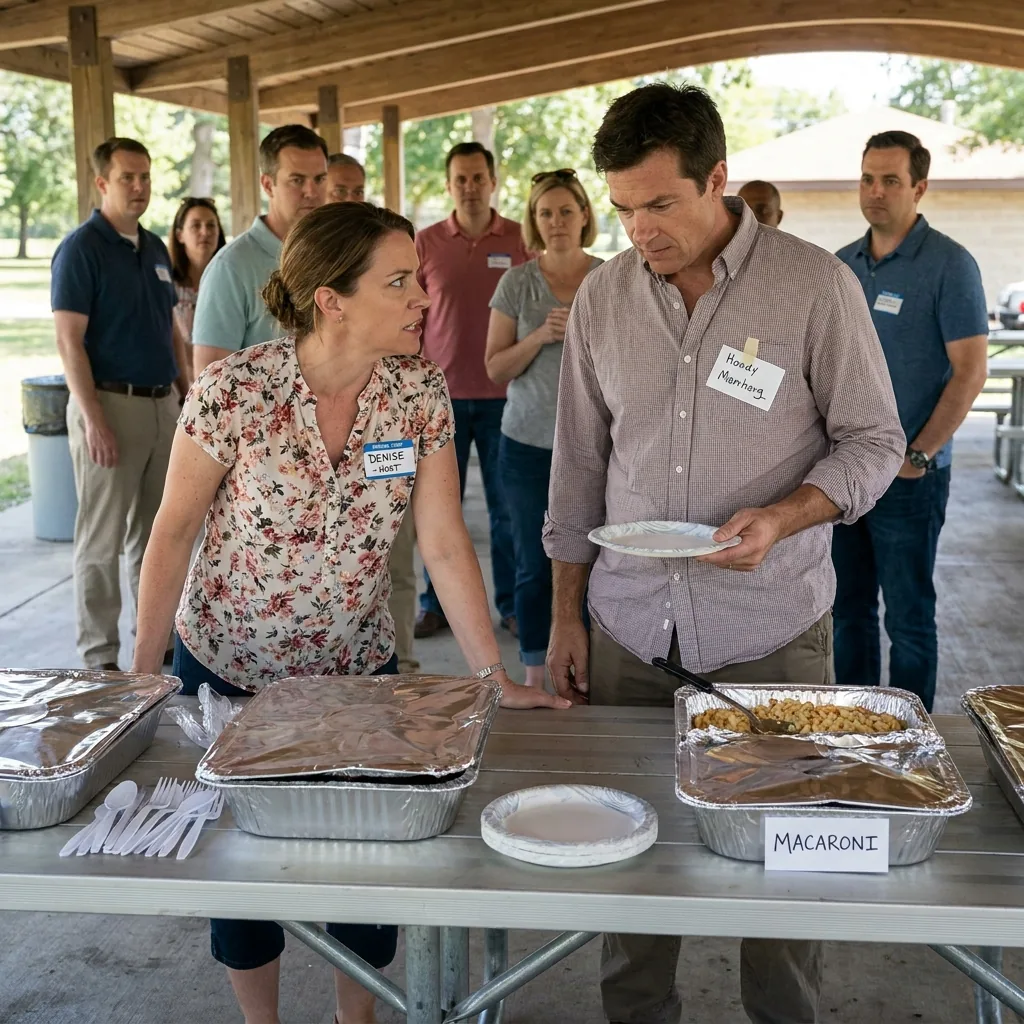
Denise caught me before I got three steps into the family reunion pavilion, with my paper name tag still crooked on my shirt and a foil pan of macaroni sitting open on the table behind her. She held out her hand like the money request was already settled, then said in front of everybody, “If you’re going to sit here and eat, you can help cover the family fund.” The whole row of folding tables went quiet except for the sound of plastic forks on plates and somebody laughing near the dessert cooler.
I was standing under the big white canopy by the drinks table, the one with the stacked paper cups and the handwritten sign for chips, napkins, and bottled water. Denise stayed right in the middle of the pavilion where everybody could see her and me, and she kept her smile fixed while she tapped my name tag with one finger like it was proof I belonged in the conversation. She said the amount out loud. She said it like it was nothing. She said it like the rest of the room had already agreed.
“Family duty,” she added, loud enough for the nearest tables to hear. “We all pitch in. That’s how we do things here.”
A few heads turned. Marvin looked up from his paper plate. Tasha slowed down near the casserole line with a serving spoon in her hand. Denise kept her palm open and waited. The money request was not framed like a request anymore. It was framed like a test.
I said, “No, I’m not covering that.”
Denise did not lower her hand. She let the word hang there for a second, then raised her voice just enough to carry. “After everything this family does for you, you want to make this hard?” She turned toward the nearest table and spread her free hand toward me. “We’re all doing our part. It’s a reunion. Nobody should have to beg family for basic support.”
That landed exactly where she wanted it. A cousin near the end of the table stared down at his plate. Somebody else stopped passing the rolls. The room did not get loud. It got worse than loud. It got interested.
Denise reached for the stack of disposable plates near the fried chicken tray, then paused with one hand on the stack and looked at me again. “You can say no if you want,” she said, “but don’t act like that doesn’t tell everybody something.” She shifted her chin toward the picnic tables. “We are all watching who helps and who leaves people hanging.”
I did not move. The name tag on my shirt stuck slightly to my collarbone where the tape had warmed. The shared meal sat between us in metal pans and paper trays, all of it public, all of it easy to point at. Denise kept using the food as if the potato salad itself owed her a yes.
Marvin finally said, “How much is she asking for?” but Denise answered before I could.
“Enough to cover what needed covering,” she said. “Unless you want the family to remember who made this harder than it had to be.”
That was the first open shove. Not a hand on my arm, not a grab for my wallet. Just the room, the name tag, and the word family used like a lock.
I looked past Denise toward the drinks table, because that’s where the receipts were supposed to be clipped to the side of the cooler with a magnet. There was only one receipt visible, half folded under a stack of napkins, and the top line was for something small enough to buy on a quick walk outside. Denise saw me looking, and her smile got tighter without changing shape.
She said, “Don’t worry about that. Just tell everybody if you’re in or out.”
And right then, while the pavilion kept moving around us with forks, paper plates, and the hum of voices pretending not to listen, I saw the little purchase listed on the end of the receipt and realized it was from the same store Denise had just said had nothing to do with the money. It was a cheap item. Small enough to overlook. Exactly the kind of thing that should not have been on the same tab at all.
Denise caught me before I got three steps into the family reunion pavilion, with my paper name tag still crooked on my shirt and a foil pan of macaroni sitting open on the table behind her. She held out her hand like the money request was already settled, then said in front of everybody, “If you’re going to sit here and eat, you can help cover the family fund.” The whole row of folding tables went quiet except for the sound of plastic forks on plates and somebody laughing near the dessert cooler.
I was standing under the big white canopy by the drinks table, the one with the stacked paper cups and the handwritten sign for chips, napkins, and bottled water. Denise stayed right in the middle of the pavilion where everybody could see her and me, and she kept her smile fixed while she tapped my name tag with one finger like it was proof I belonged in the conversation. She said the amount out loud. She said it like it was nothing. She said it like the rest of the room had already agreed.
“Family duty,” she added, loud enough for the nearest tables to hear. “We all pitch in. That’s how we do things here.”
A few heads turned. Marvin looked up from his paper plate. Tasha slowed down near the casserole line with a serving spoon in her hand. Denise kept her palm open and waited. The money request was not framed like a request anymore. It was framed like a test.
I said, “No, I’m not covering that.”
Denise did not lower her hand. She let the word hang there for a second, then raised her voice just enough to carry. “After everything this family does for you, you want to make this hard?” She turned toward the nearest table and spread her free hand toward me. “We’re all doing our part. It’s a reunion. Nobody should have to beg family for basic support.”
That landed exactly where she wanted it. A cousin near the end of the table stared down at his plate. Somebody else stopped passing the rolls. The room did not get loud. It got worse than loud. It got interested.
Denise reached for the stack of disposable plates near the fried chicken tray, then paused with one hand on the stack and looked at me again. “You can say no if you want,” she said, “but don’t act like that doesn’t tell everybody something.” She shifted her chin toward the picnic tables. “We are all watching who helps and who leaves people hanging.”
I did not move. The name tag on my shirt stuck slightly to my collarbone where the tape had warmed. The shared meal sat between us in metal pans and paper trays, all of it public, all of it easy to point at. Denise kept using the food as if the potato salad itself owed her a yes.
Marvin finally said, “How much is she asking for?” but Denise answered before I could.
“Enough to cover what needed covering,” she said. “Unless you want the family to remember who made this harder than it had to be.”
That was the first open shove. Not a hand on my arm, not a grab for my wallet. Just the room, the name tag, and the word family used like a lock.
I looked past Denise toward the drinks table, because that’s where the receipts were supposed to be clipped to the side of the cooler with a magnet. There was only one receipt visible, half folded under a stack of napkins, and the top line was for something small enough to buy on a quick walk outside. Denise saw me looking, and her smile got tighter without changing shape.
She said, “Don’t worry about that. Just tell everybody if you’re in or out.”
And right then, while the pavilion kept moving around us with forks, paper plates, and the hum of voices pretending not to listen, I saw the little purchase listed on the end of the receipt and realized it was from the same store Denise had just said had nothing to do with the money. It was a cheap item. Small enough to overlook. Exactly the kind of thing that should not have been on the same tab at all.