Story code: ST-001761
Part 1: The Glass Wall
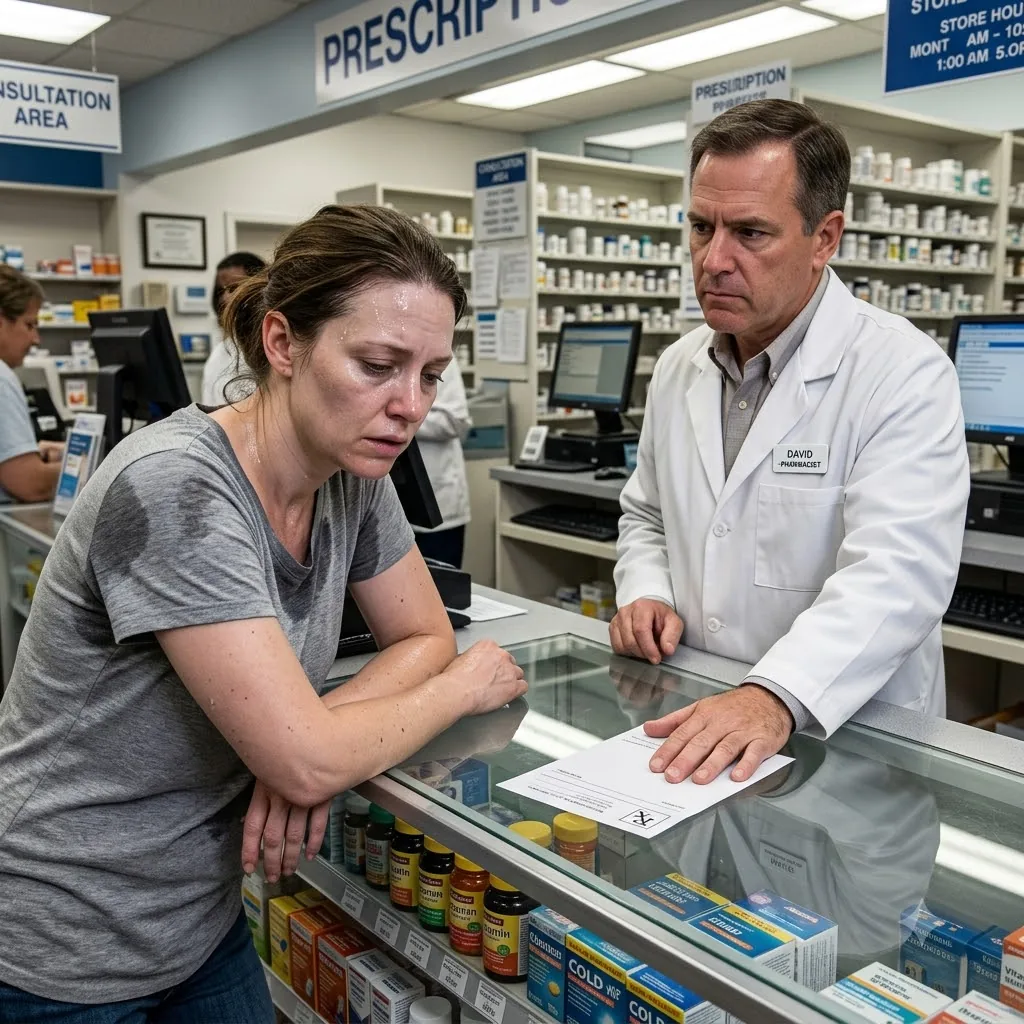
Sarah pressed her entire forearm against the smudged glass of the pharmacy drop-off counter, locking her elbow just to keep her knees from buckling. The fluorescent lights overhead pulsed with a relentless hum, matching the jagged spikes of agony radiating down her spine and pooling in her hips. Every breath she took was shallow, clipped by the sharp warning of nerve endings misfiring. She leaned heavier against the partition, staring at the small, square opening in the glass that separated her from relief.
Greg, wearing a crisp white coat over a wrinkled blue polo, did not look up from his monitor. The glow of the screen washed out his complexion, highlighting the tight, uncompromising line of his jaw. He tapped the spacebar twice, sighed heavily, and picked up her paper prescription. He slid it back through the slot. The thick security paper, complete with its holographic watermark and blue ink, came to rest against Sarah’s white-knuckled grip.
“I cannot fill this today,” Greg said, his voice a flat, practiced monotone. “The system flagged it.”
Sarah stared at the paper. The words swam in front of her eyes. “It is from my specialist. It is the exact same medication and dosage I have been taking for the past eight months. You filled it thirty days ago.”
“Corporate updated the dispensing software last night,” Greg said, finally shifting his gaze to her shoulder, specifically avoiding her eyes. “Your MME, the morphine milligram equivalent, exceeds the new threshold for this zip code. The algorithm flags anything over that specific limit as an immediate diversion risk. If I force an override in the system, I trigger an automatic DEA audit on my personal pharmacy license.”
“I am not a diversion risk,” Sarah said. Her voice trembled, lacking the force she needed to project. The sheer physical toll of standing upright was draining her reserves. “Look at my file. Look at the diagnosis codes. You have my entire medical history in that computer. I just need to be able to walk to my car and go to work.”
Greg shook his head, crossing his arms over his chest. He retreated behind the invisible shield of corporate policy. “I am sorry, but the policy is hardcoded into the terminal. We are absolutely not allowed to use clinical discretion when the red flag algorithm is active. You will need to contact your provider and have them formulate an alternative treatment plan.”
Sarah closed her eyes. The pain was no longer just a sensation. It was a heavy, physical weight, a suffocating vice clamping down on her lumbar spine. She tried to shift her stance, but a blinding flash of white-hot agony shot down her left leg. She gasped, gripping the counter edge so hard her fingernails dug into her own palms. The pharmacy smelled like rubbing alcohol, old paper, and cheap lavender floor cleaner. Behind Greg, rows upon rows of amber bottles sat on pristine white shelves. Those bottles held the precise chemical compound required to give her a functional life, to allow her to sleep, to let her exist without screaming. They were ten feet away, locked behind a software update she had no control over.
She pushed the paper back through the slot, sliding it closer to his keyboard. “Call Dr. Evans. He is on call right now. His emergency pager number is printed right there at the bottom. He will authorize the override and explain the necessity.”
“A phone call does not change the algorithmic block,” Greg replied, his tone hardening. The fear of federal oversight made him cruel. He was looking at her the way people looked at criminals on the street, not a patient with a documented, severe, and verified illness. She was a liability. A threat to his pension. “The DEA holds the pharmacist personally liable for every pill dispensed. I am not risking a federal charge and losing my livelihood because your doctor refuses to follow the new tapering guidelines.”
The sheer absurdity of the situation made the room spin. Sarah had followed every single rule imposed upon her. She had submitted to random drug tests. She had signed the humiliating pain contracts. She had brought in the physical copies with the watermarks. None of it mattered against a line of code designed by a risk management team in another state. She was being denied a functional existence by a machine.
She opened her mouth to argue, to demand a manager, to beg if it came down to it. Her joints screamed in protest as she swayed slightly on her feet.
A sharp click of expensive heels echoed against the tile directly behind her. The automatic doors at the front of the store had slid open moments ago, but Sarah had been too consumed by the roaring in her ears to notice the footsteps approaching the line. A wave of heavy, suffocating floral perfume washed over her, completely masking the clinical smell of the pharmacy counter.
Greg looked up from his monitor. His eyes darted from Sarah to the space just over her right shoulder.
The transformation was instantaneous. The rigid, bureaucratic wall of his posture completely crumbled. His shoulders dropped, his chin tucked in a reflexive display of deference, and the cold, clinical mask of the enforcer dissolved into a panicked, fawning subservience. He reached out with trembling fingers and snatched Sarah’s prescription off the counter, dragging it out of sight under his keyboard as if it were highly illegal contraband. He stood up straighter, smoothing the front of his white coat.
“Good afternoon, ma’am, I will have your order ready in just one moment.”
Sarah pressed her entire forearm against the smudged glass of the pharmacy drop-off counter, locking her elbow just to keep her knees from buckling. The fluorescent lights overhead pulsed with a relentless hum, matching the jagged spikes of agony radiating down her spine and pooling in her hips. Every breath she took was shallow, clipped by the sharp warning of nerve endings misfiring. She leaned heavier against the partition, staring at the small, square opening in the glass that separated her from relief.
Greg, wearing a crisp white coat over a wrinkled blue polo, did not look up from his monitor. The glow of the screen washed out his complexion, highlighting the tight, uncompromising line of his jaw. He tapped the spacebar twice, sighed heavily, and picked up her paper prescription. He slid it back through the slot. The thick security paper, complete with its holographic watermark and blue ink, came to rest against Sarah’s white-knuckled grip.
“I cannot fill this today,” Greg said, his voice a flat, practiced monotone. “The system flagged it.”
Sarah stared at the paper. The words swam in front of her eyes. “It is from my specialist. It is the exact same medication and dosage I have been taking for the past eight months. You filled it thirty days ago.”
“Corporate updated the dispensing software last night,” Greg said, finally shifting his gaze to her shoulder, specifically avoiding her eyes. “Your MME, the morphine milligram equivalent, exceeds the new threshold for this zip code. The algorithm flags anything over that specific limit as an immediate diversion risk. If I force an override in the system, I trigger an automatic DEA audit on my personal pharmacy license.”
“I am not a diversion risk,” Sarah said. Her voice trembled, lacking the force she needed to project. The sheer physical toll of standing upright was draining her reserves. “Look at my file. Look at the diagnosis codes. You have my entire medical history in that computer. I just need to be able to walk to my car and go to work.”
Greg shook his head, crossing his arms over his chest. He retreated behind the invisible shield of corporate policy. “I am sorry, but the policy is hardcoded into the terminal. We are absolutely not allowed to use clinical discretion when the red flag algorithm is active. You will need to contact your provider and have them formulate an alternative treatment plan.”
Sarah closed her eyes. The pain was no longer just a sensation. It was a heavy, physical weight, a suffocating vice clamping down on her lumbar spine. She tried to shift her stance, but a blinding flash of white-hot agony shot down her left leg. She gasped, gripping the counter edge so hard her fingernails dug into her own palms. The pharmacy smelled like rubbing alcohol, old paper, and cheap lavender floor cleaner. Behind Greg, rows upon rows of amber bottles sat on pristine white shelves. Those bottles held the precise chemical compound required to give her a functional life, to allow her to sleep, to let her exist without screaming. They were ten feet away, locked behind a software update she had no control over.
She pushed the paper back through the slot, sliding it closer to his keyboard. “Call Dr. Evans. He is on call right now. His emergency pager number is printed right there at the bottom. He will authorize the override and explain the necessity.”
“A phone call does not change the algorithmic block,” Greg replied, his tone hardening. The fear of federal oversight made him cruel. He was looking at her the way people looked at criminals on the street, not a patient with a documented, severe, and verified illness. She was a liability. A threat to his pension. “The DEA holds the pharmacist personally liable for every pill dispensed. I am not risking a federal charge and losing my livelihood because your doctor refuses to follow the new tapering guidelines.”
The sheer absurdity of the situation made the room spin. Sarah had followed every single rule imposed upon her. She had submitted to random drug tests. She had signed the humiliating pain contracts. She had brought in the physical copies with the watermarks. None of it mattered against a line of code designed by a risk management team in another state. She was being denied a functional existence by a machine.
She opened her mouth to argue, to demand a manager, to beg if it came down to it. Her joints screamed in protest as she swayed slightly on her feet.
A sharp click of expensive heels echoed against the tile directly behind her. The automatic doors at the front of the store had slid open moments ago, but Sarah had been too consumed by the roaring in her ears to notice the footsteps approaching the line. A wave of heavy, suffocating floral perfume washed over her, completely masking the clinical smell of the pharmacy counter.
Greg looked up from his monitor. His eyes darted from Sarah to the space just over her right shoulder.
The transformation was instantaneous. The rigid, bureaucratic wall of his posture completely crumbled. His shoulders dropped, his chin tucked in a reflexive display of deference, and the cold, clinical mask of the enforcer dissolved into a panicked, fawning subservience. He reached out with trembling fingers and snatched Sarah’s prescription off the counter, dragging it out of sight under his keyboard as if it were highly illegal contraband. He stood up straighter, smoothing the front of his white coat.
“Good afternoon, ma’am, I will have your order ready in just one moment.”