Story code: ST-001767
Part 4: The Severance
The silence broke not with shouting, but with a sudden, violent retreat. His father physically recoiled, taking a large, unsteady step backward as if Toby were suddenly contagious. The righteous fury that had fueled his interrogation dissolved into sheer, unadulterated revulsion. He looked at Toby’s trembling frame, then down at the hardwood floor, utterly refusing to make eye contact.
“Get your things,” his father whispered, his voice vibrating with a dark, suppressed rage. “You have fifteen minutes to remove yourself from this house.”
“Arthur,” his mother murmured, though she made no move to comfort Toby. She clutched the iPad to her chest, her knuckles white, her face a mask of profound disgust.
“Fifteen minutes!” his father bellowed, finally turning his back. He marched out of the kitchen, his heavy footsteps echoing down the hallway toward the living room. His mother cast one last, hollow look at Toby before silently following her husband, the swinging kitchen door clicking shut behind her.
Toby didn’t wait. He scrambled up the carpeted stairs, taking them two at a time. He burst into his bedroom, pulling a faded canvas duffel bag from the depths of his closet. His hands shook so badly he couldn’t manipulate the brass zipper on the first try. He forced himself to take a breath-a sharp intake of air that burned his lungs-and started pulling clothes from his dresser. Sweaters, jeans, whatever was thick and warm. He didn’t bother folding them. He just shoved them into the canvas void.
He opened his bottom drawer, reaching beneath a stack of old winter blankets to retrieve a small, locked metal cash box. He had sixty dollars in tip money from a previous pizza delivery job, saved in worn five-dollar bills. It was the only money he possessed that wasn’t tied to the joint youth-checking account his parents heavily monitored. He stuffed the crumpled bills into his shoe. Then, he reached deeper into the drawer and pulled out a small, padded mailer-the final delivery from the offshore pharmacy. He placed it carefully in the center of the duffel bag, wrapping it in a heavy hoodie to keep the vials safe.
From downstairs, the noise began.
It started as a low, rumbling drone, seeping up through the floorboards. His father had initiated a prayer session in the living room. It wasn’t a quiet petition for guidance. It was loud, hostile, and deeply theatrical. His father’s pastoral voice boomed with the aggressive cadence of an angry Sunday sermon, loudly binding spirits of deception and crying out for the Lord to cleanse their home of perversion. Over the rising volume of his father’s condemnations, Toby could hear his mother wailing-long, rhythmic sobs meant to project ultimate betrayal and victimhood.
The sounds turned Toby’s stomach into a tight, aching knot. He zipped up the duffel bag and slung the heavy strap over his shoulder. The bedroom around him, with its neat twin bed and framed scripture verses he had never chosen, already looked like it belonged to a stranger.
He walked back downstairs, his sneakers silent on the carpet. The voices in the living room grew louder as he reached the foyer. He paused by the kitchen entrance, looking at the bright pendant lights and the marble island where the interrogation had just taken place.
Toby reached into his pocket and pulled out his keyring. He slid the brass house key off the ring, letting it drop onto the cool marble with a sharp clink. Next came the fob for the sedan. The car was in his father’s name, insured under the family policy. If he drove it off the driveway, they would undoubtedly report it stolen by morning. He dropped the fob next to the house key.
Finally, he pulled out his phone. The screen was still glowing with the locked administrative interface of the Shepherd’s Gate monitoring app. This device was the anchor. It was the tether to their iCloud, their spyware, their absolute control over his digital existence. He held the power button until the screen went completely black, then set the dead glass rectangle next to the keys. He was leaving with nothing they could track.
“Lord, purge this darkness from our threshold!” his father shouted from the living room, his voice cracking with exertion.
Toby turned away from the kitchen and walked to the front door. He grasped the heavy brass handle, pulled it open, and stepped out into the night.
The transition was instant. The stifling, heavy air of the house vanished, replaced by the biting cold of the late autumn wind. Toby pulled the heavy door shut behind him. The deadbolt clicked into place with a definitive, metallic snap. The hostile prayers were instantly muffled, then swallowed entirely by the rustling of the dry leaves in the oak trees lining the cul-de-sac.
Toby adjusted the strap of the duffel bag across his chest and started walking down the concrete driveway. He didn’t look back at the silver minivan or the warm yellow glow of the living room windows. His chest heaved, but his breathing was finally slowing down, returning to a normal rhythm.
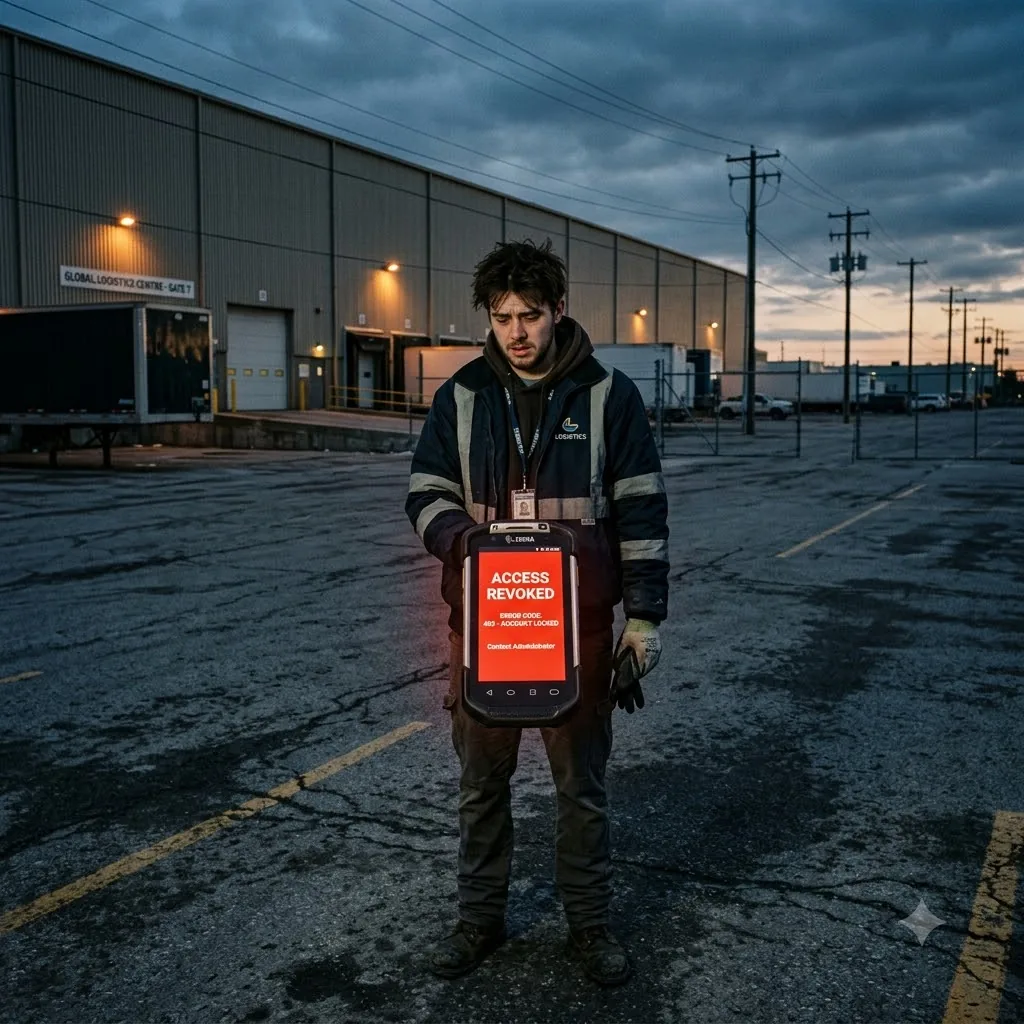
He had no job. The warehouse algorithm had seen to that. He had no car, no phone, no home, and no family. He was stepping into the dark with sixty dollars in his shoe and a canvas bag of clothes. The sheer gravity of his circumstances should have crushed him right there on the pavement.
Instead, as he walked past the property line and stepped into the quiet suburban street, a strange, breathless sensation washed over his entire body. He was completely off the grid. There were no heat maps tracking his movements. No biometric scanners monitoring his heart rate. No spyware logging his data packets, and no parents analyzing his every step.
For the first time in his life, nobody in the world knew where he was. The night air was freezing against his cheeks, but as Toby walked away from the only home he had ever known, he felt nothing but a terrifying, brilliant liberation.