Story code: ST-001794
Part 1: The Wellness Protocol
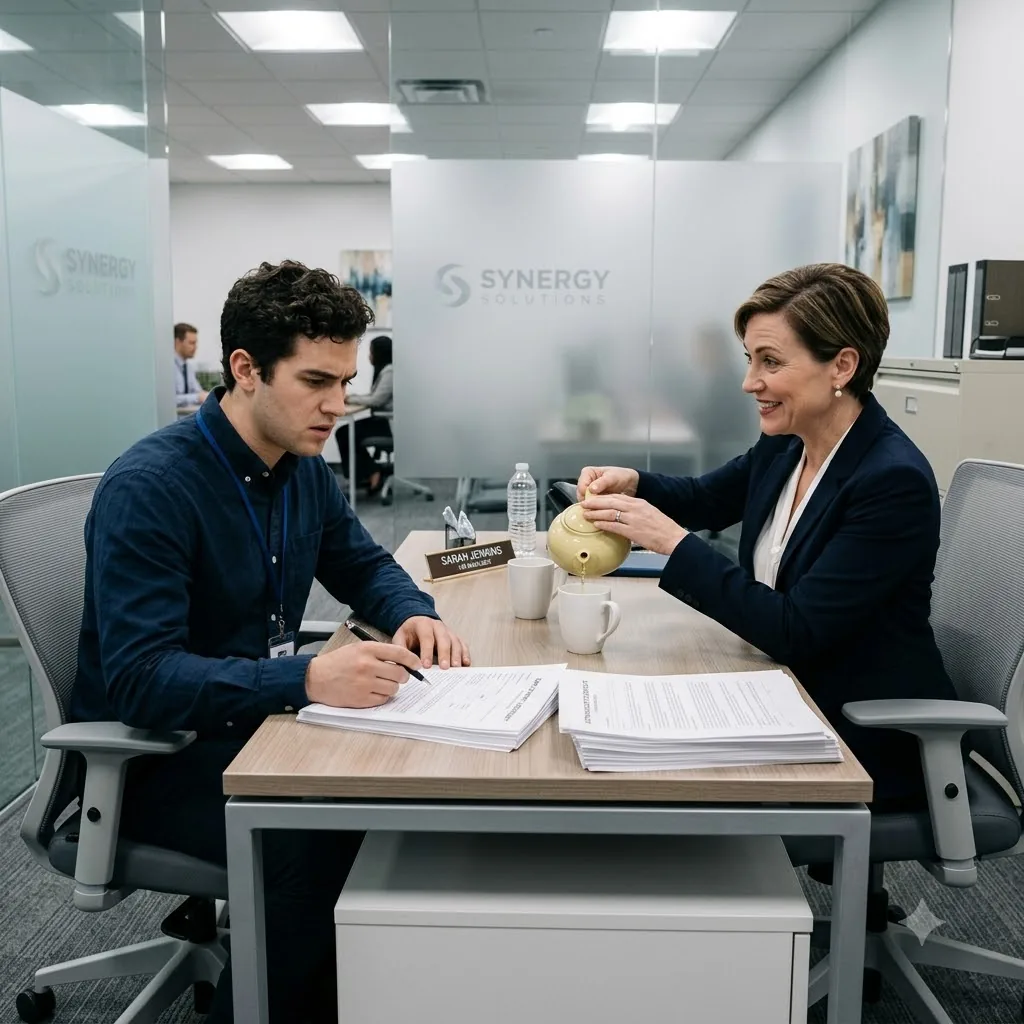
Brenda poured a second cup of chamomile tea, the pale liquid steaming against the frost-white composite of the conference table. She pushed the ceramic mug toward Elias with a practiced, devastatingly gentle smile, her movements radiating a sterile, therapeutic calm. He did not reach for it. The steam curled between them, smelling faintly of dried flowers and dust, failing to mask the sharp scent of the industrial cleaner used on the glass walls enclosing them.
“Elias, we value your unique neuro-landscape,” Brenda said, leaning forward and folding her hands over a thick manila folder. Her voice was pitched at the exact frequency of an ambient meditation track. “The way your mind processes anomalies is a tremendous asset to the data integrity team. But that same hyper-focus comes with a heavy cognitive toll.”
Elias stared at the folder. He had been in the building for forty-five minutes. His badge had stopped working at the main turnstile, triggering a silent alarm that brought two men in unmarked blazers to escort him directly to the twelfth floor. He had not even booted his workstation. He had not checked the logs from last night’s routine server audit.
“I ran a standard redundancy check on the legacy archival nodes,” Elias said, keeping his tone flat and carefully devoid of the panic tightening his chest. “There was a discrepancy in the volume size. I flagged it in the ticketing system.”
“And we are so grateful for your diligence,” Brenda murmured. She tilted her head, her eyes pooling with manufactured empathy. “But we also have a duty of care. Our telemetry indicates you logged on at three in the morning. You stayed in the system for four hours. That kind of boundary-erosion is a classic indicator of severe burnout. We failed you, Elias. We let you push yourself into a state of acute overstimulation.”
He blinked, forcing his expression to remain entirely neutral. The legacy nodes had taken exactly four hours to process because of a localized throttling issue he had meticulously documented in his incident report. It was a purely mechanical delay. He had watched the progress bar crawl while eating cold noodles in his kitchen, completely calm. There was no overstimulation. There was only a hidden directory labeled *Orphan_Assets_2019* that held three petabytes of densely encrypted data on a decommissioned server that was supposed to be completely empty.
“I am not burned out,” Elias stated. “I am reporting a critical mass of undocumented network activity.”
Brenda sighed, a soft, wounded sound that echoed loudly in the acoustically dampened room. She opened the manila folder. “This is exactly what the occupational health psychologist warned us about. The fixation. The paranoia regarding routine system updates. You are projecting your internal exhaustion onto the network infrastructure, Elias. It is incredibly common for highly gifted systems architects to experience this kind of disassociative break. We see it all the time.”
She slid a heavy, cream-colored document across the table. It came to rest right next to the chamomile tea. A heavy silver pen rolled to a stop against the ceramic mug, clinking softly against the rim.
Elias read the bold, capitalized heading at the top of the page. *MANDATORY PAID MEDICAL LEAVE WAIVER AND ACKNOWLEDGMENT OF ACUTE PSYCHOLOGICAL DISTRESS*.
“We are authorizing six months of fully paid leave,” Brenda explained, her voice dripping with weaponized compassion. “Full benefits. Complete access to our top-tier psychiatric network. We just need you to focus on healing. You do not need to worry about the servers, or the data, or anything else. Just your own mental wellness.”
Elias looked at the document, his heart hammering against his ribs in a slow, heavy rhythm. The trap was breathtaking in its corporate elegance. If he signed the paper, he was legally admitting to a psychological breakdown. He was putting his signature on a legally binding company document confessing that his judgment was severely compromised, that he was prone to paranoid delusions regarding his work. Any claim he made about the three petabytes of hidden data would be instantly dismissed as the rambling of an employee on mandatory psychiatric leave.
If he refused to sign, they would terminate him for cause, citing his hostile refusal to accept necessary medical intervention. They would lock him out, discredit him, and flag his industry profile as unstable. They would make sure he never touched a server at any major firm again. He would be entirely neutralized.
The tea stopped steaming, leaving a thin film on the surface of the pale liquid. Brenda watched him, her hands still folded patiently over the empty manila folder. She had all the time in the world. She was giving him the illusion of a choice, wrapping a professional execution in the soft, unimpeachable language of self-care.
“I just need you to sign at the bottom, Elias,” she coaxed softly, tapping a manicured fingernail against the signature line. “Let us take the burden off your shoulders. Let us protect you.”
He reached out. His fingers brushed the cold silver barrel of the pen. He could feel the weight of it, the solid metal reality of the instrument that would sign away his credibility and silence whatever he had stumbled across in the archival nodes. He rolled the pen under his index finger, pulling it away from the mug.
The door to the conference room clicked open. Both of the men in the unmarked blazers stepped inside, carrying flat plastic crates meant for packing personal desk belongings, and stopped just behind Elias’s chair.
Brenda poured a second cup of chamomile tea, the pale liquid steaming against the frost-white composite of the conference table. She pushed the ceramic mug toward Elias with a practiced, devastatingly gentle smile, her movements radiating a sterile, therapeutic calm. He did not reach for it. The steam curled between them, smelling faintly of dried flowers and dust, failing to mask the sharp scent of the industrial cleaner used on the glass walls enclosing them.
“Elias, we value your unique neuro-landscape,” Brenda said, leaning forward and folding her hands over a thick manila folder. Her voice was pitched at the exact frequency of an ambient meditation track. “The way your mind processes anomalies is a tremendous asset to the data integrity team. But that same hyper-focus comes with a heavy cognitive toll.”
Elias stared at the folder. He had been in the building for forty-five minutes. His badge had stopped working at the main turnstile, triggering a silent alarm that brought two men in unmarked blazers to escort him directly to the twelfth floor. He had not even booted his workstation. He had not checked the logs from last night’s routine server audit.
“I ran a standard redundancy check on the legacy archival nodes,” Elias said, keeping his tone flat and carefully devoid of the panic tightening his chest. “There was a discrepancy in the volume size. I flagged it in the ticketing system.”
“And we are so grateful for your diligence,” Brenda murmured. She tilted her head, her eyes pooling with manufactured empathy. “But we also have a duty of care. Our telemetry indicates you logged on at three in the morning. You stayed in the system for four hours. That kind of boundary-erosion is a classic indicator of severe burnout. We failed you, Elias. We let you push yourself into a state of acute overstimulation.”
He blinked, forcing his expression to remain entirely neutral. The legacy nodes had taken exactly four hours to process because of a localized throttling issue he had meticulously documented in his incident report. It was a purely mechanical delay. He had watched the progress bar crawl while eating cold noodles in his kitchen, completely calm. There was no overstimulation. There was only a hidden directory labeled *Orphan_Assets_2019* that held three petabytes of densely encrypted data on a decommissioned server that was supposed to be completely empty.
“I am not burned out,” Elias stated. “I am reporting a critical mass of undocumented network activity.”
Brenda sighed, a soft, wounded sound that echoed loudly in the acoustically dampened room. She opened the manila folder. “This is exactly what the occupational health psychologist warned us about. The fixation. The paranoia regarding routine system updates. You are projecting your internal exhaustion onto the network infrastructure, Elias. It is incredibly common for highly gifted systems architects to experience this kind of disassociative break. We see it all the time.”
She slid a heavy, cream-colored document across the table. It came to rest right next to the chamomile tea. A heavy silver pen rolled to a stop against the ceramic mug, clinking softly against the rim.
Elias read the bold, capitalized heading at the top of the page. *MANDATORY PAID MEDICAL LEAVE WAIVER AND ACKNOWLEDGMENT OF ACUTE PSYCHOLOGICAL DISTRESS*.
“We are authorizing six months of fully paid leave,” Brenda explained, her voice dripping with weaponized compassion. “Full benefits. Complete access to our top-tier psychiatric network. We just need you to focus on healing. You do not need to worry about the servers, or the data, or anything else. Just your own mental wellness.”
Elias looked at the document, his heart hammering against his ribs in a slow, heavy rhythm. The trap was breathtaking in its corporate elegance. If he signed the paper, he was legally admitting to a psychological breakdown. He was putting his signature on a legally binding company document confessing that his judgment was severely compromised, that he was prone to paranoid delusions regarding his work. Any claim he made about the three petabytes of hidden data would be instantly dismissed as the rambling of an employee on mandatory psychiatric leave.
If he refused to sign, they would terminate him for cause, citing his hostile refusal to accept necessary medical intervention. They would lock him out, discredit him, and flag his industry profile as unstable. They would make sure he never touched a server at any major firm again. He would be entirely neutralized.
The tea stopped steaming, leaving a thin film on the surface of the pale liquid. Brenda watched him, her hands still folded patiently over the empty manila folder. She had all the time in the world. She was giving him the illusion of a choice, wrapping a professional execution in the soft, unimpeachable language of self-care.
“I just need you to sign at the bottom, Elias,” she coaxed softly, tapping a manicured fingernail against the signature line. “Let us take the burden off your shoulders. Let us protect you.”
He reached out. His fingers brushed the cold silver barrel of the pen. He could feel the weight of it, the solid metal reality of the instrument that would sign away his credibility and silence whatever he had stumbled across in the archival nodes. He rolled the pen under his index finger, pulling it away from the mug.
The door to the conference room clicked open. Both of the men in the unmarked blazers stepped inside, carrying flat plastic crates meant for packing personal desk belongings, and stopped just behind Elias’s chair.