Story code: ST-001628
Part 1: The Clean Hands
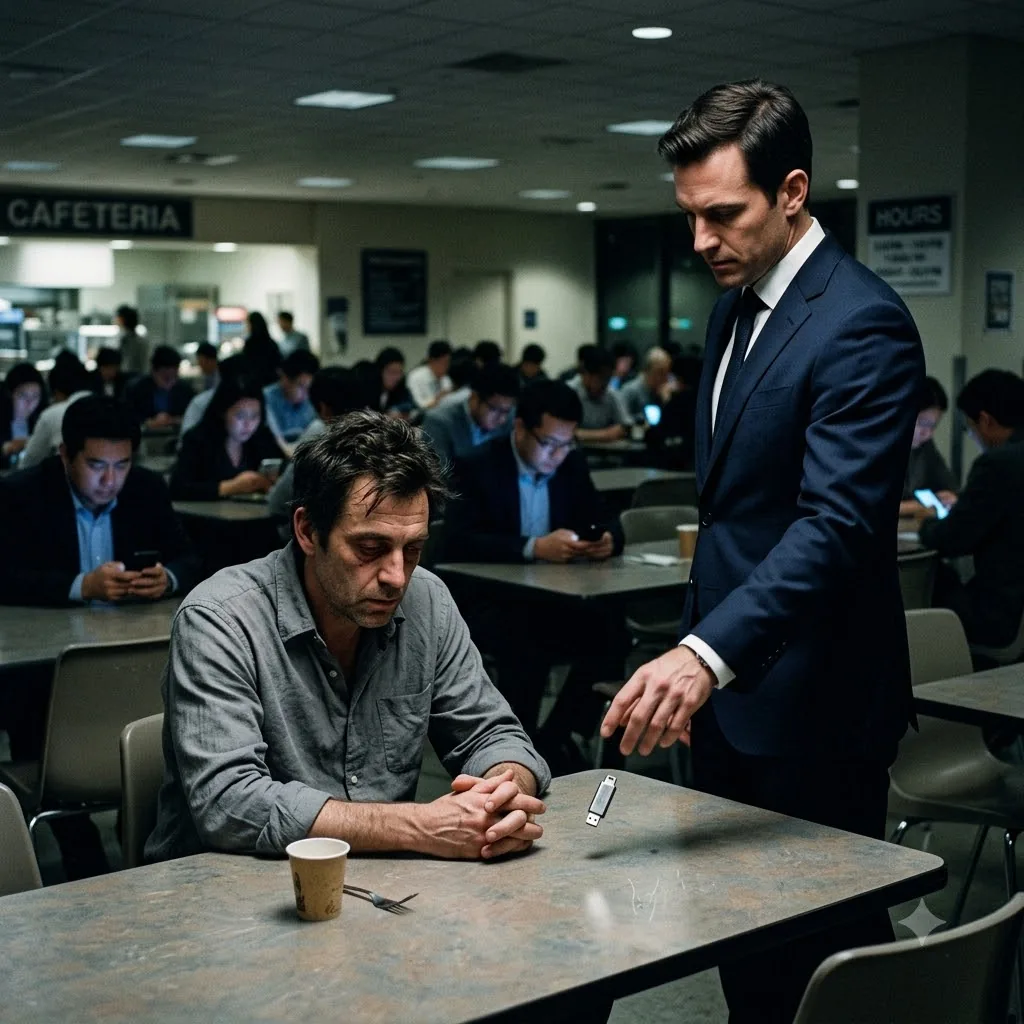
The corporate cafeteria sat in heavy, suffocating silence, illuminated only by the cold, unified glow of fifty smartphone screens. Across the expansive room, every single one of Arthur’s coworkers stared downward, trapped in a synchronized loop of the medical emergency that had just played out on this exact linoleum floor. Arthur refused to look at his own phone, choosing instead to stare at his clean, trembling hands resting on the faux-wood table.
His skin was entirely spotless. There was no smear of crimson on his knuckles, no dirt under his fingernails from scrambling across the floor, and no frantic sweat soaking into the cuffs of his button-down shirt. He had simply stood by the glass front of the vending machines and watched the entire ordeal unfold like a paralyzed bystander. He had watched the sudden, violent collapse, the desperate shouts for a medic, and the frantic, disorganized attempts of his colleagues to intervene. Now, the aftermath echoed in miniature from the fifty tiny speakers surrounding him. The cacophony of recorded gasps, the heavy thud of the fall, and the distant, arriving wail of sirens blended into a relentless, buzzing chorus of horror.
A few tables away, Marcus sat rigidly with a dark, terrifying stain ruining his pristine white dress shirt. Marcus had tried to help. Marcus had thrown himself onto the floor to perform compressions. Sarah, sitting slumped next to the broken ice machine, kept her face buried in her arms, her shoulders shaking in violent, silent spasms. Arthur could not bring himself to meet their eyes. His unbloodied hands felt like a massive, glowing sign broadcasting his ultimate cowardice to the entire floor. He laced his fingers together and pressed them hard against his kneecaps, hoping the physical pressure would stop the relentless shaking in his bones. It did not work. The guilt felt like a physical weight pressing down on his chest, making each breath shallow and jagged.
The heavy double doors of the cafeteria pushed open, breaking the unified audio loop of the tragedy. The sharp, authoritative click of leather dress shoes against the hard floor echoed through the room, demanding attention. Arthur recognized the aggressive, metronomic gait immediately. Silas, the division executive, strode into the dimly lit space. Silas did not project the shell-shocked, hollowed-out demeanor of the fifty employees scattered around the tables. He wore his usual charcoal suit, perfectly tailored and completely undisturbed. He bypassed the cordoned-off spot near the center of the room without breaking his stride or glancing down at the remnants of the medical kit left behind.
Silas headed straight for Arthur’s table in the back corner.
Arthur unclasped his hands and forced them back onto the tabletop, trying to project a steadiness he did not possess. The executive stopped at the edge of the table, looming over him. The artificial light from the nearby snacks machine cast long, distorted shadows across Silas’s sharp, angular features. Silas did not offer a word of comfort. He did not remark on the tragedy, the sudden loss, or the heavy trauma hanging thick in the air. Instead, he reached into the breast pocket of his expensive suit and withdrew a small, sleek metallic object.
He set a silver flash drive onto the table. It landed with a sharp clink that seemed deafening in the otherwise hushed cafeteria.
Arthur looked from the small drive up to the executive’s unblinking face. Silas stared down with absolute, chilling detachment. He tapped his index finger against the metal casing of the drive once, sliding it an inch closer to Arthur’s clean hands. The drive reflected the eerie bluish light of the smartphones still playing the tragedy on loop around them.
“I have already had the security team scrape the localized network and compile everything,” Silas said, his voice dropping into a low, flat murmur meant only for Arthur. “Every angle captured by every employee in this room. The high-definition security camera feeds from the ceiling are on there as well.”
Arthur stared at the drive. The edges of the metal felt impossibly sharp under the harsh overhead light. He opened his mouth to speak, to offer some expression of grief or shock, but his throat felt entirely closed off. His tongue was leaden, stuck to the roof of his mouth.
“The board wants the new predictive response AI operational by the end of the quarter, and you have been complaining about a lack of authentic, unpredictable human behavioral data,” Silas continued, straightening his dark tie with a fluid motion. “You said you needed real-time crisis reactions to map the chaotic variables of human panic.”
Arthur felt a cold sweat break across the back of his neck. He looked at the phones still glowing in the trembling hands of his traumatized coworkers, realizing exactly what those screens held. They held the last agonizing moments of a man’s life, captured in raw, unfiltered panic. The realization of what Silas was asking settled over him like a suffocating blanket.
“There are over fifty distinct angles of the incident on that drive,” Silas said, pointing a rigid finger at the silver rectangle. “Take it up to the server room and begin feeding every single video of this tragedy into your machine learning module immediately.”
The corporate cafeteria sat in heavy, suffocating silence, illuminated only by the cold, unified glow of fifty smartphone screens. Across the expansive room, every single one of Arthur’s coworkers stared downward, trapped in a synchronized loop of the medical emergency that had just played out on this exact linoleum floor. Arthur refused to look at his own phone, choosing instead to stare at his clean, trembling hands resting on the faux-wood table.
His skin was entirely spotless. There was no smear of crimson on his knuckles, no dirt under his fingernails from scrambling across the floor, and no frantic sweat soaking into the cuffs of his button-down shirt. He had simply stood by the glass front of the vending machines and watched the entire ordeal unfold like a paralyzed bystander. He had watched the sudden, violent collapse, the desperate shouts for a medic, and the frantic, disorganized attempts of his colleagues to intervene. Now, the aftermath echoed in miniature from the fifty tiny speakers surrounding him. The cacophony of recorded gasps, the heavy thud of the fall, and the distant, arriving wail of sirens blended into a relentless, buzzing chorus of horror.
A few tables away, Marcus sat rigidly with a dark, terrifying stain ruining his pristine white dress shirt. Marcus had tried to help. Marcus had thrown himself onto the floor to perform compressions. Sarah, sitting slumped next to the broken ice machine, kept her face buried in her arms, her shoulders shaking in violent, silent spasms. Arthur could not bring himself to meet their eyes. His unbloodied hands felt like a massive, glowing sign broadcasting his ultimate cowardice to the entire floor. He laced his fingers together and pressed them hard against his kneecaps, hoping the physical pressure would stop the relentless shaking in his bones. It did not work. The guilt felt like a physical weight pressing down on his chest, making each breath shallow and jagged.
The heavy double doors of the cafeteria pushed open, breaking the unified audio loop of the tragedy. The sharp, authoritative click of leather dress shoes against the hard floor echoed through the room, demanding attention. Arthur recognized the aggressive, metronomic gait immediately. Silas, the division executive, strode into the dimly lit space. Silas did not project the shell-shocked, hollowed-out demeanor of the fifty employees scattered around the tables. He wore his usual charcoal suit, perfectly tailored and completely undisturbed. He bypassed the cordoned-off spot near the center of the room without breaking his stride or glancing down at the remnants of the medical kit left behind.
Silas headed straight for Arthur’s table in the back corner.
Arthur unclasped his hands and forced them back onto the tabletop, trying to project a steadiness he did not possess. The executive stopped at the edge of the table, looming over him. The artificial light from the nearby snacks machine cast long, distorted shadows across Silas’s sharp, angular features. Silas did not offer a word of comfort. He did not remark on the tragedy, the sudden loss, or the heavy trauma hanging thick in the air. Instead, he reached into the breast pocket of his expensive suit and withdrew a small, sleek metallic object.
He set a silver flash drive onto the table. It landed with a sharp clink that seemed deafening in the otherwise hushed cafeteria.
Arthur looked from the small drive up to the executive’s unblinking face. Silas stared down with absolute, chilling detachment. He tapped his index finger against the metal casing of the drive once, sliding it an inch closer to Arthur’s clean hands. The drive reflected the eerie bluish light of the smartphones still playing the tragedy on loop around them.
“I have already had the security team scrape the localized network and compile everything,” Silas said, his voice dropping into a low, flat murmur meant only for Arthur. “Every angle captured by every employee in this room. The high-definition security camera feeds from the ceiling are on there as well.”
Arthur stared at the drive. The edges of the metal felt impossibly sharp under the harsh overhead light. He opened his mouth to speak, to offer some expression of grief or shock, but his throat felt entirely closed off. His tongue was leaden, stuck to the roof of his mouth.
“The board wants the new predictive response AI operational by the end of the quarter, and you have been complaining about a lack of authentic, unpredictable human behavioral data,” Silas continued, straightening his dark tie with a fluid motion. “You said you needed real-time crisis reactions to map the chaotic variables of human panic.”
Arthur felt a cold sweat break across the back of his neck. He looked at the phones still glowing in the trembling hands of his traumatized coworkers, realizing exactly what those screens held. They held the last agonizing moments of a man’s life, captured in raw, unfiltered panic. The realization of what Silas was asking settled over him like a suffocating blanket.
“There are over fifty distinct angles of the incident on that drive,” Silas said, pointing a rigid finger at the silver rectangle. “Take it up to the server room and begin feeding every single video of this tragedy into your machine learning module immediately.”