Story code: ST-001715
Part 1: Sixty Feet Up
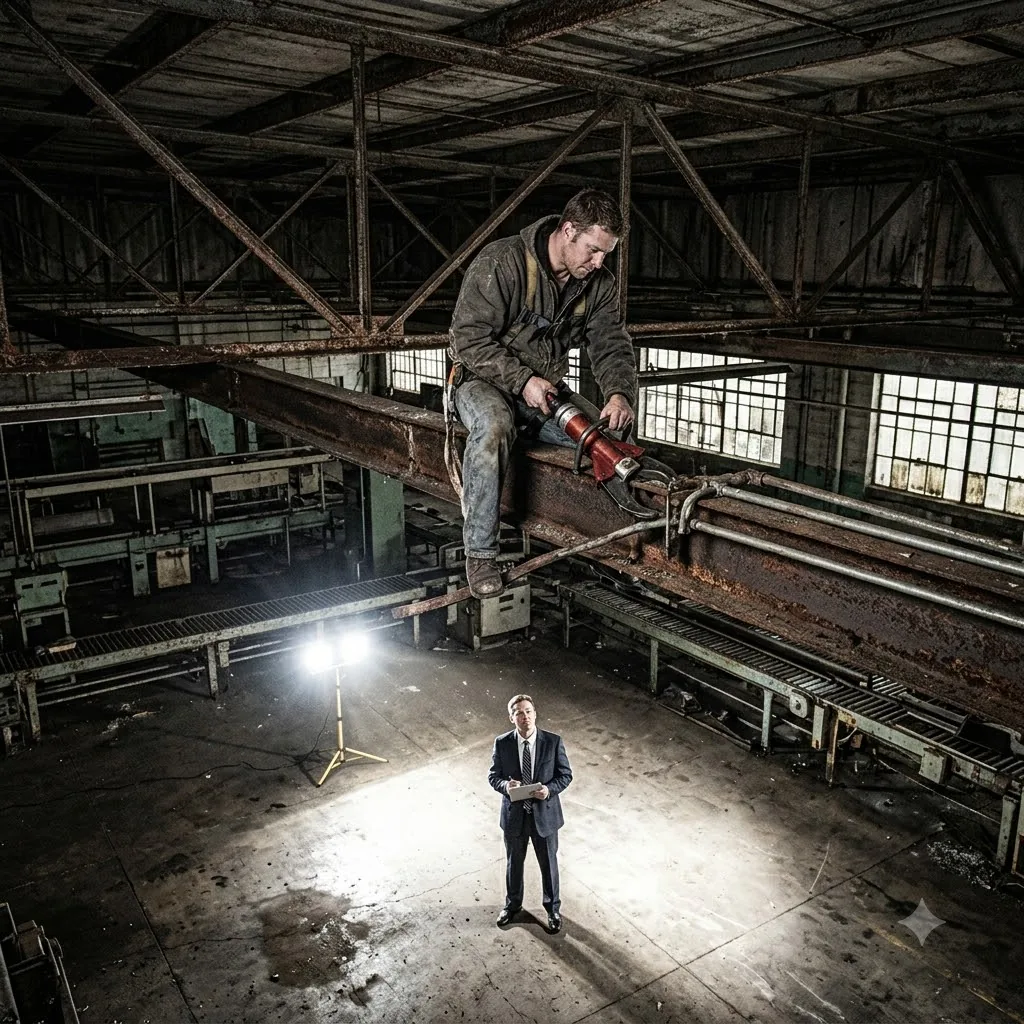
Marcus clamped his thighs around the rusted I-beam, feeling the abrasive grit of decades-old industrial dust grind into his jeans. Sixty feet below him, the sprawling concrete floor of the abandoned stamping plant was swallowed in absolute darkness. Up here in the suffocating heat of the ceiling grid, the only thing that mattered was the massive 400-amp copper main. He pumped the handles of the heavy hydraulic cutters, his forearms burning as the steel jaws bit a fraction of an inch deeper into the thick black casing of the wire. The metal groaned a dull, heavy vibration that rattled straight into his chest. Just three more pumps.
Then the cavernous space exploded into blinding white light.
Marcus froze, his hands locked in a death grip on the cutter handles. Down on the floor, banks of portable halogen floodlights had just been kicked on, casting razor-sharp shadows across the rusting husks of old assembly line tracks. A convoy of black SUVs had rolled through the loading bay doors without their headlights on, their engines a low hum that vanished when the ignitions cut out. Four men stepped out into the glare. They wore dark suits and heavy boots, their faces shielded by the blinding halogens.
They were early. The corporate liquidators were not supposed to take possession of the site until the end of the month.
Marcus held his breath, pressing his cheek against the flaking orange paint of the steel girder. The stale air pooling in the upper rafters was stifling, thick with the smell of ozone and old dust. Sweat carved cold lines through the soot on his forehead. If he released the pressure on the hydraulic cutters now, the heavy jaws would snap back with a sharp, metallic crack that would echo like a gunshot in the empty plant. He had to hold the tension. His muscles trembled under the immense strain, the fiberglass handles digging deep red grooves into his palms.
Down below, a man in a long charcoal overcoat stepped away from the vehicles. He unrolled a large architectural schematic across the hood of the lead SUV, pointing down a dark corridor that led toward the subterranean access levels. The men with him drew heavy, squared-off flashlights and something else that caught the stark light. Weapons. Matte black and compact. They were not a standard corporate demolition crew.
A sharp cramp seized Marcus’s left bicep. He gritted his teeth, shifting his weight just enough to relieve the burning in his arm without making a sound. The rusted bolt securing his section of the catwalk shifted under the new distribution of weight. It was a microscopic movement, but the metal-on-metal screech sliced through the cavernous silence of the factory.
The man in the overcoat stopped talking. He raised his head, staring directly up into the labyrinth of the ceiling grid.
Marcus did not breathe. He pressed himself flatter against the beam. The halogens cast a dizzying array of shadows, and he closed his eyes, hoping the dense network of pipes and ventilation ducts would hide his silhouette.
“Sweep the rafters,” the man in the overcoat ordered, his voice echoing off the concrete walls with flat, emotionless authority.
Four beams of intense LED light cut through the gloom, crisscrossing the steel girders. The beams illuminated decades of spider webs and rat nests, moving systematically toward Marcus’s position. The light washed over his legs, painting his scuffed boots in stark white contrast against the dark iron.
“Got him,” one of the men called out. “Grid section four, right above the main breaker.”
The flashlights converged on him, blinding him completely. Marcus squeezed the handles of his cutters one last time, locking the pressure valve so the heavy tool would not fall, and slowly raised his empty hands into the air.
“Climb down,” the man in the overcoat said. “Nice and slow.”
Marcus backed away from the copper main, his boots finding the thin metal rungs of the maintenance ladder. The descent was agonizingly slow. Every rung felt loose, the rust flaking off under his grip, sending small showers of red dust down to the floor. When his boots finally hit the solid concrete, two of the men stepped forward. They grabbed his shoulders and shoved him roughly against the side of the nearest SUV. They patted him down with practiced efficiency, tossing his utility knife, wire strippers, and pocket flashlight onto the floor.
The man in the overcoat walked over, his footsteps loud and measured in the silence. He looked at Marcus’s hands, stained pitch black with old grease and fresh copper dust.
“You know your way around up there,” the man said, gesturing to the sprawling darkness of the upper factory. “Which means you know the layout. You know where the access tunnels are.”
Marcus kept his mouth shut. He stared at the blueprint on the hood of the car, recognizing the brightly highlighted route leading down into the abandoned sublevels.
“The lower levels are a maze, and we do not have time to get lost,” the man said, stepping closer. He pulled a heavy, tactical flashlight from his coat pocket and shoved it hard into Marcus’s chest. “You are going to take us down there right now.”
Marcus grabbed the heavy metal cylinder, looking across the factory floor at the black, gaping mouth of the stairwell. He knew exactly what was waiting in the dark down there.
The man in the overcoat racked the slide of his pistol and pointed the barrel toward the descending concrete steps.
Marcus clamped his thighs around the rusted I-beam, feeling the abrasive grit of decades-old industrial dust grind into his jeans. Sixty feet below him, the sprawling concrete floor of the abandoned stamping plant was swallowed in absolute darkness. Up here in the suffocating heat of the ceiling grid, the only thing that mattered was the massive 400-amp copper main. He pumped the handles of the heavy hydraulic cutters, his forearms burning as the steel jaws bit a fraction of an inch deeper into the thick black casing of the wire. The metal groaned a dull, heavy vibration that rattled straight into his chest. Just three more pumps.
Then the cavernous space exploded into blinding white light.
Marcus froze, his hands locked in a death grip on the cutter handles. Down on the floor, banks of portable halogen floodlights had just been kicked on, casting razor-sharp shadows across the rusting husks of old assembly line tracks. A convoy of black SUVs had rolled through the loading bay doors without their headlights on, their engines a low hum that vanished when the ignitions cut out. Four men stepped out into the glare. They wore dark suits and heavy boots, their faces shielded by the blinding halogens.
They were early. The corporate liquidators were not supposed to take possession of the site until the end of the month.
Marcus held his breath, pressing his cheek against the flaking orange paint of the steel girder. The stale air pooling in the upper rafters was stifling, thick with the smell of ozone and old dust. Sweat carved cold lines through the soot on his forehead. If he released the pressure on the hydraulic cutters now, the heavy jaws would snap back with a sharp, metallic crack that would echo like a gunshot in the empty plant. He had to hold the tension. His muscles trembled under the immense strain, the fiberglass handles digging deep red grooves into his palms.
Down below, a man in a long charcoal overcoat stepped away from the vehicles. He unrolled a large architectural schematic across the hood of the lead SUV, pointing down a dark corridor that led toward the subterranean access levels. The men with him drew heavy, squared-off flashlights and something else that caught the stark light. Weapons. Matte black and compact. They were not a standard corporate demolition crew.
A sharp cramp seized Marcus’s left bicep. He gritted his teeth, shifting his weight just enough to relieve the burning in his arm without making a sound. The rusted bolt securing his section of the catwalk shifted under the new distribution of weight. It was a microscopic movement, but the metal-on-metal screech sliced through the cavernous silence of the factory.
The man in the overcoat stopped talking. He raised his head, staring directly up into the labyrinth of the ceiling grid.
Marcus did not breathe. He pressed himself flatter against the beam. The halogens cast a dizzying array of shadows, and he closed his eyes, hoping the dense network of pipes and ventilation ducts would hide his silhouette.
“Sweep the rafters,” the man in the overcoat ordered, his voice echoing off the concrete walls with flat, emotionless authority.
Four beams of intense LED light cut through the gloom, crisscrossing the steel girders. The beams illuminated decades of spider webs and rat nests, moving systematically toward Marcus’s position. The light washed over his legs, painting his scuffed boots in stark white contrast against the dark iron.
“Got him,” one of the men called out. “Grid section four, right above the main breaker.”
The flashlights converged on him, blinding him completely. Marcus squeezed the handles of his cutters one last time, locking the pressure valve so the heavy tool would not fall, and slowly raised his empty hands into the air.
“Climb down,” the man in the overcoat said. “Nice and slow.”
Marcus backed away from the copper main, his boots finding the thin metal rungs of the maintenance ladder. The descent was agonizingly slow. Every rung felt loose, the rust flaking off under his grip, sending small showers of red dust down to the floor. When his boots finally hit the solid concrete, two of the men stepped forward. They grabbed his shoulders and shoved him roughly against the side of the nearest SUV. They patted him down with practiced efficiency, tossing his utility knife, wire strippers, and pocket flashlight onto the floor.
The man in the overcoat walked over, his footsteps loud and measured in the silence. He looked at Marcus’s hands, stained pitch black with old grease and fresh copper dust.
“You know your way around up there,” the man said, gesturing to the sprawling darkness of the upper factory. “Which means you know the layout. You know where the access tunnels are.”
Marcus kept his mouth shut. He stared at the blueprint on the hood of the car, recognizing the brightly highlighted route leading down into the abandoned sublevels.
“The lower levels are a maze, and we do not have time to get lost,” the man said, stepping closer. He pulled a heavy, tactical flashlight from his coat pocket and shoved it hard into Marcus’s chest. “You are going to take us down there right now.”
Marcus grabbed the heavy metal cylinder, looking across the factory floor at the black, gaping mouth of the stairwell. He knew exactly what was waiting in the dark down there.
The man in the overcoat racked the slide of his pistol and pointed the barrel toward the descending concrete steps.