Story code: ST-001809
Part 1: Behind the Counter
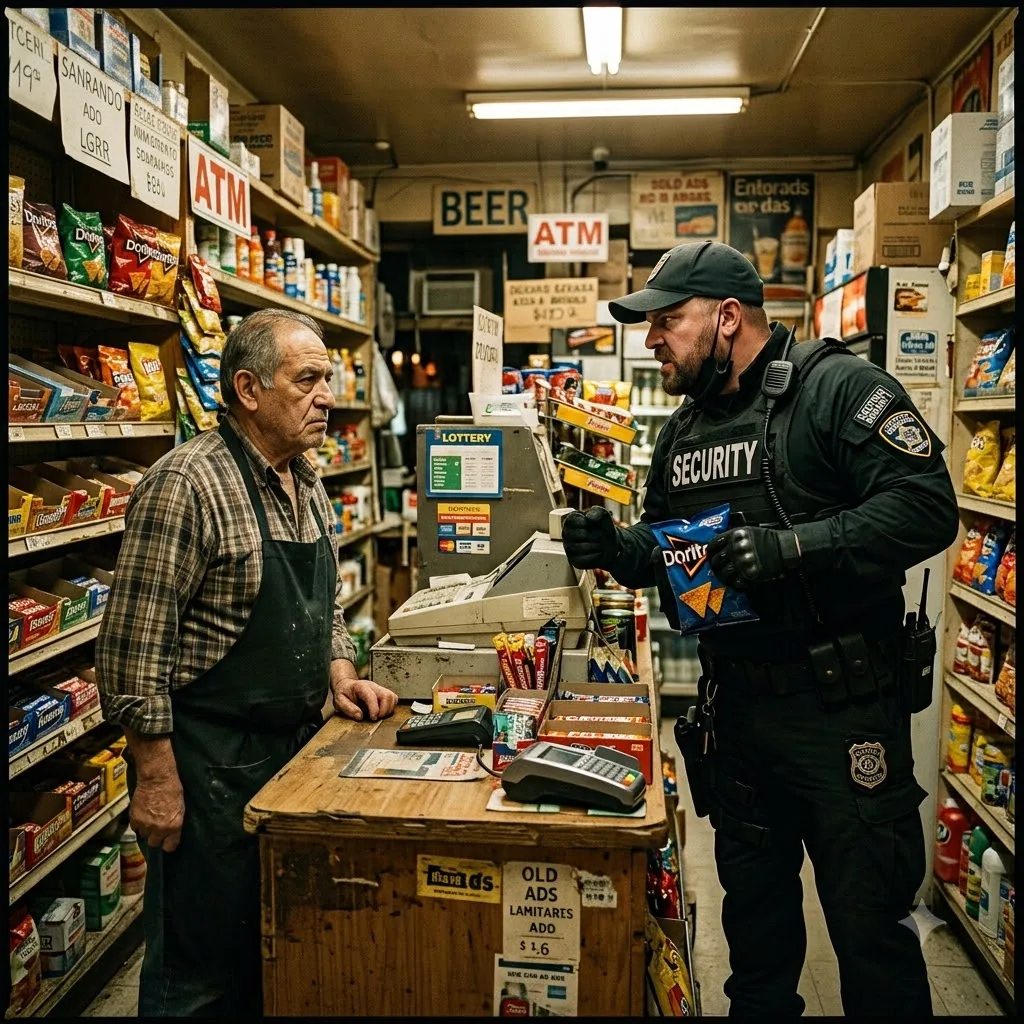
The crunch of the plantain chip sounded like a snapped bone in the dead quiet of the bodega. The man in the black tactical vest leaned back against the cigarette display, his heavy boots planted squarely on the faded anti-fatigue mats Manny washed every Sunday morning. He chewed with his mouth open, holding the torn yellow bag with one massive, gloved hand while his other hand rested casually on the butt of a holstered sidearm.
Manny did not look at the gun. He kept his eyes locked on the man’s jaw, watching the slow, rhythmic grinding of his teeth. The space behind the counter was barely wide enough for two people to pass shoulder-to-shoulder, a tight corridor meant only for Manny and the people he trusted. Right now, it belonged entirely to the intruder. The guard’s sheer bulk blocked the narrow exit path by the scratch-off ticket dispenser. There was no way around him.
Manny’s right hand rested out of sight, tucked under the lip of the main cash register. The metal of the cash drawer felt cold against his knuckles. Just inches lower, hidden behind a stack of receipt paper and bolted to the secondary wooden shelf, was the heavy steel of his father’s old revolver. The wooden grip was worn smooth from three decades of close calls and late shifts in a neighborhood that used to bite back. Manny traced the bottom edge of the register with his thumb, forcing his breathing to remain shallow and even.
The guard reached into the crinkled bag and pulled out another chip. He inspected it under the flickering fluorescent light overhead. The neon glow of the beer signs in the window cast a sickly, distorted color over his buzzed scalp and thick neck. He wore no name tag. The only identification on him was a sleek corporate logo stitched onto the chest of his vest-a silver geometric shape resembling a hawk-identifying him as part of the private security firm currently patrolling the massive new high-rise construction site down the block.
“Good crunch,” the guard stated. His voice was flat and hollow, devoid of any real interest. He let the bag drop onto the counter next to a display of disposable lighters. A dusting of salt and grease smeared the pristine glass top Manny had polished an hour ago. “Shame about the neighborhood, though. Lot of dust out there. Lot of noise from the heavy machinery. Not a great place to run a retail business these days.”
Manny said nothing. He pressed his left hand flat onto the countertop, anchoring himself, keeping his right hand completely hidden below. The silence stretched out in the small shop, filled only by the low, vibrating hum of the old refrigeration units holding the sodas and imported beers. This bodega had been his family’s anchor since his parents arrived in the city. His father had built these exact shelves by hand. His mother had laid the cracked linoleum floor. Now, a man hired by a faceless holding company was treating their sanctuary like a dirty waiting room.
The guard shifted his weight, moving closer to the register. The stiff leather of his holster creaked under the strain. He reached out and idly tapped a thick, calloused finger against the plexiglass barrier suspended from the ceiling.
“You got a final notice on Tuesday from the zoning board,” the guard said, dragging his fingernail down the plastic.
Manny felt the muscles in his forearm tighten like coiled wire. He knew exactly what notice the man meant. The paperwork claimed the western wall of the bodega encroached three inches onto the new luxury development’s property line. It was an utter fabrication. It was a legal chokehold designed to bleed him dry in court fees until he had no choice but to sell the lot for a fraction of its worth.
“I gave the paperwork to my lawyer,” Manny said. His voice came out deeper and steadier than he felt.
The guard chuckled, a dry and ugly sound that barely parted his lips. He brushed a crumb from his tactical vest, letting it fall onto Manny’s shoes. “Your lawyer. Right. A guy working out of a crumbling strip mall is going to fight a seventy-million-dollar development firm.”
The guard leaned closer, deliberately invading Manny’s personal space. He smelled heavily of spearmint chewing gum, stale sweat, and gun oil. “They sent me over here to do a physical survey of the boundary line. Make sure everything is in order.”
Without breaking eye contact, the guard reached over and grabbed a green apple from the wire basket next to the register. He did not ask. He did not offer cash. He took a massive bite, the loud snap echoing in the small space, and chewed slowly. A drop of juice ran down his chin. He wiped it away with the back of his reinforced tactical glove.
“My survey says this wall needs to come down,” the guard said, his voice dropping to a low rumble. “Today. Or we come back tomorrow with a crew and cite you for creating a structural hazard.”
Manny’s right hand slipped half an inch lower under the register. His index finger brushed the cold metal trigger guard of the revolver. A single shot would end the immediate threat standing in his domain. It would also end his life as a free man, permanently erase his family’s legacy, and hand the coveted property directly over to the developers the moment he was dragged away in a squad car. The corporate logic was perfectly clear. They wanted him to snap. They wanted an excuse to take the building by force.
But the primal, surging need to defend his space from this predator was growing louder than reason.
The guard tossed the half-eaten apple onto the floor behind the counter. It rolled into the corner, coming to rest against a stack of cardboard boxes. The guard took a heavy step forward, closing the final two feet between them, his hand moving deliberately toward the heavy steel baton resting on his tactical belt.
“Time to close up shop, old man,” the guard said, reaching out to grab Manny by the collar of his shirt.
Manny wrapped his fingers around the grip of the revolver and pulled it free from the hidden shelf.
The crunch of the plantain chip sounded like a snapped bone in the dead quiet of the bodega. The man in the black tactical vest leaned back against the cigarette display, his heavy boots planted squarely on the faded anti-fatigue mats Manny washed every Sunday morning. He chewed with his mouth open, holding the torn yellow bag with one massive, gloved hand while his other hand rested casually on the butt of a holstered sidearm.
Manny did not look at the gun. He kept his eyes locked on the man’s jaw, watching the slow, rhythmic grinding of his teeth. The space behind the counter was barely wide enough for two people to pass shoulder-to-shoulder, a tight corridor meant only for Manny and the people he trusted. Right now, it belonged entirely to the intruder. The guard’s sheer bulk blocked the narrow exit path by the scratch-off ticket dispenser. There was no way around him.
Manny’s right hand rested out of sight, tucked under the lip of the main cash register. The metal of the cash drawer felt cold against his knuckles. Just inches lower, hidden behind a stack of receipt paper and bolted to the secondary wooden shelf, was the heavy steel of his father’s old revolver. The wooden grip was worn smooth from three decades of close calls and late shifts in a neighborhood that used to bite back. Manny traced the bottom edge of the register with his thumb, forcing his breathing to remain shallow and even.
The guard reached into the crinkled bag and pulled out another chip. He inspected it under the flickering fluorescent light overhead. The neon glow of the beer signs in the window cast a sickly, distorted color over his buzzed scalp and thick neck. He wore no name tag. The only identification on him was a sleek corporate logo stitched onto the chest of his vest-a silver geometric shape resembling a hawk-identifying him as part of the private security firm currently patrolling the massive new high-rise construction site down the block.
“Good crunch,” the guard stated. His voice was flat and hollow, devoid of any real interest. He let the bag drop onto the counter next to a display of disposable lighters. A dusting of salt and grease smeared the pristine glass top Manny had polished an hour ago. “Shame about the neighborhood, though. Lot of dust out there. Lot of noise from the heavy machinery. Not a great place to run a retail business these days.”
Manny said nothing. He pressed his left hand flat onto the countertop, anchoring himself, keeping his right hand completely hidden below. The silence stretched out in the small shop, filled only by the low, vibrating hum of the old refrigeration units holding the sodas and imported beers. This bodega had been his family’s anchor since his parents arrived in the city. His father had built these exact shelves by hand. His mother had laid the cracked linoleum floor. Now, a man hired by a faceless holding company was treating their sanctuary like a dirty waiting room.
The guard shifted his weight, moving closer to the register. The stiff leather of his holster creaked under the strain. He reached out and idly tapped a thick, calloused finger against the plexiglass barrier suspended from the ceiling.
“You got a final notice on Tuesday from the zoning board,” the guard said, dragging his fingernail down the plastic.
Manny felt the muscles in his forearm tighten like coiled wire. He knew exactly what notice the man meant. The paperwork claimed the western wall of the bodega encroached three inches onto the new luxury development’s property line. It was an utter fabrication. It was a legal chokehold designed to bleed him dry in court fees until he had no choice but to sell the lot for a fraction of its worth.
“I gave the paperwork to my lawyer,” Manny said. His voice came out deeper and steadier than he felt.
The guard chuckled, a dry and ugly sound that barely parted his lips. He brushed a crumb from his tactical vest, letting it fall onto Manny’s shoes. “Your lawyer. Right. A guy working out of a crumbling strip mall is going to fight a seventy-million-dollar development firm.”
The guard leaned closer, deliberately invading Manny’s personal space. He smelled heavily of spearmint chewing gum, stale sweat, and gun oil. “They sent me over here to do a physical survey of the boundary line. Make sure everything is in order.”
Without breaking eye contact, the guard reached over and grabbed a green apple from the wire basket next to the register. He did not ask. He did not offer cash. He took a massive bite, the loud snap echoing in the small space, and chewed slowly. A drop of juice ran down his chin. He wiped it away with the back of his reinforced tactical glove.
“My survey says this wall needs to come down,” the guard said, his voice dropping to a low rumble. “Today. Or we come back tomorrow with a crew and cite you for creating a structural hazard.”
Manny’s right hand slipped half an inch lower under the register. His index finger brushed the cold metal trigger guard of the revolver. A single shot would end the immediate threat standing in his domain. It would also end his life as a free man, permanently erase his family’s legacy, and hand the coveted property directly over to the developers the moment he was dragged away in a squad car. The corporate logic was perfectly clear. They wanted him to snap. They wanted an excuse to take the building by force.
But the primal, surging need to defend his space from this predator was growing louder than reason.
The guard tossed the half-eaten apple onto the floor behind the counter. It rolled into the corner, coming to rest against a stack of cardboard boxes. The guard took a heavy step forward, closing the final two feet between them, his hand moving deliberately toward the heavy steel baton resting on his tactical belt.
“Time to close up shop, old man,” the guard said, reaching out to grab Manny by the collar of his shirt.
Manny wrapped his fingers around the grip of the revolver and pulled it free from the hidden shelf.