Story code: ST-001810
Part 3: The 1978 Plat
The heavy pounding shook the doorframe, rattling the deadbolt in its housing. Walt stood in the dim heat of the garage, his hand hovering over the heavy iron phase-converter resting on his workbench.
“Walter! I have a county deputy with me!” Richard’s voice was muffled by the solid core door, but the smug authority in it was unmistakable. “The locks are disabled. Do not make this difficult.”
Walt slowly lowered his hand. The phase-converter would have been deeply satisfying. Sending a massive electrical surge backward through the ground wire would have melted Richard’s surveillance grid into useless slag. But it wouldn’t stop a deputy, and it wouldn’t nullify a fraudulent lien. Walt wiped the axle grease from his hands with a red shop rag. He didn’t need a surge of electricity to destroy Richard Vance. He just needed the original paperwork.
Walt limped past the workbench, ignoring the throbbing ache in his damaged knees, and moved to the back corner of the garage. Tucked behind a stack of empty plastic five-gallon buckets was a dented, fireproof lockbox. He spun the mechanical dial-*32-10-44*-and pulled the heavy lid open. Bypassing his expired union card and his empty pension statements, he withdrew a thick, yellowed cardboard tube sealed with brittle wax.
The pounding at the front door escalated to a steady, rhythmic thumping.
Walt walked down the short hallway to the foyer. He unlatched the deadbolt and pulled the door open.
The blinding afternoon sun washed over the porch. Richard stood on the welcome mat, his white shoes gleaming. He held his silver clipboard against his chest like a shield. Beside him stood a young county sheriff’s deputy, sweating profusely in his dark uniform, his hand resting casually on his utility belt. Out on the lawn, the two surveyors were hammering another neon pink stake into Walt’s grass.
“It’s over, Walter,” Richard said, his lips pulling back into a tight, bloodless smile. “Your property is in severe delinquency. The HOA has executed an emergency lien, and the bank has approved the immediate transfer of the deed to Vance Equities to cover the debt. You are officially trespassing.”
The deputy shifted uncomfortably, pulling a folded legal document from his breast pocket. “Mr. Miller, I have a notice to vacate. You have twenty minutes to collect your personal effects. If you resist, I’ll have to remove you from the premises.”
Walt looked at the deputy. The kid was young, probably five years out of the academy, and clearly unaware that he was being used as a private enforcer for a corporate raider.
“I’m not resisting, Officer,” Walt said, his voice a low, steady gravel. “But you’re enforcing a lien based on a breach of residential bylaws. Is that correct?”
“The HOA covenants are legally binding,” Richard interrupted, stepping forward to block the deputy’s line of sight. “You owe twenty thousand dollars in fines and expedited legal fees for non-compliance, unauthorized mechanical work, and environmental hazards. The lien is ironclad.”
Walt ignored Richard completely. He looked squarely at the deputy and unscrewed the metal cap of the cardboard tube. “A Homeowners Association can only fine a property, and place a lien against a property, if that property is zoned residential and subject to their master deed.”
Walt pulled out a thick sheet of heavy drafting paper. It was brittle at the edges, smelling of ammonia and old filing cabinets. He unrolled it flat against the exterior brick wall of his house, holding the top corners so the deputy could see it.
It was a county plat map, dated October 14, 1978. The county surveyor’s seal was stamped in the bottom right corner, faded but perfectly legible.
“This subdivision was incorporated in 1998,” Walt said, tracing a thick blue line on the map that outlined his exact lot. “The developers bought up the old farmland, but they couldn’t buy this acre. I purchased it directly from the regional manufacturing plant twenty years before Richard’s shell company even existed.”
The deputy leaned in, squinting at the faded blue ink.
“Notice the county zoning designation,” Walt said, tapping his calloused finger against the center of his lot.
The deputy read it aloud. “Parcel 42. Active Industrial Salvage Zone.”
Richard’s confident posture faltered. He lowered the silver clipboard, blinking rapidly behind his wire-rimmed glasses. “That’s a clerical error. You live in a house. This is a residential neighborhood.”
“I live in a residential structure built on an industrial salvage yard,” Walt corrected, his eyes locking onto Richard. “The zoning was never changed. It’s grandfathered in perpetuity under the 1974 County Development Act. I checked with the zoning board before I poured the foundation.”
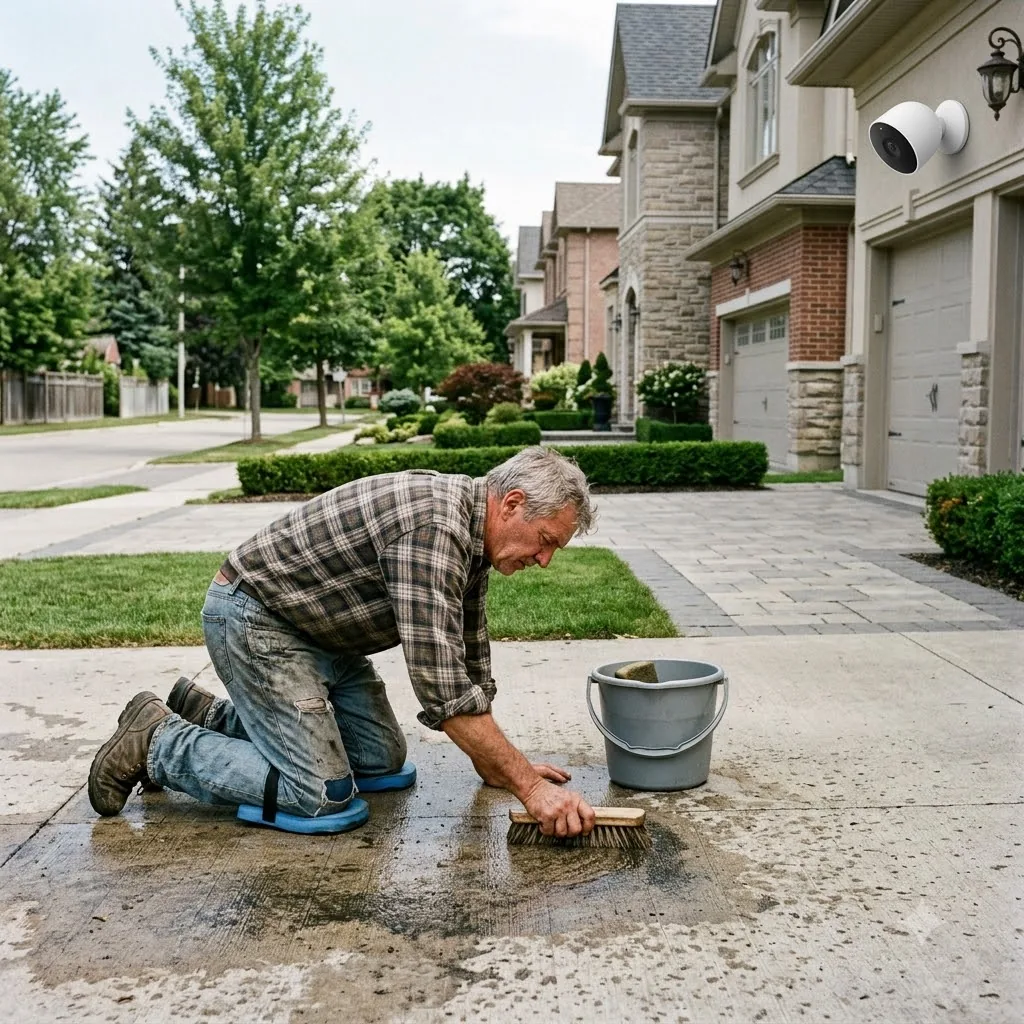
Walt turned back to the deputy. “Which means the Homeowners Association has absolutely zero legal jurisdiction over this soil. None of their residential bylaws apply here. I can legally park a bulldozer in my living room. I can store fifty tons of scrap iron on the driveway. And that invisible oil stain he fined me for? It’s a legally protected byproduct of industrial salvage.”
Richard’s face drained of color. He snatched at the map, but Walt pulled it back, rolling it smoothly to his chest.
“Wait,” the deputy said, holding up a hand. He turned to look at Richard. “Is this true? Did you file a residential lien on an industrial property?”
“He’s bluffing!” Richard barked, though his voice had gone shrill, the polished veneer cracking completely. “The HOA charter explicitly covers all lots within the physical boundary lines!”
“A private charter cannot overwrite county zoning laws,” Walt said smoothly. “If you filed a lien against my home claiming residential covenant violations on an industrial parcel, you just committed federal real estate fraud. And you used a uniformed officer of the law to execute a fraudulent eviction.”
The deputy’s eyes widened. He took a slow, deliberate step away from Richard, his hand dropping away from his belt. He looked down at the eviction notice in his hand as if it were suddenly coated in battery acid.
“Officer,” Richard stammered, pointing a trembling finger at Walt. “I demand you remove him. I am the HOA President!”
“You’re a trespasser,” Walt said, his voice dropping an octave. “On an active industrial site.”
The deputy looked at the surveyors hammering stakes into the lawn, then at Richard’s panic-stricken face. He carefully folded the eviction notice and slid it back into his pocket, leaving Richard standing completely exposed in the blinding afternoon sun.