Story code: ST-001813
Part 4: The Final Evaluation
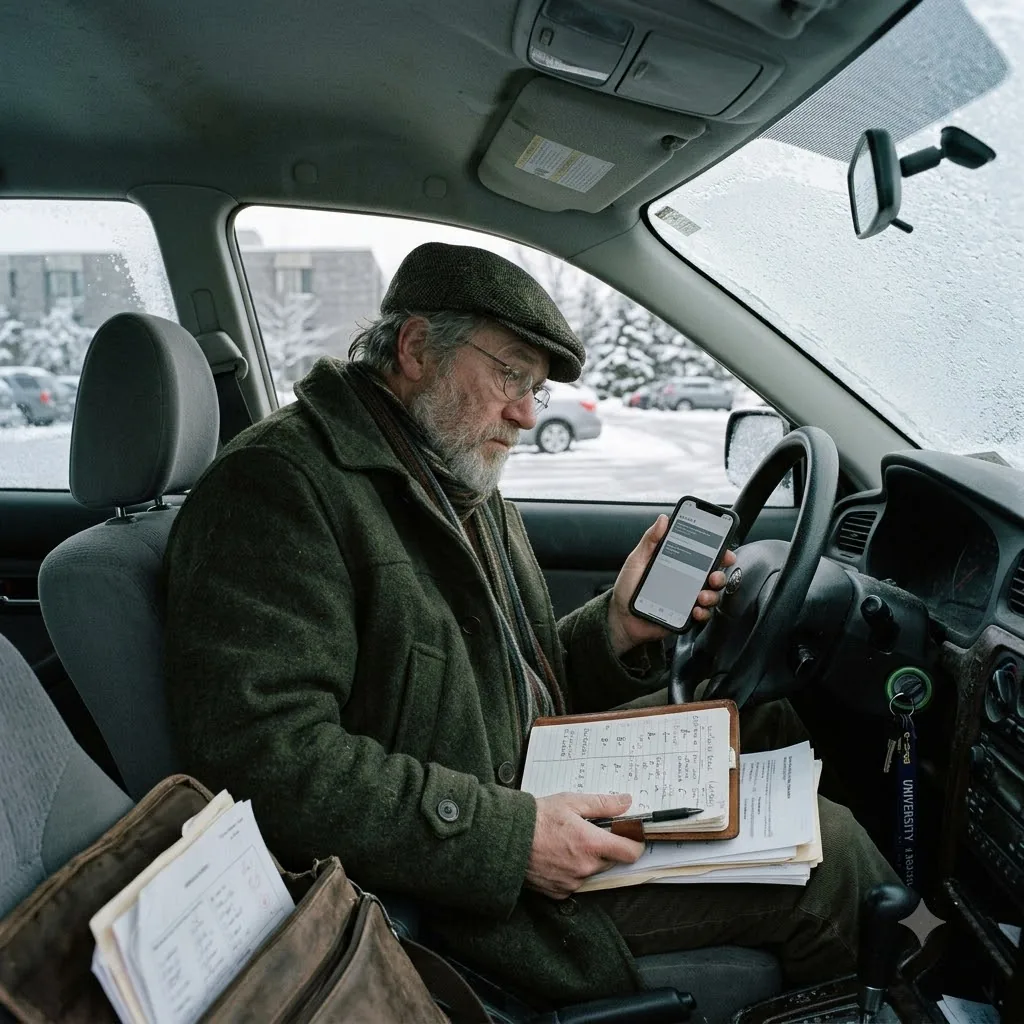
Arthur pressed the red square on his screen. The timecode stopped at four minutes and twelve seconds. He saved the audio file, the digital click echoing softly in the freezing cabin of the Subaru.
Silence returned, heavier than before, settling over the dashboard like frost. He stared through the windshield. The neon green tow sticker obscured his view of the administration building, turning the ivy-covered brick into a blurry, toxic smear. Chloe had hung up. There would be no further negotiations, no more weaponized pretense of holding space.
A new notification chimed. An email from the Office of Student Success and Wellbeing, marked with high importance. Arthur opened it.
*Dear Arthur, Effective immediately, the University is initiating an involuntary medical separation to support your urgent need for emotional regulation and housing security. As you have declined our care-transition partnership, your campus access is hereby revoked.*
He was officially terminated under the guise of failing health. They had formalized the lie.
Arthur looked at the audio file saved on his home screen. He could send it to the local news. He could hire a contingency lawyer and drag Dr. Vance and Chloe through a grueling, years-long wrongful termination lawsuit. But doing so would require engaging with the very machinery that had just crushed him. It would mean sitting in more eucalyptus-scented rooms, listening to more corporate double-speak, fighting to reclaim a position in a system that viewed his poverty as a disease and a rich student’s failure as a financial liability.
He felt a sudden, crushing exhaustion, followed immediately by an intense, surprising lightness. He didn’t want the job back. He didn’t want to step foot on that manicured quad ever again.
He opened a blank email, attached the audio file, and addressed it to the chair of the Regional Academic Accreditation Committee, carbon-copying the faculty union representative. In the subject line, he typed: *Documentation of Grade Tampering and Donor Retaliation.*
He hit send. He didn’t wait to see if it delivered. He tossed the phone onto the passenger seat, right next to the plastic bin holding his battered dictionary and his ceramic coffee mug.
Arthur turned the key in the ignition. The Subaru’s engine whined, protesting the morning cold, before sputtering to life with a familiar, rattling hum. He put the car in drive and pulled out of the commuter lot. He didn’t look in the rearview mirror as he passed the wrought-iron campus gates. He drove past the affluent coffee shops, the newly constructed biomedical wing funded by Tyler’s father, and the boutique fitness centers, heading straight for the county line.
An hour later, Arthur parked at a state reserve overlook. The gravel lot was empty, surrounded by towering, snow-dusted pines that offered no judgment. There were no parking enforcement vehicles here. There were no wellness administrators. The winter sun hung low in the pale sky, casting long, quiet shadows across the frozen ground.
Arthur turned off the engine to save gas. The cold began to creep back in through the floorboards, but for the first time in three years, he didn’t feel the panicked, tightening dread of being discovered. He was already at the bottom. There was nowhere left for them to push him. He was completely, irrevocably free of their hypocrisy.
He climbed over the center console, maneuvering his stiff, aching legs into the back of the wagon. He unrolled his heavy sleeping bag, wrapping it tightly around his shoulders. From his leather satchel, he withdrew the stack of freshman literature essays. They hadn’t been in the plastic bin; they had been safely tucked inside his bag the entire time.
He dug around in the front pocket and found his red pen.
Arthur rested the first essay on his knees. It was a paper on *The Grapes of Wrath*, written by a quiet, earnest first-generation student who sat in the front row and worked the night shift at a local diner. He uncapped his pen.
The silence of the pine forest was absolute. No diffusers, no ergonomic chairs, no toxic empathy. Just a teacher, a text, and the sincere pursuit of understanding.
Arthur drew a careful, steady line under a run-on sentence. In the margin, he wrote a detailed, thoughtful note about paragraph structure, his handwriting as neat and deliberate as it had been on his very first day in a classroom thirty years ago. He turned the page, finding a cold, quiet peace in the work they couldn’t take away.