Story code: ST-001835
Part 4: The Bleachers
Through the glass partition, the teenager’s pale, detached eyes swept across the darkened fitness center. He stared directly at the sprawling, chaotic shadow of the fallen metal rack and the scattered medicine balls.
Beneath Maria’s bleeding hand, Eleanor’s skin had turned to ice. The wealthy woman was no longer thrashing. She wasn’t even breathing. The overwhelming, suffocating reality of the rifle and the dragging steel door had instantly shattered the immaculate architecture of her worldview. She was locked in a primal, animal paralysis-the kind of absolute terror that predated association fees, luxury penthouses, and twenty-four-hour private security teams.
For ten agonizing seconds, the boy stood perfectly still in the harsh yellow light of the promenade. He squinted into the gloom of the gym, adjusting the tactical strap on his narrow shoulder. Maria tightened her grip on Eleanor’s jaw, ignoring the warm trickle of blood running down her own wrist from where the acrylic nails had gouged her. She kept her breathing painfully shallow, her eyes fixed on the boy’s twitching finger resting just outside the trigger guard.
Then, the boy sniffed loudly. He wiped his nose with the back of his hand, turned away from the glass, and continued down the corridor. The heavy industrial chain clanked against the marble. The terrible, grinding scrape of the steel door resumed, echoing through the luxury corridors until it was finally swallowed by the cavernous acoustics of the tower’s east wing.
Maria didn’t move. She kept Eleanor pinned to the rubberized gym matting long after the scraping faded. They stayed in the suffocating silence of the dark fitness center for what felt like hours. When the real tactical boots finally pounded through the hallways-a deafening chorus of shattered glass, heavy armor, and precise, booming commands-Eleanor flinched violently against the floor. But she didn’t call out for her lawyers. She didn’t demand the head of security. She simply pulled her knees to her chest and curled into a tight, trembling ball among the heavy leather medicine balls.
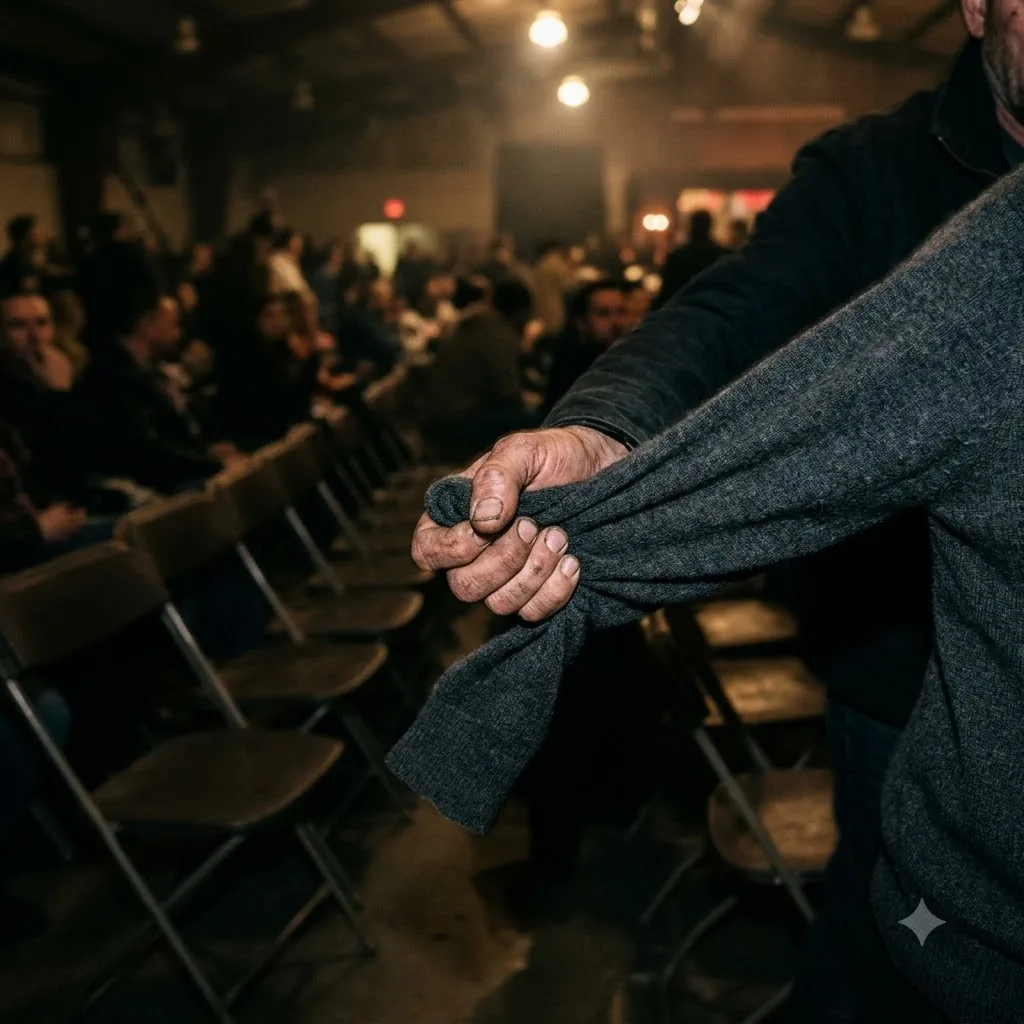
The evacuation center was a public high school gymnasium three blocks away, entirely bathed in the harsh, buzzing glow of overhead mercury-vapor lights.
Maria sat on the lowest tier of the wooden bleachers, pressing a plastic bag of melting ice against her left side. Every inhalation sent a sharp, radiating spike of agony through her ribcage. The brutal impact of tackling Eleanor into the steel rack had done exactly what she expected it to do. It was going to be a long, painful time before she could comfortably swing an industrial floor buffer again.
Ten feet away on the same wooden bench sat Eleanor Vance.
A frazzled police officer had draped a crinkling foil emergency blanket over her shoulders, but it sat awkwardly atop her ruined cashmere coat. The expensive fabric was smeared with white gym chalk, sour sweat, and Maria’s dried blood. Eleanor’s perfectly contoured makeup was destroyed, leaving her face pale, hollow, and visibly older.
Her smartphone, finally restored to full cellular service, sat completely ignored on the bench beside her. She wasn’t frantically dialing her husband. She wasn’t typing out furious, litigious emails to the condominium board. She was simply staring at the scuffed, varnished hardwood floor of the basketball court.
Maria watched her, waiting for the inevitable pivot. She had worked around these people long enough to know the cycle. She expected the defensive rationalization to kick in. She braced herself for the quiet, condescending offer of financial compensation-a desperate attempt to buy back the dignity she had lost on the floor of the supply closet.
But Eleanor did none of that.
When a county victim advocate approached her with a clipboard and a gentle voice, Eleanor just shook her head tightly, pulling the silver foil higher around her neck. For a brief, agonizing second, Eleanor shifted her gaze and caught Maria looking at her.
There was absolutely no gratitude in the wealthy woman’s eyes. There was no silent thank you, no grand acknowledgment of the life that had just been saved. Instead, there was only a profound, suffocating shame. To look at Maria was to look at the exact moment the invincible bubble of her life had popped. Maria wasn’t a savior to her; Maria was the sole witness to her utter, humiliating irrelevance in the face of the real world.
Eleanor couldn’t bear the weight of it. She quickly looked away, her jaw clamped tight, staring rigidly back down at the floorboards, refusing to speak.
Maria let out a slow, painful breath and lowered the ice pack. She didn’t feel vindicated. She didn’t feel like a hero. She just felt deeply, heavily exhausted.
She stood up, biting the inside of her cheek as her bruised ribs screamed in protest at the movement. She didn’t walk over to Eleanor. She didn’t say goodbye. She simply turned her back on the rows of shell-shocked millionaires shivering on the bleachers, pushed through the heavy double doors of the gymnasium, and stepped out into the bitter wind of the city.
It was past two in the morning. The air was freezing, biting through her thin work jacket in seconds. The express trains were no longer running this late, which meant her journey home would require three separate transfers and a grueling three-hour commute on the late-night local buses just to get back to her side of the river. Maria zipped her jacket up to her chin, fell into step with the few other stranded essential workers heading for the distant transit stop, and began the long, limping walk into the dark.