Story code: ST-001847
Part 3: The Acceptable Casualty
The man’s uninsulated fingers were an inch from the exposed copper.
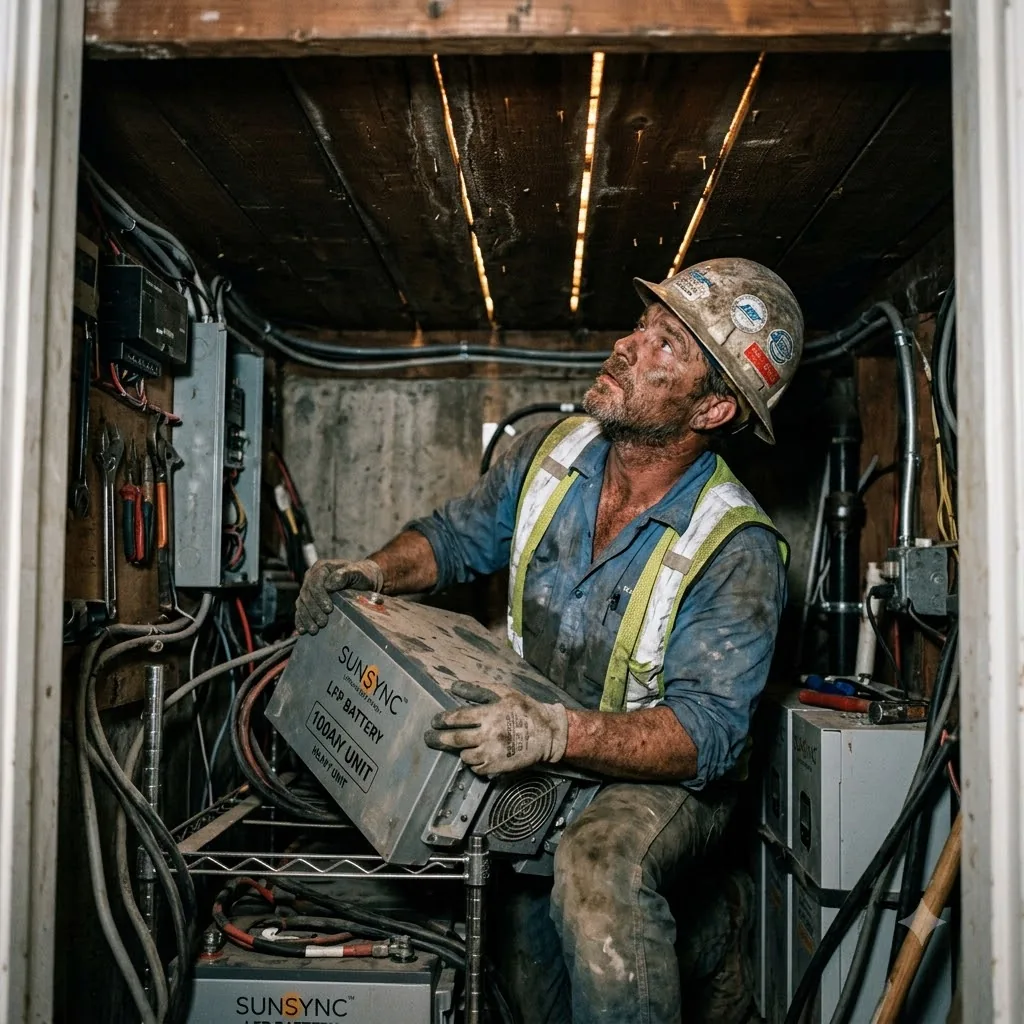
Wade didn’t shout. A shout would startle the man, and a sudden flinch in the cramped space could send his hand directly into the live six-hundred-volt trap. Instead, Wade acted with brutal, mechanical efficiency. He lunged out from the claustrophobic shadows behind the massive water heater, his heavy lineman’s pliers gripped tightly in his right fist. He didn’t swing at the man. He swung past him, driving the heavy steel head of the pliers directly into the faceplate of the newly mounted solar inverter.
The impact was deafening in the tiny closet. The reinforced plastic casing cracked, and the fragile, highly engineered glass cooling core inside shattered with a sharp, concussive pop.
The homeowner yelped, instinctively recoiling from the spray of harmless silica shards. He stumbled backward out of the condensation puddle, his heavy hunting boots slipping on the slick concrete. He slammed hard into the climate-controlled wine fridge, dropping his cell phone. It skittered across the floor, the screen cracking against the uneven dirt.
For a moment, the only sound was the frantic, shallow gasps of the homeowner and the sickening hiss of proprietary coolant leaking from the destroyed inverter casing.
“What the hell is wrong with you?” the man roared, his face flushing a deep, dangerous crimson as he recovered his balance. He stared at the shattered machinery, then at Wade, his expression twisting into absolute disgust. “You stupid, incompetent son of a bitch. Do you have any idea what that hardware costs? I’ll have your practicum revoked! I’ll have you thrown in a cell for vandalism!”
Wade didn’t flinch. He stood perfectly still under the harsh, swinging glare of the forty-watt bulb, the heavy pliers still resting in his gloved hand. He looked at the man’s face. Without the shadows, without the distortion of the louvered door, the features clicked into place. It wasn’t just a generic executive. Wade recognized the silver hair, the aggressively tailored jawline, and the distinct, stylized falcon lapel pin on the tuxedo jacket.
It was Richard Sterling.
He was the out-of-state lobbyist who had drafted the aggressive privatization bill. Sterling was the man who had stood on the Capitol steps, flashing that exact same smug smile, and declared the shutdown of the Blackridge Coal Mine an “acceptable, necessary casualty for a greener tomorrow.” He had orchestrated the destruction of Wade’s entire community, plunging thousands into poverty, just to secure federal tax credits for his own shell companies.
“You’re Sterling,” Wade said, his voice flat, completely devoid of the deference required by his state mandate.
“And you’re finished,” Sterling spat, violently brushing a shard of glass off his tuxedo sleeve. “You people are all the same. Lazy. Destructive. You think because you lost your dirty little jobs, you can come into my home and throw a tantrum? I’m calling the practicum board right now. You’ll never earn a dime in this state again.”
Wade looked at the ruined inverter. Six months of unpaid, backbreaking labor. The electronic punch-card he needed to legally feed his family, gone. He had broken the cardinal rule. He had sacrificed his only way out.
He walked forward. Sterling took a sudden, nervous step back, pressing against the wine fridge, but Wade ignored him. He reached his thick, insulated canvas gloves directly into the shattered casing of the inverter. With a sharp twist, he snapped the mounting brackets and pulled the heavy, leaking core free from the wall.
“Where do you think you’re going?” Sterling demanded, his voice cracking slightly as Wade turned and marched toward the closet door.
Wade didn’t answer. He carried the shattered metal and glass like a severed head, pushing past the louvered door and striding toward the basement stairs.
“Stop right there!” Sterling yelled, scrambling after him.
Wade climbed the wooden treads, his steel-toed boots striking the wood with heavy, uncompromising purpose. He reached the top of the stairs and kicked the basement door open. He stepped into a sprawling, brilliantly lit kitchen. A team of hired caterers froze, trays of delicate hors d’oeuvres suspended in mid-air as a massive, grease-covered man in a sweat-soaked canvas shirt marched past them, dripping coolant onto the pristine white marble floors.
The rhythmic, upbeat tempo of the jazz trio grew louder as Wade pushed through the swinging doors and entered the formal dining room.
The space was a cavern of privilege. Vaulted ceilings, floor-to-ceiling windows overlooking a manicured, drought-resistant estate, and a massive, custom-built, live-edge walnut dining table. Two dozen guests in expensive evening wear sat clutching crystal flutes.
As Wade approached the table, the jazz trio faltered. The upright bass ground to a halt. The conversation died instantly, replaced by the collective, horrified intake of breath from the city’s elite.
Sterling burst through the swinging doors seconds later, his face purple with rage. “Security! Someone call the police, get this lunatic out of my house!”
Wade ignored the shouting. He stopped dead center at the head of the table. He looked down at the pristine, polished walnut, the delicate linen napkins, and the glowing candles. With a dull, heavy thud, he slammed the shattered, leaking inverter core right in the middle of the table.
A woman shrieked. Crystal glasses rattled, tipping over and spilling vintage champagne across the wood.
“Six hundred volts,” Wade said. His voice wasn’t a shout. It was a low, steady rumble that carried effortlessly through the cavernous room, completely drowning out Sterling’s frantic orders.
Sterling froze near the doorway, panting. “What?”
Wade pointed a bruised, grease-stained finger at the ruined technology bleeding fluid onto the table. “Direct current. Six hundred volts of it. You were standing in a puddle of condensation, Sterling, reaching for a live lead with your bare, uninsulated hands. You were going to try and push it out of your way to get your whiskey.”
The guests murmured in confusion, their eyes darting between Wade’s hardened, soot-stained face and their immaculate host.
“I didn’t…” Sterling stammered, the authoritative baritone suddenly sounding very thin.
“If I stayed in the dark like I was ordered to,” Wade continued, locking eyes with the lobbyist, “the current would have seized your muscles. You wouldn’t have been able to let go. Your heart would have stopped in four seconds. You would have cooked in your own basement.”
Wade looked around the table, taking in the shocked faces of the investors and politicians who had funded the transition. “I’m the state trash they sent to wire your green revolution. The acceptable casualty. You laid off three thousand men at Blackridge so you could get a federal tax credit on this luxury array, then lobbied the state to force us to install it for free, just to earn the right to work again.”
Sterling opened his mouth, but nothing came out.
Wade gestured to the shattered core. “I smashed that to keep you from touching the wire. It’s an automatic failure. It resets my six months of labor to zero.” Wade slowly pulled his heavy canvas gloves off, tossing them onto the table beside the leaking core. “You propose toasts to a historic victory. You celebrate your clean future while we die in the dark building it. But tonight, one of those acceptable casualties just decided you get to live.”
Wade stared across the ruined table at Sterling. The lobbyist’s face was ashen, his hands trembling at his sides. He looked at the leaking machinery, then at the horrified, judging eyes of his peers. The architect of the new world stood entirely paralyzed, realizing with sickening clarity that he owed his life to the man he had just tried to erase.